What’s actually slowing this PC down?
Pick the symptom - the matching free tool is one click away.
Suno began as a remarkably simple proposition: describe a song in ordinary language and receive a finished-sounding track in seconds. That made the “ChatGPT for music” analogy compelling. But Suno is no longer just a text-to-song generator. By August 2026, it had expanded into a generative-audio platform with personalized voices, creator-trained models, audio uploads, stem separation, multitrack editing, recording, and exports for wider production workflows.
The company’s harder challenge now is not proving that AI can produce a convincing song. It is proving that accessibility, human creative control, commercial rights, artist participation, and responsible model development can coexist. Suno is trying to move from a startling demo to a trusted layer for making, editing, and distributing music—while copyright, consent, and the future value of human musicians remain unsettled.
The demo that made Suno’s idea easy to understand
When Rolling Stone reported from Suno’s Cambridge, Massachusetts, offices, the company was demonstrating its then-unreleased V3 model. A short prompt asked for a solo acoustic Mississippi Delta blues song about a sad artificial intelligence. After only a few attempts, Suno produced a credible vocal-and-instrumental performance.
The demonstration was striking partly because the user did not need to know how to play guitar, write a melody, arrange a song, choose a microphone, or operate a digital audio workstation. The prompt described an intention rather than a production plan. In the demonstration described by the magazine, OpenAI’s ChatGPT supplied the lyrics and even a title, while Suno’s own model generated the music.
#1 Best Overall
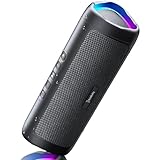
- [Immersive Sound Experience & Dual Connectivity] Experience unparalleled sound quality with this wireless Bluetooth speaker's 2 drivers and advanced technology that delivers powerful, well-balanced sound with minimal distortion. Connect two speakers together to create an immersive stereo sound experience and fill any room with powerful sound. Perfect for gaming, music, and movie playback
- [Tough & Weather-Resistant] Engineered to handle rough use and adverse weather conditions, this speaker features a durable design and an IPX5 rating for protection against water splashes and spills. It's an ideal choice for outdoor events, and is perfect for use at parties, at the pool, on the beach, while camping or hiking, and more
- [Long-lasting Playtime & Extended Bluetooth Connectivity] Experience extended playtime with up to 24 hours(50% Vol and light off) per charge and extended wireless range with Bluetooth 5.3, reaching up to 100 feet from your device. The multicolor lights on the speaker can also be turned off with a simple button press to save the battery and adapt to your needs. Keep in mind that the actual playtime can vary depending on volume level, audio content, and usage
- [Vibrant Light Effects] Bring a new level of excitement to your party with the dynamic multi-color light show that syncs to the beat of the music, you can easily customize the light effects to suit your preference by simply pressing the Light button. Make any gathering more memorable with these visually stunning light effects that will elevate the atmosphere
- [Everything You Need] The package includes 1 waterproof Bluetooth speaker (Item Dimensions D x W x H: 7.87"D x 2.76"W x 2.81"H, Weight: 1.28lb), 1 Type-C charging cable, and a quick start guide, all backed by lifetime technical support. The built-in microphone allows for hands-free phone calls and you can also play music from other devices using the AUX jack (not included). It's a perfect gift for men and women. It is also suitable as white elephant gifts for adult, stocking stuffers for men and women, Christmas gifts,birthday gifts, mothers day gifts,fathers day gifts,Valentine's Day,mens gifts,and various anniversary gifts for him.
That division explains why “ChatGPT for music” was more than a catchy label. Like a conversational AI system, Suno lowered the entry barrier to a creative task by accepting natural language. A person could begin with an idea such as a genre, mood, subject, or story instead of a technical specification.
The analogy also has an important limit. Text generation mainly has to coordinate language. Music generation must coordinate melody, harmony, rhythm, arrangement, timbre, vocal delivery, instrumentation, and the sense of a beginning, middle, and end. Suno’s output is therefore closer to an automated creative collaborator—or increasingly, a production environment—than to a chatbot with a music button.
Suno’s product has changed substantially
Suno still offers the foundational prompt-driven workflow: describe a song, provide or request lyrics, specify musical characteristics, and generate multiple versions. The larger change is that users can now bring more of themselves into the process and exercise more control after the first generation.
| Capability | What it does | Why it matters | Important qualification |
|---|---|---|---|
| Text-to-song creation | Turns a description, lyrics, and musical direction into song variations. | Lets beginners start with an idea rather than music theory or recording equipment. | Prompting remains a form of direction, not necessarily the kind of human authorship that establishes copyright. |
| Voices | Uses a verified user’s singing or speech recording in generated songs. | Moves the result away from a generic AI vocal and toward a creator-specific performance identity. | Eligibility depends on age and location, and the user must confirm the right to use the voice. |
| Custom Models | Allows Pro and Premier subscribers to tune a model using tracks from their original catalog. | Creates a more personal sound based on a creator’s own material. | It is not presented as a universal feature for every plan or every user. |
| My Taste | Adapts to a user’s preferred genres and moods. | Personalizes discovery and generation rather than treating every account as musically identical. | Personalization is not the same as ownership of the model’s output. |
| Audio Uploads | Accepts a melody, rough demo, drum loop, or other audio as a starting point. | Allows existing human-made material to guide generation. | Users need the necessary rights to upload and transform the material. |
| Suno Studio | Provides a browser-based timeline for recording, arranging, editing, layering, extracting stems, and exporting. | Lets users work on a song after generation instead of treating the first result as final. | Studio is available with the Premier plan. |
Suno announced v5.5 on March 26, 2026, describing it as its most expressive model at that point. The release’s significance was less about a single model number than about the direction of the product: personalization, creator-specific inputs, and more involvement from musicians and the music business.
Quick wins for a faster PC:
Scan for outdated or missing drivers - takes under a minuteDriver Scan →Repair Windows errors before they cause bigger problemsFix Now →Fix the driver behind crashes, sound loss and screen glitchesFind Drivers →How a Suno workflow now works
- Start with a musical intention. A user can describe the subject, emotional arc, instrumentation, vocal character, tempo, or broad genre. The prompt is a starting brief, not a guarantee that every detail will be followed perfectly.
- Choose the human material to contribute. That might be original lyrics, a melody, a rough demo, a drum loop, or a recording of the creator’s own voice. Adding original material can make the result more personal and may also become relevant when evaluating human authorship.
- Generate alternatives. Suno’s original appeal was the speed of moving from an idea to multiple recognizable songs. Variations can be useful for finding a melody, chorus, arrangement, or vocal interpretation worth developing.
- Use Voices when the creator’s vocal identity is central. Eligible users can record singing or speech through a microphone or upload an existing recording. Suno says the recording can be between 15 seconds and four minutes, with up to two minutes selected for use. It recommends a clean acapella recording, a good microphone, and an acoustically neutral environment.
- Develop the track in Studio. Users can record directly, upload audio to a timeline, use a recording as a song section, extract stems, adjust tempo, layer parts, audition alternate takes, comp sections, and mix tracks.
- Export only after deciding what the song is for. Studio can export a full song, a selected range, multitracks, and MIDI extracted from stems. The appropriate export depends on whether the goal is a private sketch, a finished listen, or further work in another production environment.
Audio Uploads have different limits by plan. Suno’s documentation says Basic users can upload up to 60 seconds, while Pro and Premier subscribers can upload up to eight minutes. Those limits apply to the uploaded starting material and should not be confused with Studio’s broader timeline and export capabilities.
Why Suno Studio is strategically important
A generated song is impressive, but a finished production normally requires choices after the first take. A producer may want the chorus from one version, the drum pattern from another, a different tempo, a new vocal entrance, or a cleaner balance between instruments. Studio’s multitrack timeline is Suno’s answer to that problem.
Its tools—stem extraction, layering, arrangement, tempo adjustment, recording, comping, mixing, and several export formats—move Suno closer to territory traditionally occupied by digital audio workstations. That does not mean Studio makes every conventional DAW unnecessary. It means Suno is trying to own more of the path between a vague idea and a usable production.
For creators who want to continue outside Suno, a DAW for editing Suno stems is an optional next step, not a requirement. Studio’s multitracks and MIDI exports can enter a broader hybrid AI-and-human production workflow. The best choice depends on the creator’s existing software, desired level of editing, and comfort with recording and mixing; no particular program should be treated as endorsed here.
Rank #2

- Outdoor-Proof Speaker: Portable design with IPX7 waterproof protection to safeguard against splashes, waves, and water vapor. Get incredible sounds at home, on camping trips, or for outdoor adventures.
- 24H Non-Stop Music: With Anker's world-renowned power management technology and a 5,200mAh Li-ion battery, the soundcore 2 speaker delivers a full day of great sound.
- Powerful Sound: The speaker features 12W power with enhanced bass from dual neodymium drivers. An advanced digital signal processor ensures pounding bass and zero distortion at any volume.
- Intense Bass: Our exclusive BassUp technology and a patented spiral bass port boost low-end frequencies to make the beats hit even harder. The soundcore 2 speaker delivers vibrant audio for home theater nights, beach parties, and sitting around a campfire.
- Grab, Go, Listen: A classic design refined with simple controls and effortless portability. Easy to use and take anywhere, and supports wireless stereo pairing.
Voices adds power—and a consent problem
Voice generation is one of the clearest examples of Suno becoming more personal. A user can provide singing or speech and generate a song that uses that vocal identity rather than a generic synthesized performer.
Suno’s workflow includes an identity check. The user is asked to read a displayed phrase, and the system compares that speech with the uploaded singing recording. The user must also confirm that they have the rights to use the voice. Those safeguards address an obvious abuse case: uploading somebody else’s vocal recording and presenting the resulting performance as authorized.
They do not make voice rights a solved problem. Voices is restricted by age and location, so availability is not universal. A user should not upload a bandmate’s, client’s, family member’s, or public figure’s voice merely because the file is accessible. Consent, contractual permissions, publicity rights, and platform rules can all matter separately from whether a technical identity check succeeds.
Custom Models make Suno more creator-specific
Custom Models allow Pro and Premier subscribers to tune a model using tracks from their original catalog. In principle, this gives a songwriter or producer a way to work from a personal musical vocabulary rather than relying only on a broad general-purpose model.
The distinction between a personal catalog and an enormous external training corpus is significant. A creator who trains from original tracks has a clearer basis for saying where the source material came from. That still does not answer every question about the resulting output, but it makes the creative relationship more legible: the user is not simply issuing a prompt; the user is supplying a body of work, selecting results, and shaping a system around that material.
My Taste follows a different path. Instead of training on a creator’s catalog, it adapts to preferred genres and moods. Together, the two features show Suno pursuing personalization at both ends: the sound of a particular creator and the listening preferences of an individual user.
Commercial rights are not the same as copyright
This is the distinction most likely to be lost in a short description of Suno. Suno’s January 2026 help documentation separates what its service terms allow from what copyright law protects.
The Tool Desk
Outbyte Driver Updater FREEScan for outdated or missing drivers - takes under a minuteDriver Scan →Outbyte PC Repair FREEClear out junk files and repair common Windows errorsFree Scan →| Question | Careful answer |
|---|---|
| Can a paid subscriber use a song commercially? | Suno says songs made while a user is subscribed to Pro or Premier receive commercial-use rights under its terms. |
| Who owns a song made on the free Basic tier? | Suno says Basic-tier songs remain owned by Suno and are limited to non-commercial use under the service terms. |
| Does a paid plan guarantee copyright? | No. Contractual permission from Suno does not automatically create copyright protection in every country. |
| What can support a copyright claim? | Human-written lyrics, creative selection and arrangement, substantial edits, a human performance, and other original production choices may be relevant. The answer depends on the work and the jurisdiction. |
| Is a prompt by itself enough? | U.S. Copyright Office guidance says prompts alone generally do not provide sufficient human authorship for expressive material generated by an AI system. |
The practical wording is therefore not simply, “You own your Suno song.” A more accurate statement is: Suno’s paid plans may grant contractual ownership and commercial-use rights, while copyright eligibility depends on human authorship, the final work, and applicable law.
Rank #3

- Wireless Bluetooth streaming
- 12 hours of playtime
- IPX7 waterproof
- Pair multiple speakers with party boost
- Premium JBL sound quality
For someone planning a release, that means keeping records of original lyrics, uploaded recordings, edits, arrangements, performances, and production decisions. It also means checking the current Suno terms, the law in the relevant country, and the rules of any distributor or platform. Before release, research music distribution for AI-assisted songs carefully: acceptance policies vary, and commercial permission from Suno is not a guarantee that every distributor will accept every AI-assisted track.
Suno is trying to bring the music industry inside the system
The company’s relationship with the music industry is becoming central to its future. In November 2025, Suno announced a partnership with Warner Music Group. Suno described the agreement as a way to develop richer creation experiences, enable interaction and collaboration with established musicians, and bring rights holders into its future product ecosystem.
In June 2026, Suno said it was preparing to roll out its first music model developed in partnership with the industry. The company presented that future generation as a way to expand creative possibilities while helping artists reach audiences, build communities, and create new economic opportunities.
Do these 3 things before closing this tab:
1Fix the driver behind crashes, sound loss and screen glitches2Clear out junk files and repair common Windows errors3Scan for outdated or missing drivers - takes under a minuteThat announcement should not be read as proof that an industry-developed model was already available to every user. It was a statement about the company’s planned product direction. Nor does a partnership by itself settle broader questions about all training data, consent, compensation, or imitation.
Suno’s August 2026 responsibility statement described several other measures: writing camps with artists, songwriters, musicians, and producers; a creator-support initiative called Spark; screening of uploaded audio and lyrics through third-party providers; and plans for audio watermarking and fingerprinting. These are company-described policies and planned actions. They may indicate an effort to build trust, but they are not independent evidence that every legal or ethical concern has been resolved.
The scale of the company raises the stakes
Suno describes itself as a music company whose mission is to amplify imagination and make music creation accessible to millions. Its public materials emphasize that technology is a tool and that human creativity remains central to meaningful music.
The business has also grown quickly. In June 2026, CEO and co-founder Mikey Shulman announced that Suno had raised more than $400 million in Series D funding at a $5.4 billion post-money valuation. Bond Capital led the round, with participation from IVP, Forerunner, Union Square Ventures, Alkeon, Quiet, Matrix, Lightspeed, Menlo Ventures, and Schroders Capital. Suno said more than half of its team members were musicians and that the financing would support expansion of its creator platform and artist-oriented work.
Recommended Free Tools
In November 2025, Suno said its community had grown to nearly 100 million music makers. That is a company-reported community figure, not an independently audited user metric. It nevertheless illustrates why the company’s decisions matter beyond a niche software audience: a large population can use the platform to create, share, and potentially monetize music at a scale that conventional production tools never made possible.
Rank #4
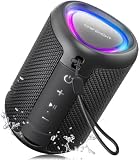
- Compact and Powerful Design: Engineered with premium craftsmanship, this portable speaker features a space-saving form measuring a mere 2.99 inches (7.6 cm) in width and length, and 4.25 inches (10.8 cm) in height. Ultra-lightweight at just 0.582 lbs (264g), it slips effortlessly into any bag. Driven by a robust 20W peak power, it delivers immersive audio with punchy bass and crisp highs, while its 15W continuous output ensures crystal-clear sound for indoor relaxation or outdoor adventures
- 【IPX5 Waterproof – Beach, Pool & Outdoor Adventures】Built for everyday outdoor fun, this portable Bluetooth speaker features IPX5 waterproof protection to handle splashes, light rain, and wet environments. Take it to the beach, pool, campsite, backyard, patio, or shower for music wherever you go. A reliable companion for travel, camping, outdoor gatherings, and weekend adventures
- 【Portable Companion – Travel, Camping & Everyday Use】At just 0.58 lbs, this compact wireless speaker easily fits into a backpack, tote, suitcase, or travel bag. The built-in lanyard makes it easy to carry or hang from a backpack, bike, hook, or shower caddy. Great for road trips, beach days, camping trips, dorm rooms, home offices, and relaxing at home
- 【Dynamic Lights – Create the Right Mood Anywhere】Dynamic LED lights add colorful visual effects to your favorite music, bringing extra energy to parties, gatherings, and everyday listening. Use it in the bedroom, dorm, backyard, patio, campsite, or party space. A fun choice for Halloween music, movie nights, sleepovers, game nights, and outdoor hangouts
- 【15W HD Sound & 15H Playtime – Music for Every Moment】Powerful 15W HD sound delivers clear, enjoyable audio for music, podcasts, games, and more. With up to 15 hours of playtime, enjoy your playlist during travel, beach trips, camping, pool days, backyard gatherings, or a relaxing night at home. Keep the music going without frequent recharging
A policy change that creators need to date carefully
On August 10, 2026, Suno announced an updated downloads policy in response to concerns about mass export and abuse. As of the authoritative research date of August 11, 2026, the policy had been announced but was scheduled to take effect on September 3, 2026.
The announced policy would impose lifetime trial-download limits for free users and monthly limits for Pro and Premier subscribers. Premier users who use Suno Studio would have no download limits under the announcement. Suno also said paid subscribers would retain commercial rights to songs downloaded from the platform, while trial downloads would be for personal use.
The timing matters. Describing those limits as already active on August 11 would be inaccurate. Creators should also check the current policy when publishing or downloading, since plan terms and enforcement can change. The policy shows the tension in Suno’s business model: the company wants broad experimentation, but unlimited automated export can facilitate spam, low-quality distribution, impersonation, and abuse at industrial scale.
Democratization versus displacement
Suno’s strongest positive case is accessibility. A user can move from an idea to a recognizable song without formal training, a band, a studio, a professional singer, or a large budget. That can be valuable for songwriting sketches, private gifts, commemorative projects, work events, playful experimentation, and demos that would otherwise never be recorded.
Suno has also described songs made for birthdays, graduations, hospice situations, therapy, caregiving, and memory preservation. Those are illustrative examples from the company, not independent clinical evidence. They do, however, show why the tool’s significance cannot be measured only by whether it replaces a commercial recording session. Music can be a form of communication even when the result is never released.
The strongest criticism is more serious than the claim that AI music is mediocre. A system that produces convincing music can shift value away from human performers, songwriters, and producers. It may also raise questions about whether copyrighted works were used in model development, whether artists consented, and whether a generated performance borrows too closely from a recognizable identity or musical tradition.
Those positions are not mutually exclusive. Suno’s current tools invite human input through original lyrics, uploaded demos, a creator’s own voice, catalog-based Custom Models, editing, arrangement, recording, and mixing. At the same time, the amount and kind of human control remain important for artistic credit, platform eligibility, and copyright analysis. “AI-made” and “human-made” are not always useful opposing categories; many real workflows will be mixtures of both.
Free tools Windows power users keep installed
One-click scans. No signup required.
Who Suno is for—and who should be cautious
| User | Where Suno may help | What to watch |
|---|---|---|
| Beginner or hobbyist | Turning an idea, joke, story, or mood into a playable song quickly. | Free-tier ownership, non-commercial limits, and the difference between a fun generation and a releasable work. |
| Songwriter | Exploring arrangements, melodies, demos, and alternate directions. | Preserve original lyrics and musical contributions, and decide which parts are actually yours. |
| Singer or performer | Using a verified voice, a rough vocal, or a recorded idea as source material. | Record only voices for which you have permission; check regional and age eligibility. |
| Producer | Generating starting material, extracting stems, comping takes, and moving elements into a larger workflow. | Studio is not automatically a replacement for every DAW, and exports may require additional editing and mixing. |
| Professional releasing music | Rapid ideation and human-led production with clear source records. | Review Suno’s current terms, copyright rules, distributor policies, and any disclosure requirements before release. |
A responsible Suno release checklist
- Choose the plan before generating. Do not assume that upgrading later changes the rights attached to an earlier Basic-tier creation. Confirm the current terms and the relevant creation or download date.
- Use material you are entitled to use. That includes lyrics, melodies, demos, samples, uploaded recordings, and voices. Possessing an audio file is not the same as having permission to transform it.
- Keep a contribution record. Save original lyrics, source audio, prompts, edits, arrangement notes, recordings, stems, and exports. This will not guarantee copyright, but it makes the human part of the work easier to identify.
- Review the result rather than treating generation as clearance. Listen for unwanted similarities, accidental artifacts, inappropriate lyrics, and elements that do not fit the intended use. A generated output still needs human judgment.
- Check release channels independently. A commercial-use statement from Suno does not guarantee acceptance by a distributor, label, collecting society, or social platform. Rules vary by service and geography.
- Check the date-sensitive download policy. The announced September 3, 2026 changes may affect how free and paid users export material. Verify the live policy before planning a large catalog or automated publishing workflow.
- Be transparent where appropriate. If a client, collaborator, audience, distributor, or employer expects disclosure of AI assistance, document and communicate how Suno was used.
The question Suno still has to answer
The novelty phase is over. Suno has already shown that a short prompt can produce an emotionally recognizable song, and its expanding feature set shows that generation is only the first layer of its ambition.
Best Value

- JBL PRO SOUND + AI BOOST: How does the already great JBL Charge sound profile get even better? AI Sound Boost analyzes music in real time—delivering bigger bass, crisper highs, and maximum acoustic performance with less distortion. Same portable speaker, bigger punch.
- 28-HOUR BATTERY: Keep the mood alive for 24 hours on a single charge—then squeeze out 4 more with JBL Playtime Boost (thanks, long battery life). This portable Bluetooth speaker outlasts the longest days and the wildest nights.
- IP68 WATERPROOF DESIGN: Have you ever dropped your speaker, had it roll down a dusty hill and land in a lake? This waterproof, dustproof, drop-proof bluetooth speaker survives 1m drops and submersion up to 1.5m.* Throw parties instead. *Lab conditions apply.
- MULTI-SPEAKER CONNECTION: Wouldn't it be great to share the vibes with your whole crew? Auracast lets you stereo pair two Charge 6s or link multiple JBL Auracast-enabled speakers wirelessly—covering more ground (and more ears) with the same playlist.
- FAST CHARGING + POWER BANK: No low-battery panic here. Fast charging gets you up to 150 minutes of playtime from just 10 minutes plugged in—plus a built-in power bank keeps your phone charged while the music keeps going.
The lasting test is whether Suno can create a durable relationship between its users and the wider music ecosystem. That means giving beginners a welcoming path in, giving experienced musicians meaningful control, protecting voices and uploaded material, explaining commercial terms precisely, and developing models with artists and rights holders rather than treating them as obstacles.
If Suno succeeds, it may become less like a novelty song generator and more like an operating layer for participatory music creation. If it fails, the same scale that made the product exciting could magnify disputes over authorship, consent, distribution, and who gets paid. The central story is no longer whether AI can make music from a sentence. It is who controls the music after the sentence becomes sound.
Frequently Asked Questions
Why was Suno called a “ChatGPT for music”?
The analogy came from Suno’s low-friction prompt interface. Users could describe a song in ordinary language and receive a complete-sounding result, much as a conversational AI turns a request into text. The comparison is imperfect because music generation must coordinate vocals, melody, harmony, rhythm, arrangement, and production.
Can Suno users commercially release their songs?
Suno says songs made while subscribed to its Pro or Premier plans receive commercial-use rights under its service terms. Basic-tier songs are described as owned by Suno and limited to non-commercial use. These contractual permissions do not guarantee copyright protection or acceptance by every distributor.
Does a paid Suno subscription automatically give a creator copyright?
No. Copyright depends on human authorship and applicable law. The U.S. Copyright Office has said that prompts alone generally do not provide sufficient human authorship for AI-generated expressive material, while human-written lyrics, selection, arrangement, edits, performances, and other creative contributions may matter.
Can Suno use my voice?
Eligible users can record or upload singing or speech for the Voices feature. Suno describes an identity check and requires confirmation that the user has rights to use the voice. The feature is subject to age and location restrictions, so availability is not universal.
What is Suno Studio?
Studio is Suno’s browser-based generative audio workstation for Premier subscribers. It supports recording, audio uploads, multitrack editing, arrangement, stem extraction, tempo adjustment, comping, mixing, and exports including full songs, selected ranges, multitracks, and MIDI extracted from stems.
Windows Errors? Fix Them Before They Spread
Repair common Windows errors and clear accumulated junk for a smoother, more stable PC - no reinstall needed.Free scan · no reinstallCrashes, No Sound, or Screen Glitches?
Random freezes, missing sound and display glitches usually trace back to one bad driver. Find and replace yours safely.Free scan · under a minuteThe Bottom Line
Suno’s original breakthrough was making song creation feel as simple as writing a prompt. Its next challenge is much bigger: building a platform where human contributions remain meaningful, commercial rights are not confused with copyright, voices and source material are used with consent, and artists and rights holders share in the value created. Suno can make music accessible to millions, but its long-term legitimacy will depend on what happens after generation.
Quick Recap
Product prices and availability are accurate as of the date/time indicated and are subject to change. Any price and availability information displayed on Amazon at the time of purchase will apply.