iCloud Music Library is now primarily known as Sync Library. It lets Apple Music or iTunes Match subscribers access eligible personal music and playlists across devices signed in to the same Apple Account. It may match songs to Apple’s catalog or upload unmatched files, but it is not a byte-for-byte archive and—most importantly—it is not a backup. Keep the original library and an independent backup before changing synchronization settings.
What iCloud Music Library is called now
iCloud Music Library is now primarily called Sync Library. It is Apple’s cloud-based library synchronization feature for Apple Music and iTunes Match subscribers. When it is enabled, eligible music from a personal collection, Apple Music additions, playlists, and some music videos can become available on other devices signed in to the same Apple Account.
The name has not disappeared completely. Apple uses Sync Library in current Music and Apple Music interfaces, while iTunes for Windows still uses the label iCloud Music Library. They refer to the same general library-synchronization workflow.
The most important warning: Sync Library is not a backup. Apple explicitly says that Sync Library and iTunes Match should not be treated as backup services. Keep the original music files and maintain an independent backup before enabling, disabling, or resetting synchronization.
#1 Best Overall
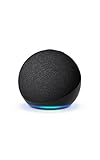
- Your favorite music and content – Play music, audiobooks, and podcasts from Amazon Music, Apple Music, Spotify and others or via Bluetooth throughout your home.
- Alexa is happy to help – Ask Alexa for weather updates and to set hands-free timers, get answers to your questions and even hear jokes. Need a few extra minutes in the morning? Just tap your Echo Dot to snooze your alarm.
- Keep your home comfortable – Control compatible smart home devices with your voice and routines triggered by built-in motion or indoor temperature sensors. Create routines to automatically turn on lights when you walk into a room, or start a fan if the inside temperature goes above your comfort zone.
- Do more with device pairing – Fill your home with music using compatible Echo devices in different rooms, or create a home theatre system with Fire TV.
- Say goodbye to drop-offs and buffering - With eero Built-in, Echo Dot doubles as a mesh wifi extender, adding up to 1,000 sq. ft. of wifi coverage to your existing eero network.
What Sync Library actually does
Sync Library creates a cloud-accessible version of an eligible music library. It is designed for access and convenience rather than archival preservation. Depending on the source and Apple’s eligibility checks, a song may be matched with a corresponding item in Apple’s catalog or uploaded to Apple’s servers.
A synchronized library can include:
- Music added from the Apple Music catalog
- Personal songs imported from CDs or other local sources
- Songs that Apple matches to an equivalent catalog item
- Personal songs that Apple uploads because they cannot be matched
- Playlists, including Smart Playlist rules in supported desktop libraries
- Music videos purchased from the iTunes Store
Once synchronization has completed, the library can generally be streamed on supported Apple devices and through music.apple.com. Songs can also be downloaded for offline listening. However, offline downloads from the Apple Music catalog remain dependent on an active Apple Music subscription; they are not permanent purchases.
Matching is not the same as copying
For an eligible personal song, Apple may match the track to a corresponding item in its catalog. Apple’s user documentation describes matched songs as being made available at iTunes Plus quality: 256 kbps, DRM-free AAC. A song that is not matched can instead be uploaded, but Apple’s terms say the upload format is determined by Apple.
Apple’s user guidance also discusses songs remaining at their original quality in some situations. The practical lesson is not to assume that the cloud version is a byte-for-byte duplicate of the file on your computer. The cloud copy may use a different format or quality, and a rare release, custom edit, live recording, unusual metadata, or self-produced track may not behave like a standard catalog recording.
If the exact original file matters, preserve it locally and back it up independently. Sync Library is a way to access music across devices, not a substitute for an archive.
Library limits
Apple documents a maximum synchronized library of 100,000 songs, excluding iTunes Store purchases. An individual file can be no larger than 200 MB. These limits apply to the cloud-library workflow and do not mean that every item in a local folder will automatically be accepted, matched, or uploaded.
What you need before turning it on
- An active Apple Music subscription or iTunes Match subscription, depending on the workflow you want to use
- The same Apple Account signed in on the source computer and every device that should access the synchronized library
- An internet connection while the library is being matched, uploaded, and updated
- A current independent backup of valuable local music files
Country and region affect catalog availability and some feature behavior. A song available in one country may be unavailable in another, and an Apple Account signed into the wrong region or account can make a title appear missing or unplayable.
Rank #2

- Your favorite music and content – Play music, audiobooks, and podcasts from Amazon Music, Apple Music, Spotify and others or via Bluetooth throughout your home.
- Alexa is happy to help – Ask Alexa for weather updates and to set hands-free timers, get answers to your questions and even hear jokes. Need a few extra minutes in the morning? Just tap your Echo Dot to snooze your alarm.
- Keep your home comfortable – Control compatible smart home devices with your voice and routines triggered by built-in motion or indoor temperature sensors. Create routines to automatically turn on lights when you walk into a room, or start a fan if the inside temperature goes above your comfort zone.
- Do more with device pairing – Fill your home with music using compatible Echo devices in different rooms, or create a home theatre system with Fire TV.
- Say goodbye to drop-offs and buffering - With eero Built-in, Echo Dot doubles as a mesh wifi extender, adding up to 1,000 sq. ft. of wifi coverage to your existing eero network.
How to enable Sync Library
On a Mac
- Open the Music app.
- Choose Music > Settings.
- Open the General tab.
- Turn on Sync Library.
- Allow the library to finish updating before judging whether songs or playlists are missing.
The Mac should be signed in to the Apple Account associated with the Apple Music or iTunes Match subscription. The first update can take time for a large collection, particularly when Apple must examine, match, or upload many files.
Quick wins for a faster PC:
Repair Windows errors before they cause bigger problemsFix Now →Scan for outdated or missing drivers - takes under a minuteDriver Scan →Clear out junk files and repair common Windows errorsFree Scan →On an iPhone or iPad
- Open Settings.
- Tap Apps > Music.
- Turn on Sync Library.
The iPhone or iPad must use the same Apple Account as the source computer and the active subscription. Enabling the switch on only one device does not guarantee that another device is configured to access the library.
On Windows
In the current Apple Music app for Windows, enable Sync Library. In iTunes for Windows, the equivalent setting is still labeled iCloud Music Library. The different wording is a terminology difference, not a separate cloud library.
After enabling the feature, give the source computer time to update. A library that has not completed its cloud update may appear incomplete on an iPhone, iPad, another computer, or the web.
Apple Music, iTunes Match, or manual syncing?
| Option | What it provides | Who it suits |
|---|---|---|
| Apple Music | The Apple Music catalog, streaming, recommendations, catalog downloads, and Sync Library for eligible personal music | People who want both Apple’s subscription catalog and access to their own imported music across devices |
| iTunes Match | A personal-library-focused upload and matching service that makes a library available on supported devices with Sync Library enabled | People who want cloud access to music imported from CDs or other personal sources without subscribing to the Apple Music catalog |
| Manual synchronization | Direct transfer of selected local music to compatible devices without the same cloud-library workflow | People who do not subscribe to Apple Music or iTunes Match, or who prefer to manage device files themselves |
iTunes Match is not available for Android devices. Android users can use the Apple Music app, but that does not make iTunes Match itself available on Android. Apple Music can also expose a synchronized library through the web at music.apple.com, subject to account, subscription, device, and regional availability.
What happens when Apple Music ends?
Apple Music has several different kinds of content, and they do not all behave the same way when a subscription expires.
- Apple Music catalog songs: You can no longer play songs from the subscription catalog after the membership ends. Catalog-based playlists, including playlists created with or added from catalog music, are also no longer available in the same way.
- Personal music synchronized through Apple Music: Sync Library turns off when the subscription expires, and Apple’s terms state that access to iCloud Music Library—including content uploaded to Apple’s servers—is lost. The original local files on the source computer are not thereby erased, but cloud access ends.
- Music already on a device: Apple says music and playlists that were already on the device before the Apple Music subscription ended remain available. This does not restore subscription-only catalog rights to songs in those playlists.
- iTunes Store purchases: Purchased music is treated differently from subscription catalog content. Purchases generally remain associated with the purchaser’s Apple Account and may be available for redownload, subject to Apple Account access and Apple’s download conditions.
Do not confuse an Apple Music download with a purchased file. A downloaded catalog track is licensed for use while the subscription and relevant rights remain active; it is not converted into a permanent purchase when saved for offline listening.
Rank #3
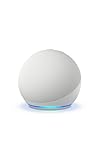
- Your favorite music and content – Play music, audiobooks, and podcasts from Amazon Music, Apple Music, Spotify and others or via Bluetooth throughout your home.
- Alexa is happy to help – Ask Alexa for weather updates and to set hands-free timers, get answers to your questions and even hear jokes. Need a few extra minutes in the morning? Just tap your Echo Dot to snooze your alarm.
- Keep your home comfortable – Control compatible smart home devices with your voice and routines triggered by built-in motion or indoor temperature sensors. Create routines to automatically turn on lights when you walk into a room, or start a fan if the inside temperature goes above your comfort zone.
- Do more with device pairing – Fill your home with music using compatible Echo devices in different rooms, or create a home theatre system with Fire TV.
- Say goodbye to drop-offs and buffering - With eero Built-in, Echo Dot doubles as a mesh wifi extender, adding up to 1,000 sq. ft. of wifi coverage to your existing eero network.
If the personal collection is important, keep the source files and backup even when every song appears successfully matched or uploaded.
Sync Library is not a backup
A successful cloud status means that Apple has processed a song for synchronization. It does not prove that the local original is safely archived, that the cloud copy has identical encoding, or that the content will remain available if a subscription ends.
The Tool Desk
Outbyte PC Repair FREERepair Windows errors before they cause bigger problemsFix Now →Outbyte Driver Updater FREEFix the driver behind crashes, sound loss and screen glitchesFind Drivers →This distinction is especially important for:
- Imported CDs and recordings that are difficult to replace
- Rare pressings, alternate masters, and live performances
- Self-produced or independently released music
- Custom edits, extended versions, and recordings unavailable in Apple’s catalog
- Libraries with carefully maintained metadata, artwork, ratings, or playlist organization
A practical protection plan is:
- Keep the original media files on the source computer or a dedicated music drive.
- Maintain at least one independent backup, preferably disconnected or stored separately from the computer.
- Verify that the backup contains the actual audio files, not merely playlists or cloud placeholders.
- Do not delete local files simply because Sync Library reports that songs are matched or uploaded.
- Before turning Sync Library off, confirm the backup and understand that downloaded music may be removed from devices.
For a valuable local collection, an external drive for music-library backup is a practical destination. It protects the local source library; it does not replace Sync Library and does not make Apple Music catalog downloads permanent.
How to troubleshoot missing or gray songs
Start with Apple’s own checks before deleting tracks, re-importing a library, or installing a third-party utility.
Step 1: Check the Apple Account
Confirm that the source computer and the affected device are signed in with the Apple Account associated with the Apple Music or iTunes Match subscription. A different account can prevent access to the subscription, synchronized library, or purchased music.
Step 2: Check Sync Library on every device
Make sure Sync Library is enabled on the Mac, Windows computer, iPhone, iPad, or other relevant device. If it is disabled on one device, that device may show only its local library or a partial collection.
Recommended Free Tools
Step 3: Check the internet connection
Synchronization needs an internet connection. A device may show an incomplete library while the source computer is still processing uploads or while the device cannot reach Apple’s servers.
Step 4: Inspect the song’s cloud status on the source computer
On the Mac or PC that contains the original file, inspect the affected song’s cloud status. This helps distinguish a file that was never processed from one that was processed but cannot currently play on a particular device.
Rank #4
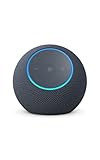
- Meet Echo Dot Max: Experience rich room-filling sound that automatically adapts to your space and fine-tunes playback. Features a built-in smart home hub and Omnisense technology for highly personalized experiences.
- Music to your ears: With nearly 3x the bass versus Echo Dot (2022 release), it fits beautifully in any space, delivering your personal sound stage with deep bass and enhanced clarity. Listen to streaming services, such as Amazon Music, Apple Music, Spotify, and SiriusXM. Encore!
- Do more with device pairing: Connect compatible Echo smart speakers and smart displays in different rooms, or pair with a second Echo Dot Max to enjoy even richer sound. Pair your Echo Dot Max with compatible Fire TV devices to create a home theater system that brings scenes to life.
- Simple smart home control: Set routines, pair and control lights, locks, and thousands of smart home devices that work with Alexa without needing a separate smart home hub. With Omnisense technology, you can activate routines via temperature or presence detection.
- Say goodbye to drop-offs and buffering - With eero Built-in, Echo Dot Max doubles as a mesh wifi extender, adding up to 1,000 sq. ft. of wifi coverage to your existing eero network.
Step 5: Update the cloud library
Use the source computer’s option to update the cloud library, then allow time for the status to propagate. Repeatedly changing settings before the first update completes can make the state of the library harder to diagnose.
Step 6: Toggle Sync Library only as a later recovery step
If the problem continues, Apple’s troubleshooting sequence may involve turning Sync Library off and on again. Do this only after confirming that the local library is backed up. Disabling synchronization can remove downloaded music from devices, and turning it back on does not restore an independent backup or guarantee that every cloud copy will match the original.
Why a song may be gray
A gray or unavailable song does not have one universal cause. Check for:
- The wrong Apple Account
- Sync Library being disabled
- A title unavailable in the current country or region
- An explicit-content restriction or other playback restriction
- A hidden item
- A song that has been removed from the Apple Music catalog
- An upload, match, or cloud-status problem on the source computer
There is an important diagnostic difference between missing from the cloud library and present but unplayable on one device. A missing cloud entry points toward account, import, processing, or synchronization problems. A title that is visible but gray may instead involve authorization, regional rights, restrictions, device compatibility, or the title’s current catalog status.
For Windows users, a general PC-maintenance product should not be the first response to an Apple Music synchronization problem. Apple Account, network, Sync Library, cloud-status, and catalog checks should come first. No general Windows utility should be presented as Apple-endorsed or as a guaranteed repair for Apple Music.
Independent reader supportYour contribution helps us test, update, and keep practical guides available for everyone.Lossless and Hi-Res Lossless: what Sync Library does and does not promise
Apple Music supports lossless audio using Apple Lossless Audio Codec, or ALAC. Where the title and region support it, Apple describes options ranging from 16-bit/44.1 kHz CD quality through 24-bit/192 kHz Hi-Res Lossless. Higher-resolution streaming and downloads use more data and storage.
Do these 3 things before closing this tab:
1Fix the driver behind crashes, sound loss and screen glitches2Clear out junk files and repair common Windows errors3Scan for outdated or missing drivers - takes under a minuteLossless availability should not be confused with personal-library archiving. Apple may make a matched personal song available as a 256 kbps DRM-free AAC copy, while Apple Music catalog titles may offer lossless or Hi-Res Lossless versions. Sync Library does not guarantee that every personal track is stored or delivered as a lossless, bit-perfect copy of the original.
Best Value

- Alexa can show you more - Echo Show 5 includes a 5.5” display so you can see news and weather at a glance, make video calls, view compatible cameras, stream music and shows, and more.
- Small size, bigger sound – Stream your favorite music, shows, podcasts, and more from providers like Amazon Music, Spotify, and Prime Video—now with deeper bass and clearer vocals. Includes a 5.5" display so you can view shows, song titles, and more at a glance.
- Keep your home comfortable – Control compatible smart devices like lights and thermostats, even while you're away.
- See more with the built-in camera – Check in on your family, pets, and more using the built-in camera. Drop in on your home when you're out or view the front door from your Echo Show 5 with compatible video doorbells.
- See your photos on display – When not in use, set the background to a rotating slideshow of your favorite photos. Invite family and friends to share photos to your Echo Show. Prime members also get unlimited cloud photo storage.
Hardware requirements
- Wired connection: Wired headphones, receivers, and powered speakers can be used for lossless playback.
- Bluetooth limitation: Bluetooth transmission is not lossless, even when the source track is marked lossless, because Bluetooth playback uses a codec-based wireless transmission path.
- iPhone and high sample rates: Playback above 48 kHz on an iPhone requires an external digital-to-analog converter.
- Data and storage: Lossless and especially Hi-Res Lossless settings consume more bandwidth and device storage than standard streams or downloads.
For an iPhone user specifically pursuing Hi-Res Lossless above 48 kHz, an external USB DAC for Hi-Res Lossless is the relevant accessory category. The DAC, cable, and adapter must be compatible with the particular iPhone connector and the DAC’s input; there is no universal cable or setup that fits every device.
For lossless playback without Bluetooth transmission, wired headphones for lossless audio are a straightforward option. They are a compatibility choice, not a guarantee of better sound. Perceived improvement depends on the recording, listening environment, playback equipment, and listener.
Common misconceptions
- Is iCloud Music Library a cloud backup?
- No. It synchronizes an eligible library for access across devices, but Apple says it is not a backup service. Keep an independent copy of the original files.
- Does matching preserve my exact file?
- Not necessarily. Matching can make a 256 kbps DRM-free AAC version available, and unmatched uploads use a format determined by Apple. Preserve the original if exact fidelity matters.
- Are Apple Music downloads purchases?
- No. Catalog downloads are tied to the active Apple Music subscription and applicable rights. They are different from iTunes Store purchases.
- Does a lossless badge mean Bluetooth headphones receive lossless audio?
- No. Bluetooth transmission is not lossless. Use a wired path for lossless playback, and use an external DAC on iPhone for playback above 48 kHz.
- Will every song appear on every device?
- Only eligible, successfully processed content can synchronize, and the same Apple Account, enabled Sync Library setting, internet access, regional availability, restrictions, and subscription status all matter.
A safe setup for most collections
- Back up the original local library before enabling Sync Library.
- Choose between an Apple Music subscription and iTunes Match based on whether you want Apple’s catalog as well as personal-library access.
- Use the same Apple Account everywhere.
- Enable Sync Library on the source computer and each device that should access it.
- Wait for cloud processing and inspect cloud status for unusual or valuable files.
- Test a few ordinary tracks, rare tracks, playlists, and downloads before assuming the entire library is ready.
- Keep the independent backup even after synchronization succeeds.
- If lossless audio is the goal, use a wired playback path and add a compatible external DAC when an iPhone must play above 48 kHz.
In short, Sync Library is excellent for carrying an eligible music library between devices, but it is not an archive. Treat Apple Music catalog content as subscription-based, treat matched and uploaded personal tracks as cloud-access copies rather than guaranteed originals, and protect the local collection separately.
PC Slower Than It Used to Be?
A free scan shows the junk files, broken settings and background clutter dragging Windows down - then fixes them in one click.Free scan · Windows 10 & 11Crashes, No Sound, or Screen Glitches?
Random freezes, missing sound and display glitches usually trace back to one bad driver. Find and replace yours safely.Free scan · under a minuteFrequently Asked Questions
What is iCloud Music Library called now?
iCloud Music Library is now primarily called Sync Library. It is available through Apple Music or iTunes Match and makes eligible music, playlists, and other library content accessible across devices using the same Apple Account. iTunes for Windows still uses the older iCloud Music Library label.
Is Sync Library a backup for my music collection?
No. Apple says Sync Library and iTunes Match are not backup services. Keep the original local files and at least one independent backup, especially for rare, imported, custom, or self-produced recordings.
What is the difference between Apple Music and iTunes Match?
Apple Music combines the subscription catalog with synchronized personal-library access, streaming, recommendations, and catalog downloads. iTunes Match focuses on matching and uploading a personal collection without requiring an Apple Music catalog subscription. iTunes Match is not available for Android.
What happens to my library if Apple Music expires?
Apple Music catalog songs and catalog-based playlists become unavailable when the subscription ends, and Sync Library turns off. Apple says music and playlists already on the device remain available, while its terms state that cloud access to uploaded iCloud Music Library content ends. Original local files on the source computer remain separate from that cloud access.
What’s actually slowing this PC down?
Pick the symptom - the matching free tool is one click away.
Do I need a DAC or wired headphones for Apple Music Hi-Res Lossless?
For lossless playback, use wired headphones, receivers, or powered speakers. Bluetooth transmission is not lossless. On iPhone, playback above 48 kHz requires an external digital-to-analog converter, or DAC.
The Bottom Line
Bottom line: iCloud Music Library is Apple’s older name for Sync Library, which uses an Apple Music or iTunes Match subscription to make eligible personal music available across devices. It is convenient, but it is not backup storage. Use one Apple Account everywhere, enable Sync Library consistently, keep an independent backup of the original files, and use wired audio or a compatible external DAC only when the technical requirements of lossless or Hi-Res Lossless playback justify it.
Quick Recap
Product prices and availability are accurate as of the date/time indicated and are subject to change. Any price and availability information displayed on Amazon at the time of purchase will apply.