Recommended Free Tools
Netflix began with DVDs in the mail and became a global streaming and entertainment company by repeatedly removing friction from home viewing. It used the internet first to improve DVD discovery and rental, then to eliminate due dates and late fees, then to deliver video instantly. Later, it built cloud infrastructure, personalized recommendations, global distribution, and original programming around that same direct-to-consumer promise.
The transformation took decades rather than happening overnight. Netflix started operations in 1998, introduced its subscription breakthrough in 1999, launched streaming in 2007, became a major producer and distributor of television in 2013, expanded to more than 190 countries in 2016, and shipped its final DVD on September 29, 2023.
The red envelope before the red “N”
Netflix began as an online DVD rental and sales business, not a streaming service. Its first major innovation was to use the internet to make physical-media rental easier: customers could search a substantial catalog, read reviews, receive discs through the mail, return them in prepaid envelopes, and get recommendations for what to watch next.
That original service established the promise that would define Netflix for the next 25 years: more choice, more control, and less friction between a viewer and the entertainment they wanted. The delivery mechanism changed from a mailbox to the internet, but the direct-to-consumer idea remained.
Do these 3 things before closing this tab:
1Repair Windows errors before they cause bigger problems2Fix the driver behind crashes, sound loss and screen glitches3Clear out junk files and repair common Windows errors#1 Best Overall

- Enjoy Blu-ray Disc movies in Full HD as well as DVD discs
- Upscale your DVDs to near HD quality
- Easy set-up with included HDMI cord
- Boot up in less than a second with super quick start mode
- Keep things simple with the new user-friendly interface
Netflix’s history at a glance
| Year | Milestone | Why it mattered |
|---|---|---|
| 1997 | Netflix was incorporated in Delaware in August. | The company was formally created before it began serving customers. |
| 1998 | Operations began on April 14 with an online DVD rental and sales store. | Netflix combined a new, mail-friendly format with internet-based selection and ordering. |
| 1999 | The Marquee subscription launched in December. | Due dates and late fees disappeared, and rental became an ongoing queue-and-replenishment service. |
| 2002 | Netflix went public. | The IPO gave the company public capital and marked its transition from startup to publicly traded subscription business. |
| 2007 | Instant viewing launched on personal computers. | Netflix began delivering video online, although DVDs remained central for years. |
| 2013 | House of Cards and Orange Is the New Black became early major Netflix series. | Netflix moved beyond licensing and distribution into commissioning, financing, and releasing original programming. |
| 2016 | Netflix expanded to more than 190 countries and added mobile downloads. | The service became a global internet-delivery platform that also accommodated offline viewing. |
| 2023 | The final DVD shipped on September 29. | The physical-media business that founded Netflix officially ended after 25 years. |
1997–1998: A new way to rent DVDs
Netflix was incorporated in Delaware in August 1997, but it did not begin operations until April 14, 1998. That distinction matters: the company existed on paper in 1997, while its customer-facing business started the following year.
The initial proposition was an online store for DVD rentals and purchases. Netflix announced a catalog of more than 900 DVD titles, mail delivery across the United States, prepaid return mailers, and a website built around search, browsing, reviews, and personalized recommendations.
DVDs were an important choice of format. Compared with VHS tapes, they were smaller and better suited to mailing. But the format alone was not the breakthrough. Netflix combined DVDs with an online catalog that helped customers decide what to rent before anything arrived at their homes.
The early experience still resembled a conventional rental transaction. Customers selected individual discs and paid rental and shipping charges; they could also buy titles. The more important experiment was the system around the disc: online discovery, home delivery, prepaid returns, and recommendations were being treated as one connected product.
The popular origin story about Netflix is often reduced to one specific late-fee incident. That is a much neater explanation than the evidence supports. The broader and more useful interpretation is that Netflix saw an opportunity to use the internet and a more convenient physical format to remove several annoyances from video rental at once.
1999: The subscription idea changed the rental business
Netflix’s decisive early move came in December 1999, when it introduced the Marquee subscription. The plan removed due dates and late fees, allowed members to keep a limited number of DVDs at home, and automatically sent another title when a returned disc became available.
This was more than a different way to charge for rentals. It changed the customer relationship from a series of isolated transactions into a continuing service. Instead of deciding whether to make another rental every time, members could build a queue of films and shows they wanted to see. Netflix then handled the sequence of fulfillment, returns, and replenishment.
Quick wins for a faster PC:
Repair Windows errors before they cause bigger problemsFix Now →Fix the driver behind crashes, sound loss and screen glitchesFind Drivers →Clear out junk files and repair common Windows errorsFree Scan →The queue became part of the product. A customer could choose several titles in advance, and Netflix could use those choices to manage inventory and distribution. The company’s revenue was also tied more closely to continued membership and use than to individual rental events.
That model removed several forms of friction at the same time:
- No due-date pressure: Members did not have to rush a disc back by a particular deadline.
- No late-fee anxiety: Keeping a disc longer did not create the traditional penalty that had frustrated many rental customers.
- Less repeated shopping: A queue meant customers could decide what they wanted before the previous disc was returned.
- Automatic replenishment: The next available title could be sent without requiring a new rental transaction.
- Better discovery: Reviews, metadata, search, and recommendations helped turn a large catalog into usable choices.
Netflix’s early advantage was therefore not simply “DVDs by mail.” It was a managed pipeline from discovery to delivery, viewing, return, and the next selection.
Rank #2
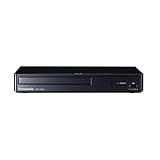
- Play Media from External Storage: Plug in an external hard drive to these compact DVD players for TVs to share your favorite movies, photos, and more on a large screen
- Multi-Connectivity DVD Blu Ray Player: HDMI-CEC and USB connectors; interfaces with multiple file formats in video (MKV/MP4) and audio (MP3/FLAC/ALAC/DSD/ WAV)
- Compact Size: Space-saving design allows this Bluray/DVD player for tv to fit neatly in narrow spaces and on thin racks. Dimensions: Approx. 9 5/8" W x 1 1/2"H x 6 7/8"D
- High-Quality Picture Resolution: With full HD support, BD84P-K Panasonic DVD players beautifully up-converts images to high-definition image quality (1080p) video, rendering your favorite movies in fine detail
- High-Resolution Audio Playback: Hear clear, superior audio from this Blu-Ray DVD player in action, adventure, dialogue, and music with Dolby Digital sound for DVDs, CDs, and compatible external files
2002: Netflix becomes a public company
Netflix completed its initial public offering in May 2002. It offered 5.5 million shares at $15 per share and reported more than 600,000 subscribers and a library of more than 11,500 titles.
What’s actually slowing this PC down?
Pick the symptom - the matching free tool is one click away.
The IPO was a major business milestone because it gave Netflix access to public capital and made its operating model visible to investors. Unlike a software company with few physical assets, Netflix had to manage DVD inventory, distribution centers, postage, customer acquisition, and the economics of recurring subscriptions.
Its recommendation and queue systems were also becoming economically important. The better Netflix could match a member with a desirable title, the more useful the subscription became. Discovery was not a decorative feature added to a rental catalog; it helped determine whether a large inventory could translate into sustained customer use.
2007: Streaming begins, but DVDs do not disappear
Netflix introduced instant viewing on personal computers in January 2007. The initial streaming catalog and platform were limited compared with the service that followed, but the direction was unmistakable: a customer could choose a video online and begin watching without waiting for a disc to arrive.
It would be wrong to describe this as an overnight replacement of DVDs. Netflix’s reporting in 2007 and 2008 continued to describe a substantial DVD business alongside a growing instant-watching library. The company kept investing in physical distribution while extending internet delivery to more screens and platforms.
This two-track period was strategically important. DVDs provided an established revenue engine and a large customer base. Streaming offered a potentially more scalable delivery model, but it also required capabilities that a mail-order company did not automatically possess:
- Licensing video for internet delivery rather than physical rental.
- Supporting different computers, televisions, game consoles, phones, and other connected screens.
- Encoding and transcoding video for different resolutions, devices, and network conditions.
- Delivering large volumes of data reliably across changing broadband connections.
- Building software that made an expanding digital catalog easy to browse.
Streaming was therefore not just a new playback button. It was a new operating model introduced alongside the old one and expanded as content rights, broadband access, devices, and infrastructure improved.
The technology Netflix customers rarely saw
Netflix’s transformation depended on systems that were mostly invisible to viewers. The familiar interface was only the surface of a much larger operation involving recommendations, distributed databases, cloud computing, content delivery, and device support.
Recommendations turned a catalog into a service
Netflix had recommendation features from its earliest website. That was a logical response to the problem of choice: a catalog can be valuable, but only if members can find something they actually want to watch.
Crashes, No Sound, or Screen Glitches?
Random freezes, missing sound and display glitches usually trace back to one bad driver. Find and replace yours safely.Free scan · under a minutePC Slower Than It Used to Be?
A free scan shows the junk files, broken settings and background clutter dragging Windows down - then fixes them in one click.Free scan · Windows 10 & 11As Netflix expanded internationally, personalization became more ambitious. In describing its global recommendation approach in 2016, the company explained that it identified communities of members with similar tastes across markets rather than treating every country as an entirely separate audience. A viewer’s location still mattered for rights and availability, but taste patterns could cross borders.
Rank #3

- 1080p HDMI Upscaling - Upscales standard-definition DVD content to Full HD using advanced picture enhancement and progressive scan technology, delivering a clearer and more immersive viewing experience—perfect for your home theater setup.
- Multi-Region DVD Playback - Plays DVDs from all regions (1–6) and supports both PAL and NTSC video standards for worldwide compatibility.
- Multi-Format Compatibility - Supports video discs including DVD, DVD+R/R DL, DVD+RW, DVD-R/R DL, DVD-RW, SVCD, VCD; audio discs including CD, CD-R, and CD-RW; plus MP3, WMA, and JPEG file formats. Note: Not compatible with Blu-ray discs.
- USB Port - Plays MP3/WMA audio and JPEG image files directly from USB flash drives. Supports drives up to 128GB (FAT32 format only; NTFS and exFAT are not supported).
- Easy Setup - Connects easily to your Smart TV, HDTV, or projector via HDMI for high-quality digital audio and video through a single cable. Also includes RCA AV output for older TVs and a coaxial digital audio output for connection to a multi-channel home audio system (coaxial cable not included).
This was one of Netflix’s enduring ideas: entertainment discovery could be personalized at global scale. The service was not merely storing videos and waiting for customers to search for them. It was using viewing behavior, title information, and similarities among members to help decide what should be visible and appealing to each person.
A database failure forced an architectural rethink
Netflix’s move into cloud and distributed systems was also shaped by failure. In 2008, a database-corruption incident prevented DVD shipments for three days. The event exposed the danger of relying on vertically scaled systems and single points of failure.
Netflix then undertook a multiyear architectural migration toward distributed cloud systems. The streaming service’s migration was completed in early 2016. The goal was not simply to make the service faster; it was to make a global, always-available product more resilient when individual components failed.
That work helped create the technical foundation for streaming at scale:
- Cloud infrastructure allowed computing and storage capacity to be distributed rather than concentrated in one physical system.
- Distributed databases and services reduced dependence on a single failure point.
- Content delivery systems helped move video closer to viewers and manage global demand.
- Transcoding pipelines prepared titles for different devices, resolutions, and network conditions.
- Device applications made Netflix available across an expanding range of screens.
- Recommendation systems helped members navigate a catalog too large for manual browsing alone.
Netflix’s history is often told through product launches, but the infrastructure story explains why those launches could become reliable habits rather than short-lived demonstrations.
2013: Netflix starts making television
Netflix’s next major reinvention was its move into original programming. House of Cards and Orange Is the New Black were among the company’s first major Netflix series in 2013.
The importance of this step went beyond adding exclusive titles to the catalog. Netflix was moving closer to the content itself. It was no longer only licensing films and television shows from other rights holders or distributing rented discs. It could commission, finance, acquire, market, and distribute distinctive programming under the Netflix brand.
Free tools Windows power users keep installed
One-click scans. No signup required.
That shift offered several strategic advantages. Original programming could give people a reason to subscribe, make the service less dependent on outside catalogs, and create shows that were designed for Netflix’s global distribution model rather than for one national broadcast schedule.
Netflix also used these early series to test a different release pattern. Instead of requiring viewers to wait for one episode each week, the company released complete seasons at once. Netflix later described this as a defining experiment in how a streaming service could distribute television.
The phrase “Netflix original” needs some care, however. It has not always meant that Netflix produced a title entirely in-house. Depending on the project, the label can describe programming Netflix commissioned, financed, acquired, distributed, or branded. For the 2013 milestone, it is more accurate to say that Netflix became a major commissioner and distributor of original series than to suggest it suddenly turned into a traditional studio with every production capability under one roof.
Rank #4

- 𝗨𝗡𝗣𝗔𝗥𝗔𝗟𝗟𝗘𝗟𝗘𝗗 𝟭𝟬𝟴𝟬𝗣 𝗛𝗗𝗠𝗜 𝗩𝗜𝗗𝗘𝗢: Seamlessly connects to your smart TV, monitor, or projector via HDMI and AV cables. Elevate your DVD collection with stunning high-definition visuals and immersive audio, making every movie night a cinematic delight.
- 𝗥𝗘𝗚𝗜𝗢𝗡-𝗙𝗥𝗘𝗘, 𝗨𝗡𝗜𝗩𝗘𝗥𝗦𝗔𝗟 𝗖𝗢𝗠𝗣𝗔𝗧𝗜𝗕𝗜𝗟𝗜𝗧𝗬: Our robust HDMI DVD player offers extensive compatibility with a wide array of media devices. This multi-region DVD player effortlessly handles DVD, DVD-R, and DVD-RW disc formats, as well as all CD and USB video formats.
- 𝗙𝗔𝗦𝗧, 𝗟𝗖𝗗 𝗗𝗜𝗦𝗣𝗟𝗔𝗬, 𝗟𝗢𝗪-𝗡𝗢𝗜𝗦𝗘: Elevate your entertainment experience with our compact TV DVD player, boasting lightning-fast loading speeds, top-tier reading capabilities, convenient memory playback, a vibrant LCD screen, and remarkably quiet operation.
- 𝗨𝗦𝗕, 𝗛𝗗𝗠𝗜, 𝗥𝗖𝗔, 𝗥𝗘𝗠𝗢𝗧𝗘: Our DVD player includes a HDMI cable, RCA AV cables and a USB port for versatile media playback. It's equipped with a full format remote, allowing you to access functions such as rewind, zoom, slow motion, and customisation of visual and audio settings.
- 𝗪𝗛𝗔𝗧'𝗦 𝗜𝗡 𝗧𝗛𝗘 𝗕𝗢𝗫: This package contains 1x DVD Player, 1x AV Cable, 1x Power Cable, 1x Remote Control, 1x HDMI Cable and a user manual. Dimensions: 28.86 x 7.48 x 1.77in - Weight: 1.6 pounds.
2016: Netflix becomes a global platform
Netflix had already expanded in stages beyond the United States, including launches in Canada, Latin America, Europe, Australia, New Zealand, and Japan. On January 6, 2016, it expanded into more than 130 additional countries, bringing the service to more than 190 countries.
The move transformed Netflix from a primarily national or regional business into a global internet television platform. The company presented the expansion as a new era in which its service could reach viewers across much of the world through the same basic internet-delivery model.
Global availability did not mean a globally identical catalog. Film and television rights had historically been licensed by territory, and catalogs could differ from one country to another. Regulatory rules, local licensing agreements, and the availability of particular titles all affected what members could watch in a given market.
That distinction remains essential when describing Netflix’s international growth:
- Global platform: The Netflix service became available in more than 190 countries.
- Not one universal library: The selection of films and series varied by territory.
- Shared technology, local constraints: Recommendations, streaming infrastructure, and applications could operate globally while rights and regulations remained geographically specific.
The international expansion also made Netflix’s technology strategy more consequential. A service serving viewers around the world needed to support different network conditions, languages, devices, viewing habits, and legal environments while maintaining a recognizable product.
November 2016: Offline viewing brings streaming beyond the signal
In November 2016, Netflix added downloads for offline viewing on phones and tablets. Members could download selected films and series in advance and watch them without an active internet connection at the moment of playback.
The feature addressed ordinary limitations of internet access. Travelers might face unreliable connectivity on a flight, mobile data might be expensive, or a household might not have a strong connection everywhere it wanted to watch. Offline downloads showed that Netflix’s goal was broader than live delivery over a permanent connection.
The company was treating the internet as the distribution layer while adapting playback to the member’s circumstances: the screen being used, the available bandwidth, the viewer’s location, and whether a connection was available at that moment. Streaming remained the central model, but the best on-demand experience sometimes involved downloading first.
September 29, 2023: The last red envelope
Netflix announced in April 2023 that it would wind down DVD.com and ship its final discs on September 29, 2023. The last red envelope closed a 25-year chapter that had begun with Netflix’s first DVD in 1998.
The Tool Desk
Outbyte PC Repair FREERepair Windows errors before they cause bigger problemsFix Now →Outbyte Driver Updater FREEScan for outdated or missing drivers - takes under a minuteDriver Scan →The DVD service was not an incidental prelude that became irrelevant as soon as streaming launched. It helped Netflix develop several capabilities that remained valuable after the discs disappeared:
Best Value

- 🌷【HIGH DEFINITION PICTURE QUALITY】This DVD player adopts 1080P technology, allowing you to experience higher definition picture quality and perfect sound.
- 🌷【MULTIMEDIA SUPPORTED】Direct play in formats: CD,DVD,VCD,CD-R/RW,DVD-R/+R,DVD+RW/-RW, MP3,JPEG,SVCD(Blu-ray DVD not supported);It is Region free.
- 🌷【DVD PLAYER HDMI】This region-free DVD player easily inserts and plays MP3/WMA digital audio and JPEG picture files recorded on a USB flash drive,Upgraded to support up to 128GB (FAT32 format only, NTFS/exFAT not supported.) making it a high-quality DVD player for all your entertainment needs!
- 🌷【IMPORTED MOVEMENT】This all-region DVD player with hdmi is equipped with an original imported movement with fast reading, error correction and anti-shock functions, which can load the discs in advance to enhance your movie watching experience
- 🎁【PERFECT GIFT】This dvd player for tv is made of high quality material, well made, stylish and generous appearance, it is the best gift for your relatives and friends.
- A direct relationship with viewers rather than relying entirely on physical retailers.
- Experience operating a subscription business over time.
- Logistics, inventory management, distribution centers, and returns.
- Catalog metadata, reviews, search, and personalized recommendations.
- A practical understanding of how to reduce friction throughout the customer journey.
The final DVD therefore represented both an ending and a confirmation of Netflix’s original strategy. The company did not abandon direct-to-consumer entertainment. It changed the delivery mechanism from mail and physical inventory to internet infrastructure, digital rights, software, and cloud systems.
Why Netflix’s transformation lasted
1. Convenience was treated as a system
Netflix did not rely on one isolated convenience feature. Online selection, home delivery, prepaid returns, recommendations, subscription replenishment, and later instant playback each removed a different obstacle. Together they created an experience that was easier to use than a traditional rental trip.
2. One business funded and taught the next
Streaming did not begin in a vacuum. The DVD operation gave Netflix a customer base, recurring revenue, logistics experience, and a reason to keep improving discovery while internet delivery matured. The company could test streaming while a functioning physical service continued to serve members.
3. Discovery was part of entertainment
Netflix understood that a huge catalog could become a burden if members could not find something appealing. Recommendations and personalization helped convert abundance into a usable experience. This became even more important as Netflix added international markets and a growing library of digital titles.
4. Netflix moved closer to the content
Original programming reduced the company’s dependence on external catalogs and gave members distinctive reasons to subscribe. By commissioning and distributing its own shows, Netflix gained more control over the relationship between programming, release strategy, branding, and audience data.
5. The company rebuilt for scale
Cloud migration, distributed systems, content delivery, transcoding, recommendations, and multi-device support were essential to turning streaming into a dependable global service. The engineering work was less visible than the red envelope or the “play” button, but it made the product possible.
What Netflix’s story really changed
Netflix changed the definition of convenience several times. In 1998, convenience meant selecting a DVD online and finding it in the mailbox. In 1999, it meant eliminating due dates and late fees while keeping a queue of future choices. In 2007, it meant instant playback. In 2013, it meant a streaming distributor could also become a major producer and commissioner of television. In 2016, it meant accessing the same broad service across borders, devices, and even offline situations.
The last DVD in 2023 made the progression visible. Netflix’s future no longer depended on the physical format that had created it, but the principles developed during the DVD era remained recognizable: give people control, reduce unnecessary steps, improve discovery, and deliver entertainment in the way that best fits their circumstances.
Frequently Asked Questions
Did Netflix start as a streaming service?
No. Netflix began operations on April 14, 1998, as an online store for DVD rentals and purchases. It introduced instant viewing on personal computers in January 2007.
When did Netflix stop renting DVDs?
Netflix introduced streaming in 2007, but DVDs remained a substantial part of the business for many years. The company shipped its final DVD on September 29, 2023.
Did every country get the same Netflix catalog?
No. Netflix’s 2016 global expansion reached more than 190 countries, but catalogs varied by territory because film and television rights, licensing agreements, and regulations differed from country to country.
Free tools Windows power users keep installed
One-click scans. No signup required.
What were Netflix’s first major original series?
Netflix’s first major series in 2013 included House of Cards and Orange Is the New Black. However, “Netflix original” does not always mean a program was produced entirely in-house; it can also refer to content Netflix commissioned, financed, acquired, distributed, or branded.
What made Netflix’s early subscription model different?
The subscription model launched in December 1999 as the Marquee plan. It removed due dates and late fees, let members keep a limited number of DVDs at home, and sent another queued title when a disc was returned and available.
Quick Recap
Product prices and availability are accurate as of the date/time indicated and are subject to change. Any price and availability information displayed on Amazon at the time of purchase will apply.