The Tool Desk
Outbyte Driver Updater FREEFix the driver behind crashes, sound loss and screen glitchesFind Drivers →Outbyte PC Repair FREEClear out junk files and repair common Windows errorsFree Scan →Some links on this page are affiliate links: if you buy through them we may earn a commission, at no extra cost to you.
For louder Spotify playback, first raise volume in Spotify and on the output device, then test Volume normalization: choose Loud for a noisy environment, Normal for a balanced default, or turn it off to preserve differences between tracks. For better tone, make small equalizer adjustments; for higher source fidelity, choose Very High or Lossless when available. None of these settings can overcome a speaker, headphone, or amplifier that has reached its clean volume limit.
Start with the quick fixes
- Play a track and set Spotify’s volume to 100%.
- Raise the volume on your phone or computer and on the headphones, speaker, amplifier, or car stereo. Some devices have their own separate volume controls.
- Confirm Spotify is playing through the intended output. On Windows, check the per-app volume mixer as well as the master volume.
- Temporarily turn off the equalizer and compare another track. A heavy preset can make sound muddy, thin, or harsh.
- Test normalization at Normal, Loud, and Off to find the right balance of perceived volume and dynamics.
- Try the same output with another app. If everything is quiet, the likely cause is outside Spotify.
Spotify’s slider is only one point in the signal chain. Operating-system routing, Bluetooth, a headphone’s own controls, an amplifier, and the speaker or car system can all affect the result. With Windows Exclusive Mode, the normal system master-volume slider may not control Spotify; the app, per-app mixer, or external DAC/amplifier may be the relevant control. Spotify’s Exclusive Mode information explains this output behavior.
Choose the right Volume normalization setting
Normalization adjusts playback level to reduce loudness differences between tracks. It does not permanently change the uploaded music. It is a convenience and loudness choice, not a universal sound-quality switch.
- Loud: A useful starting point in traffic, on public transport, or in other noisy places. Spotify targets about −11 dB LUFS for this mode and uses limiting to help prevent clipping in quieter, more dynamic tracks. Limiting can reduce dynamic variation.
- Normal: Spotify’s general-purpose setting, targeting about −14 dB LUFS. Start here if you want playlists to feel more consistent without choosing the more aggressive Loud mode.
- Quiet: Intended for quiet environments. It is not the setting to choose when you want the strongest perceived level.
- Off: Avoids Spotify’s normalization processing and preserves more of the track-to-track level differences in the masters. Some songs will be much quieter than others; Off is not inherently higher quality or louder.
Spotify documents the setting and its platform-specific steps in its Volume normalization guide; its loudness-normalization explanation describes the targets and limiter behavior. Menu labels can vary by app version and rollout, so search Settings for “Normalize volume” or “Volume normalization” if the path differs.
#1 Best Overall

- WORLD’S BEST IN-EAR ACTIVE NOISE CANCELLATION — Removes up to 2x more unwanted noise than AirPods Pro 2* so you can stay fully immersed in the moment.*
- BREAKTHROUGH AUDIO PERFORMANCE — Experience breathtaking, three-dimensional audio with AirPods Pro 3. A new acoustic architecture delivers transformed bass, detailed clarity so you can hear every instrument, and stunningly vivid vocals.
- HEART RATE SENSING — Built-in heart rate sensing lets you track your heart rate and calories burned for up to 50 different workout types.* With iPhone, you will have access to the Move ring, step count, and the new Workout Buddy,* powered by Apple Intelligence.*
- LIVE TRANSLATION — Communicate across language barriers using Live Translation,* enabled by Apple Intelligence.*
- EXTENDED BATTERY LIFE — Get up to 8 hours of listening time with Active Noise Cancellation on a single charge. Or up to 10 hours in Transparency using the Hearing Aid feature.*
iPhone and iPad
- Open Spotify and tap your profile picture.
- Choose Settings and privacy → Playback.
- Turn Enable Audio Normalization on or off. If it is on, select Loud, Normal, or Quiet.
Android
- Open Spotify and tap your profile picture.
- Choose Settings and privacy → Playback.
- Under Volume controls, toggle Volume normalization and choose a level if available.
Spotify may not let you change this setting while playing to another device through Spotify Connect.
Windows and Mac
- Click your profile picture and open Settings.
- Under Audio Quality, find Normalize volume, switch it on or off, and select a level if offered.
Use the equalizer for tonal balance
An equalizer changes the balance of frequency ranges; it does not increase the maximum clean volume your headphones or speakers can produce. There is no universally correct Spotify EQ: headphone response, earbud fit, room, music, and hearing all matter. Change one thing at a time and compare at roughly the same loudness—an EQ that is simply louder can seem better even when the balance is not.
- If vocals seem recessed, try a small adjustment in the presence range rather than boosting every band.
- If bass is boomy, reduce the low end slightly instead of sharply raising treble.
- If sound is harsh, ease back upper-mid or treble energy.
- If it is thin, try a modest low-frequency boost. If bass distorts or the overall sound ducks on bass hits, undo the boost.
- Avoid pushing many bands to their maximum: large boosts consume headroom and can create clipping or trigger device protection.
iPhone and iPad: Go to Profile picture → Settings and privacy → Playback → Equalizer, turn it on, and choose a preset or adjust the bands.
Rank #2
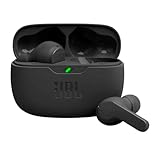
- JBL Deep Bass Sound: Get the most from your mixes with high-quality audio from secure, reliable earbuds with 8mm drivers featuring JBL Deep Bass Sound
- Comfortable fit: The ergonomic, stick-closed design of the JBL Vibe Beam fits so comfortably you may forget you're wearing them. The closed design excludes external sounds, enhancing the bass performance
- Up to 32 (8h + 24h) hours of battery life and speed charging: With 8 hours of battery life in the earbuds and 24 in the case, the JBL Vibe Beam provide all-day audio. When you need more power, you can speed charge an extra two hours in just 10 minutes.
- Hands-free calls with VoiceAware: When you're making hands-free stereo calls on the go, VoiceAware lets you balance how much of your own voice you hear while talking with others
- Water and dust resistant: From the beach to the bike trail, the IP54-certified earbuds and IPX2 charging case are water and dust resistant for all-day experiences
Android: Look under Settings and privacy, commonly in Audio Quality, for Equalizer. Availability and controls vary by device; Spotify may open the phone’s system equalizer, which can affect other apps too.
Windows and Mac: Open Profile picture → Settings → Playback and turn on Equalizer. Spotify says the control is unavailable while streaming through Spotify Connect. In that case, use the receiving speaker, receiver, or playback device’s EQ if it has one. See Spotify’s equalizer overview.
Set audio quality to Very High or Lossless
Higher streaming quality can preserve more source detail; it does not make Spotify louder. Spotify Lossless is available to Premium users in supported markets and devices, at up to 24-bit/44.1 kHz FLAC. Whether the difference is audible depends on the recording, playback chain, hearing, and listening environment. Spotify recommends Wi-Fi and wired headphones or speakers for the smoothest Lossless experience.
Rank #3
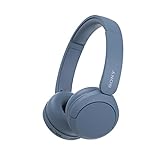
- LONG BATTERY LIFE: With up to 50-hour battery life and quick charging, you’ll have enough power for multi-day road trips and long festival weekends.(USB Type-C Cable included)
- HIGH QUALITY SOUND: Great sound quality customizable to your music preference with EQ Custom on the Sony | Headphones Connect App.
- LIGHT & COMFORTABLE: The lightweight build and swivel earcups gently slip on and off, while the adjustable headband, cushion and soft ear pads give you all-day comfort.
- CRYSTAL CLEAR CALLS: A built-in microphone provides you with hands-free calling. No need to even take your phone from your pocket.
- MULTIPOINT CONNECTION: Quickly switch between two devices at once.
- Open the profile menu and go to Settings and privacy → Media Quality.
- Choose a quality for Wi-Fi, cellular data, or downloads; select Lossless where offered. Very High is a sensible alternative if Lossless is unavailable or data use matters.
- Check the Now Playing screen for the Lossless indicator. Spotify says the setting must be enabled for each device or connection.
Low or Normal quality can save data and storage; High or Very High is a practical choice for most listening. Lossless uses more data and storage and requires the feature to be supported along the playback path. Spotify’s Lossless page lists the format, while its announcement and setup guidance covers availability and device use.
Bluetooth can sound very good, but it is not a lossless connection. Spotify says Bluetooth compresses the signal before transmission, so selecting Lossless while listening over Bluetooth does not deliver a lossless signal to the headphones. A wired connection is the better choice when the aim is to hear the Lossless source. Do not expect Lossless to fix a quiet output or weak speaker.
Windows Exclusive Mode: an advanced fidelity option
Spotify introduced Exclusive Mode for Premium users in the Windows desktop app in March 2026. It is intended for compatible wired audio hardware—such as an external DAC or audio interface—when the goal is to let Spotify take control of the device instead of having the Windows mixer resample or mix the signal. It is not a general loudness boost.
Rank #4
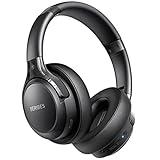
- 65 Hours Playtime: Low power consumption technology applied, BERIBES bluetooth headphones with built-in 500mAh battery can continually play more than 65 hours, standby more than 950 hours after one fully charge. By included 3.5mm audio cable, the wireless headphones over ear can be easily switched to wired mode when powers off. No power shortage problem anymore.
- Optional 6 Music Modes: Adopted most advanced dual 40mm dynamic sound unit and 6 EQ modes, BERIBES updated headphones wireless bluetooth black were born for audiophiles. Simply switch the headphone between balanced sound, extra powerful bass and mid treble enhancement modes. No matter you prefer rock, Jazz, Rhythm & Blues or classic music, BERIBES has always been committed to providing our customers with good sound quality as the focal point of our engineering.
- All Day Comfort: Made by premium materials, 0.38lb BERIBES over the ear headphones wireless bluetooth for work are the most lightweight headphones in the market. Adjustable headband makes it easy to fit all sizes heads without pains. Softer and more comfortable memory protein earmuffs protect your ears in long term using.
- Latest Bluetooth 6.0 and Microphone: Carrying latest Bluetooth 6.0 chip, after booting, 1-3 seconds to quickly pair bluetooth. Beribes bluetooth headphones with microphone has faster and more stable transmitter range up to 33ft. Two smart devices can be connected to Beribes over-ear headphones at the same time, makes you able to pick up a call from your phones when watching movie on your pad without switching.(There are updates for both the old and new Bluetooth versions, but this will not affect the quality of the product or its normal use.)
- Packaging Component: Package include a Foldable Deep Bass Headphone, 3.5MM Audio Cable, Type-c Charging Cable and User Manual.
- Connect a compatible wired audio device that supports a 44.1 kHz sample rate.
- In the Windows Spotify app, open Settings → Playback → Output and select the device.
- Turn on Exclusive Mode. Optionally enable Force Volume if you want Spotify to remain at maximum and control level on the external hardware.
The Output option requires Spotify desktop app version 1.2.84 or later. Spotify documents Exclusive Mode as Windows-only, and says it does not work with Bluetooth, built-in computer speakers, or virtual audio devices such as Zoom audio. Other apps cannot use the selected device while the mode is active. It also excludes music videos, podcasts, preview clips, and Canvas clips, and requires compatible hardware. If audio fails, return to Settings → Playback → Output, turn Exclusive Mode off, and choose System Default. See Spotify’s Exclusive Mode announcement for details.
For a bit-perfect-oriented setup, Spotify recommends disabling processing such as Crossfade, Automix, Normalize Volume, and Equalizer. That is an accuracy-focused choice, not a requirement for enjoyable listening: keep normalization or EQ if you prefer its sound or consistency.
Free tools Windows power users keep installed
One-click scans. No signup required.
Troubleshoot by symptom
| What you notice | What to check |
|---|---|
| Spotify is quieter than other apps | Set Spotify to 100%; test normalization at Off and Loud; check Windows per-app volume or the device mixer; confirm output routing; turn EQ off; compare the desktop app with the web player or another output. Restart and update Spotify if the problem persists. |
| Only Bluetooth is quiet | Raise both source and headset volume; check the headset’s companion app and any hearing-protection limit; forget and re-pair the device; test another Bluetooth device or a wired connection if supported. |
| Volume drops when bass hits | Turn EQ off and remove bass boosts; try Normal or Off instead of Loud; test wired playback and another output. A speaker, headphone, or amplifier may be limiting itself to prevent distortion or damage. |
| Sound is thin or harsh | Check for an unsuitable EQ preset, poor earbud seal, blocked mesh, or spatial/virtual-surround processing. Try a neutral mode and compare at matched loudness with another source. |
| Lossless does not appear | Check Premium eligibility and market availability; enable Lossless under Media Quality on that device or connection; confirm the Now Playing indicator and supported output. Bluetooth re-compresses the signal, and not every track or Connect device exposes the same options. |
If Spotify is the only quiet app, investigate its settings, routing, or client. If every app is quiet on one output, focus on that output’s limits, controls, or settings instead.
Best Value

- REBUILT FOR COMFORT — AirPods 4 have been redesigned for exceptional all-day comfort and greater stability. With a refined contour, shorter stem, and quick-press controls for music or calls.
- PERSONALIZED SPATIAL AUDIO — Personalized Spatial Audio with dynamic head tracking places sound all around you, creating a theater-like listening experience for music, TV shows, movies, games, and more.*
- IMPROVED SOUND AND CALL QUALITY — AirPods 4 feature the Apple-designed H2 chip. Voice Isolation improves the quality of phone calls in loud conditions. Using advanced computational audio, it reduces background noise while isolating and clarifying the sound of your voice for whomever you’re speaking to.*
- MAGICAL EXPERIENCE — Just say “Siri” or “Hey Siri” to play a song, make a call, or check your schedule.* And with Siri Interactions, now you can respond to Siri by simply nodding your head yes or shaking your head no.* Pair AirPods 4 by simply placing them near your device and tapping Connect on your screen.* Easily share a song or show between two sets of AirPods.* An optical in-ear sensor knows to play audio only when you’re wearing AirPods and pauses when you take them off. And you can track down your AirPods and Charging Case with the Find My app.*
- LONG BATTERY LIFE — Get up to 5 hours of listening time on a single charge. And get up to 30 hours of total listening time using the case.*
Check fit, surroundings, and hardware before buying anything
Earbuds: A poor seal can make bass weak and music seem less full. Try another tip size, check insertion, clean blocked speaker meshes, and test each ear separately. Turn off transparency or ambient mode temporarily to compare. Better isolation or active noise cancellation can make detail easier to hear without raising playback volume; ANC does not necessarily increase the music signal itself.
Wired headphones: Some combinations of impedance, sensitivity, and source output need more voltage or current to reach a desired level cleanly. Not every high-impedance headphone needs a separate amplifier. Consider a DAC/headphone amp only if your current wired output is audibly noisy, distorted, or insufficient at a comfortable setting. A DAC will not automatically improve Bluetooth earbuds or a source that already drives your headphones cleanly.
Speakers and cars: An underpowered amplifier or speaker cannot be made louder cleanly by changing Spotify. In a car, compare Bluetooth, USB, or another available connection and check separate media and navigation levels, Bluetooth volume synchronization, speed-compensated volume, phone safety limits, and audio-processing modes.
Recommended Free Tools
Settings by listening goal
| Goal | Starting point | Trade-off |
|---|---|---|
| More consistent playlists | Normalization: Normal | Tracks may not retain their original relative levels. |
| Stronger perceived level in noise | Normalization: Loud, then adjust hardware volume | Less dynamic variation; limiting may engage. |
| Original track-to-track dynamics | Normalization: Off | Volume can vary substantially between tracks. |
| Better personal tonal balance | Small, targeted EQ changes | Boosts can cause distortion or reduce headroom. |
| Highest source fidelity | Lossless where available, preferably wired | Requires supported Premium access and more data/storage; audible gains vary. |
| Windows bit-perfect-oriented playback | Exclusive Mode with compatible wired hardware | Not louder; other apps lose access to the device. |
| Better audibility in background noise | Improve isolation or use well-fitted ANC | Changes comfort and may alter the listening experience. |
Default recipe
For most listeners, start with Spotify at full volume, the output device at a comfortable clean level, normalization on Normal, and a neutral or lightly adjusted EQ. Use Loud when background noise makes consistency more important than dynamics; turn normalization off when you prefer each master’s original level. Choose Very High or Lossless for fidelity if supported, and use wired playback when Lossless transmission matters. If every app is quiet or the sound distorts at the level you need, focus on fit and hardware rather than pushing Spotify settings further.
Quick Recap
Product prices and availability are accurate as of the date/time indicated and are subject to change. Any price and availability information displayed on Amazon at the time of purchase will apply.

