What’s actually slowing this PC down?
Pick the symptom - the matching free tool is one click away.
Some links on this page are affiliate links: if you buy through them we may earn a commission, at no extra cost to you.
Start with the child’s question and something they know: weather is what happens outside today, while climate is the usual pattern of weather in a place over a much longer time. Then explain that Earth’s atmosphere naturally keeps some heat in, and that burning coal, oil and gas adds extra heat-trapping gases. Keep the first explanation short, concrete and hopeful; add evidence, impacts and solutions as the child is ready.
A useful opening is: “Have you heard about climate change and wondered what it is?” Answer what the child actually asks, check what they already believe, and invite the next question rather than delivering a lecture.
What climate change means
Climate change is a change in the usual weather patterns of a place or the planet over a long period. NASA’s K–4 explanation distinguishes the two ideas this way:
Free tools Windows power users keep installed
One-click scans. No signup required.
- Weather: what the atmosphere is doing over minutes, hours or days—such as rain this afternoon, a windy morning or a heat wave this week.
- Climate: the usual temperatures, precipitation and other weather patterns measured over many years.
A cold day does not disprove a warming climate, and one hot day does not prove it. Scientists look for patterns across long records and many places. Natural factors have changed climate throughout Earth’s history. The current change also includes a human contribution: activities that burn coal, oil and gas add carbon dioxide and other heat-trapping gases to the atmosphere.
Popular on Amazon

- [Color LCD Screen Weather Station] Newentor temperature & humidity monitor with a large color LCD display shows essential home weather information at a glance: indoor/outdoor temperature & humidity, daily high/low records, customizable alerts, time/date, alarm clock & snooze, weather forecast, moon phase, and barometric pressure.
- [Two Power Modes & Adjustable Backlight] To enjoy a 24/7 continuous always-on vibrant display, simply connect this home weather station to a wall outlet using the included DC power adapter. When operating on battery power only (batteries not included), the digital thermometer automatically enters an eco-energy-saving mode, where the screen lights up for a quick 15-second glance before dimming. It is the perfect bedside or living room clock designed to fit your power preference.
- [3-channel Home Weather Stations Wireless Indoor Outdoor] Wireless temperature forecast station supports up to 3 remote sensors to monitor inside outside temperature & humidity of multiple locations. Package contains one remote sensor.
- [Wireless Forecast Station] The weather forecast station calculates the weather forecast for the next 12-24 hours, 7 to 10 days calibration ensures an accurate personal forecast for your location.
- [Wireless Weather Station with Atomic Time&Date] Atomic alarm clock weather station can be used not only as a wireless indoor outdoor thermometer but also as an atomic clock with dual alarms.
NASA’s child-facing page was published in 2014 and includes an “about one degree Fahrenheit in 100 years” figure. That number is historical to that resource, not a current global estimate, so do not present it as today’s measurement.
How to describe the greenhouse effect without creating a misconception
Sunlight warms Earth’s surface. The warm surface releases energy back toward space as heat. Gases in the atmosphere absorb and re-emit some of that heat, so not all of it escapes immediately. This natural greenhouse effect keeps Earth warm enough for living things.
The atmosphere is not a glass roof. NASA’s child-facing video puts it memorably: “Earth isn’t surrounded by glass, but it is surrounded by a jacket of gases called the atmosphere.” The NASA greenhouse-effect video and transcript names carbon dioxide, water vapor and methane as greenhouse gases. Explain that adding more of these gases is like making the heat-trapping jacket thicker: more heat stays in the Earth system, raising average temperatures and changing patterns.
Do these 3 things before closing this tab:
1Scan for outdated or missing drivers - takes under a minute2Repair Windows errors before they cause bigger problems3Fix the driver behind crashes, sound loss and screen glitchesAn analogy is useful only if you correct its limits. A blanket or jacket can illustrate heat being retained, but it is not a literal blanket around the planet. Avoid saying that the atmosphere “turns into glass” or that greenhouse gases block all heat from leaving.
A simple explanation for younger children
For a preschooler or young elementary student, use two sentences and a familiar observation:
“Weather is what happens outside today. Climate is the kind of weather a place usually has over a very long time. Some gases in the air hold in heat, and people are adding more of those gases by burning coal, oil and gas.”
Also popular on Amazon
Sale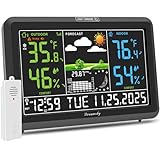 DreamSky Weather Station Indoor Outdoor Thermometer Wireless, Atomic Clock | Digital Large Display with Backlight Dimmer, Barometer, Inside Outside Temperature Humidity Monitor for Home (Plug-in)
- Illuminated Indoor Outdoor Weather Station for Home with Large Colorful Display: The home weather station delivers large big numbers for weather forecast info, indoor outdoor temperature, atomic time, date, year and calendar day, which is super easy to read from afar.
- Indoor outdoor Thermometer Wireless with High/Low Temperature Alert: The digital weather station supports 3 outdoor sensors which helps to monitor temperature and humidity of multiple locations (one sensor included). With the high/low temperature alert function, the weather station clock keeps you informed about the changes of weather thermometer outdoor.
- WWVB Atomic Weather Station with Auto DST: Weather atomic clock with indoor/outdoor temp always keeps precise time and date by receiving the WWVB atomic signal. The self setting digital weather clock will automatically adjust to daylight saving time with auto DST feature, no more resetting twice a year.
- Personal Weather Forecast Station: This weather stations wireless indoor outdoor predicts the next 12-24 hours weather condition with a 7-day calibration through the pressure of your location which provides you a better outing experience.
- 5 Level Adjustable Backlight Brightness: The weather clock indoor outdoor temperature atomic with backlight dimmer function helps you avoid high-intensity light that disturb your sleep and easily check the weather situation during the day.
Ask, “What was the weather like on the way here?” Then ask, “Is that what every day is like where we live?” The contrast lets the child discover the difference between a single event and a long-term pattern.
Keep the first conversation free of global statistics, disaster images and technical vocabulary. If the child wants more, draw a sun, Earth and a few wavy lines representing heat. Label the lines “heat” and the surrounding air “atmosphere.”
Building the idea for elementary-age children
Children who can follow a short cause-and-effect story can handle three connected steps:
- Sunlight warms land and water.
- Earth sends some of that energy back as heat, while atmospheric gases hold some heat in.
- Burning fossil fuels adds carbon dioxide, so the atmosphere traps more heat than it would without those additional emissions.
Use examples they recognize—warmer nights, changes in when plants bloom or snow melts—without claiming that every local event has a single cause. Say, “A changing climate can make some kinds of heat, heavy rain or drought more likely in some places, but scientists study records to determine how much a particular event was influenced.”
For grades K–4, NASA’s What Is Climate Change? offers short definitions and illustrations. It also discusses natural influences and human activities. Read it together, pausing to ask the child to explain each picture in their own words.
Going deeper with older children
Students in later elementary and middle school can examine mechanisms and evidence:
Also popular on Amazon
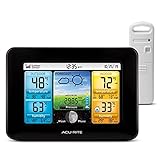
- Simple Setup and Use: Install 2 AA batteries (not included) in the outdoor weather station sensor and easily hang on a post or tree branch using the integrated hanger to begin receiving your weather forecast and hyperlocal conditions
- Real-Time Weather Conditions: This indoor outdoor weather station has an indoor temperature gauge and an outdoor temperature thermometer for indoor and outdoor temperature, humidity, and barometric pressure trends from an outdoor temperature sensor
- Weather Forecast and Forecasting Technology: The outside temperature thermometer wirelessly relays data to provide a hyperlocal, personalized weather forecast 12 hours from your current conditions, so you can plan your la crosse or other sports game!
- Illuminated LCD Color Display: Easy-to-view digital indoor outdoor thermometer display has an adjustable dimmer to make for the perfect addition to your home technology and allows easy placement anywhere in the house, office, or as an RV weather station
- Dynamic Forecast Icons and Moon Phase: With multiple thermometers & weather instruments data, this digital indoor outdoor thermometer display has trend arrows and provides the current moon phase to further impact your weather monitoring capabilities
- Scientists combine thermometer, ocean, ice, satellite and other observations with computer models and physical laws.
- Greenhouse gases include carbon dioxide, methane and water vapor. Human emissions change the amount of long-lived gases, especially carbon dioxide and methane.
- Climate records describe trends and probabilities; a prediction is not the same as an observation.
- Natural variability still produces year-to-year ups and downs within a long-term human-driven warming trend.
Invite the child to ask, “How do scientists know?” Look at a graph together and distinguish the measured data from a model projection. The NASA guide for grades 5–8 is designed for this age range and is available online or as a printable information sheet. NASA Climate Kids adds games, activities, crafts, videos and articles for grades K–4 and 5–8.
A conversation method that works at any age
1. Begin with the child’s words
Ask, “What did you hear?” or “What do you think climate change means?” Correct only the misunderstanding that matters to the question. A child asking about a hot day needs a weather–climate distinction, not a full lecture on emissions.
2. Connect to a local observation
Discuss rain, snow, heat, plants or seasonal changes where you live. Local examples make an abstract time scale tangible, but label them accurately: a short family record shows weather, not by itself a climate trend.
Quick wins for a faster PC:
Scan for outdated or missing drivers - takes under a minuteDriver Scan →Clear out junk files and repair common Windows errorsFree Scan →3. Give one mechanism
Explain sunlight, outgoing heat and atmospheric gases before adding more detail. Children retain a causal story better than a list of frightening consequences.
4. Check understanding
Ask the child to teach the idea back: “Which one describes today—weather or climate?” or “What does the atmosphere do with some of Earth’s heat?” Their answer shows whether to simplify, add a drawing or move on.
5. End with a realistic next step
Offer a choice such as observing clouds, reading a child-facing resource, measuring temperature or helping reduce wasted energy at home. Make clear that no single child is responsible for solving a global problem.
Also popular on Amazon

- Comprehensive Weather Information: One of the best weather stations, receive over 55 data points that allow you to monitor historical data, the heat index, dew point, feels like temperature, pressure trends with trend arrow, and more
- Real-Time Weather Conditions: Look no further for the perfect indoor and outdoor weather station! Wirelessly receive readings for indoor/outdoor temperature and humidity, wind speed/direction, barometric pressure, and rainfall directly to your home weather station
- Easiest Setup on the Market: Just install batteries, attach the wireless outdoor sensor to a pole or post using the included mounting bracket, and you’re ready to be the neighborhood weather expert
- Weather Clock: The indoor weather station display is a large, color LCD Display with the current time, date, and an adjustable dimmer, making it convenient to read and easily view indoor and outdoor data, time, and conditions
- Weather Forecast: The outdoor weather station collects elevation data and combines it with barometric pressure data from the indoor weather station to provide a personalized weather forecast 12 hours from your current conditions
How to explain causes without false balance
It is accurate to say that climate has changed naturally because of factors such as volcanic activity, changes in sunlight and other Earth-system processes. It is also accurate to explain that the recent warming trend includes human emissions from burning fossil fuels. Presenting these statements as equal explanations for current warming can mislead a child. Say instead: “Earth’s climate has natural ups and downs, and people are now adding gases that increase heat trapping.”
PC Slower Than It Used to Be?
A free scan shows the junk files, broken settings and background clutter dragging Windows down - then fixes them in one click.Free scan · Windows 10 & 11Crashes, No Sound, or Screen Glitches?
Random freezes, missing sound and display glitches usually trace back to one bad driver. Find and replace yours safely.Free scan · under a minuteUse “coal, oil and gas” before introducing “fossil fuels.” Explain that carbon dioxide is invisible and not poisonous at ordinary outdoor concentrations, but increasing its amount changes the planet’s energy balance. Avoid implying that breathing or one child’s use of a light switch drives climate change on its own; emissions come from systems of energy, transport, buildings, industry and land use.
Discussing impacts without frightening children
Climate impacts differ by location. Some communities experience more extreme heat, heavier rainfall, drought, wildfire risk, coastal flooding or changes in ecosystems; the mix and severity are not identical everywhere. Use conditional, specific language: “Scientists expect higher heat risk in many places,” rather than “Everywhere will become unlivable.”
Show both vulnerability and adaptation. Communities can improve heat shelters, restore wetlands, prepare for floods, change crops and strengthen early-warning systems. These examples demonstrate that people can reduce harm without pretending that all risks disappear.
Do not use graphic disaster footage as a teaching shortcut. If a child sees upsetting coverage, ask what they noticed and what they are worried about. Acknowledge that climate impacts are real, answer honestly, and limit repeated exposure to alarming media.
Turning concern into constructive action
Actions should be proportional to the child’s age and family circumstances:
Also popular on Amazon
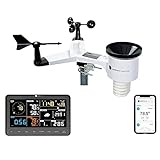
- COMPLETE WEATHER STATION: (1) Osprey Sensor Array with Rain Cup, and (1) Brilliant, Easy-to-Read LCD Color Display
- AUTHENTIC HYPER-LOCAL DATA: Monitor your actual home and backyard weather conditions with our wireless and Wi-Fi-enabled sensor array measuring wind speed/direction, temperature, humidity, rainfall, UV intensity, and solar radiation
- SMART HOME READY: Set up alerts, access your data remotely, and program your home based on weather conditions using IFTT, Google Home, Alexa, and more
- ENHANCED WIFI: Enables your station to transmit its data wirelessly to the world's largest personal weather station network (optional setting)
- JOIN THE COMMUNITY: Connect to Ambient Weather Network to customize your dashboard tiles, share hyperlocal weather conditions via social feeds and create your own forecasts (coming soon)
- Observe: Keep a weather diary, look for seasonal changes and compare observations with official records.
- Learn: Read a reliable child-facing explanation, visit a science museum or watch a short educational video together.
- Participate: Join a school garden, tree-care project, community preparedness exercise or conservation activity when an adult can provide supervision.
- Reduce waste: Turn off unused lights, avoid wasting food and reuse materials, while explaining that larger policy and infrastructure choices also matter.
- Use a voice: Older children can ask a school or local organization how it plans for heat, flooding or energy use.
Frame these as ways to care for a place and practice problem-solving, not as a test the child can pass or fail.
Independent reader supportYour contribution helps us test, update, and keep practical guides available for everyone.Hands-on activities that make climate ideas visible
Weather diary and home weather station
Record temperature, precipitation, cloud cover and wind at the same time each day. A simple notebook is enough. Families who want a sensor can search for a digital weather station, but no purchase is required. Compare the diary with a longer official record and explain that a few weeks or months describe local weather, not climate by themselves.
NOAA’s free Discover Your Changing World with NOAA activity book includes ten activities, including weather-versus-climate lessons, a home weather station and a temperature-sensor activity. The page does not state a publication year, so describe it simply as a free resource.
Model the greenhouse effect
Use two similar containers, thermometers and a sunny location, following the safety directions in the activity instructions. One container can represent ordinary air and the other a covered or otherwise modified setup. Emphasize that the demonstration is a model: Earth is not a sealed glass box, and the atmosphere’s heat-trapping process involves gases and radiation.
Graph a long record
Older students can plot monthly temperatures or precipitation from a trustworthy public dataset. Have them mark missing data, calculate an average and discuss why a trend line does not make every year warmer than the previous one. Ask which conclusion the graph supports and which it cannot support.
Choosing a resource by age and learning style
| Resource | Best fit | What it offers | Access and cautions |
|---|---|---|---|
| NASA: What Is Climate Change? (Grades K–4) | Young elementary readers | Short definitions of weather, climate, warming, causes and actions | Free online; its temperature figure is from a 2014 page and should not be treated as a current estimate |
| NASA: A Guide to Climate Change for Kids | Grades 5–8 | Printable or online explanation with more scientific detail | Free; read together if unfamiliar terms raise questions |
| NASA Climate Kids | Grades K–4 and 5–8 | Games, activities, crafts, videos and articles | Free; choose items that match reading level and attention span |
| NOAA: Discover Your Changing World | Families and classrooms | Ten activities, including a weather station and greenhouse-effect model | Free; follow each activity’s safety and measurement guidance |
| NOAA Climate & Energy Teaching Toolbox | Adults, teachers and adaptable lessons | Brief, accurate, relatable and hopeful communication guidance plus teaching materials | Resource collection includes materials from different partners and vintages; check linked pages for availability |
| NOAA classroom bundles | Teachers and older students | Grade-level resources, real-data activities, climate stripes and a coastal-resilience decision game | Free online collection; select activities appropriate to the class |
What to say when a child is worried
Listen first: “What part worries you most?” Name the feeling without amplifying it: “It makes sense to feel concerned when you hear about floods or fires.” Then answer the specific question with the amount of detail the child can use. Avoid promises such as “Everything will be fine,” and do not suggest that recycling or another personal habit will solve the entire problem.
Offer a bounded plan: choose one reliable resource, one observation activity and one helpful action. Return to ordinary routines—play, sleep, school and time outdoors. The teaching guidance from NOAA’s toolbox supports information that is brief, accurate, understandable, relatable and hopeful. It is educational guidance, not a clinical mental-health protocol. If persistent fear interferes with sleep, school or daily life, a parent or caregiver should seek advice from a qualified health professional.
Recommended Free Tools
Common mistakes and better alternatives
- Mistake: treating a single weather event as proof. Better: explain that climate conclusions require long-term patterns and many observations.
- Mistake: saying the greenhouse effect is bad. Better: distinguish the natural effect that makes Earth habitable from the extra heat trapping caused by added gases.
- Mistake: using only catastrophe. Better: pair risks with preparation, adaptation and solutions.
- Mistake: giving a preschooler a middle-school lecture. Better: start with one definition and expand only when the child asks.
- Mistake: implying natural change cancels human influence. Better: explain both natural variability and the added greenhouse gases from human activities.
- Mistake: assigning global responsibility to one child. Better: offer a small action and explain that governments, businesses and communities also make major decisions.
- Mistake: presenting an old number as current. Better: date every statistic and check a current assessment before using it.
A ready-to-use script
“Weather is what happens outside today. Climate is the usual pattern over many years. The sun warms Earth, and gases in the atmosphere keep some heat from escaping, which is necessary for life. When people burn coal, oil and gas, they add more heat-trapping gases, so the planet warms and weather patterns can change. Scientists measure these patterns over a long time. We can learn what is happening, prepare for risks and help with solutions—and you do not have to solve it by yourself.”






Say something about this film