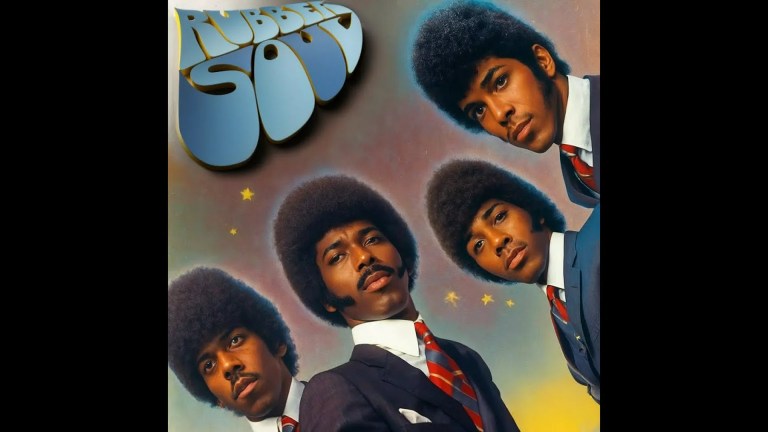
Randy Travis’s “Where That Came From,” released May 3, 2024, was his first new recording in more than a decade after a 2013 stroke severely affected his speech and singing. The song used archival Travis vocals, a new vocal performance by James Dupré, and AI-assisted reconstruction, with human songwriters, musicians, producers, engineers, and Travis’s team shaping the final track.
Randy Travis did not use AI to write an entire song or to generate a performance from nothing. On May 3, 2024, “Where That Came From” became his first new recording in more than a decade after a 2013 stroke severely affected his speech and singing. The track combined Travis’s archival vocals, a new vocal performance by James Dupré, AI-assisted vocal reconstruction, and months of human production and review.
What happened to Randy Travis’s voice?
Travis suffered a major medical crisis in 2013 that included viral cardiomyopathy and a stroke. The stroke left him with aphasia and lasting limitations involving speech and singing. CBS News described the event as having taken away his singing voice. Mary Travis later told the U.S. House Judiciary Committee that the family never expected to hear Randy’s voice in a new recording again.
That history explains why “Where That Came From” was presented as more than a technological experiment. Warner Music Nashville approached Randy and Mary Travis about using AI to recreate his vocal identity. The stated goal was to explore an artist-approved use of the technology: restoring a creative ability that illness had taken away while keeping Travis and his team involved in the result.
#1 Best Overall
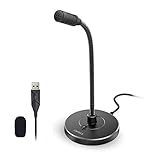
- 【Crystal Clear Audio Quality】Our Omnidirectional pattern condenser microphone accurately captures your voice, making it perfect for dictation, online classrooms, and more.
- 【Active Noise-Cancelling】Come in CMTECK CCS2.0 SMART CHIP with Omnidirectional Polar Pattern, which can effectively block the background noise. The pop filter prevents plosives from overloading the microphone, ensuring only your voice is heard.7
- 【Convenient Mute Button with LED Indicator】You can quickly mute/un-mute the microphone with the Mute Button and the built-in LED light lets you know the working status(Greenlight: Connected; Red light: Mute mode).
- 【Easy to use】 No drivers needed, just plug and record without external power supply, directly connect the microphone to a USB compatible device, well compatible with Windows(7, 8 and 10), Mac OS and PS4 (NOT compatible with Raspberry Pi/Linux/Android)
- 【Mini size with Adjustable Gooseneck】Adopted flexible and adjustable gooseneck metal pipe, easily adjust position 360 degrees to suit user comfort. The compact and stable base maximizes your desktop space.
How “Where That Came From” was made
The final recording was a human-and-AI production rather than a wholly machine-made song. The available reporting describes the process in several stages:
| Part of the recording | What the team did |
|---|---|
| Songwriting | Scotty Emerick and John Scott Sherrill wrote “Where That Came From.” AI did not write the song. |
| Archival source material | The team used existing Travis vocal recordings to build vocal models. Associated Press reporting referred to one model using 12 vocal stems and another using 42 stems spanning his career from 1985 to 2013. Mary Travis described the archive to Congress as approximately 42 to 45 Travis songs. |
| New performance | James Dupré supplied the vocal bed—the human performance over which the reconstructed Travis vocal identity was placed. |
| AI-assisted reconstruction | The system helped render Travis’s recognizable vocal character over Dupré’s performance using material from Travis’s earlier recordings. |
| Production and editing | Longtime Travis producer Kyle Lehning spent months refining the recording. Jerry Douglas, Casey Wood, Andrew Mendelson, and other musicians and engineers also contributed. |
| Artist and team review | The first generated result was not treated as final. Travis and his team were involved as the production was adjusted to make the recording sound like an authorized Randy Travis performance. |
The different archival figures—12 vocal stems, 42 stems, or approximately 42 to 45 songs—describe the process at different levels of detail. They are not evidence that the entire track was generated from one undisclosed recording. They indicate that the team drew on a substantial body of Travis’s pre-stroke work.
Did Randy Travis sing a new lead vocal?
Not in the conventional sense. The supported description is that Travis’s vocal identity was reconstructed from archival material and applied over a new human vocal performance. It would therefore be inaccurate to say that Randy Travis went into the studio and recorded a newly sung lead vocal for the track.
It is equally inaccurate to describe “Where That Came From” as an AI song with no human performance. Dupré provided the vocal bed, human musicians supplied the instrumentation, Emerick and Sherrill wrote the lyrics and melody, and Lehning and the production team made extensive creative decisions. AI was used for the vocal-reconstruction portion of the recording.
Quick wins for a faster PC:
Scan for outdated or missing drivers - takes under a minuteDriver Scan →Clear out junk files and repair common Windows errorsFree Scan →Fix the driver behind crashes, sound loss and screen glitchesFind Drivers →Rank #2

- [Natural Audio Clarity] Operated with frequency response of 50Hz-16KHz, the podcasting XLR mic delivers balanced audio range, likely to resonate with your audience. Directional cardioid dynamic microphone corded will not exaggerate your voice, while rejects unwanted off-axis noise for vocal originality and intelligibility during your PS5 gaming streaming video recording. (Tips: Keep the top of end-addressing XLR dynamic microphone AM8 facing audio source, and suggested recording range is 2 to 6 in.)
- [XLR Connection Upgrade-Ability] To use XLR connection, connect the podcast microphone to an audio interface (or mixer) using a separate XLR cable (NOT Included) . Well-connected and smooth operation improves audio flexibility to make you explore various types of music recording singing. The streaming mic isolates the pristine and accurate sound from ambient noise with greater no interference and fidelity. (RGB and function key on mic are INACTIVE when using XLR connection.)
- [USB Connection with Handy Mute] Skip the hassle of setting something up and plug the cable to play the dynamic USB microphone directly, which suits for beginner creators or daily podcast. You can quickly control the gamer mic with tap-to-mute that is independent of computer/Macbook programs to keep privacy when live streaming. LED mute reminder helps you get rid of forgetting to cancel the mute. (RGB and function key are only available for USB connection, but NOT for XLR connection)
- [Soothing Controllable RGB] RGB ring on the desktop gaming microphone for PC, with 3 modes and more than 10 light colors collection, matches your PC gears accessories for gaming synergy even in dim room. You can control the RGB key button of the dynamic microphone USB directly for game color scheme gaming or live streaming. Configured memory function, the streaming microphone RGB no need to repeated selections after turnning off and brings itself alive when power on. (Only available for USB connection)
- [More Function Keys] Computer microphone with headphones jack upgrades your rhythm game experience and gets feedback whether the real-time voice your audience hear as expected. Get the desired level via monitoring volume control when gaming recording. Smooth mic gain knob on the PC microphone gaming has some resistance to the point, easily for audio attenuation or boost presence to less post-production audio. (Only available for USB connection)
The exact commercial AI platform or public product used in the process has not been consistently identified by the authoritative accounts reviewed. There is no reliable basis for naming a particular software package, describing a specific model architecture, or claiming that the source recordings were licensed through a particular training arrangement.
Why the recording mattered
“Where That Came From” became a prominent example of an artist-sanctioned voice-reconstruction project. Warner Music Group described the recording as a possible example of “AI for good,” while acknowledging that artificial intelligence creates difficult questions about artist rights, copyright, and consent.
The consent question is the central distinction. An unauthorized voice clone can make a living or deceased artist appear to perform words, endorsements, or songs they never approved. Mary Travis told Congress that an unauthorized recreation of Randy’s voice felt like identity theft. She argued that artists should have control over whether their voices are used, along with compensation, attribution, and clear provenance for authorized works.
The Travis project does not resolve every legal or ethical question surrounding synthetic voices. It does, however, show why permission and human oversight matter. The family and label presented this recording as a collaboration involving Travis, his representatives, archival material, a known surrogate performer, professional producers, and repeated review—not as an anonymous imitation released without the artist’s approval.
Rank #3

- [Convenient Setup] Plug and play recording USB microphone for PC, with 5.9-Foot USB cable included for computer PC laptop, is connected directly to USB-A port for recording music, computer singing or podcast. The office condenser microphone for computer is easy to use and install. (NOT compatible with Xbox and Phones)
- [Durable Metal Design] Solid sturdy metal construction design, the computer microphone for Zoom meetings with stable tripod stand is convenient when you are doing voice overs or livestreams on YouTube. Durable material extends the service life of the voice-over microphone.
- [Mic Volume Knob] Gaming condenser USB mic compatible for PS4 with additional volume knob itself has a louder or quieter adjustment and is more sensitive. Your voice would be heard well enough through the zoom microphone USB when gaming, skyping or voice recording. Also, you can adjust your volume to zero and protect your privacy.
- [Widely Use] USB-powered design, the condenser microphone for recording no need the 48v Phantom power supply, works well with Cortana, Discord, voice chat and voice recognition. The podcast microphone for Mac, with USB-B to USB-A/C cable, is compatible with desktop, laptop or PS4/PS5, which meets most of your daily recording needs.
- [Clear Output Voice] Cardioid condenser microphone for PC captures your voice properly, producing clear smooth and crisp sound. Great computer recording mic for gamers/streamers/youtubers focus on the main source and reduces background noise. The streaming microphone does the job well for broadcast ,OBS and teamspeak.
The public account also emphasizes the emotional importance of the result. Mary Travis described hearing Randy’s voice again as deeply meaningful, and the family said Randy was involved in the studio process. That involvement should not be confused with a newly recorded lead vocal, but it is an important part of why the release was framed as a return rather than a simple deepfake.
Why Randy Travis had enough archival material for the project
Travis’s pre-stroke catalog provided a substantial foundation. His 1986 debut album, Storms of Life, helped establish the new-traditionalist country movement and remains the clearest starting point for understanding the voice and style the team was trying to preserve. Travis went on to become one of country music’s most commercially successful artists, with the official biography crediting him with more than 25 million lifetime sales, seven Grammy Awards, induction into the Grand Ole Opry, and membership in the Country Music Hall of Fame.
His 2019 memoir, Forever and Ever, Amen: A Memoir of Music, Faith and Braving the Storms of Life, co-written with Ken Abraham, is a useful source for broader career and recovery context. It should not be treated as evidence about the later AI production unless a specific passage is independently checked.
What the original headline gets right—and what needs updating
The phrase “first song since near-fatal stroke” refers to a specific 2024 milestone. “Where That Came From” was released on May 3, 2024, more than ten years after the 2013 stroke. In that historical sense, the headline is accurate.
It should not be used to suggest that the song remains Travis’s newest release. As of the August 12, 2026 research check, Apple Music listed “Fish On,” released July 10, 2026, as his latest release. The official Randy Travis site also documented “Horses In Heaven” in January 2025 and other post-2024 releases, including “Where My Heart Is (From The Vault).” Release catalogs can change, so the current Randy Travis official music pages should be checked for updates before publication.
Rank #4

- Studio-Quality Sound for Clear Podcast Recording – The K66 USB podcast microphone delivers studio-quality, broadcast-level audio using a high-performance condenser capsule and cardioid pickup pattern that focuses on your voice while reducing unwanted background noise. Designed as a reliable microphone for PC, it features a wide 40Hz–18kHz frequency response and a 46kHz sampling rate to reproduce rich lows, smooth mids, and clear highs for natural, detailed vocals. With –45dB ±3dB sensitivity, it captures balanced sound without distortion during expressive speaking. Ideal for podcasting, voice-over, online classes, meetings, and professional content creation.
- Intelligent Noise Reduction Mode for Cleaner Podcast Audio – This podcast microphone features an advanced Noise Reduction Mode designed for clearer, more focused voice recording in real-world environments. Press and hold the mute button to enable noise reduction (blue indicator). In this mode, the microphone helps reduce keyboard clicks, PC fan noise, air conditioner hum, and background chatter. Default Mode maintains a warm, natural vocal tone for quiet spaces. Designed as a reliable microphone for PC, it allows creators to identify the active mode instantly and adapt as needed, ensuring clear audio for podcasting, gaming, streaming, online classes, meetings, and recording.
- True Plug-and-Play USB Microphone with Wide Device Compatibility – Engineered for effortless plug-and-play use, the K66 USB microphone requires no drivers, apps, or software installation. Simply connect and start recording on Windows PC, Mac, laptops, PS4, PS5, and tablets. Included USB-C and Lightning adapters ensure seamless compatibility with iPhone, iPad, and modern USB-C phones and devices, making it easy to switch between desktop and mobile recording. Ideal for creators working across multiple platforms, this microphone delivers consistent, high-quality audio for YouTube, TikTok, Twitch, Zoom, Discord, OBS Studio, Streamlabs, podcasting, livestreaming, and professional voice recording.
- Real-Time Zero-Latency Monitoring with Adjustable Volume Control – This podcast microphone features real-time, zero-latency monitoring through a built-in 3.5mm headphone jack, allowing you to hear exactly what’s being recorded without delay. Designed as a reliable microphone for PC, it includes a dedicated monitoring volume control that lets you adjust headphone listening levels independently for accurate and comfortable audio monitoring. Real-time feedback helps identify distortion, background noise, or uneven volume before it affects your final recording, making this podcast microphone ideal for podcasting, streaming, online teaching, voice-over work, and professional content creation.
- Precision Audio Adjustment Knobs for Full Sound Control – This podcast microphone gives creators hands-on control with dedicated knobs for microphone volume, monitoring volume, and echo adjustment. Fine-tune mic gain to maintain clear, balanced vocal output, adjust headphone monitoring levels independently for comfortable listening, and add or reduce echo to enhance depth and presence. Designed as a reliable PC microphone, these intuitive physical controls allow fast, on-the-fly adjustments without software, helping identify distortion, background noise, or level inconsistencies instantly. Ideal for podcasting, streaming, ASMR, voice-overs, singing, and professional multi-platform recording.
Travis’s team also announced an album project involving previously unreleased original recordings in 2026. The strongest sources reviewed did not establish a final album title or release date, so those details should not be stated as settled facts without a fresh official announcement.
Independent reader supportYour contribution helps us test, update, and keep practical guides available for everyone.The larger lesson about AI voices
Voice reconstruction can mean very different things depending on who authorizes it and how the result is made. In Travis’s case, the technology was used to help restore the vocal identity of an artist whose illness had made conventional singing difficult. The recording still depended on songwriting, musicianship, a surrogate vocal performance, engineering, production judgment, archival selection, and artist approval.
That is a substantially different model from cloning a singer without permission and releasing a fabricated performance under that singer’s name. For listeners, useful questions include:
Recommended Free Tools
- Did the artist or rights holder authorize the voice use?
- Is the vocal source or reconstruction process disclosed?
- Who wrote and performed the underlying song?
- Was a human performer used as the basis for the new phrasing and timing?
- Does the release clearly distinguish archival material from newly generated or reconstructed audio?
“Where That Came From” matters because it makes those questions visible. It is both a country-music comeback story and an early, widely discussed example of an authorized synthetic-voice production.
Best Value

- [USB Output] Enables simple setup. USB studio recording microphone kit provides a direct convenient plug-and-play connection to pc and laptop without any additional hardware or drivers for recording vocals, podcasts and Skype. Studio microphone for recording vocals is never been easier to get high-quality sound for your voice and computer-based audio recordings. (Incompatible with Xbox)
- [Excellent Sound Quality] With rugged construction for durable performance, the vocal recording microphone, USB condenser mic for PC,offers a wide frequency response and handles high SPLs with ease. Ideal for project/home-studio applications. The cardioid condenser capsule captures crystal-clear audio from the front and avoid ambient noise when communicating/creating/recording. Comes ready to go with a desktop mic boom arm stand and 8.2ft USB cable, you're guaranteed to get great-sounding results.
- [Durable Arm Set] The podcast microphone bundle with versatile and sturdy broadcast suspension boom scissor arm with 180° up and down rotation, 135° forward and backward extension for optimal adjustment, for capturing your voice in podcast or voiceover. The double pop filter attached on the music recording microphone provides two layers of dissipation, removes the rush of air, minimize the popping sounds or cancel noise that can compromise your recording, great for studio as well as home use.
- [Easy to Attach] The streaming microphone for PC includes adjustable boom studio scissor arm stand that features a heavy-duty combo mount consisting of a sturdy C-clamp and a detachable desktop mount. With 13" fixed horizontal arm and offers a 30" reach, the low-profile, table-hugging design of audio recording microphone allows on-air talent to perform without facial obstruction to record in podcasting or make dubbing sounds for videos, use voice chat in Discord or online conference on Zoom or Skype.
- [The Accessory Package Includes] The studio microphone music recording comes with practical accessories for you to use in most of recording. The scissor arm stand is made out of all steel construction, sturdy and durable, a studio-grade shock mount, a double pop filter, premium 8.2' USB-B to USB-A/C cable, a podcast PC gaming microphone, a user manual and friendly Technical Support.
Sources and attribution
The account above draws on Warner Music Group and Warner Records Nashville material, Associated Press and CBS News reporting, Mary Travis’s testimony and witness statement in the U.S. House Judiciary hearing record, the official Randy Travis biography and release announcements, and current artist catalogs from Apple Music and Amazon Music. The release-status details are time-sensitive and should be rechecked against the official Randy Travis site and current streaming listings before publication.
Frequently Asked Questions
Did AI write Randy Travis’s song?
No. “Where That Came From” was not an entirely AI-generated song. Scotty Emerick and John Scott Sherrill wrote it, James Dupré supplied the vocal bed, and human musicians, producers, and engineers created and refined the recording. AI was used to reconstruct Travis’s vocal identity from archival material.
Did Randy Travis actually sing the new recording?
The available reporting does not support the claim that Travis recorded a new conventional lead vocal for the track. His vocal identity was reconstructed from earlier recordings and placed over a new performance by James Dupré. Travis and his team were involved in reviewing and shaping the result.
Crashes, No Sound, or Screen Glitches?
Random freezes, missing sound and display glitches usually trace back to one bad driver. Find and replace yours safely.Free scan · under a minutePC Slower Than It Used to Be?
A free scan shows the junk files, broken settings and background clutter dragging Windows down - then fixes them in one click.Free scan · Windows 10 & 11How much of Randy Travis’s old music was used?
Reports describe different measurements of the source archive. The Associated Press referred to models built from 12 vocal stems and 42 stems spanning 1985 to 2013, while Mary Travis described approximately 42 to 45 songs in testimony. These figures reflect different ways of describing the archival material.
Is “Where That Came From” Randy Travis’s latest song?
No. “Where That Came From” was the first new recording in more than a decade after Travis’s 2013 stroke, but it is not his latest release in the current catalog. As of August 12, 2026, Apple Music listed “Fish On,” released July 10, 2026, as his latest release.
What AI platform did Randy Travis use?
The authoritative accounts reviewed describe AI-assisted vocal models and reconstruction but do not consistently identify a public commercial platform name. It is safer not to attribute the recording to a specific AI product without an independently verified source.
The Bottom Line
Bottom line: “Where That Came From” used AI to reconstruct Randy Travis’s vocal identity from archival recordings, but it was not written or performed entirely by a machine. James Dupré, human musicians, songwriters, producers, engineers, and Travis’s own team all played essential roles—and the project was presented as authorized by Travis and his representatives.
What’s actually slowing this PC down?
Pick the symptom - the matching free tool is one click away.
Quick Recap
Product prices and availability are accurate as of the date/time indicated and are subject to change. Any price and availability information displayed on Amazon at the time of purchase will apply.