Akira Toriyama’s legacy is larger than the size of Dragon Ball. He was the manga creator, illustrator, and character designer whose expressive cartooning, visual economy, comic timing, and playful designs moved naturally from comedy manga to global adventure, animation, video games, toys, and fan culture.
Toriyama died on March 1, 2024, at age 68, from an acute subdural hematoma; the news was publicly announced on March 8, 2024. The most fitting way to honor him is to remember both sides of his career: the intimate craft visible in Dr. Slump, his short manga, and his game designs, and the enormous cultural reach of Dragon Ball.


The artist before the phenomenon
Before Goku became one of the most recognizable characters in the world, Toriyama had already developed a distinctive comic language. His first major success was Dr. Slump, a comedy manga centered on the android girl Arale Norimaki and the eccentric residents of Penguin Village.
Dr. Slump established qualities that would remain visible throughout Toriyama’s career: elastic facial expressions, energetic body language, machines and creatures with comic personality, and background details that reward a second look. A gag could interrupt the expected rhythm of a scene, or a supposedly important moment could collapse into absurdity. The humor was not separate from the drawing. It was built into the characters, settings, props, and timing.
Crashes, No Sound, or Screen Glitches?
Random freezes, missing sound and display glitches usually trace back to one bad driver. Find and replace yours safely.Free scan · under a minutePC Slower Than It Used to Be?
A free scan shows the junk files, broken settings and background clutter dragging Windows down - then fixes them in one click.Free scan · Windows 10 & 11#1 Best Overall
That combination of visual invention and comic speed made Toriyama widely known before Dragon Ball. It also showed that his appeal did not depend on epic scale. He could make a small village feel like a complete universe because every inhabitant, vehicle, and visual aside seemed capable of generating another story.
How Dragon Ball changed the scale of his legacy
Dragon Ball began serialization in Weekly Shonen Jump on November 20, 1984. The official anniversary retrospective describes its serialization as lasting approximately ten and a half years. What began as a globe-spanning adventure and treasure hunt, inspired in part by the broad adventure structure associated with Journey to the West, gradually expanded into martial-arts tournaments, increasingly dangerous battles, alien mythology, time travel, family drama, and apocalyptic stakes.
That evolution is important because Dragon Ball was never only one kind of story. Toriyama could move from a slapstick exchange to a sharply designed action pose and then to a sincere emotional beat without making the changes feel like violations of the story’s world. The series could be silly without becoming weightless, and dramatic without losing its sense of play.
Its influence also came from the manga itself, not only from the anime adaptations that later carried the characters to enormous international audiences. Toriyama’s panels made action easy to follow. Silhouettes were readable, movement was communicated through economical lines and composition, and characters remained visually distinct even when a page became crowded with speed, explosions, machines, or competing fighters.
Recommended Free Tools
The original manga created a visual grammar that traveled well across languages and formats. Readers did not need lengthy explanations to understand who was reacting, where a character was moving, or why a pose was funny or powerful. That clarity helped Dragon Ball move from manga into animation, video games, toys, merchandise, and fan communities around the world.
Rank #2
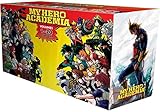
- MHA Fandom: Midoriya inherits the superpower of the world’s greatest hero, but greatness won’t come easy.
- Includes: The first 20 volumes of the bestselling My Hero Academia manga.
- Format: Softcover, 3840 pages.
The craft inside the simplicity
Toriyama’s drawings can look deceptively simple. Their apparent economy is part of their sophistication: a few shapes can establish a character, a gesture can communicate an emotion, and a machine can seem both fantastical and functional. The following observations describe qualities visible in his published work rather than an undocumented private method.
- Clarity before clutter: action poses and character silhouettes are generally easy to parse, even during rapid movement.
- Humor inside the design: vehicles, monsters, costumes, weapons, and buildings often have comic personality instead of serving as neutral scenery.
- Mechanical imagination: his vehicles and machines frequently look assembled, usable, and lived in, even when their technology is impossible.
- Emotional readability: faces and body language communicate quickly, helping the work cross cultural and linguistic boundaries.
- Tonal elasticity: cute, absurd, dangerous, and heroic elements can coexist in one visual world without requiring separate styles.
This is why Toriyama’s work could be imitated superficially but not easily reproduced in full. The memorable features were not just spiky hair, exaggerated muscles, or unusual creatures. They were the relationships among shape, movement, humor, and emotion. His characters could be instantly recognizable without becoming rigid icons.
More than Goku
Reducing Toriyama’s career to Dragon Ball misses the breadth of his contribution. He designed characters for major video-game properties including Dragon Quest, Chrono Trigger, Tobal No. 1, and Blue Dragon. In games, where a character may need to be understood from a small image, a moving sprite, a battle screen, or a box illustration, his instinct for strong silhouettes and expressive details was especially valuable.
His non-Dragon Ball manga likewise shows a creator interested in compact worlds and unusual tonal combinations. Works such as COWA!, Kajika, Sand Land, Neko Majin, Toccio the Angel, and Jaco the Galactic Patrolman reveal the same ability to make strange settings inviting rather than forbidding. They also show how naturally he could build a world around a memorable creature, an odd vehicle, or a hero whose design communicated personality before the plot explained it.
Readers who want to explore Toriyama beyond the main Dragon Ball saga can look for Akira Toriyama’s Manga Theater, a career-spanning collection of his short stories. VIZ describes the collection as covering the first few decades of his career and presenting a history of his work as a manga writer and illustrator. It is a particularly useful way to encounter the humor, pacing, and visual experimentation that can disappear when his legacy is represented only by Goku and the franchise’s largest battles.
For readers who prefer to return to the source manga, VIZ identifies the Dragon Ball Complete Box Set as a 16-volume physical collection that includes a poster and collector’s booklet. The Dragon Ball Z Complete Box Set is identified as a 26-volume collection, with both story and art attributed to Toriyama. These collections offer a reminder that the franchise’s visual foundation exists on the page, where panel rhythm and composition can be appreciated independently of any adaptation.
Dragon Ball DAIMA and Toriyama’s late-career involvement
Dragon Ball DAIMA is significant in a different way. The official Dragon Ball site credited Toriyama with the project’s original concept, story, and character designs. It later documented new character and setting illustrations created by him.
Free tools Windows power users keep installed
One-click scans. No signup required.
Rank #3

- Comes with secure packaging
- Easy to read text
- This product will be an excellent pick for you
Those credits show that Toriyama remained creatively involved in developing new material late in his life. They do not mean that he completed every aspect of production or personally made every later franchise decision. The official staff listings distinguish his contributions from the work of the director, series director, animation character designer, series composition staff, and other production personnel.
That distinction matters when honoring a creator. A large production is collaborative, even when it grows from one person’s characters and ideas. Giving Toriyama credit for the elements he created makes his contribution clearer; assigning him every decision made by later staff makes it less accurate.
Remembering Toriyama with facts rather than speculation
Akira Toriyama died on March 1, 2024, at age 68, from an acute subdural hematoma. The news was publicly announced on March 8, 2024. The official Shueisha notice acknowledged the suddenness of the loss and the influence of Toriyama’s characters and design sensibility on other manga artists and creators.
A respectful account does not need to speculate about his private life, family, medical history beyond the verified announcement, funeral, personal beliefs, or supposed final wishes. The most meaningful tribute is to describe what can be seen in the work: the precision of the drawing, the generosity of the humor, and the unusual ability to make a fantastical world feel immediately accessible.
What’s actually slowing this PC down?
Pick the symptom - the matching free tool is one click away.
It is also more accurate to describe Toriyama as one of the most influential bridges between Japanese comics, animation, video games, and international popular culture than to claim that he invented anime or single-handedly created modern shonen manga. His work entered a much larger creative history, but it became one of the clearest and most powerful routes through which audiences encountered that history.
A legacy that continues without replacing its creator
The Dragon Ball franchise remains active after Toriyama’s death. In January 2026, the official site announced production of Dragon Ball Super: The Galactic Patrol and continued to credit Toriyama for original work, story, and character design. The announcement also identified the project as a continuation built on his credited creative foundation, not as a production in which every new decision originated with him.
The same event announced Dragon Ball Super: Beerus, an enhanced edition of the Dragon Ball Super anime planned for fall 2026. The announcement described extensive visual, structural, sound, and story revisions while retaining Toriyama’s credited creative foundation. The wording is important: a later production can reinterpret, revise, and extend his work without becoming a work drawn or directed entirely by Toriyama.
The official Dragon Ball site also continues to document merchandise based on Toriyama’s illustrations and characters. Figures and collectibles are part of the franchise’s commercial life, but they are also evidence of how effectively his designs survive translation into three-dimensional objects. A good Toriyama character remains readable as a silhouette, a small illustration, an animated figure, or a physical model.
Fan communities, licensed products, adaptations, and continued circulation of his books all keep the work in motion. Yet continuation is not the same as replacement. New stories may preserve elements of his worlds, but they cannot reproduce the exact hand, timing, or creative decisions of the person who established them. The honest way to discuss the future is to acknowledge both facts: Toriyama’s work continues to inspire new creations, and his individual authorship belongs to a particular moment that cannot be recreated.
Independent reader supportYour contribution helps us test, update, and keep practical guides available for everyone.How to honor Akira Toriyama’s work
The strongest tribute is not simply to repeat that Dragon Ball was popular. It is to look more closely at why the work remains welcoming.
Best Value

- Comes with secure packaging
- Care instruction: Keep away from fire
- It can be used as a gift
- Return to the manga. The original pages reveal the economy of Toriyama’s paneling, the clarity of his action, and the jokes that can be lost or altered in adaptation.
- Read beyond the central saga. Dr. Slump and the shorter works show that his imagination was not dependent on power rankings or increasingly large battles.
- Notice the supporting designs. Vehicles, machines, creatures, costumes, and background figures often carry as much personality as the principal heroes.
- Separate influence from ownership. Many artists and creators were influenced by Toriyama, but influence does not mean that every later anime, game, or merchandise design was drawn by him.
- Support official editions where possible. Official manga collections and licensed releases preserve the work while making the creators and rights holders visible.
Toriyama’s most durable legacy is therefore larger than the size of Dragon Ball. He made an apparently simple drawing capable of holding comedy, adventure, danger, tenderness, and wonder at the same time. His worlds invite audiences to move from laughter to action without abandoning either emotion. That accessibility is why the work continues to travel—and why honoring Toriyama means remembering not only the global phenomenon he helped create, but the singular cartoonist who made it feel so easy to enter.
Frequently Asked Questions
When did Akira Toriyama die?
Akira Toriyama died on March 1, 2024, at age 68, from an acute subdural hematoma. The news was publicly announced on March 8, 2024.
Quick wins for a faster PC:
Fix the driver behind crashes, sound loss and screen glitchesFind Drivers →Clear out junk files and repair common Windows errorsFree Scan →What was Akira Toriyama’s first major manga success?
Toriyama’s first major success was Dr. Slump, a comedy manga about the android girl Arale Norimaki and the residents of Penguin Village. It established his expressive cartooning, visual jokes, inventive machines, and comic timing before Dragon Ball.
What did Akira Toriyama create besides Dragon Ball?
Outside Dragon Ball, Toriyama designed characters for Dragon Quest, Chrono Trigger, Tobal No. 1, and Blue Dragon. His other manga included COWA!, Kajika, Sand Land, Neko Majin, Toccio the Angel, and Jaco the Galactic Patrolman.
Was Akira Toriyama involved in Dragon Ball DAIMA?
Yes. The official Dragon Ball site credited Toriyama with Dragon Ball DAIMA’s original concept, story, and character designs, and documented new character and setting illustrations by him. Those credits do not mean he completed every part of production.
The Bottom Line
Akira Toriyama’s legacy rests on more than Dragon Ball’s global reach. It lives in his clear action, expressive characters, playful machines, short-form storytelling, and ability to make wildly imaginative worlds emotionally accessible. Later productions can extend that legacy, but the original creative voice remains distinctly his.
Quick Recap
Product prices and availability are accurate as of the date/time indicated and are subject to change. Any price and availability information displayed on Amazon at the time of purchase will apply.