What’s actually slowing this PC down?
Pick the symptom - the matching free tool is one click away.
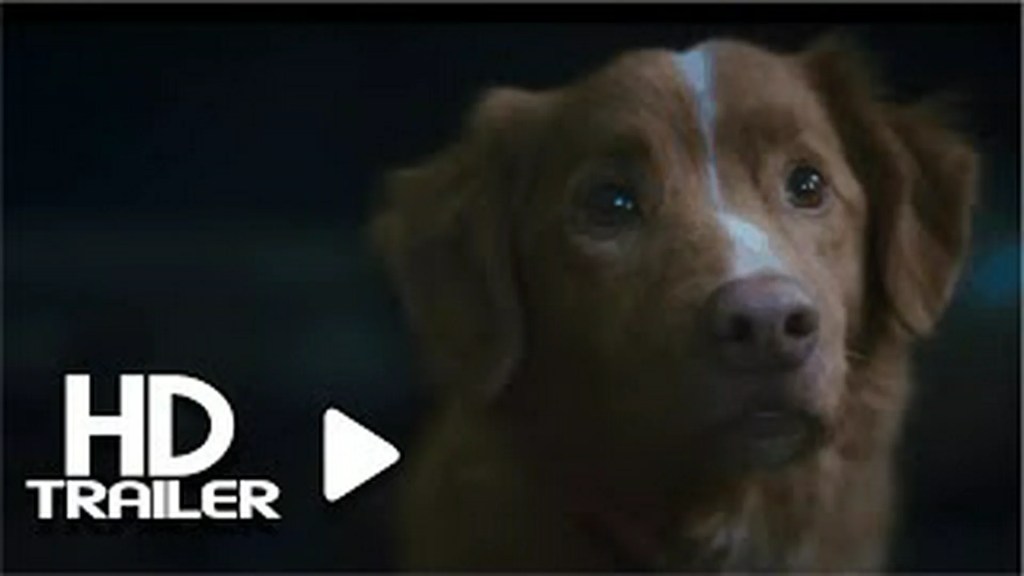
Ben Leonberg’s Good Boy is a supernatural horror film told primarily through the perspective of Indy, a real-life dog who senses a haunting before his owner does. PEOPLE premiered the exclusive first trailer on August 18, 2025. The film subsequently opened wide in U.S. theaters on October 3, 2025, arrived for premium digital rental and purchase on October 24, and premiered on Shudder on November 21. U.S. subscription and digital options remain available, although catalogs vary by service and territory.
The film’s “entirely from a dog’s POV” premise is best understood as a restriction of perspective and knowledge—not as a movie made from a camera literally strapped to Indy for every shot. That distinction is part of what makes Good Boy an unusual filmmaking experiment as well as a haunted-house story.
| # | Preview | Product | Price | |
|---|---|---|---|---|
| 1 |
![The Thing (1982) [Blu-ray]](https://m.media-amazon.com/images/I/51HmHE72PlL._SL160_.jpg)
|
The Thing (1982) [Blu-ray] | $7.99 | Buy on Amazon |
| 2 |
![Sleepaway Camp - Collector's Edition [Blu-ray]](https://m.media-amazon.com/images/I/51nF-+3CpkL._SL160_.jpg)
|
Sleepaway Camp - Collector's Edition [Blu-ray] | $8.99 | Buy on Amazon |
| 3 |

|
Nightmare on Elm Street Collection (1-7)(BD) | $19.79 | Buy on Amazon |
| 4 |
![Dead Silence [Blu-ray]](https://m.media-amazon.com/images/I/51bAXzJsWcL._SL160_.jpg)
|
Dead Silence [Blu-ray] | $7.99 | Buy on Amazon |
| 5 |

|
House of Wax (2005) / Return to House on Haunted Hill / Ghost Ship (BD) (3FE) | $10.83 | Buy on Amazon |
Watch the official Good Boy trailer on YouTube, or visit the official film site.
What is Good Boy about?
Good Boy follows Indy as he leaves New York City with his owner, Todd, and moves into a long-vacant rural family home. The change from familiar city life to an isolated property quickly unsettles the dog. He notices empty corners, strange sounds, phantom tracks, a ghostly dog, and disturbing visions connected to the house—things the humans around him cannot fully see or understand.
At the same time, Todd’s health begins to deteriorate. A malevolent force appears to be threatening him, and Indy recognizes that something is wrong long before he can understand what it is. His objective is not to investigate the haunting like a human detective. It is simpler and more instinctive: protect his person.
That setup comes from the SXSW synopsis and the film’s official materials. The trailer keeps the explanation deliberately limited. It first establishes the affectionate bond between Indy and Todd, then lets the isolated house transform that warmth into unease. Indy reacts to spaces, sounds, and presences that remain invisible or incomprehensible to the people around him. The emotional hook is not simply whether the dog can defeat a supernatural entity; it is whether he can recognize that Todd is in danger without knowing why.
How does the dog’s point of view work?
The marketing shorthand says that Good Boy is told entirely from a dog’s point of view. A more precise description is that the film is constructed largely through Indy’s perspective and restricts the audience’s knowledge to what he can perceive, hear, observe, or infer.
In an interview with Filmmaker Magazine, Leonberg explained that the production combined objective and subjective shots while preserving the feeling that Indy behaves like a real dog. Den of Geek also discussed how the filmmakers built the film around the animal’s perspective rather than turning him into a talking, humanized character.
- Camera height: Much of the imagery is composed at or near Indy’s eye level, changing the apparent scale and geography of the house.
- Restricted knowledge: The audience encounters the haunting through what Indy notices instead of receiving an all-knowing explanation from a conventional human protagonist.
- Sensory emphasis: Sound, movement, silhouettes, empty spaces, sudden reactions, and behavior that implies a smell or distant noise often carry more information than exposition.
- Behavioral realism: Indy is not given dialogue, an internal monologue, human reasoning, or a magical ability to explain the supernatural force. “No talking dog” here means no human speech from Indy, not an absence of human dialogue elsewhere in the film.
- Editing as performance: Indy reacts, and the film may then cut to the apparent object of his attention. The juxtaposition creates the impression of a precise dramatic performance without requiring him to hit a mark or understand a script.
- Narrative limitation: Indy’s incomplete understanding becomes the source of suspense. The audience is often left to interpret the same clues he is trying to process.
That means Good Boy does include nearby human conversations, phone calls, VHS material, flashbacks, and objective or semi-objective shots. It is not accurate to describe every frame as literally being the dog’s vision or as having been filmed from a camera attached to Indy. The film’s formal experiment lies in combining eye-level framing, sound, editing, and limited information to make a dog’s experience the story’s organizing perspective.
Rank #2
- Factory sealed DVD
Who is Indy?
Indy is Ben Leonberg and producer Kari Fischer’s real-life dog, a Nova Scotia Duck Tolling Retriever commonly known as a Toller. He has no conventional acting career, and the character he plays is also named Indy. In that sense, he plays a fictionalized version of himself: the story is scripted and supernatural, but the canine performer is the filmmakers’ own dog rather than a trained human-style actor.
Leonberg and Fischer were drawn to Indy’s naturally intense stare and alert behavior. Rather than asking him to imitate a human actor’s choices, they built scenes around what he naturally did and then shaped that material through camera placement, prompts, sound, and editing. SXSW recognized the result with the festival’s inaugural Howl of Fame Award for canine performance. That was a specific SXSW special award, not a claim that Indy won the festival’s top narrative-feature prize.
How was a feature film made around a dog?
The production’s logistics are nearly as unusual as its premise. According to interviews with Leonberg and Fischer, filming took place over roughly three years and more than 400 filming days. Indy generally worked for only about an hour or so per day, and the schedule was organized around his limits rather than around the demands of a conventional film set.
The filmmakers used treats, sounds, physical gestures, basic obedience, and carefully prepared environments to encourage particular kinds of behavior. Much of the filming was carried out with only Leonberg and Fischer present, which helped keep the atmosphere controlled and familiar. Indy was not expected to understand the plot or move to an exact mark at a precise moment.
Instead, the film was assembled from natural canine behavior. A look, pause, bark, turn, or sudden movement could become a story beat when placed beside the right camera angle or cut. Leonberg’s direction therefore involved designing situations in which Indy might behave naturally, then using editing and shot construction to create apparent dramatic intention.
The production also avoided putting Indy in unnecessary physical danger. A fake-dog prop was used for at least one physically demanding movement rather than requiring the real animal to perform it. The American Kennel Club’s production feature and the GamesRadar+ interview provide further details about the process.
Recommended Free Tools
Was Indy actually frightened or harmed?
The trailer is designed to make viewers fear for Indy, but Leonberg has said that the dog himself was not genuinely frightened during filming. Apparent fear was produced through editing, reaction shots, off-camera prompts, sound design, and the audience’s interpretation of his expressions and movements.
Some of the apparent cries or yelps heard in dramatic contexts were reportedly happy sounds that were edited into the scene. The filmmakers also used a prop or stunt double for at least one shot involving demanding physical movement. PETA later gave the film its Good Boy, Great Filmmaking Award, citing the production’s animal-safety practices.
That award reflects PETA’s assessment; it should not be described as an independently audited, universal industry certification. The most accurate summary is that the film wants viewers to believe Indy is in supernatural danger, while the filmmakers say the dog was not subjected to that danger or to genuine distress during production.
Does the dog die in Good Boy?
No. Indy survives the movie. Leonberg explicitly confirmed that the filmmakers never intended for Indy to die. That is the spoiler-free answer to the question that followed the trailer across social media and horror forums.
Survival does not mean the film is comfortable viewing for every dog lover. Indy is surrounded by frightening events, Todd’s illness, supernatural forces, and moments of apparent peril. The PG-13 rating cites strong language, bloody images, and terror, and the emotional threat to the dog is central to the film’s suspense.
What inspired the concept?
Leonberg has traced the idea to the opening of Poltergeist, where the family dog appears to sense the haunting before the humans do. Good Boy expands that familiar horror image into a feature-length story organized around the animal’s experience.
Rank #4
The premise also draws on a common pet-owner anxiety: a dog barks at an empty corner, refuses to enter a room, or seems to track something no human can see. In a conventional haunted-house movie, that behavior might be a quick warning to the audience. Here, it becomes the audience’s primary way into the mystery.
From SXSW premiere to wide release
Good Boy had its world premiere on March 8, 2025, at the SXSW Film & TV Festival, where it screened in the Midnighter section as a Narrative Feature. Indy’s Howl of Fame recognition helped underline the film’s distinctive central performance, while later genre-festival screenings—including Overlook—expanded its festival profile.
Shudder acquired English-speaking-territory rights after the SXSW premiere. The film was initially expected to receive a limited theatrical release, but the trailer changed that plan. According to TheWrap, the trailer passed more than one million views within days, and IFC expanded the October 3 theatrical rollout to a full wide release in the United States.
On its original trailer date, PEOPLE’s exclusive announced the October 3, 2025 theatrical release. The later release schedule was:
| Release | Date |
|---|---|
| World premiere, SXSW | March 8, 2025 |
| U.S. wide theatrical release | October 3, 2025 |
| Premium digital rental and purchase | October 24, 2025 |
| Shudder premiere | November 21, 2025 |
The original distribution coverage refers to IFC Films; newer industry pages may use the name Independent Film Company. Both references concern the film’s IFC distribution story.
Independent reader supportYour contribution helps us test, update, and keep practical guides available for everyone.Where can you watch Good Boy now?
As of this update, U.S. listings show Good Boy through subscription services including Shudder, AMC+, and Hulu, along with digital rental and purchase options. Availability changes as licensing agreements change, and the options may be different outside the United States. Check the current U.S. JustWatch listing immediately before watching, or consult the Shudder platform directly.
Quick wins for a faster PC:
Fix the driver behind crashes, sound loss and screen glitchesFind Drivers →Clear out junk files and repair common Windows errorsFree Scan →Best Value
- Blu-ray
- Multiple Formats, Blu-ray, NTSC
- English (Published), German (Published), English (Original Language)
- 3
- 285
Reception
At the time of this update, Rotten Tomatoes listed Good Boy at 90% from 187 critic reviews, with an 81% Popcornmeter audience score. Metacritic listed a 73/100 Metascore based on 23 critic reviews, categorized as Generally Favorable. These are changing snapshots rather than permanent ratings, so scores and review counts may be different when you read this.
Good Boy: cast and credits
| Director | Ben Leonberg |
|---|---|
| Writers | Ben Leonberg and Alex Cannon |
| Producers | Kari Fischer and Ben Leonberg |
| Cast | Indy, Shane Jensen, Larry Fessenden, Arielle Friedman, Stuart Rudin, Anya Krawcheck, and Max |
| Music | Sam Boase-Miller |
| Production company | What’s Wrong With Your Dog? |
| Runtime | 73 minutes |
| Rating | PG-13 for strong language, bloody images, and terror |
The official SXSW listing and Rotten Tomatoes list the runtime as 73 minutes. Some early coverage rounded or reported it as 72 minutes; this article uses the festival-listed 73-minute figure.
The short answer for dog lovers
Good Boy is not a novelty film in which a dog simply wanders through a human horror story. Its central experiment is to make Indy’s limited, sensory-driven understanding the audience’s guide to the haunting. The film still uses conventional filmmaking tools—objective shots, human dialogue, flashbacks, sound design, and editing—but it deploys them within a perspective shaped by a dog’s behavior.
That approach makes the trailer’s central fear especially effective: Indy may be unable to explain the presence in the house, but he knows that Todd needs protection. And although the movie puts viewers through apparent danger, the confirmed spoiler-free answer is reassuring: Indy lives.
Do these 3 things before closing this tab:
1Repair Windows errors before they cause bigger problems2Scan for outdated or missing drivers - takes under a minute3Clear out junk files and repair common Windows errorsFrequently Asked Questions
Does Indy die in Good Boy?
No. Indy survives the film. However, the movie includes terror, illness, bloody imagery, and scenes of apparent danger involving the dog, so dog-sensitive viewers may still find it upsetting.
Is Good Boy literally filmed from a camera attached to the dog?
No. The film is largely composed at Indy’s eye level and restricts the audience to what he can perceive, but it also uses objective shots, human conversations, phone calls, VHS material, flashbacks, and conventional editing.
Is Indy a real dog?
Yes. Indy is Ben Leonberg and Kari Fischer’s real-life Nova Scotia Duck Tolling Retriever, and he plays a fictional version of a character also named Indy.
Where can I watch Good Boy?
In the United States, current listings include subscription access through services such as Shudder, AMC+, and Hulu, as well as digital rental and purchase options. Availability varies by country and can change, so check the current JustWatch listing or the relevant service before watching.
Free tools Windows power users keep installed
One-click scans. No signup required.
The Bottom Line
Bottom line: Good Boy uses a real dog’s eye-level perspective, natural behavior, sound, and editing to turn the familiar idea of a pet sensing a ghost into a feature-length horror experiment. The “dog POV” claim is genuine as a storytelling principle, not a literal promise that every shot is canine-camera footage. Indy survives, and the film is now available in the U.S. through a mix of subscription and digital options.