Do these 3 things before closing this tab:
1Fix the driver behind crashes, sound loss and screen glitches2Repair Windows errors before they cause bigger problems3Scan for outdated or missing drivers - takes under a minuteSome links on this page are affiliate links: if you buy through them we may earn a commission, at no extra cost to you.
Yes—Dream Productions is worth watching, especially if you enjoy the world-building in Inside Out more than a conventional sequel plot. This four-episode limited series relocates Pixar’s emotional universe to a Hollywood-style studio inside Riley’s mind, where dreammakers negotiate creative egos, deadlines and a child’s changing life. Its Paula Persimmon–Xeni partnership supplies a clear comic engine, while the short run keeps the concept brisk. The trade-off is that four episodes can make the workplace feel more like an excellent extended vignette than a fully developed television ensemble.
Dream Productions at a glance
| Item | Details |
|---|---|
| Format | Four-episode animated limited series with a mockumentary-style presentation |
| Setting | A dream-production studio inside Riley’s mind |
| Timeline | Between Inside Out and Inside Out 2 |
| Premiere | All four episodes released on December 11, 2024 |
| Classification | TV-G comedy and animation in Disney’s current catalog listing |
| Streaming | Listed on Disney+; catalog availability can vary by market |
| Writer and director | Mike Jones |
| Producer | Jaclyn Simon |
| Central characters | Night-dream director Paula Persimmon and daydream director Xeni |
| Voices | Paula Pell as Paula Persimmon and Richard Ayoade as Xeni |
The series is best understood as a compact workplace mockumentary, not a replacement for either feature film. It takes a supporting idea from the first movie—the labor involved in making Riley’s dreams—and gives that idea offices, artistic hierarchies and competing professional ambitions.
| # | Preview | Product | Price | |
|---|---|---|---|---|
| 1 |

|
Inside Out (Blu-ray/DVD Combo Pack + Digital Copy) | $22.87 | Buy on Amazon |
| 2 |

|
Inside Out 2 - Blu-ray + DVD + Digital | $14.09 | Buy on Amazon |
| 3 |
|
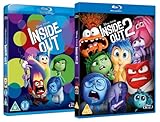
Inside Out: 2-Movie Collection [Blu-ray] | $51.79 | Buy on Amazon |
| 4 |

|
Inside Out [Blu-ray] | $29.17 | Buy on Amazon |
| 5 |

|
Inside Out 2 [4K UHD + Blu-ray] (2024) | $41.95 | Buy on Amazon |
Where the series fits in the Inside Out timeline
Pixar places Dream Productions between Inside Out and Inside Out 2. The studio operates in the period when Riley’s inner life is already established but still changing, so the dreammakers must adapt their nightly productions to new experiences and emotional pressures.
The Tool Desk
Outbyte Driver Updater FREEFix the driver behind crashes, sound loss and screen glitchesFind Drivers →Outbyte PC Repair FREEClear out junk files and repair common Windows errorsFree Scan →You do not need a formal viewing-order rule to start the series. The official descriptions do not identify either film as a mandatory prerequisite. However, watching Inside Out first makes the premise immediately legible: viewers recognize Riley, the core emotions and the idea that memories and feelings can be processed through visualized mental spaces. Inside Out 2 is useful follow-up context because it shows Riley at a later stage, but the series is positioned before that film rather than after it.
Popular on Amazon
The premise: a film studio inside a child’s mind
Memories that need additional processing are sent by Joy and the other core emotions to Dream Productions. There, a team treats Riley’s dreams as productions requiring direction, performance and a coherent creative point of view.
That setup converts a visual gag from the films into a sustainable workplace. Instead of observing a dream as a finished mental event, the series asks what happens behind the scenes: who decides what Riley should dream, how a director protects a creative reputation, and what a production team does when Riley’s waking life no longer fits an old formula.
Pixar Chief Creative Officer Pete Docter described the project in Disney’s September 24, 2024 announcement as “a treasure trove of jokes and fun” that explores “the making of Riley’s dreams.” That is promotional language, but it accurately identifies the show’s central promise: process is the comedy. The pleasure comes from seeing an internal experience treated with the seriousness—and absurdity—of a film set.
Why the mockumentary format works
Hollywood language gives the emotions a new comic vocabulary
The films personify emotions as inhabitants of Riley’s mind. Dream Productions adds another layer by giving those inhabitants an entertainment industry to imitate. The result is a workplace where artistic prestige, departmental politics and production anxiety can be joked about without abandoning the emotional logic of the franchise.
That format also creates a useful contrast. Dreams are intimate and often irrational, yet the studio approaches them through meetings, assignments and professional roles. The mismatch supplies jokes while preserving the franchise’s basic metaphor: Riley’s inner life is both deeply personal and made up of systems she does not consciously control.
The setting does more than decorate the franchise
A weaker spin-off could have used the dream studio as a change of scenery only. Here, the studio is the story engine. Its hierarchy explains why characters want particular assignments, why a director might defend a recognizable style and why a new collaborator can threaten an established process. The workplace framing lets the series examine Riley’s dreams from several angles without turning every scene into a lesson about psychology.
Also popular on Amazon
- Disney and Pixar?s ?Inside Out 2? returns to the mind of newly minted teenager Riley just as headquarters is disrupted by something entirely unexpected: new Emotions! Joy, Sadness, Anger, Fear and Disgust aren?t sure how to feel when Anxiety and friends show up.
The Guardian’s review highlights the show’s Hollywood-hierarchy jokes and its construction of relationships among Riley’s dreams, her waking inner world and the real world around her. That is the most persuasive case for the series as more than an extended sketch: the production metaphor connects different levels of Riley’s experience instead of isolating the dream sequences.
Recommended Free Tools
Paula Persimmon and Xeni provide the central conflict
Paula: prestige, authority and a proven method
Paula Persimmon is an acclaimed night-dream director. Her status gives the studio an internal hierarchy and gives the comedy a character who has something to protect. An established director can be confident, demanding and attached to a recognizable creative identity; those traits are fertile ground for mockumentary humor even before a new colleague challenges them.
Paula Pell’s voice performance is therefore important to the show’s balance. Paula must read as professionally formidable without becoming an obstacle who exists only to be mocked. The character’s authority makes the dream studio feel like a real workplace rather than a collection of random gags.
Xeni: ambition from the daydream department
Xeni is a daydream director who wants to move into night dreams. That ambition establishes the series’ most straightforward source of friction: an outsider wants access to the prestigious division, while the incumbent has reasons to doubt the transfer.
Richard Ayoade’s casting suits a character built around precision, self-awareness and professional aspiration. Xeni’s goal also expands the world. The studio is not a single-purpose factory; it has different kinds of dream production, different statuses and a career ladder that characters understand.
Free tools Windows power users keep installed
One-click scans. No signup required.
Why their pairing carries a limited series
Putting an acclaimed specialist together with an ambitious colleague creates a conflict that can support both episodic jokes and a longer relationship arc. Paula represents expertise and institutional standing; Xeni represents reinvention and upward mobility. Their pairing lets the series ask whether a successful creative process should be protected, disrupted or shared.
Also popular on Amazon
- Experience the emotional journey once more with the complete 2-movie set of "Inside Out" on Blu-ray!
The limitation is scale. Four installments provide enough room to establish the pairing and test its professional assumptions, but not necessarily enough for every supporting relationship or workplace department to receive equal development. The concept is strong; the format determines how much of its potential can be shown.
How the familiar emotions function in the spin-off
Amy Poehler, Maya Rudolph, Ally Maki, Kensington Tallman, Liza Lapira, Tony Hale, Lewis Black and Phyllis Smith are among the wider voice cast. The core emotions remain important because they connect the dream studio to the films, but they do not always function as the sole dramatic center.
In this format, the emotions can operate as commentators around the dream broadcasts. That distance is deliberate: the series is interested in the workers producing a dream, not only in the emotions reacting to one. The arrangement preserves continuity while allowing Paula, Xeni and the studio staff to carry the workplace story.
What’s actually slowing this PC down?
Pick the symptom - the matching free tool is one click away.
For viewers seeking a feature-length emotional journey led by Joy and the other emotions, that shift may feel less immediate. For viewers interested in the franchise’s systems and side characters, it is the series’ most useful expansion. The familiar cast provides an anchor, while the new production team supplies the reason to return.
What the four-episode length does well—and what it limits
The benefit: a focused concept
All four episodes premiered together on December 11, 2024. A short, complete release suits a premise built around one workplace and one central partnership. The series does not need to invent a new status quo every season; it can concentrate on the studio’s routines and on the pressure to make Riley’s dreams fit a changing life.
The limited format also protects the idea from over-explanation. Because the studio is immediately understandable, the show can move quickly from world-building to jokes about creative authority, professional insecurity and the difference between a daydream and a night dream.
Also popular on Amazon
The cost: less room for an ensemble
The same four-episode structure can make the workplace feel compressed. A television mockumentary normally gains depth by letting secondary employees accumulate habits, rivalries and running jokes over time. Here, the Paula–Xeni pairing must do most of that work, with the broader cast often serving the production concept rather than developing separate arcs.
That is a reason to approach the series as a concentrated addendum instead of expecting a second, equally expansive feature narrative. The question is not whether the premise can sustain television in the abstract; it is whether this particular four-episode run has enough time to show all the workplace possibilities it introduces.
Animation and world-building: the show’s strongest reason to exist
The dream studio gives Pixar a visual playground that differs from both films without abandoning their internal logic. A production floor, director’s workspace and dream-broadcast environment can all reflect Riley’s mental state while borrowing recognizable details from film production.
The setting also makes abstraction legible. A viewer can understand a dream as an image, a memory as material awaiting processing and a director as the figure trying to shape that material. The workplace metaphor turns invisible mental activity into a chain of visible decisions.
This is where the series most clearly earns its place in the franchise. It is not simply retelling Riley’s experiences from another camera angle. It is asking what kind of institution would exist inside the metaphor and what professional culture that institution would develop.
Critical response, with the numbers in context
Rotten Tomatoes showed a 75% score from 20 critic reviews and a 6.70/10 average among rated reviews in a 2026 access snapshot. Those figures describe a changing aggregator at that moment, not an audience statistic or a permanent quality verdict.
Also popular on Amazon
- Experience the emotional journey once more with "Inside Out 2" on Ultra HD!
The score is consistent with a series that has a strong central idea and some reservations about scope. The Guardian’s positive emphasis on hierarchy jokes and connections among dreams, waking consciousness and the real world supports the show’s world-building strengths.
On Metacritic’s critic-review page, Nick Schager calls it “A gloriously fun little addendum” and argues that it “makes a strong case that Inside Out is now Pixar’s best franchise.” That is Schager’s assessment, not a consensus statement, but it captures the series’ scale: enjoyable, inventive and intentionally supplementary rather than a new franchise centerpiece.
How it compares with the two Inside Out films
| Comparison point | Dream Productions | The feature films |
|---|---|---|
| Story form | Workplace mockumentary centered on dream production | Feature narratives built around Riley’s emotional experiences |
| Main source of conflict | Creative status, professional ambition and adapting dreams to Riley’s life | Emotional and developmental changes in Riley |
| Use of the inner world | Examines the institution that makes dreams | Follows the emotions and mental systems more directly |
| Dependence on prior knowledge | Familiarity with Riley and the emotions helps, but no formal prerequisite is stated | Each film establishes its own immediate narrative situation |
| Scope | Four-episode limited series | Feature-length stories with broader arcs |
The important change is not merely length. The series changes the storytelling form from emotional adventure to workplace satire. That shift makes it a worthwhile companion for viewers who want to see how the franchise’s world operates, while viewers looking for the films’ larger emotional crescendos may find it deliberately smaller.
Who should watch it?
- Watch if you enjoy production-world satire. The studio’s hierarchy and professional anxieties are the core attraction.
- Watch if the first film’s dream-making scenes fascinated you. The series turns that brief idea into the main setting.
- Watch if you like character pairings built on opposing ambitions. Paula’s established authority and Xeni’s desire to move into night dreams give the show a clear relationship engine.
- Set expectations if you want another feature-scale Riley story. The core emotions often frame or comment on the dream broadcasts while the studio staff carries the plot.
- Set expectations if you want a long ensemble comedy. Four episodes establish the workplace efficiently but leave less room for every supporting character to develop.
Where to watch and what to know before starting
Disney’s current catalog lists Dream Productions as a TV-G comedy and animation title on Disney+. Because catalog availability can vary by market, check the local Disney+ listing before planning a viewing session.
The complete four-episode release means you can watch the series as a single compact story or space it out like a short season. Prior familiarity with Inside Out is helpful context rather than an officially stated requirement; the premise itself explains the studio’s role inside Riley’s mind.
Final verdict: a smart, compact expansion
Dream Productions succeeds because it finds a genuinely different form for the Inside Out universe. The Hollywood-style dream studio is not a disposable backdrop: it explains the jokes, gives Paula and Xeni a reason to clash, and connects Riley’s dreams with the emotional and real-world layers established by the films.
Its restraint is also its limitation. Four episodes can deliver a polished workplace premise and a satisfying central pairing, but they cannot explore every department, relationship and consequence the setting suggests. That makes the series easiest to recommend as a focused companion piece—particularly for fans who value Pixar’s imaginative world-building—rather than as a substitute for the feature films.
Quick wins for a faster PC:
Repair Windows errors before they cause bigger problemsFix Now →Scan for outdated or missing drivers - takes under a minuteDriver Scan →





Say something about this film