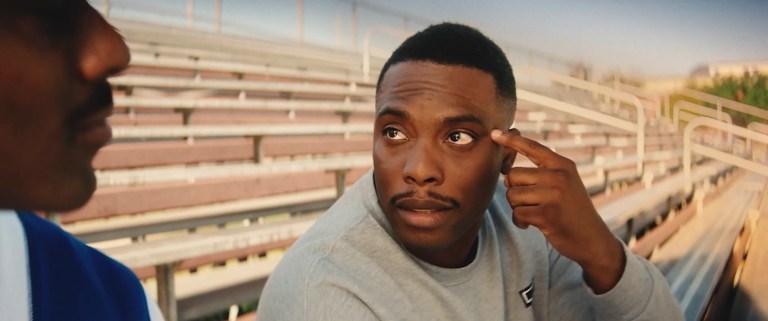
When David Tennant was asked about J.K. Rowling’s ongoing comments on trans rights, his answer was notably calm in a conversation often defined by extremes. Rather than escalating the conflict, the longtime Harry Potter and Doctor Who star made it clear that he harbors “no ill will” toward Rowling, a statement that immediately set his remarks apart from more incendiary celebrity responses. What followed, however, was a pointed moral line that resonated far beyond a single soundbite.
Tennant said he simply wants Rowling to “let trans people be,” framing the issue not as an ideological battle but as a matter of basic dignity and everyday coexistence. The phrasing was deliberate in its simplicity, avoiding slogans or policy debates while centering the real-world impact of public rhetoric. Coming from an actor so closely tied to the Harry Potter universe, his words carried additional weight, underscoring how deeply the franchise remains entangled with broader cultural conversations.
| # | Preview | Product | Price | |
|---|---|---|---|---|
| 1 |

|
Harry Potter Box Set: The Complete Collection | $58.00 | Buy on Amazon |
| 2 |

|
Harry Potter Paperback Box Set (Books 1-7) | $52.62 | Buy on Amazon |
| 3 |

|
Harry Potter Hardcover Boxed Set: Books 1-7 (Trunk) | $154.83 | Buy on Amazon |
| 4 |

|
Harry Potter Paperback Box Set Books 1-7 (Deluxe Edition with Stenciled Edges) | $64.61 | Buy on Amazon |
The reaction was swift, with fans and commentators parsing not just what Tennant said, but how he chose to say it. For some, his comments represented a compassionate model for disagreement in a polarized media landscape; for others, they highlighted the growing expectation that entertainers address social issues tied to their most famous work. In that tension lies why the moment mattered: Tennant demonstrated how public figures can acknowledge personal relationships and professional legacies while still affirming a clear stance on human rights.
David Tennant’s Longstanding Advocacy for Trans Rights and LGBTQ+ Inclusion
David Tennant’s comments about Rowling did not emerge in a vacuum. For years, the actor has used his platform to advocate for LGBTQ+ inclusion, often doing so in ways that feel consistent with his off-screen persona: principled, conversational, and rooted in empathy rather than spectacle. His support has been visible across interviews, public appearances, and the creative choices he’s championed within his own projects.
Quick wins for a faster PC:
Scan for outdated or missing drivers - takes under a minuteDriver Scan →Clear out junk files and repair common Windows errorsFree Scan →Fix the driver behind crashes, sound loss and screen glitchesFind Drivers →#1 Best Overall
A Public Record of Allyship
Tennant has repeatedly spoken out in support of trans rights, framing the issue as one of basic humanity rather than partisan politics. Whether addressing hostile media narratives or responding to political rhetoric in the UK, he has emphasized the importance of allowing trans people to live safely and authentically without being treated as a cultural flashpoint. That approach has earned him both praise from advocacy groups and criticism from those who see celebrity involvement as overreach.
His stance drew particular attention in 2024 when he publicly rebuked comments made by then–Prime Minister Rishi Sunak regarding trans identities, a moment that underscored Tennant’s willingness to challenge power rather than simply signal virtue. The exchange reinforced his reputation as an entertainer unafraid to step beyond the comfort zone traditionally afforded to mainstream stars.
Advocacy Through Art and Collaboration
Beyond public statements, Tennant’s advocacy has extended into his work. On projects like Good Omens, he has been vocal about inclusive casting and supportive of trans and nonbinary performers, aligning the production’s ethos with its themes of empathy and moral nuance. These choices have helped position the series as a quietly affirming space within genre television, resonating with fans who see representation as inseparable from storytelling.
That creative alignment matters in the context of Harry Potter, a franchise increasingly scrutinized not just for its fictional world but for the values associated with its legacy. Tennant’s career illustrates how actors connected to culturally dominant properties can model a different relationship to those worlds, one that prioritizes inclusivity even when it complicates nostalgic attachments.
Navigating Fame, Family, and Responsibility
Tennant has also spoken about how his views are informed by his personal life, noting the importance of listening, learning, and standing up for young people navigating identity in an often hostile public sphere. While he tends to guard his family’s privacy, his remarks suggest a perspective shaped by proximity rather than abstraction, reinforcing why his advocacy feels grounded rather than performative.
In that sense, Tennant’s “no ill will” stance toward Rowling becomes easier to contextualize. His history shows an actor less interested in winning cultural battles than in reducing harm, even when the conversation involves figures and franchises that helped define his own career.
J.K. Rowling, Harry Potter, and the Ongoing Trans Rights Controversy: A Brief but Necessary Context
J.K. Rowling’s place in contemporary culture is now inseparable from the debate surrounding her views on gender identity and trans rights. Since 2019, the author has repeatedly voiced concerns about trans-inclusive policies, framing them as matters of women’s safety and free speech. Critics, including LGBTQ+ advocates and medical organizations, have argued that her rhetoric contributes to stigma and misunderstanding toward trans people.
From Literary Icon to Cultural Flashpoint
The controversy marked a dramatic shift in how Rowling is publicly perceived, especially given Harry Potter’s long-standing association with themes of belonging, chosen family, and resistance to authoritarianism. For many fans, the dissonance between those messages and the author’s real-world statements has been jarring. What was once a largely unifying franchise became a site of moral and emotional conflict.
PC Slower Than It Used to Be?
A free scan shows the junk files, broken settings and background clutter dragging Windows down - then fixes them in one click.Free scan · Windows 10 & 11Outdated Drivers Are Slowing You Down
One free scan finds every outdated or missing driver and matches the right update for your exact hardware.Free scan · exact hardware matchRowling has remained firm in her position, rejecting claims of transphobia while emphasizing her philanthropic work and belief in nuanced debate. Her responses have often intensified scrutiny, turning individual statements into broader cultural flashpoints amplified by social media and political discourse.
The Franchise Caught in the Middle
As the Wizarding World expanded through films, games, and theme parks, questions arose about whether it was possible to separate the art from its creator. Some fans chose to disengage entirely, organizing boycotts of projects like Hogwarts Legacy, while others sought ways to continue enjoying the world without endorsing Rowling’s views. The divide underscored how deeply personal media consumption can become when identity and ethics collide.
Actors associated with Harry Potter and its extended universe found themselves navigating especially fraught terrain. Several original cast members publicly expressed support for trans people, implicitly or explicitly distancing themselves from Rowling’s comments. Their statements reflected an industry-wide reckoning with how public figures respond when a beloved brand becomes politically charged.
Why Tennant’s Position Resonates
It is within this landscape that David Tennant’s remarks land with particular weight. His insistence that he holds “no ill will” toward Rowling, while simultaneously affirming that trans people deserve dignity and freedom to exist, reflects a posture of moral clarity without personal animosity. Rather than reframing the debate as a battle between individuals, Tennant emphasizes outcomes and harm reduction.
What’s actually slowing this PC down?
Pick the symptom - the matching free tool is one click away.
Rank #2
That approach mirrors a broader shift among entertainers who are increasingly asked to reconcile professional ties to powerful franchises with evolving social values. Tennant’s stance suggests that disagreement need not be dehumanizing, and that advocating for trans rights does not require erasing the cultural significance of Harry Potter, even as its legacy continues to be reexamined in real time.
‘No Ill Will’ vs. Clear Disagreement: How Tennant Separates Personal Respect from Political Stance
What distinguishes David Tennant’s comments is not their ambiguity, but their precision. When he says he holds “no ill will” toward J.K. Rowling, he is not retreating from disagreement; he is deliberately refusing to personalize it. Tennant frames the issue as one of principle rather than personality, drawing a firm line between respecting an individual and opposing the impact of their views.
A Rejection of the Culture War Playbook
In an era where public disputes are often flattened into heroes and villains, Tennant resists the gravitational pull of outrage. His language avoids accusations or moral grandstanding, focusing instead on what he believes trans people should be allowed to do: live safely, openly, and without being politicized. By declining to demonize Rowling, he implicitly critiques the zero-sum nature of online discourse without softening his stance on trans rights.
This approach has resonated with audiences fatigued by performative confrontation. Tennant is not positioning himself as an arbiter of Rowling’s intentions, nor is he interested in litigating her past statements line by line. His concern is present-tense and outcome-oriented, centered on how rhetoric translates into real-world consequences for a vulnerable community.
Do these 3 things before closing this tab:
1Scan for outdated or missing drivers - takes under a minute2Clear out junk files and repair common Windows errors3Fix the driver behind crashes, sound loss and screen glitchesPersonal Courtesy, Public Responsibility
Tennant’s insistence on separating personal regard from political disagreement also reflects his long-standing reputation within the industry. Known for his affability and professionalism, he extends that same courtesy even in disagreement, modeling a form of public dissent that does not rely on erasure or humiliation. It is a reminder that civility and conviction are not mutually exclusive.
At the same time, Tennant does not hide behind politeness to avoid accountability. His comments make clear that respect for Rowling does not mean neutrality on trans rights. By articulating that distinction, he challenges the idea that maintaining professional or cultural ties to Harry Potter requires silence or complicity.
Why the Distinction Matters Now
The nuance of Tennant’s position has drawn both praise and criticism, underscoring how fraught the terrain has become. Some view his refusal to condemn Rowling outright as insufficient, while others see it as a necessary corrective to an increasingly punitive public sphere. That tension reflects a broader question facing entertainers: how to speak ethically without becoming instruments of polarization.
For Tennant, the answer appears to lie in clarity of values rather than volume of condemnation. His “no ill will” stance is not a hedge, but a deliberate recalibration of how disagreement can be expressed in a moment when cultural conversations often reward extremity. In doing so, he offers a template for navigating legacy, loyalty, and conscience in a franchise that continues to mean different things to different people.
The Harry Potter Legacy at a Crossroads: Fans, Cast Members, and Moral Reckonings
The Harry Potter franchise occupies a singular place in modern pop culture, one that extends beyond box office totals or publishing milestones. For many fans, it represents a formative moral universe about empathy, chosen family, and resistance to authoritarianism. That emotional investment makes the current reckoning around J.K. Rowling’s views on trans rights feel less like a celebrity dispute and more like a collision between values and nostalgia.
What makes the moment particularly volatile is that the wizarding world is no longer just Rowling’s creation in the public imagination. It is also the collective memory of readers, viewers, theme park visitors, and the actors who helped bring it to life. As a result, statements from figures like David Tennant are not heard in isolation, but as part of an ongoing negotiation over who gets to define the franchise’s moral center.
When the Cast Speaks, the Stakes Change
Over the past several years, multiple Harry Potter cast members have publicly affirmed support for trans rights, often in careful but unmistakable terms. Daniel Radcliffe, Emma Watson, and Rupert Grint have each articulated positions that place human dignity above brand loyalty, even when doing so risks backlash. Tennant’s comments, though he is not part of the original film cast, enter that same cultural conversation because of his proximity to the broader Wizarding World through projects like Goblet of Fire and his stature within British pop culture.
What distinguishes Tennant’s intervention is not the substance of his support for trans people, but the tone. By rejecting animosity while still urging Rowling to “let trans people be,” he sidesteps the binary of silence versus denunciation. That approach reframes the debate from one of personal allegiance to one of ethical consequence, asking what responsibility comes with cultural influence rather than who deserves moral exile.
Rank #3
- Complete hardcover boxed set of all seven Harry Potter books, presented in a collectible trunk-style boxA stunning gift for new readers and longtime fans of J.K. Rowling's magical seriesPerfect for building a home library and immersing young readers in the world of Hogwarts
Fans Caught Between Meaning and Origin
For fans, this ongoing discourse has prompted difficult questions about consumption and complicity. Can the stories still be cherished if their creator’s views feel at odds with the lessons readers took from them? Tennant’s stance implicitly validates that discomfort, acknowledging that it is possible to hold affection for a cultural text while advocating for change in how its legacy operates in the present.
This ambivalence is especially pronounced among LGBTQ+ fans, many of whom found early refuge in the inclusive metaphors of the series. Tennant’s comments resonate because they refuse to invalidate that connection while still naming the harm caused when powerful voices marginalize vulnerable groups. In doing so, he aligns himself less with the franchise as an institution and more with the people who found meaning within it.
A Franchise Reflecting a Broader Cultural Shift
The Harry Potter controversy is also emblematic of a wider transformation in how audiences relate to legacy properties. Viewers are increasingly unwilling to separate art from impact when real-world consequences are visible, yet they are equally resistant to simplistic moral litmus tests. Tennant’s measured language reflects that evolving sensibility, one that favors accountability without absolutism.
Rather than offering closure, moments like this underline that the franchise is still in flux, shaped as much by contemporary values as by its original texts. Tennant’s refusal to frame the issue as a personal feud suggests that the future of Harry Potter, culturally speaking, will be determined less by individual grievances and more by collective expectations about empathy, inclusion, and responsibility.
Recommended Free Tools
Public and Industry Reaction: How Fans, Media, and Fellow Entertainers Responded
Fans Respond With Nuance Rather Than Polarization
Online reaction to Tennant’s remarks was swift, but notably less volatile than previous flashpoints tied to the Harry Potter debate. Many fans praised his ability to articulate support for trans people without resorting to personal attacks, interpreting his comments as an attempt to de-escalate rather than inflame. For a fandom long accustomed to binary positions, that restraint felt both refreshing and overdue.
At the same time, some Rowling supporters criticized Tennant for what they viewed as a subtle rebuke framed in conciliatory language. Others argued that neutrality itself can feel insufficient when trans rights are under legislative and cultural pressure. The split underscores how even carefully calibrated statements are inevitably filtered through deeply personal stakes.
Media Coverage Focuses on Tone as Much as Substance
Coverage across entertainment and mainstream outlets emphasized Tennant’s phrasing as much as his position. Headlines often highlighted his “no ill will” framing, contrasting it with more confrontational responses from other public figures connected to the franchise. That distinction mattered, positioning Tennant not as a combatant in a culture war, but as a mediator attempting to reframe the conversation.
Several commentators noted that Tennant’s long-standing reputation as a thoughtful, progressive voice lent his comments additional credibility. Rather than chasing virality, his remarks were treated as a case study in how celebrities can express moral clarity without spectacle. In an attention economy driven by outrage, that approach stood out.
Industry Voices Signal a Quiet Alignment
While few fellow actors directly addressed Tennant’s comments, his stance aligns with a broader, if often understated, shift within the entertainment industry. Many performers associated with legacy franchises have opted for expressions of solidarity with trans communities that stop short of directly naming Rowling. Tennant’s comments mirrored that pattern, suggesting an industry still navigating how to balance professional history with evolving values.
Behind the scenes, the response appeared less about surprise and more about recognition. Tennant articulated what many in the industry have privately acknowledged: that one can respect past collaborations while advocating for a more inclusive future. His comments did not open a new front so much as crystallize an existing, carefully managed consensus.
A Moment That Reflects Changing Expectations of Celebrity Speech
What ultimately resonated was not just what Tennant said, but how he said it. Audiences increasingly expect public figures to demonstrate ethical awareness without turning every disagreement into a spectacle. Tennant’s measured response suggests an emerging template for engagement, one that prioritizes empathy and consequence over allegiance and escalation.
In that sense, the reaction to his comments reveals as much about cultural fatigue with absolutism as it does about the Harry Potter controversy itself. Tennant did not offer a definitive answer, and the response indicates that many no longer expect one. Instead, the moment reflects a collective negotiation over how influence, responsibility, and humanity intersect in public life.
Free tools Windows power users keep installed
One-click scans. No signup required.
Navigating Fandom and Power: What Tennant’s Comments Reveal About Celebrity Activism Today
Tennant’s remarks land at a particularly fraught intersection of fandom and authority. Harry Potter is not just a media franchise but a cultural touchstone, one whose creator still wields enormous symbolic and financial power. Any comment about Rowling inevitably reverberates through decades of reader loyalty, cinematic nostalgia, and personal identity tied to the series.
Speaking From Inside the Machine
What distinguishes Tennant’s position is that he speaks from within the Potter ecosystem rather than from its margins. As a former Doctor Who star who later joined the Wizarding World in Goblet of Fire, his relationship to the franchise is real but not defining. That partial distance allows him to acknowledge Rowling’s influence without positioning her as untouchable, a balance few directly associated with the brand have managed publicly.
His “no ill will” framing underscores a broader reality of celebrity activism today: criticism does not always arrive as condemnation. Tennant’s call for Rowling to “let trans people be” sidesteps legalistic debates and social media skirmishes in favor of a human appeal. It is activism calibrated for longevity rather than momentary applause.
The Limits and Leverage of Celebrity Speech
Tennant’s comments also reflect an awareness of scale. Rowling’s platform, bolstered by wealth and cultural legacy, dwarfs that of most individual actors. By avoiding personal attacks, Tennant shifts the focus from winning an argument to questioning how power is exercised, and who bears the consequences of that power.
The Tool Desk
Outbyte PC Repair FREERepair Windows errors before they cause bigger problemsFix Now →Outbyte Driver Updater FREEFix the driver behind crashes, sound loss and screen glitchesFind Drivers →This approach resonates with audiences increasingly skeptical of performative allyship. Rather than positioning himself as a moral authority, Tennant speaks as a participant in the same cultural conversation as fans, creators, and critics alike. That posture invites dialogue instead of defensiveness, even when disagreement remains unresolved.
Fandom as a Moral Arena
The reaction to Tennant’s words highlights how fandom itself has become a site of ethical negotiation. For many fans, loving Harry Potter now involves reconciling affection for the story with discomfort over its author’s views. Tennant’s stance validates that tension, suggesting it is possible to hold space for both appreciation and critique without demanding ideological purity.
In that sense, his comments do not attempt to close the chapter on the Rowling controversy. They reflect an evolving understanding of how public figures, especially those tied to beloved franchises, can engage with difficult issues while respecting the emotional investments of their audience.
Why This Moment Matters: Culture Wars, Trans Lives, and the Future of Beloved Franchises
David Tennant’s remarks land at a time when pop culture is no longer a refuge from political conflict, but one of its most visible stages. The debate surrounding J.K. Rowling has moved beyond individual statements and into broader questions about who feels welcome in the worlds her stories helped build. When an actor as widely respected as Tennant speaks with restraint rather than rancor, it reframes the conversation without diminishing its urgency.
When Fantasy Collides With Reality
The Harry Potter franchise has long represented escapism, empathy, and chosen family for millions, including many LGBTQ+ fans who found solace in its themes. For trans readers in particular, the disconnect between that emotional bond and Rowling’s public stance has been deeply felt. Tennant’s call to simply “let trans people be” acknowledges that hurt without turning the franchise itself into a battleground.
His words suggest that protecting the meaning fans have found in these stories does not require silence. Instead, it may require redefining ownership, shifting it away from a single creator and toward the community that continues to keep the magic alive.
Celebrity Speech in an Era of Polarization
In today’s culture wars, celebrity commentary is often reduced to sides, slogans, and backlash cycles. Tennant’s measured tone stands out precisely because it resists that pattern. By expressing disagreement without hostility, he models a form of public engagement that prioritizes impact over virality.
That approach carries its own risks, satisfying neither extreme fully. Yet it reflects a growing awareness among entertainers that their influence lies not just in what they say, but how they say it, especially when the stakes involve real lives rather than abstract ideals.
Recommended Free Tools
The Future of Franchises in a Values-Driven Age
As legacy franchises continue to expand through reboots, spin-offs, and reinterpretations, the values they project matter more than ever. Audiences are increasingly attentive to whether the worlds they invest in align with their sense of inclusion and dignity. Tennant’s stance hints at a future where beloved properties can evolve culturally, even if their origins remain complicated.
This moment ultimately underscores a shift in power. Stories like Harry Potter no longer belong solely to their creators, but to the generations shaped by them. Tennant’s intervention, quiet but pointed, reflects an industry and a fandom learning how to carry forward what they love without leaving vulnerable voices behind.
Quick Recap
Product prices and availability are accurate as of the date/time indicated and are subject to change. Any price and availability information displayed on Amazon at the time of purchase will apply.