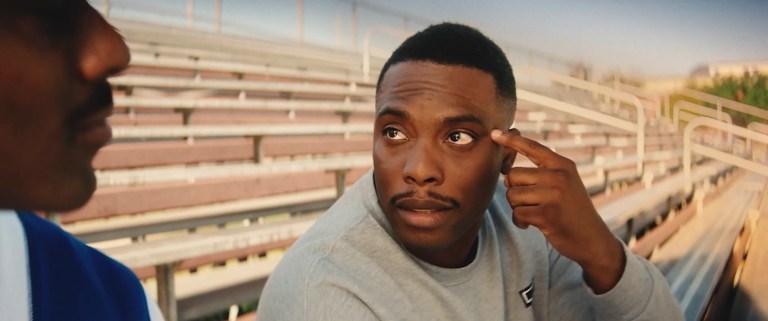
Luc Besson’s Dracula arrives with the familiar promise of reinvention, the same seductive whisper that’s lured filmmakers to Bram Stoker’s novel for over a century. This time, the pitch is prestige filtered through Besson’s glossy, Euro-pop sensibility: a tragic immortal reframed as a romantic antihero, wrapped in lavish production design and streamlined for modern tastes. On paper, it sounds like a return to operatic gothic, a course correction after years of ironic or action-heavy vampire fare.
What Besson clearly sets out to do is sand down Stoker’s harsher edges in favor of emotional accessibility. His Dracula isn’t a monster intruding on Victorian repression so much as a lonely god of sadness, cursed by love and fate rather than driven by appetite or terror. It’s a direction that echoes Francis Ford Coppola’s 1992 adaptation, but without that film’s baroque madness or feverish commitment to excess.
| # | Preview | Product | Price | |
|---|---|---|---|---|
| 1 |
![Dracula [Blu-ray]](https://m.media-amazon.com/images/I/51RM0qXVICL._SL160_.jpg)
|
Dracula [Blu-ray] | $12.96 | Buy on Amazon |
| 2 |

|
Bram Stoker's Dracula - 4K + Blu-ray | $18.99 | Buy on Amazon |
| 3 |
![Dracula: Prince of Darkness - Collector's Edition [Blu-ray]](https://m.media-amazon.com/images/I/51V-pU+E1ML._SL160_.jpg)
|
Dracula: Prince of Darkness - Collector's Edition [Blu-ray] | $21.79 | Buy on Amazon |
| 4 |
|
Taste the Blood of Dracula (Blu-ray) | $11.99 | Buy on Amazon |
| 5 |

|
Bram Stoker's Dracula / Mary Shelley's Frankenstein - Set | $9.99 | Buy on Amazon |
Style Over Substance, Again
True to form, Besson prioritizes surface pleasures over narrative rigor, leaning hard on mood, imagery, and mythic shorthand. The problem is that Dracula, more than most stories, depends on accumulating dread, on the slow horror of intrusion and corruption. By rushing to humanize its vampire and smoothing the story into a melancholic romance, the film drains the material of its danger, leaving behind something handsome, competent, and oddly bloodless.
Style Over Substance—Again: Besson’s Visual Flourishes and Their Narrative Cost
Besson has always been a director intoxicated by images, and Dracula is no exception. Every frame strains for painterly elegance, from cathedral-sized interiors drenched in shadow to candlelit close-ups that feel designed for prestige trailers. The problem isn’t the beauty itself, but how insistently it substitutes for storytelling.
#1 Best Overall
Gothic as Wallpaper
The film’s gothic elements are lavish but inert, deployed as décor rather than dramatic engines. Castles loom, fog rolls, blood glistens, yet none of it meaningfully escalates tension or deepens character psychology. Horror becomes ambience, something to be admired rather than endured.
Besson frequently pauses the narrative to indulge in visual tableaus that feel disconnected from cause and effect. Scenes don’t so much build on each other as sit side by side, each one a striking postcard. Over time, the repetition dulls the impact, turning what should be mounting dread into aesthetic white noise.
Emotion Without Architecture
By prioritizing romantic melancholy, the film flattens its emotional range. Dracula’s anguish is omnipresent but curiously static, communicated through lingering stares and mournful compositions instead of evolving behavior. Without narrative architecture to support it, the sadness becomes monotonous rather than tragic.
This approach also undercuts the supporting characters, who exist largely as emotional accessories. Mina, Van Helsing, and the ensemble orbit Dracula’s pain without exerting meaningful pressure on it. Stoker’s story thrives on collision—belief versus disbelief, desire versus duty—but Besson’s version smooths those tensions into passivity.
Free tools Windows power users keep installed
One-click scans. No signup required.
Echoes of Better Adaptations
Comparisons to Coppola’s Dracula are unavoidable, and rarely flattering. Where Coppola weaponized excess to externalize obsession and madness, Besson’s restraint feels cautious, even polite. The operatic heights are gestured at but never fully embraced, leaving the film suspended between arthouse solemnity and mainstream accessibility.
Earlier adaptations understood that Dracula must be frightening before he can be pitied. Besson reverses that equation, offering empathy first and horror as an afterthought. In doing so, the film forfeits the primal charge that has kept this character culturally immortal.
When Style Becomes a Crutch
Ultimately, the visual flourishes function as a kind of narrative anesthesia. They soothe the viewer, inviting admiration rather than engagement, and mask how little is actually happening beneath the surface. Besson’s Dracula looks expensive, tasteful, and carefully curated, but those qualities can’t compensate for a story that refuses to bite.
What remains is a film that feels convinced of its own seriousness without doing the work to earn it. The tragedy isn’t that Besson lacks vision; it’s that his vision once again overwhelms the fundamentals of character, pacing, and thematic clarity. Dracula deserves more than to be embalmed in beauty.
The Tool Desk
Outbyte PC Repair FREEClear out junk files and repair common Windows errorsFree Scan →Outbyte Driver Updater FREEScan for outdated or missing drivers - takes under a minuteDriver Scan →A Dracula Without Dread: How This Interpretation Drains the Character of Mythic Power
The most glaring flaw in Besson’s Dracula is how resolutely unthreatening he is. This incarnation may brood, pine, and posture, but he rarely commands a scene with the gravitational menace the role demands. Dracula isn’t merely a tragic immortal; he’s a force of nature, and Besson’s version treats that force like an aesthetic inconvenience.
Stripped of genuine menace, the character loses his mythic dimension. Stoker’s Count works because he embodies violation and contagion, the fear of something ancient and predatory slipping into the modern world. Besson reframes him as a sorrowful romantic first and a monster a distant second, robbing the story of its fundamental imbalance of power.
A Monster Afraid of His Own Shadow
The direction consistently pulls its punches when it comes to horror. Attacks are softened, confrontations defanged, and moments that should feel invasive or terrifying are staged with a curious delicacy. Besson seems less interested in unsettling the audience than in maintaining a mournful, museum-like reverence for his central figure.
That restraint neuters the drama. Dracula’s threat should destabilize everyone around him, warping behavior and escalating conflict. Instead, the world politely accommodates his presence, reacting with subdued concern rather than escalating dread, as if everyone senses they’re in a prestige drama rather than a gothic nightmare.
PC Slower Than It Used to Be?
A free scan shows the junk files, broken settings and background clutter dragging Windows down - then fixes them in one click.Free scan · Windows 10 & 11Crashes, No Sound, or Screen Glitches?
Random freezes, missing sound and display glitches usually trace back to one bad driver. Find and replace yours safely.Free scan · under a minuteRank #2
- From Academy Award �-winning director Francis Ford Coppola (1974, Best Director, The Godfather Part II). When Dracula (Gary Oldman) meets Mina (Winona Ryder), a young woman who appears as the reincarnation of his lost love, the two embark on a journey of romantic passion and horror.
Performance Without Predation
The central performance compounds the problem. While technically controlled and emotionally legible, it leans heavily into wounded vulnerability at the expense of danger. This Dracula feels more like a man waiting to be understood than a predator choosing when to strike.
Great Draculas shift registers mid-scene, seducing and terrifying in the same breath. Here, the emotional note is fixed, denying the character his essential duality. Without that oscillation between charm and cruelty, the Count becomes predictable, and predictability is death for horror.
Myth Reduced to Mood
By prioritizing atmosphere over archetype, Besson diminishes the symbolic weight Dracula carries. Vampirism becomes a metaphor for sadness rather than appetite, desire, or corruption. The myth is flattened into a single emotional frequency, beautiful to look at but dramatically inert.
Dracula endures because he reflects humanity’s fear of being consumed—emotionally, spiritually, physically. Besson’s interpretation sidesteps that terror, offering a version of the Count who asks for sympathy rather than instilling fear. In doing so, the film drains the character of the very power that made him eternal.
Do these 3 things before closing this tab:
1Repair Windows errors before they cause bigger problems2Fix the driver behind crashes, sound loss and screen glitches3Clear out junk files and repair common Windows errorsPerformances Caught Between Camp and Emptiness
If Besson’s Dracula is emotionally muted, the ensemble around him struggles to find a register that makes sense within that restraint. The actors seem unsure whether they’re meant to lean into heightened gothic theatrics or pull everything inward to match the film’s solemn mood. The result is a collection of performances that feel stranded between irony and inertia.
Actors Playing in Different Movies
Several supporting performances flirt with camp, embracing exaggerated accents, ornate line deliveries, and theatrical physicality that might have worked in a more stylized adaptation. In isolation, these choices are not wrong; Dracula has always thrived on excess. But within Besson’s hushed, prestige-drama framing, they read as tonal intrusions rather than deliberate counterpoints.
Elsewhere, actors go in the opposite direction, delivering flattened, almost affectless performances that mistake seriousness for depth. Scenes meant to crackle with temptation or moral panic instead play like solemn tableaus, drained of urgency. The lack of a unified performance language makes even well-cast roles feel oddly misused.
The Women Left With Symbols Instead of Agency
The film’s treatment of its female characters is especially revealing. They are positioned as emotional anchors and symbolic ideals, yet rarely granted the interiority needed to justify that weight. Performances strain to inject complexity into roles that are written more as aesthetic concepts than as people responding to danger.
Where past adaptations allowed characters like Mina and Lucy to embody desire, fear, and defiance in equal measure, Besson’s version limits them to narrow emotional lanes. The actresses do what they can, but they are asked to react to Dracula’s sadness rather than confront his monstrosity. That imbalance robs their performances of tension and purpose.
When Camp Isn’t Earned, and Seriousness Isn’t Felt
Classic Dracula adaptations understand that camp works best when it’s anchored by genuine threat. Think of Gary Oldman’s operatic excess or Christopher Lee’s predatory minimalism; both commit fully to their tonal choices. Besson’s film hedges, allowing moments of stylization without committing to the danger that makes such flourishes meaningful.
As a result, performances never quite land. Camp feels accidental, seriousness feels hollow, and no one is given permission to go far enough in either direction. The actors aren’t bad, but they’re unsupported by a vision that knows what kind of Dracula story it wants to tell. In a myth built on extremes, moderation becomes the most damaging choice of all.
Love Story or Gothic Soap Opera? Where the Film’s Emotional Core Collapses
At the center of Besson’s Dracula is a wager the film never wins: that reframing the story as a tragic love affair will deepen the myth rather than dilute it. Instead of obsession curdling into horror, we get longing stretched so thin it snaps. What should feel dangerous and transgressive plays more like a gothic melodrama unsure whether it wants to seduce or apologize.
Quick wins for a faster PC:
Fix the driver behind crashes, sound loss and screen glitchesFind Drivers →Clear out junk files and repair common Windows errorsFree Scan →Scan for outdated or missing drivers - takes under a minuteDriver Scan →The romance is positioned as the film’s emotional engine, yet it lacks the intensity to justify that prominence. Dracula’s fixation is framed as eternal devotion rather than predatory compulsion, stripping the story of its moral friction. Without that tension, the narrative loses its teeth, leaving behind a mournful repetition of longing glances and whispered regret.
When Tragedy Is Declared Instead of Earned
Besson leans heavily on the idea of Dracula as a cursed romantic hero, but tragedy cannot simply be asserted through slow motion and sorrowful monologues. The film tells us these emotions are monumental without giving them the dramatic scaffolding to feel that way. Loss is treated as a fixed aesthetic rather than a lived experience shaped by choice and consequence.
Compare this to Coppola’s Dracula, where operatic excess is matched by moral extremity, or even Murnau’s Nosferatu, where desire feels alien and destabilizing. In those versions, love is inseparable from corruption and fear. Besson’s film isolates romance from horror, leaving both dramatically undernourished.
A Relationship Without Chemistry or Conflict
The central relationship is further undermined by a lack of believable chemistry. Scenes meant to pulse with forbidden attraction instead drift into polite melancholy. The actors circle each other emotionally, but the script rarely allows their connection to evolve beyond mutual sadness.
What’s actually slowing this PC down?
Pick the symptom - the matching free tool is one click away.
Conflict is replaced by inevitability, which is dramatically inert. When love feels preordained rather than chosen, it loses urgency. The result is a romance that feels passive, more observed than experienced, and ultimately incapable of sustaining the film’s emotional weight.
Soap Opera Stakes in a Gothic Frame
As the film doubles down on sentiment, its stakes begin to resemble those of a gothic soap opera rather than a horror tragedy. Emotional beats repeat without escalation, and anguish becomes decorative. The visuals promise grandeur, but the feelings underneath are small and familiar.
Dracula stories endure because they balance intimacy with menace, desire with annihilation. Besson’s version mistakes emotional seriousness for emotional depth, flattening the myth into a series of mournful poses. When the love story collapses, it takes the film’s entire emotional architecture with it, leaving a beautiful shell with very little beating inside.
Comparing the Count: Why Previous Dracula Adaptations Still Cast a Longer Shadow
Luc Besson’s Dracula arrives carrying the weight of a century of cinematic reinvention, yet it rarely engages with that legacy beyond surface homage. The problem isn’t that it refuses to innovate, but that it misunderstands what made earlier versions endure. Great Dracula films don’t just reinterpret the Count; they interrogate the era that produced him.
Recommended Free Tools
Where Besson smooths the myth into mournful romanticism, previous adaptations embraced contradiction. They allowed Dracula to be seductive and repellent, tragic and monstrous, often within the same scene. That tension is precisely what gives the character his longevity, and it’s what this version consistently avoids.
Coppola’s Operatic Excess Had Teeth
Francis Ford Coppola’s 1992 Bram Stoker’s Dracula remains the obvious comparison, not because it was faithful, but because it was fearless. Coppola married maximalist artifice to raw erotic panic, letting style amplify theme rather than replace it. The film understood that love, in Dracula’s world, is never safe.
Gary Oldman’s Count is grotesque, tender, ridiculous, and terrifying, sometimes all at once. His romance with Mina works because it’s inseparable from guilt and corruption. Besson borrows the tragic lover framework but drains it of danger, leaving a pale echo of Coppola’s moral and emotional extremity.
Nosferatu and the Power of Otherness
Even the silent era grasped something Besson seems reluctant to confront: Dracula should feel wrong. F.W. Murnau’s Nosferatu, and Werner Herzog’s haunted remake decades later, treat the vampire as a force of existential contamination. Desire isn’t beautiful; it’s invasive, unsettling, and fatal.
Rank #4
Those films externalize Dracula’s inner rot through atmosphere and behavior, not speeches. The Count’s loneliness is palpable precisely because it isolates him from humanity rather than romanticizing his proximity to it. Besson’s Dracula wants to be understood too quickly, and in doing so, forfeits mystery.
Performance Matters More Than Sympathy
From Bela Lugosi’s hypnotic stillness to Christopher Lee’s physical menace, iconic Dracula performances command the screen through authority and risk. These actors don’t ask for the audience’s sympathy; they dare viewers to feel it against their better judgment. That friction is essential.
In Besson’s film, the performance is restrained to the point of anemia. Tragedy is played at a single register, robbing the character of evolution or surprise. Without volatility, Dracula becomes static, a figure to observe rather than fear or desire.
The Myth Thrives on Moral Conflict
What ultimately separates enduring adaptations from Besson’s take is their willingness to wrestle with Dracula as a moral problem. The best versions understand that immortality is not merely sad, but corrosive. Love becomes obsession, memory becomes curse, and survival demands violence.
Besson sidesteps these implications in favor of melancholy reverie. By sanding down the myth’s sharper edges, the film loses the very qualities that have allowed Dracula to outlive generations of reinterpretation. In trying to make the Count gentle, it forgets why he was terrifying in the first place.
Independent reader supportYour contribution helps us test, update, and keep practical guides available for everyone.Missed Themes and Muted Horror: What Bram Stoker’s Novel Offers That This Film Ignores
Luc Besson’s Dracula gestures toward literary prestige but seems curiously uninterested in what actually makes Stoker’s novel endure. The book isn’t just a gothic romance; it’s a paranoid document of cultural anxiety, sexual repression, and spiritual dread. By flattening those tensions into generalized melancholy, the film abandons the engine that drives the story forward.
The Horror of Invasion, Not Intimacy
At its core, Dracula is about violation. Stoker frames vampirism as a contagion that spreads across borders, bodies, and belief systems, reflecting Victorian fears of immigration, disease, and moral decay. Horror emerges from the sense that something foreign is infiltrating the familiar and cannot be reasoned with or redeemed.
Besson reframes this invasion as misunderstood longing. The Count’s presence rarely feels threatening, and the victims’ terror is softened into wistful sadness. Without the fear of corruption, Dracula stops being an existential threat and becomes just another tragic outsider.
Do these 3 things before closing this tab:
1Clear out junk files and repair common Windows errors2Fix the driver behind crashes, sound loss and screen glitches3Repair Windows errors before they cause bigger problemsSexuality Without Transgression
Stoker’s novel crackles with repressed sexuality barely held in check by social decorum. The vampire women are terrifying precisely because they embody forbidden desire, while Lucy’s transformation is treated as both erotic awakening and moral catastrophe. Sex and death are inseparable, and that tension is the point.
Besson’s film acknowledges eroticism but drains it of danger. Desire is aestheticized rather than destabilizing, presented as something beautiful instead of something that ruptures identity. When vampirism no longer feels transgressive, it loses its power to unsettle.
Faith, Science, and the Cost of Certainty
One of Stoker’s sharpest ideas is the collision between modern rationality and ancient superstition. Van Helsing’s effectiveness comes from his willingness to believe in the impossible, blending science, folklore, and faith to confront evil. The horror lies in realizing that progress alone cannot save you.
Besson sidelines this conflict almost entirely. The metaphysical stakes are muted, and belief becomes decorative rather than essential. Without that ideological struggle, the fight against Dracula feels abstract, lacking urgency or philosophical weight.
Best Value
- Blu-ray
- Blu-ray, Subtitled
- Czech (Subtitled), French (Subtitled), Hindi (Subtitled)
- 2
- 250
The Epistolary Structure and the Loss of Dread
Stoker’s fragmented, diary-driven structure creates cumulative terror through uncertainty. Events are pieced together after the fact, often too late, reinforcing the sense that knowledge itself is fragile and incomplete. Horror grows in the gaps between perspectives.
Besson opts for a more conventional, emotionally direct narrative, smoothing over ambiguity. Everything is explained, felt, and processed in real time. In doing so, the film sacrifices suspense for accessibility, trading creeping dread for immediate comprehension.
Women as Survivors, Not Symbols
Despite its Victorian origins, Dracula grants its female characters surprising agency. Mina’s intelligence and resilience are crucial to defeating the Count, and her struggle is not just romantic but moral. She survives because she resists surrendering herself entirely.
Besson reduces this complexity, positioning the female lead primarily as an emotional anchor for Dracula’s suffering. Her role becomes symbolic rather than strategic, diminishing the novel’s quieter but more radical assertion: that horror is confronted through strength, not submission.
In ignoring these thematic layers, Besson’s Dracula doesn’t just simplify Stoker’s story; it anesthetizes it. The novel endures because it understands that horror isn’t about sadness or beauty, but about the terror of losing control over one’s body, beliefs, and future. When those fears are muted, the Count’s bite barely breaks the skin.
Final Verdict: Why Besson’s Dracula Feels Like a Prestige Misfire Rather Than a Bold Reinvention
Luc Besson’s Dracula isn’t a disaster so much as a confusion of priorities. It wants to be operatic, mournful, and elevated, but it mistakes solemnity for substance. What emerges is a film that looks expensive and sounds important yet rarely feels dangerous, provocative, or alive.
Style Over Substance, Again
Besson has always been a visual stylist, but here the aesthetic polish becomes a liability. Every frame is composed to impress, draining the story of spontaneity and menace. Dracula is a creature of intrusion and violation, yet this version feels museum-ready, safely cordoned off behind impeccable production design.
The film’s reverence for its own imagery creates distance rather than immersion. Horror needs friction, and Besson’s sleek surfaces leave nothing for fear to cling to.
PC Slower Than It Used to Be?
A free scan shows the junk files, broken settings and background clutter dragging Windows down - then fixes them in one click.Free scan · Windows 10 & 11Outdated Drivers Are Slowing You Down
One free scan finds every outdated or missing driver and matches the right update for your exact hardware.Free scan · exact hardware matchA Tragic Hero Without Teeth
Recasting Dracula as a misunderstood romantic isn’t inherently misguided; Coppola did it with operatic conviction, and Herzog explored existential melancholy with restraint. Besson, however, leans so hard into pity that the Count loses his symbolic power. He becomes less a force of corruption than a brooding immortal stuck in emotional stasis.
Without genuine threat, the story’s moral tension collapses. Dracula should seduce because he is terrifying, not because the script insists we feel sorry for him.
Strong Performers, Misguided Direction
The cast does what it can within narrow emotional parameters. Performances are controlled, often elegant, but rarely surprising. Besson’s direction favors pose over psychology, reducing actors to components in a carefully arranged tableau.
This approach flattens relationships that should crackle with danger or desperation. Even confrontations feel preordained, robbed of the volatility that defines great gothic cinema.
What’s actually slowing this PC down?
Pick the symptom - the matching free tool is one click away.
How It Stacks Up Against the Canon
Compared to past adaptations, Besson’s Dracula lacks a clear interpretive spine. It doesn’t have Browning’s eerie minimalism, Fisher’s hammer-horror ferocity, Coppola’s maximalist passion, or Herzog’s haunted fatalism. Instead, it gestures toward all of them without committing to any.
The result is a film that feels derivative without understanding what it’s borrowing. It references the iconography of Dracula without grasping why those images still unsettle us.
In the end, Besson’s Dracula feels less like a bold reinvention than a prestige project afraid of its own darkness. By sanding down the novel’s fears and reframing monstrosity as melancholy, the film forgets why Stoker’s creation endures. Dracula survives not because he is beautiful or sad, but because he embodies the terror of being consumed. When that terror fades, all that remains is a well-dressed shadow, haunting nothing in particular.
Quick Recap
Product prices and availability are accurate as of the date/time indicated and are subject to change. Any price and availability information displayed on Amazon at the time of purchase will apply.