Owls can live in cities and in the countryside, but neither setting is automatically better. Their success depends on whether a site supplies cover, prey, quiet roosts and safe routes between them. A northern pygmy owl in Portland’s Forest Park, snowy owls commuting to a Montréal-area interchange, and several owl species recorded across London all show that “urban” and “rural” are useful descriptions of landscapes—not guarantees of habitat quality.
The most useful way to understand a city owl versus a country owl is to examine habitat structure, food, movement and human hazards at the individual site. The observations below come from field profiles, GPS tracking and London records, not from a controlled experiment ranking one environment above the other.
What “city owl” and “country owl” really mean
An owl’s address says less than the details of the landscape around it. A city can contain mature woodland, meadows, wetlands, railway margins, gardens and derelict ground. A rural area can contain productive grassland and marsh, but also intensively managed fields with little cover or prey. Owls choose the combination that meets their needs at a particular time of year.
That is why the title City Owl, Country Owl is best read as a comparison of habitat opportunities and risks. The examples are snapshots of real birds: a northern pygmy owl photographed in a formerly logged second-growth forest in Portland, Oregon; GPS-tagged snowy owls moving through Québec, New York, the Dakotas, Manitoba and Saskatchewan; and London records documenting several species in a large, heavily developed metropolitan area.
PC Slower Than It Used to Be?
A free scan shows the junk files, broken settings and background clutter dragging Windows down - then fixes them in one click.Free scan · Windows 10 & 11Crashes, No Sound, or Screen Glitches?
Random freezes, missing sound and display glitches usually trace back to one bad driver. Find and replace yours safely.Free scan · under a minute#1 Best Overall

- Optimal Design: screech owl box 14.5×9×7.5 inches are perfectly designed to provide safe, comfortable shelter for small to medium sized owls under 9 to 11 inches and most other birds.The entrance hole ensures easy access for owls while preventing predators and larger animals from entering.
- Natural Materials: screech owl nesting box is made from cedar wood, providing a safe home for wild owls. Carbonization instead of paint protects wildlife, the environment, and promotes natural living. Each set comes with a bag of wood shavings.
- Sturdy and Durable: Made from premium cedar wood,barred owl nesting box is built to withstand harsh weather, resisting moisture and decay. Reinforced joints and a solid structure ensure it provides a reliable and secure home for wild owls for years.
- Ventilation and Moisture Protection: owl nesting box is designed with vents at the top and bottom to maintain optimal conditions inside. Made from cedar wood, it naturally resists moisture and decay,essential for the long-term health of nesting owls.
- Easy to Assemble:Our barn owl box comes with an easy-to-follow installation guide, requiring no special tools. This makes setup simple and quick, and cleanup easy. It provides a safe haven for owls, enhancing your outdoor space effortlessly.
How an urban forest can support an owl
The Portland northern pygmy owl
bioGraphic’s January 21, 2022 profile by Krista Langlois, with photography by Gerrit Vyn, follows a northern pygmy owl (Glaucidium gnoma californicum) in Forest Park, Portland. The park is a second-growth city forest on land that had previously been logged. Its importance is not that every city park can support this species, but that a developed city can retain a functioning forest patch.
Northern pygmy owls hunt along open forest and forest edges. Their potential hunting places include meadows, clearings, lawns and parks as well as woodland. An urban park can therefore work when it combines trees for cover and perches with openings where an owl can detect and pursue prey. The Portland bird demonstrates presence in an urban setting; it does not establish that city habitat is universally equivalent to remote forest.
Structure matters more than a “green” label
For an owl, a park’s value depends on what is physically available: layered vegetation, mature trees or snags, shaded roosting spots, and open ground that supports prey. A manicured lawn without nearby cover may be less useful than a smaller, rougher clearing beside dense vegetation. Edges can be especially productive because they place hunting space next to concealment.
Connectivity also matters. Woodland strips, stream corridors and railway trees can let an owl move between roosting and feeding areas without crossing large exposed spaces. Conversely, a park surrounded by traffic or bright, busy development may be difficult to reach even when it looks suitable on a map.
Free tools Windows power users keep installed
One-click scans. No signup required.
What GPS tracking reveals about snowy owls
Yul’s evening commute
Project SNOWstorm’s January 22, 2020 update by Scott Weidensaul describes GPS-tagged snowy owls in Québec, New York, the Dakotas, Manitoba and Saskatchewan. One bird, Yul, roosted in the countryside and traveled roughly 6 kilometers each evening to a busy interchange in Repentigny near Montréal. The route shows that an owl can use a rural roost and an urbanized feeding area within the same daily routine.
Rank #2

- Superior Comfortable Owl Box: Measuring 17 x 9.5 x 8.5 inches, this owl nesting box provides ample interior space—larger than many standard boxes on the market. The spacious design ensures comfortable roosting and nesting for small to some medium owls, particularly Eastern & western Screech-Owls and Northern Saw-whet Owls. It offers enough room for adults and owlets to move naturally, promoting successful breeding and shelter
- Prime Charred Cedar Wood: Crafted from natural, untreated cedar wood, this owl house features a traditional charred exterior finish. Charring enhances wood durability and weather resistance, while adding a rustic aesthetic. Cedar is naturally rot-resistant and provides excellent insulation—keeping the interior cooler in summer and warmer in winter. This eco-friendly owl box for outside ensures a safe and healthy environment for owls and other wildlife visitors
- Perfectly Designed for Screech Owls & Saw-whet Owls: Specifically tailored for Screech-Owls and Saw-whet Owls, this owl nest box includes a 3 inch circular entrance hole ideal for them and evading predators. This nesting box for owls has rough grooves for easy gripping; proper ventilation and drainage holes are added to regulate temperature and prevent moisture buildup, creating an inviting habitat for owls
- Weather-Resistant Owl Houses for Outdoors: Built to endure outdoor elements year-round owl boxes. The elevated roof overhang protects the entrance from rain and direct sun. The charred cedar surface further resists moisture, UV damage and decay. The owl nesting boxes include a secure opening panel with a locking latch for easy monitoring and cleaning. Mounting hardware and pre-drilled holes are included for simple, stable installation on trees or posts at recommended heights of 10–20 feet
- Can’t wait to hear the haunting tremolo of owls at night? Now providing a safe nesting house for them! This owl nest bird house helps protect from predators and harsh weather, making it a secure, long-term home in your backyard or woodland area. Perfect gift for you, also great gift for bird lovers and backyard conservationists
Other tracked snowy owls used farmland, prairie, grassland, marsh, industrial areas, rooftops, roadsides and airport margins. These records overturn a simple assumption that a snowy owl must remain in untouched wilderness. They also show why a location that attracts an owl is not necessarily safe for it.
Seasonal choices and snow
Snowy-owl movements varied with snow depth and access to prey. A field, prairie or roadside can become valuable when prey is exposed or concentrated, while deep or changing snow can make another area less profitable. The tracking stories are individual movements rather than a universal map of snowy-owl habitat, so they should be used to understand flexibility, not to predict that every owl will make the same journey.
City and country habitat compared
The following comparison keeps the evidence in its proper scope. It describes conditions documented in the cited examples rather than declaring a permanent winner between urban and rural landscapes.
What’s actually slowing this PC down?
Pick the symptom - the matching free tool is one click away.
| Question | City settings | Country settings |
|---|---|---|
| Cover and roosts | Second-growth forest, mature park trees, railway woodland, gardens and other retained vegetation can provide shelter. Quality varies sharply from one park or neighborhood to another. | Forest, prairie, marsh, farmland and grassland can offer extensive cover, but intensive cultivation or removal of hedges may reduce usable structure. |
| Hunting space | Forest edges, meadows, clearings, lawns, brownfields, rooftops and industrial margins may expose prey. | Open fields, prairie, marsh and farm edges can provide hunting areas, with use changing as snow alters prey access. |
| Movement and roosting | An owl may cross a city between parks, gardens, industrial land and transport corridors; traffic and buildings interrupt some routes. | Longer, less obstructed movements are possible, but birds may still commute between a rural roost and a developed feeding site, as Yul did. |
| Human-created hazards | Road traffic, aircraft near airports, disturbance, lighting and loss of brownfields or garden vegetation can reduce safety or habitat. | Roads and airport margins remain hazards, while agricultural practices and loss of grassland, marsh or prairie can affect food and cover. |
| What the evidence shows | Urban use is documented for northern pygmy owls in Portland and multiple species in London. | Snowy-owl tracking documents use of rural and open-country habitats alongside developed sites. |
Which owls have been recorded in London?
Five species in Greater London
London Wildlife Trust says five wild owl species have been recorded in Greater London in recent decades: tawny owl, little owl, barn owl, long-eared owl and short-eared owl. Their presence reflects a patchwork of mature trees, parks, grasslands and brownfield sites rather than a single “urban owl” habitat.
Species differ in how they use that patchwork. Woodland and mature garden trees can provide cover for tawny owls. Open grassland and rough ground can be important to species that hunt over low vegetation. Brownfields may supply both open hunting areas and undisturbed corners, even when they are not conventionally considered nature reserves. The trust’s species information and sighting records are the appropriate way to check identification cues for a particular bird.
Rank #3

- Premium Natural Materials: The Owl Houses for Outdoors is crafted from carbonized cedar wood, providing a secure habitat for wild owls. High-quality cedar withstands weathering and sun exposure, offering long-lasting durability that effectively prevents wood splitting, moisture damage, and fading
- Perfect Size: Screech Owl Nesting Box measures 11.8 inches long, 9.5 inches wide, and 16.1 inches high, the larger size of the Outdoor Owl House provides a comfortable shelter for larger birds, and the entrance hole ensures that the owls have easy access to meet their resting and foraging needs
- Easy Installation: The Barn Owl Nesting Box comes with everything you need to install and is quick and easy to set up in minutes and can be quickly installed on trees, fences or gardening poles to attract owls to nest there
- Ventilated And Moisture-Proof: Owl Boxes for Outside features new design ,waterproof roof and ventilated side holes protect against rain while maintaining airflow, moisture and preservation, dry environment for long-term nesting owls have vital health issues
- Add a Touch Of Glamour To Your Your Patio: Ideal for birders, gardeners or nature lovers, an Owl Nesting Boxes for Outside enhances the biodiversity of your backyard, can provide years of reliable and safe habitat for wild owls, facilitates human observation and conservation, and adds rustic charm to your outdoor space
What the London numbers mean
London Wildlife Trust reports 441 public owl records from a 1985 survey and an estimate of 105 tawny-owl pairs at that time. In 2019, at least 11 tawny-owl breeding pairs were recorded in London. These figures come from different dates and should not be treated as a direct population trend without matching survey methods. They do show that tawny owls have persisted in the capital and that public records can reveal where birds are being detected.
Mathew Frith, Director of Conservation of London Wildlife Trust, wrote: “Owls have always been present in London, but are rarely heard, let alone seen, by many. They have benefitted from the improved management of many of our parks, and the growing maturity of the urban forest of garden trees and railway woodlands.”
Quick wins for a faster PC:
Fix the driver behind crashes, sound loss and screen glitchesFind Drivers →Repair Windows errors before they cause bigger problemsFix Now →Why prey and cover determine an owl’s choice
Owls need more than a place to perch. They need dependable prey and a way to approach it without excessive exposure. Open edges, grassland, meadows and clearings can make hunting possible, while dense trees, hedges, cavities or sheltered structures provide daytime roosts and escape cover.
Urban prey can include small mammals, birds and insects associated with parks, gardens, vacant land and woodland edges. Rural prey may be concentrated in fields, marshes or prairie, but availability can change with cultivation, flooding, grazing and snow. The snowy-owl tracking records specifically connect movements with snow depth and prey access, illustrating why a bird may shift between landscapes rather than remain in one habitat type.
Habitat management therefore has trade-offs. Removing every patch of rough vegetation can simplify a park and eliminate hunting opportunities. Leaving mature trees, native vegetation and connected edges can increase shelter and prey, provided safety and public access are managed responsibly.
Rank #4
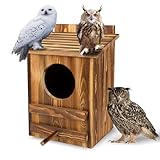
- High-Quality Natural Materials: Owl Houses for Outdoors are made of carbonized cedar wood to provide a safe perch for wild owls, preventing warping, cracking, and moisture, and effectively preventing rot, cracking, and discoloration
- Perfect Size: The Barred Owl Nesting Box measures 11.8 inches long, 9.5 inches wide, and 16.1 inches high, the larger size of the Outdoor Owl House provides a comfortable shelter for larger birds, and the entrance hole ensures that the owls have easy access to meet their resting and foraging needs
- Easy Installation: The Owl Nest Box comes with everything you need to install and is quick and easy to set up in minutes and can be quickly installed on trees, fences or gardening poles to attract owls to nest there
- Ventilated And Moisture-Proof: Owl Boxes for Outside features new design ,waterproof roof and ventilated side holes protect against rain while maintaining airflow, moisture and preservation, dry environment for long-term nesting owls have vital health issues
- Add a Touch Of Glamour To Your Your Patio: Ideal for birders, gardeners or nature lovers, an Owl Nesting Boxes for Outside enhances the biodiversity of your backyard, can provide years of reliable and safe habitat for wild owls, facilitates human observation and conservation, and adds rustic charm to your outdoor space
Are city owls safe near roads and airports?
No location should be assumed safe simply because an owl uses it. Project SNOWstorm documented snowy owls at roadsides, busy interchanges, industrial areas and airport margins. Those places may offer prey or open sight lines, but they also expose birds to vehicles, aircraft and other disturbance.
For observers, the safest practice is to watch from a legal, stationary position well away from traffic and restricted airport land. Never enter a roadway, pull onto a shoulder where stopping is prohibited, approach a runway boundary, or create noise and movement that forces an owl to fly. A bird repeatedly flushed from a roost loses energy and may abandon a useful site.
Urban risks extend beyond collisions. Bright lighting can alter nocturnal behavior, construction can remove roost trees, and crowded viewing can cause repeated disturbance. Rural birds face their own pressures, including habitat conversion and reduced prey, so “country” is not a synonym for protected.
Where can you look for an owl in an urban area?
- Start with habitat, not a famous landmark. Choose a park, woodland edge, meadow, wetland margin, railway woodland viewed from a public path, or brownfield site that is legally open to visitors.
- Check for connected cover. Prioritize places with mature trees, dense vegetation and nearby open hunting ground rather than isolated ornamental lawns.
- Visit at appropriate times. Many owls are easiest to detect around dusk, dawn or by their calls at night. Follow park closing rules and avoid entering dark or restricted areas.
- Listen before searching. Pause quietly at the edge of woodland or grassland. Use binoculars only from a distance; do not play calls to lure a bird.
- Record the context. Note the date, approximate time, habitat, behavior and whether the bird was seen or heard. Do not publish an exact nest or roost location if disclosure could attract crowds.
In London, the Owl Prowl project provides a public route for contributing sightings. Elsewhere, a local wildlife trust, natural-history society or established citizen-science scheme can explain which records are accepted and how sensitive locations are handled.
How to report an owl sighting responsibly
Submit a sighting through the relevant local wildlife organization’s form when one is available. Include the species identification or a cautious description, location at the level requested by the project, date, time, habitat and behavior. A photograph can help, but it should never require approaching the bird.
Recommended Free Tools
Best Value

- Spacious for Large Owls:With a large size of 14 inches x 25 inches, it perfectly fits large screeching owls such as the Barred Owl and the Barn Owl, providing a comfortable and spacious nesting space for natural breeding.
- Sturdy Wooden Build:Handmade solid wood construction stands up to rain, wind and outdoor elements, ensuring long-lasting use year-round.
- Owl-Friendly Entrance:Arched opening and textured grip grooves ease owl access, matching their natural movement for safe, easy entry.
- Easy to Install:Comes with mounting screws, wood shavings and pre-drilled parts—simple assembly in minutes, ready to mount on trees or posts.
- Rustic Garden Charm:Blends naturally with outdoor scenery, adding rustic wood texture to your yard while welcoming owls as backyard guests.
- Use “unknown owl” or a similar category when identification is uncertain.
- Distinguish a bird heard from one seen, and describe the call or visible features.
- Flag hazards such as a bird repeatedly sitting beside a high-speed road, while avoiding attempts to rescue or capture it yourself.
- Do not disclose nest, roost or fledgling locations publicly unless the project specifically asks for that detail.
Public records help organizations identify habitat and raise awareness, but they are not a complete census. Areas with more observers generate more reports, and elusive owls can remain undetected even where they are present.
What threatens urban owl habitat?
London Wildlife Trust identifies the loss of brownfield sites and garden vegetation as threats to owls in the inner city. Brownfields can be cleared for development, while mature gardens may lose trees, shrubs and rough ground through gradual landscaping. The effect is cumulative: each change can remove a roost, a hunting edge or the prey base that connects larger green spaces.
Management that retains mature trees, protects connected vegetation and keeps some grassland or scrub can preserve the structural variety owls use. Public access should be balanced with quiet refuges, especially during breeding periods. The same principle applies outside London: protect the features that provide cover and prey, not merely the label “park,” “reserve” or “countryside.”
How to interpret the city-versus-country evidence
The Portland profile, snowy-owl GPS stories and London records answer different questions. A photograph establishes that a northern pygmy owl used a Portland urban forest. Tracking shows where particular snowy owls traveled and roosted. London’s surveys and public records indicate that several species have occurred in a major city over multiple decades. None is a controlled comparison of survival or breeding success across all urban and rural habitats.
The defensible conclusion is conditional: owls can exploit cities when suitable habitat and prey remain, and they can use rural landscapes that are productive at a given time. The same places can contain serious hazards. Conservation works best when decisions are made at the site level—retaining cover, maintaining prey-rich edges, protecting movement routes and reducing disturbance—while using sightings to find gaps in knowledge.
Quick Recap
Product prices and availability are accurate as of the date/time indicated and are subject to change. Any price and availability information displayed on Amazon at the time of purchase will apply.






Say something about this film