What’s actually slowing this PC down?
Pick the symptom - the matching free tool is one click away.
Plain, dry-roasted, unsalted peanuts are the nut-like food best supported for backyard birds. Jays, crows, chickadees, titmice, woodpeckers, nuthatches, cardinals and finches are documented peanut eaters. Peanuts are legumes rather than botanical tree nuts, so evidence that birds accept peanuts does not automatically establish that almonds, walnuts, pecans or every other nut is safe.
The practical rule is simple: offer fresh peanuts without salt or sugar, keep them dry, put out only what birds will eat promptly, and discard anything moldy. The 13 names below are representative visitors within the documented bird groups—not a definitive worldwide count of exactly 13 nut-eating species.
Which birds eat peanuts?
Cornell Lab’s All About Birds reports that peanuts are popular with jays, crows, chickadees, titmice, woodpeckers and many other birds. National Audubon guidance also identifies woodpeckers, jays, nuthatches, chickadees and titmice as regular feeder visitors, and says cardinals and finches will eat peanuts. These observations concern common North American backyard-feeder groups; they are not a global census.
The table uses familiar species as examples within those documented groups. The source material establishes the groups’ peanut interest, not a ranked list proving that every named species eats peanuts in every location or season.
#1 Best Overall
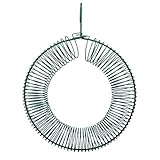
- Convenient Feeding: These peanut bird feeders are designed for outdoor use, allowing you to easily attract and nourish feathered friends in your backyard.
- Versatile Options: Choose from whole or shelled peanut feeders to cater to the preferences of different bird species visiting your garden.
- Durable Construction: Crafted with weather-resistant materials, these feeders can withstand the elements and provide long-lasting service.
- Easy Refilling: The feeders feature a simple design that allows for hassle-free refilling, ensuring a consistent supply of nutritious peanuts for your avian visitors.
- Attracting Variety: Both whole and shelled peanut feeders are appealing to a wide range of bird species, adding diversity and vibrancy to your outdoor space.
| Representative bird | Documented group | What the evidence supports |
|---|---|---|
| Blue Jay | Jay | Jays are reported as peanut users; individual species and local preferences vary. |
| Steller’s Jay | Jay | A representative jay, included as an example rather than a separate population estimate. |
| American Crow | Crow | Crows are among the groups Cornell identifies as attracted to peanuts. |
| Black-capped Chickadee | Chickadee | Chickadees are regular peanut-feeder visitors in Audubon’s guidance. |
| Tufted Titmouse | Titmouse | Titmice are specifically included among peanut-eating feeder birds. |
| Downy Woodpecker | Woodpecker | Woodpeckers are repeatedly identified as peanut visitors. |
| Red-bellied Woodpecker | Woodpecker | A representative woodpecker; availability depends on habitat and region. |
| White-breasted Nuthatch | Nuthatch | Nuthatches are named by Audubon as regular visitors that eat peanuts. |
| Red-breasted Nuthatch | Nuthatch | A second nuthatch example, not evidence of a complete species list. |
| Northern Cardinal | Cardinal | Audubon says cardinals will eat peanuts. |
| House Finch | Finch | Finches are included among birds that will eat peanuts. |
| Purple Finch | Finch | A representative finch; sightings and feeder use are local. |
| Other jay, crow, chickadee, titmouse, woodpecker, nuthatch, cardinal or finch species | Documented groups | These groups contain more potential visitors; the available sources do not establish an exact total of 13 species. |
Seeing one of these birds at a peanut feeder is not guaranteed. Weather, habitat, competing food, feeder placement and local abundance all influence visits.
What “nuts” are safe for birds?
Peanuts: the clearest supported choice
Peanuts are the food for which the cited guidance is specific. Audubon recommends de-shelled, dry-roasted, unsalted peanuts for winter feeding and says to check that no salt or sugar has been added. Choose packages whose ingredient list is simply peanuts, with no seasoning, sweet coating or flavored oil.
Peanuts are legumes that develop in pods underground. Calling them “nuts” in everyday bird-feeding language is common, but their botanical classification matters: peanut evidence cannot be generalized to every tree nut.
Tree nuts: do not assume a blanket endorsement
The available guidance does not establish the safety of almonds, walnuts, pecans, hazelnuts, pistachios or mixed tree-nut products. A nut can be unsuitable because of salt, sugar, spices, coatings, rancidity, contamination or mold, even if a bird can physically crack it. Without species-specific and preparation-specific evidence, treat those foods as unverified rather than automatically safe.
Outdated Drivers Are Slowing You Down
One free scan finds every outdated or missing driver and matches the right update for your exact hardware.Free scan · exact hardware matchPC Slower Than It Used to Be?
A free scan shows the junk files, broken settings and background clutter dragging Windows down - then fixes them in one click.Free scan · Windows 10 & 11Rank #2

- Convenient Feeding: These peanut bird feeders are perfect for outdoor use, helping you easily draw feathered friends to your yard and provide them with a reliable food source. With the dimension of 15.7″ x 11.7″, the feeders give multiple birds enough room to feed together.
- Built to Last: Made from weather-resistant metal materials, these peanut feeder for birds are built to withstand rain, sun, and wind, delivering reliable performance and long-lasting use in your backyard.
- Flexible Choices: Whether the birds visiting your garden prefer whole peanuts or shelled ones, our bird feeders handle both perfectly, helping you attract a wider range of bird species with different feeding preferences.
- Attracting Variety: By providing a consistent and generous supply of food source, this peanut wreath bird feeder encourages many varieties of birds to visit your outdoor space again and again, adding life and color to your backyard all season long.
- Low Maintenance: Thanks to its large capacity, you can spend less time on daily refills and more time enjoying the sight of happy birds—a convenient choice for busy bird lovers.
Mixed “wildlife nut” products also need scrutiny. If a blend contains salted human snacks, candy-like coatings or ingredients you cannot identify, it fails the plain-food test. A single safe ingredient does not make the entire mixture safe.
How to buy peanuts for a bird feeder
- Read the label: select plain peanuts with no added salt and no added sugar.
- Prefer dry-roasted preparation: this matches Audubon’s winter-feeding recommendation. Do not substitute heavily seasoned, honey-coated or oil-flavored snacks.
- Inspect before purchase: avoid packages with a musty smell, visible dampness, webbing or discolored kernels.
- Buy a size you can use promptly: a smaller package is safer than storing a large quantity where humidity can reach it.
- Keep them dry at home: seal the package and store it in a cool, dry place. Do not leave an opened bag in a damp shed or beside a leaking feeder.
Why freshness matters: aflatoxin and mold
Cornell Lab warns that peanuts can harbor aflatoxins. Moisture encourages mold, and some molds produce aflatoxin, a toxin that can kill birds. David Bonter, assistant director of Citizen Science and former Project FeederWatch leader at Cornell Lab, states: “Some molds produce a byproduct called aflatoxin, which is fatal to birds.”
Do not try to rescue questionable food by scraping, rinsing or roasting it again. Mold can penetrate beyond the part you see. Seal and discard moldy or damp peanuts, then wash your hands and clean the feeder and surrounding surface before refilling.
How to offer peanuts safely
De-shelled peanuts
De-shelled kernels are easy for smaller birds to carry and reduce shell litter. Put out a limited amount in a feeder that keeps food above droppings and drains rain. Refill only after checking that the remaining kernels are dry and clean.
Rank #3

- CLASSIC TUBE DESIGN: Attract all your favorite clinging birds to your yard with this large metal tube feeder; Easy-Cling 360-degree mesh feeding
- EASY TO REFILL AND CLEAN: Twist-off lid and large tube opening allow for easy filling with less spill and wasted seed; ALL parts can be removed for cleaning without the use of tools
- KEEP THE BIRDS HAPPY: Drain holes in seed tray promote rain drainage to keep seed fresh and prevents seed waste
- DURABLE QUALITY MATERIALS: Constructed from all metal with durable powder-coated materials for a long-lasting feeder
In-shell peanuts
Cornell Lab says in-shell peanuts can be placed on a platform feeder or a deck railing. This presentation suits birds that can grasp or hammer a shell, but it exposes food to weather and contamination. Use a stable surface, keep the quantity modest and remove leftovers before they become wet.
Platform and screened feeders
Platform feeders are flexible, but Cornell’s feeder guidance notes that food can remain exposed to rain and bird droppings. A draining design lets water escape instead of pooling under the food. A screened platform or covered tray can reduce contact with wet surfaces while still accommodating larger birds such as jays and woodpeckers.
Choose a feeder you can reach easily. If you cannot empty, scrub and dry it, its attractive design is a hygiene liability. Place it where falling shells and spilled kernels can be swept up, and keep it away from areas where pets may consume spoiled food.
A practical peanut-feeding routine
- Check the food: look for dampness, mold, insects, rancid odor or clumping before each refill.
- Clean the feeding surface: remove old shells, hulls and droppings; wash the tray or platform and let it dry fully.
- Measure a small serving: add only what local birds are likely to finish promptly rather than filling the feeder to capacity.
- Protect it from rain: use a roof, sheltered location or draining tray, while ensuring ventilation so humidity does not build up.
- Recheck later: after wet weather, inspect immediately and discard any food that has become damp or moldy.
- Adjust to demand: increase or decrease the amount based on actual consumption, not on the number of birds you hope to attract.
Common problems and fixes
Peanuts disappear overnight
Large birds, squirrels and other wildlife may remove food before smaller birds arrive. Put out a smaller morning portion, use a feeder opening suited to the birds you want to observe, or offer peanuts during daylight when you can monitor use. Do not respond by leaving a large pile out for days.
Do these 3 things before closing this tab:
1Repair Windows errors before they cause bigger problems2Scan for outdated or missing drivers - takes under a minute3Clear out junk files and repair common Windows errorsRank #4
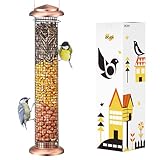
- 【Solid Wire Construction】the whole mesh tube allow many birds to cling onto and feed at the same time. When many birds come at a time and bring a most vibrant and lively scene.
- 【Work for many bird seeds 】It’s of great capacity and holds up to 1 pound of peanuts or sunflower seed. it can be filled with Shelled peanuts or peanut mixes and black oil sunflower seed without worrying seeds may fall out to ground.
- 【Many Birds Love this Feeder】A variety of birds use this feeder, Birds like Chickadee, Woodpecker, Nuthatch, Titmouse, Cardinal love this feeder and frequently come and feed on it when you have this feeder in your backyard or garden to enjoy watching many birds coming and going.
- 【No Assemble Required, Flip Top to Open, Easy Refill & Clean】Our bird feeder comes with a lift-lid for easy and convenient filling. Mesh compartment, easily to see when see runs out and replenish in time. Bottom tray designed for drainage to keep the feed stay fresh and direct the feed to the mesh.
Peanuts become wet
Move the feeder under a roof or choose a tray with drainage. Empty wet food immediately, clean the surface and refill with fresh dry peanuts. Drying visibly wet kernels does not guarantee that mold toxins are absent.
Birds ignore the feeder
Give birds time to discover a new location. Place the feeder near natural cover but with enough open space for birds to watch for predators. Confirm that the peanuts are plain and fresh, then adjust the serving size. Local species may simply have other foods available.
Shells and droppings accumulate
Use a tray you can remove, sweep the ground regularly and avoid overfilling. Accumulated waste can retain moisture and attract unwanted animals. Cleaning is part of safe feeding, not an optional cosmetic step.
You are unsure about a mixed nut product
Do not serve it until every ingredient and preparation is clear. Choose plain peanuts instead of guessing about salt, sugar, spices or coatings. The evidence for peanuts does not validate an unidentified blend.
Best Value

- [0.7cm Fine Mesh for Chew Resistant] iBorn Finch Bird Feeder features a thick all-metal top, base and 0.7cm/0.27’’ fine mesh, perfectly designed for finches and small birds to feed freely -while preventing squirrels from gnawing and raiding the feeder with outstanding outdoor sturdiness,slashing recurring replacement costs for fewer upkeep troubles, letting you enjoy peaceful backyard bird observation effortlessly.
- [All-Metal for Durable Use] This hanging bird feeder features full metal construction to withstand harsh weather like blazing sun and icy winter frost. The square metal mesh avoids bending & deformation, offering enhanced sturdiness and great anti-break performance. A perfect fit for your backyard, garden or lawn,it can stay outdoors for years on end, requiring barely any maintenance while letting you enjoy consistent delight from watching wild backyard avian visitors.
- [3-Step Tool-Free Disassembly for Easy Cleaning & Refilling] No extra tools required - the feeder can be fully taken apart in only 30 seconds. Simply lift the lid for quick seed refilling and twist off the fastener to detach the mesh tube from the base for thorough cleaning. Say goodbye to the repeatedly taking apart and reassembling bird feeders, so you can spend more relaxed time enjoying visits from garden birds.
- [360°Mesh Design for Versatile Feeding & Ideal Garden Gift] Featuring 360°surrounding metal mesh, iBorn feeder for outdoors allows birds to feed comfortably from any angle, while a wide rolled-rim tray with larger perching space ensures multiple birds to dine at the same time. It attracts plenty of finches and small wild birds to your backyard, and its elegant appearance also acts as a charming decor piece to elevate your garden view, making it a wonderful practical gift for bird lovers.
- [Large Rolled-Rim Tray | Less Spillage | 2.2 Lbs Capacity] Designed with a wide, surrounding seed tray, iBorn finch feeder helps prevent seeds from spilling out, reducing waste and lowering how often you need to refill. It also offers a generous 2.2 lbs seed capacity, keeping finches and wild birds well-fed and lingering in your garden longer.
How much confidence should you place in “13 birds” lists?
Lists with a precise number can imply a scientific count that does not exist. Cornell and Audubon identify several feeder groups that eat peanuts, but the cited material does not provide a definitive, current statistic for how many bird species eat nuts. It also does not establish worldwide coverage or prove that exactly 13 individually named species share the same response.
The popularity of feeding helps explain why the question is widespread. A Cornell Lab article reports that nearly 53 million Americans feed wild birds and stock home feeders with more than $5 billion worth of seed each year; it also cites an industry estimate of about four billion pounds of seed annually. Those figures are presented without a survey year or industry-estimate year in the passage, so they should not be read as current-year measurements.
Bottom line for a backyard feeder
Start with plain, dry-roasted, unsalted peanuts, preferably without shells when small birds are your priority. Jays, crows, chickadees, titmice, woodpeckers, nuthatches, cardinals and finches are the best-supported visitor groups. Keep servings small, protect food from rain, clean the feeder and throw away anything moldy. Because peanuts are legumes, this guidance is not a blanket safety ruling for tree nuts.
Quick Recap
Product prices and availability are accurate as of the date/time indicated and are subject to change. Any price and availability information displayed on Amazon at the time of purchase will apply.






Say something about this film