Free tools Windows power users keep installed
One-click scans. No signup required.
These eleven photographs from the 2017 Audubon Photography Awards show birds doing ordinary but revealing things: young Burrowing Owls pouncing in play, a Ruffed Grouse bathing in dust, a Northern Parula singing, and an American Avocet sweeping mud for food. Audubon Field Editor Kenn Kaufman presented the gallery on August 1, 2017, as an action-focused alternative to static bird portraits.
The gallery is archival rather than a current awards roundup. Its captions add natural-history context to each frame, but words such as “may,” “often,” and “generally” matter: a photograph captures one instant, while the caption proposes what that behavior can mean over a bird’s longer life.
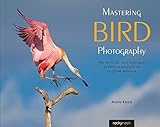


Why these photographs are different from ordinary bird portraits
A posed-looking portrait can establish a species’ colors and shape. An action photograph can show how that species spends time, solves a problem, communicates, or reacts to a neighbor. Kaufman’s framing is simple: “We don’t just look at birds—we watch them, and we watch them because they’re always doing things.” The eleven images therefore work as brief windows into feeding, care, movement, communication, defense, and social life.
The visible gesture is only part of each entry. A young owl appears to be pouncing; the caption explains why play may matter for later hunting. A woodpecker drops chips; the caption describes what happens as the cavity deepens. Reading both layers prevents a common mistake in wildlife photography: treating a single expressive frame as proof of a universal rule.
Recommended Free Tools
#1 Best Overall
“Birds are lovers and fighters, singers and dancers, hunters and players.”
The eleven moments, photo by photo
1. “Sibling Revelry” — Burrowing Owls learn through play
Young Burrowing Owls can grow up with as many as a dozen siblings. In this image, the youngsters are above ground, running and pouncing on objects or on one another. The movement looks recreational, but the caption connects it to practical development: play may help the owls rehearse skills that will be useful when they hunt.
That interpretation also explains why a family scene belongs in an awards gallery about behavior. The photograph does not show a completed hunting technique; it shows repeated, low-stakes practice among nestmates. “May” is important here. The caption offers a function for the behavior, not a claim that every pounce has been measured or that all play has one purpose.
2. “How Vane” — A Reddish Egret maintains its feathers
The Reddish Egret is caught preening, using its bill to tend the feather surfaces that make flight and insulation possible. Kaufman notes that a bird may spend up to several hours a day preening. The long plumes being arranged in this frame are associated in the caption with the bird’s breeding-season appearance, so the action is both maintenance and part of looking its best at a particular time of year.
Preening is easy to overlook because it is quiet compared with a chase or a display. Yet the hours invested in it show how much of a bird’s day can be devoted to upkeep. The image turns that routine into an observable behavior rather than background detail.
3. “Flight School” — Peregrine Falcon fledglings practice in the air
Young Peregrine Falcons practice flying by following their parents. The photograph records a stage between dependence and independence, when a fledgling must build control, timing, and confidence while staying close to an experienced adult.
The caption raises two possible explanations for a parent dropping prey. It may be practice for the fledglings, giving them a moving target or a chance to attempt a capture. Alternatively, the adult may be trying to avoid being mobbed by its own eager young. The image cannot decide between those explanations, and the caption does not pretend that it can. That uncertainty is part of reading wildlife behavior honestly: the same action can serve more than one immediate purpose.
4. “A Good Dust Off” — Ruffed Grouse bathe without water
A Ruffed Grouse throws itself into loose soil for a dust bath, even though water is available elsewhere. Kaufman lists parasite control and the removal of fatty grease from feathers as possible functions. Neither is presented as a certainty for this individual bird, but both explain why dust bathing can be worthwhile.
The Tool Desk
Outbyte PC Repair FREERepair Windows errors before they cause bigger problemsFix Now →Outbyte Driver Updater FREEScan for outdated or missing drivers - takes under a minuteDriver Scan →The behavior also demonstrates that birds do not reserve bathing for ponds or rain. Dry material can reach places that water cannot, and the vigorous tossing shown in the photograph likely works the particles through the plumage. What looks messy to a human observer may be a form of routine body care.
5. “Reunited” — Northern Gannets return to a long-term partner
Northern Gannet pairs generally mate for life, yet the partners separate during fall and winter. When they meet again at the nest site in spring, they use recognizable rituals that include bowing and beak-fencing. The photograph freezes that reunion, while the caption supplies the seasonal story around it.
Calling the pair bond “generally” lifelong leaves room for the variation that occurs in real populations. The important point is behavioral recognition: the spring meeting is not a random encounter at a crowded colony. A repeated greeting helps partners re-establish contact and coordinate the breeding season after months apart.
6. “One King to Rule Them All” — An Eastern Kingbird defends its nest area
The Eastern Kingbird is smaller than a robin, but the bird in this frame is willing to chase much larger species away from the area around its nest. The caption specifically includes Bald Eagles among the birds it may drive off. That contrast between body size and defensive boldness is the photograph’s visual punch.
Rank #3
Nest defense is not the same as winning a physical fight. A fast approach, repeated pursuit, or sudden change of direction can persuade an intruder that remaining nearby is not worth the trouble. The image therefore documents territorial pressure and risk-taking, not a contest in which the smaller bird overpowers the larger one.
7. “The World Is A Dance Floor” — Blue Cranes turn courtship into a long display
Kaufman states that all 15 crane species perform elaborate dances as social interaction. In the Blue Crane image, a courting pair may bow, stretch, flap its wings, leap, and call. The sequence can last as long as four hours, making the visible instant one part of a much longer performance.
Dance here is not a human metaphor pasted onto random motion. The caption identifies a collection of coordinated actions that communicate within a pair and may reinforce a courtship bond. Because the display is extended, a single photograph cannot show its full rhythm; it gives viewers a memorable entry point into behavior that unfolds over time.
8. “Chips Away!” — A Red-bellied Woodpecker excavates a nest cavity
The male Red-bellied Woodpecker is shown dropping a beakful of chips from a new nest hole. Excavation produces obvious debris, but the caption adds an important second stage: as the cavity deepens, the woodpecker later clears material from inside rather than allowing the entrance to clog.
Windows Errors? Fix Them Before They Spread
Repair common Windows errors and clear accumulated junk for a smoother, more stable PC - no reinstall needed.Free scan · no reinstallOutdated Drivers Are Slowing You Down
One free scan finds every outdated or missing driver and matches the right update for your exact hardware.Free scan · exact hardware matchThat distinction separates construction from simple pecking. Each chip marks progress toward a usable chamber, and clearing the hole is part of the same building job. The photograph catches the outward movement of material; the explanation asks viewers to imagine the repeated work that the frame cannot contain.
9. “Come at Me, Bro” — Two perch rivals rely on bluff
A Curve-billed Thrasher and a White-winged Dove compete over a prominent cholla perch. Their postures suggest a confrontation, but Kaufman describes this example as bluff and bluster: the birds do not actually fight.
Rank #4
That restraint matters when interpreting dramatic bird poses. Threat displays can settle access to a valuable lookout without the injuries and energy costs of contact. The image records a negotiation conducted through appearance and attitude, not a failed battle. It is a useful reminder that apparent aggression may be a way to avoid escalation.
10. “Built to Filter” — An American Avocet feeds at the surface
The American Avocet’s upturned bill is a specialized feeding tool. The bird sweeps the tip through surface water or mud, filtering small prey from the material it disturbs. In the photograph, the curved bill is not merely a distinctive shape for identification; it is visibly engaged in the job that shape makes possible.
What’s actually slowing this PC down?
Pick the symptom - the matching free tool is one click away.
This is an example of a behavior whose function can be inferred directly from anatomy and motion. The avocet’s repeated sweep covers a feeding zone while the filter-like action separates tiny food items. Watching the bill work explains more about the species than a still view of its profile would.
11. “Belt It Out” — A Northern Parula uses more than one song routine
Male songbirds sing to defend breeding territory and to attract or communicate with females. The Northern Parula in this frame illustrates both the sound and the schedule of that work: the caption says the species uses different song types at dawn and during the day for distinct purposes.
That detail encourages listeners to notice time of day, not just species identity. A dawn song and a daytime song may carry different social information, so hearing a Parula at one hour does not necessarily mean it is doing the same communicative job at another. The photograph supplies the performer; the caption supplies the behavioral context that ears alone may miss.
Independent reader supportYour contribution helps us test, update, and keep practical guides available for everyone.How to interpret an action photograph responsibly
Each entry combines an observable event with a proposed longer-term function. The distinction is useful for anyone watching birds in a yard, park, or wildlife refuge.
Best Value
- Start with what is visible. Describe the posture, movement, object, or interaction before assigning a motive.
- Keep the time scale separate. A captured instant may represent a behavior repeated for minutes or hours, such as a crane dance or extended preening.
- Preserve qualifiers. “May,” “often,” and “generally” signal that the caption is describing a tendency or possible function, not an exception-free law.
- Look for the social setting. Siblings, mates, rivals, parents, and intruders create different pressures even when the motion looks similar.
- Use anatomy as evidence, not decoration. The avocet’s bill and the woodpecker’s bill make sense when linked to the work shown in the frame.
This approach also clarifies what the gallery does not establish. It does not provide a controlled test of why every Ruffed Grouse dust-bathes, prove that every Peregrine prey drop is instructional, or show the complete duration of every display. It offers carefully captioned examples from one awards collection.
Identifying the birds and learning their sounds
Audubon’s 2017 article points readers to an identification app that taught songs and behaviors for 821 North American species at the time of publication. That number belongs to the 2017 article and should not be read as a current species count; app coverage can change as editions are updated.
For a practical follow-up, identify the bird first by several features—shape, bill, habitat, behavior, and range—then compare recordings and notes rather than relying on a single visual match. A printed North American field guide can complement an app when you want side-by-side range maps and plumage plates, but the gallery itself does not name a specific book or edition.
An archival gallery worth revisiting
Published August 1, 2017, this collection remains useful because its subject is not a yearly ranking. The award date places the photographs in a particular competition; the behaviors give them lasting value. Play, grooming, flight practice, bathing, reunion, defense, display, construction, bluff, feeding, and song are all ordinary parts of avian life, yet each becomes newly legible when a decisive moment is preserved.
Kaufman’s invitation still describes the gallery well: “See below for eleven glimpses into the fascinating lives of our feathered neighbors.” Taken together, the images ask viewers to spend less time searching for a perfect pose and more time watching what birds are actually doing.
Quick Recap
Product prices and availability are accurate as of the date/time indicated and are subject to change. Any price and availability information displayed on Amazon at the time of purchase will apply.






Say something about this film