
Some links on this page are affiliate links: if you buy through them we may earn a commission, at no extra cost to you.
There is no objective shortlist of bad songs on great albums. The interesting question is why a track can feel like a letdown beside an album’s highlights—and why another listener may hear it as a favorite, a useful detour, or an essential part of the record.
What makes a song feel bad on a great album?
“Bad” is a judgment, not a measurable property. A track may seem weak because its songwriting or lyrics disappoint, its sound clashes with the record, its experiment does not land, or its placement interrupts the album’s flow. Sometimes it is simply less memorable than the songs around it. Those are different criticisms, and they need not lead to the same verdict.


Rolling Stone’s Andy Greene introduced a February 2025 list of 50 picks with the line, “There’s always one,” describing the target as a track that “sucks to such a profound degree that it almost feels like a sick joke.” That is the framing of Greene’s list, not a settled judgment shared by every listener. Read the list and its selections.
Free tools Windows power users keep installed
One-click scans. No signup required.
Rolling Stone feature writer Brian Hiatt posed the broader puzzle in March 2025: “How does a truly terrible song end up an otherwise flawless album?” His feature suggests possible explanations such as band politics, a studio experiment, a personal songwriting choice, a shortage of ideas, or simple bad judgment. Those are possible ways to think about the puzzle—not confirmed accounts of how any specific song was made. Read Hiatt’s feature.
Popular on Amazon
Why “most skippable” is not the same as “worst”
A song can be worth hearing and still be the one a listener skips. “Most skippable” describes what happens during a particular listening experience; “worst” is a broader judgment about quality. A completionist may want every track, while someone focused on pacing may skip a song that breaks the mood. WatchMojo’s “most skippable” framing makes that distinction visible, even when its examples overlap with criticism of a track’s quality. See WatchMojo’s list.
When deciding whether a song is a genuine weak point or simply a personal skip, consider what is not working for you: the writing, the performance, the sound, the fit with the album, or its place in the sequence. A track that feels disruptive in one context may be a welcome change of pace to another listener.
Also popular on Amazon
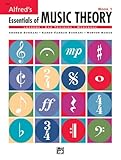
- An all-in-one music theory course designed for students of any age — whether listeners or performers — who want a solid understanding of the language of music
- Covers foundational concepts including staff, notes, pitches, clefs, time signatures, note values, dynamics, flats, sharps, and whole and half steps across 25 concise lessons
- Combines reading and writing exercises with ear-training support (CDs sold separately) and unit reviews to reinforce learning and test knowledge retention
- Compatible with optional computer software featuring randomized drilling and scorekeeping for interactive, self-paced study
- Part of a complete product line including Teacher's Answer Keys, Flash Cards, Double Bingo games, and Reproducible Teacher's Activity Kits for studio and classroom use
Three disputed tracks, three different kinds of mismatch
Stone Roses: “Don’t Stop”
Rolling Stone’s list argues that “Don’t Stop” feels misplaced after “Waterfall”: it is a reversed and altered reprise that, in the list’s view, interrupts the album’s sequence. The criticism is about both the track’s unusual construction and where it appears, rather than proof that listeners agree on its quality. Greene’s list discusses the track.
The Tool Desk
Outbyte PC Repair FREEClear out junk files and repair common Windows errorsFree Scan →Outbyte Driver Updater FREEFix the driver behind crashes, sound loss and screen glitchesFind Drivers →The Police: “Mother”
WatchMojo presents “Mother,” from Synchronicity, as jarring. That description points to a question of fit: does the track’s effect feel like a purposeful break from the surrounding album, or a distraction from it? The answer depends on the listener’s tolerance for that contrast, not just on whether the song is easy to skip. WatchMojo’s list includes the example.
Also popular on Amazon
Elton John: “Jamaica Jerk-Off”
Classic FM’s 2026 list criticizes the song on Goodbye Yellow Brick Road for its vocal accent, lyrics, and arrangement. Those are specific objections from that critic, not evidence that the song is universally disliked. Read Classic FM’s discussion.
Independent reader supportYour contribution helps us test, update, and keep practical guides available for everyone.Why the disagreement is part of the point
A list can tell readers what one critic hears as a flaw; it cannot settle how a song works for everyone. The same track may strike one listener as an awkward detour and another as a deliberate experiment or a personal highlight. Rolling Stone’s feature includes Bono’s comment about U2’s “The Playboy Mansion”: “It’s contemporary references work against it.” That observation is specific to that song and Bono’s assessment, not a general rule about references in lyrics. The Rolling Stone list includes the comment.
Also popular on Amazon

- Format: Book & 2 CDs
- Category: Textbook - General
- Contributors: By Andrew Surmani, Karen Farnum Surmani, and Morton Manus
- Pub Date: 8/2004
- Series: Essentials of Music Theory
So if you are asking, “Which song do you always skip on your favorite album?” the answer can be personal without being a universal ranking. And if you are asking, “Are there any great albums with one really bad song on them?” the best examples are ones where the critic explains both why the album is admired and what, specifically, makes the disputed track feel weaker or out of place. The argument is more useful than pretending a subjective verdict is settled.
Do these 3 things before closing this tab:
1Fix the driver behind crashes, sound loss and screen glitches2Repair Windows errors before they cause bigger problems3Scan for outdated or missing drivers - takes under a minute





Say something about this film