Some links on this page are affiliate links: if you buy through them we may earn a commission, at no extra cost to you.
If you play lo-fi while working, sleep sounds overnight, or children’s music on a family account, those hours can shape what Apple Music recommends. The missing control is simple: keep listening to a playlist, but tell the service not to use it to define your taste. As of August 2026, Apple’s support documentation does not show a playlist-level equivalent to Spotify’s “Exclude from your taste profile.” Apple’s closest workaround is to turn off listening history globally, which affects more than the playlist you want to filter.
The problem is context, not the music
A playlist can be useful without representing what you want in your personalized mixes. You might put on instrumental music for a workday, a sleep playlist for the night, ambient tracks for meditation, or a children’s playlist for a car ride. A party, shared household, shop, or office can produce the same mismatch. The issue is that long or repeated background sessions may contribute listening signals even when the music is serving a practical purpose rather than expressing your core taste.
Apple says listening history helps inform recommendations and Replay, but it does not publish a precise formula explaining how each play, hour, artist, or playlist is weighted. So it is fair to say background listening can influence personalization; it is not possible to say exactly how much any one session changes a particular mix.
What’s actually slowing this PC down?
Pick the symptom - the matching free tool is one click away.
The missing control: exclude a playlist, not the music
Spotify’s “Exclude from your taste profile” control addresses this specific problem. Spotify lets a listener exclude a whole playlist or an individual track from influencing recommendations and taste summaries, while continuing to play it. The distinction matters: “I want to hear this” is not always the same as “use this to infer what I like.”
#1 Best Overall

- REBUILT FOR COMFORT — AirPods 4 have been redesigned for exceptional all-day comfort and greater stability. With a refined contour, shorter stem, and quick-press controls for music or calls.
- PERSONALIZED SPATIAL AUDIO — Personalized Spatial Audio with dynamic head tracking places sound all around you, creating a theater-like listening experience for music, TV shows, movies, games, and more.*
- IMPROVED SOUND AND CALL QUALITY — AirPods 4 feature the Apple-designed H2 chip. Voice Isolation improves the quality of phone calls in loud conditions. Using advanced computational audio, it reduces background noise while isolating and clarifying the sound of your voice for whomever you’re speaking to.*
- MAGICAL EXPERIENCE — Just say “Siri” or “Hey Siri” to play a song, make a call, or check your schedule.* And with Siri Interactions, now you can respond to Siri by simply nodding your head yes or shaking your head no.* Pair AirPods 4 by simply placing them near your device and tapping Connect on your screen.* Easily share a song or show between two sets of AirPods.* An optical in-ear sensor knows to play audio only when you’re wearing AirPods and pauses when you take them off. And you can track down your AirPods and Charging Case with the Find My app.*
- LONG BATTERY LIFE — Get up to 5 hours of listening time on a single charge. And get up to 30 hours of total listening time using the case.*
Apple Music offers adjacent controls, but they solve different problems:
- Exclude a playlist from your taste profile: The targeted control the complaint is about. Apple’s reviewed support documentation does not identify an equivalent playlist-level control.
- Dislike or Suggest Less: Feedback that asks Apple Music to recommend less of a song or kind of music. It is not ideal when you genuinely like the music but only want to exclude a listening context.
- Hide from your profile: A visibility setting for what followers can see, not a documented way to remove listening from recommendation signals.
- Turn off Use Listening History: A broad control that stops history from informing recommendations and Replay; it is not limited to one playlist.
- Remove a song from a playlist: Changes the playlist itself, not how its listening affects personalization.
Apple’s current documentation explains personalized recommendations and history controls, but does not document a “keep playing this, don’t count it toward my profile” option. That is the meaningful gap. (See Apple’s iPhone guidance and its Music personalization guidance for Mac.)
Rank #2

- WORLD’S BEST IN-EAR ACTIVE NOISE CANCELLATION — Removes up to 2x more unwanted noise than AirPods Pro 2* so you can stay fully immersed in the moment.*
- BREAKTHROUGH AUDIO PERFORMANCE — Experience breathtaking, three-dimensional audio with AirPods Pro 3. A new acoustic architecture delivers transformed bass, detailed clarity so you can hear every instrument, and stunningly vivid vocals.
- HEART RATE SENSING — Built-in heart rate sensing lets you track your heart rate and calories burned for up to 50 different workout types.* With iPhone, you will have access to the Move ring, step count, and the new Workout Buddy,* powered by Apple Intelligence.*
- LIVE TRANSLATION — Communicate across language barriers using Live Translation,* enabled by Apple Intelligence.*
- EXTENDED BATTERY LIFE — Get up to 8 hours of listening time with Active Noise Cancellation on a single charge. Or up to 10 hours in Transparency using the Hearing Aid feature.*
Apple Music’s best workaround: turn off listening history
If you want to keep background music from informing personalization, Apple’s documented workaround is to disable Use Listening History while that listening is happening. The trade-off is scope: it turns off history-based personalization more broadly, rather than excluding only the session or playlist you have in mind.
Windows Errors? Fix Them Before They Spread
Repair common Windows errors and clear accumulated junk for a smoother, more stable PC - no reinstall needed.Free scan · no reinstallCrashes, No Sound, or Screen Glitches?
Random freezes, missing sound and display glitches usually trace back to one bad driver. Find and replace yours safely.Free scan · under a minuteOn iPhone or iPad
- Open Settings.
- Tap Apps, then Music.
- Turn off Use Listening History.
Apple says this setting prevents listening habits from adjusting new recommendations and Replay content. Apple also says played music will not appear to Apple Music followers while the setting is off. The exact interface can vary as operating-system versions change; Apple’s documented route is in its iPhone guide.
Rank #3
- REBUILT FOR COMFORT — AirPods 4 have been redesigned for exceptional all-day comfort and greater stability. With a refined contour, shorter stem, and quick-press controls for music or calls.
- ACTIVE NOISE CANCELLATION — AirPods 4 with Active Noise Cancellation help reduce outside noise before it reaches your ears, so you can immerse yourself in what you’re listening to.*
- HEAR THE WORLD AROUND YOU — The powerful H2 chip comes to AirPods 4. Adaptive Audio seamlessly blends ANC and Transparency mode — which lets you comfortably hear and interact with the world around you exactly as it sounds — to provide the best listening experience in any environment.* And when you’re speaking with someone nearby, Conversation Awareness automatically lowers the volume of what’s playing.*
- IMPROVED SOUND AND CALL QUALITY — Voice Isolation improves the quality of calls in loud conditions. Using advanced computational audio, it reduces background noise while isolating and clarifying the sound of your voice for whomever you’re speaking to.*
- MAGICAL EXPERIENCE — Just say “Siri” or “Hey Siri” to play a song, make a call, or check your schedule.* And with Siri Interactions, now you can respond to Siri by simply nodding your head yes or shaking your head no.* Pair AirPods 4 by simply placing them near your device and tapping Connect on your screen.* Easily share a song or show between two sets of AirPods.* An optical in-ear sensor knows to play audio only when you’re wearing AirPods and pauses when you take them off. And you can track down your AirPods and Charging Case with the Find My app.*
On Mac
- Open the Music app.
- Choose Music > Settings.
- Open the General tab.
- Turn off Use Listening History.
Apple says this prevents listening history from influencing recommendations and Replay. See Apple’s Mac instructions.
On Android
Apple’s Replay guidance says Android users can open Apple Music settings using the More button and switch Use Listening History on or off. Look under the app’s settings, since placement or wording can differ by version. Apple’s Replay support page covers the history requirement across devices.
Rank #4
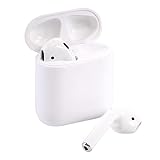
- Automatically on, automatically connected
- Easy setup for all your Apple devices
- Quick access to Siri by saying “Hey Siri”
- Double-tap to play or skip forward
- New Apple H1 headphone chip delivers faster wireless connection to your devices
Use a Focus for a listening context
For recurring situations—such as playing music for a child—Apple suggests setting up a custom Focus that turns off Use Listening History. That is closer to separating contexts than leaving history off all the time, but it remains a manual workaround: history is disabled globally while the Focus is active, not just for a chosen playlist. Remember to turn it back on when you return to personal listening.
Do these 3 things before closing this tab:
1Repair Windows errors before they cause bigger problems2Scan for outdated or missing drivers - takes under a minute3Clear out junk files and repair common Windows errorsWhat the workaround does—and does not—change
- It does not filter one playlist. Apple’s switch applies broadly to listening history.
- It may change recommendations and Replay. Apple says history affects both. Replay uses listening history, play counts, and listening time; Apple says history must be enabled across devices for Replay. See Apple’s Replay explanation.
- It affects follower visibility too. Apple says played music is hidden from followers while Use Listening History is off. That is a side effect, not the purpose of a recommendation-exclusion feature.
- It requires attention. Forgetting to switch history back on can leave personal listening out of the signals you intended to keep.
- It is not a guaranteed reset. Apple’s documentation describes the setting’s general effect, not an instant timetable for every existing playlist or recommendation. Do not assume old signals are erased or every mix immediately rebuilt.
For one-off background sessions, toggling history may be tolerable. For nightly sleep playlists or frequent family listening, a global switch can quickly become inconvenient.
Best Value

- Active Noise Cancellation blocks outside noise, so you can immerse yourself in music
- Transparency mode for hearing and interacting with the world around you
- Spatial audio with dynamic head tracking places sound all around you
- Adaptive EQ automatically tunes music to your ears
- Three sizes of soft, tapered silicone tips for a customizable fit
Why “Suggest Less” is not the same thing
Apple provides item-level feedback such as Favorite, Dislike, and Suggest Less. These can help tune recommendations when you want less of a song or sound. But using negative feedback on music you actually enjoy can send the wrong message. “Suggest Less” means, in effect, “show me less of this.” The missing control would mean: “I still want to listen to this, but don’t use it to define me.” Apple documents the feedback options in its Music personalization guide.
Does hiding a playlist from your profile help?
No, not for this problem. Apple’s profile controls address what followers can see. Hiding an item from a profile is not documented as removing its listening from recommendation history. Public visibility and private personalization are separate concerns. Apple explains profile visibility in its guide to hiding music from an Apple Music profile.
Apple Music vs. Spotify for background listening
| Need | Apple Music | Spotify |
|---|---|---|
| Exclude one playlist from taste-based recommendations | No equivalent is identified in Apple’s reviewed documentation | Yes: exclude a playlist from your taste profile |
| Exclude one track | No equivalent is identified in Apple’s reviewed documentation | Yes: exclude an individual track |
| Turn listening history off broadly | Yes: Use Listening History | Spotify has separate privacy and recommendation controls; these should not be confused with playlist exclusion |
| Timing and refresh expectations | Apple does not specify a refresh timetable for every playlist | Spotify says changes may take up to 48 hours, and some recommendations may not update until the following week |
| Effect on annual summaries | Apple says history affects Replay | Spotify says excluded streams do not count toward Wrapped data points other than total listening time |
Spotify’s exclusion is not a magic eraser for every play: Spotify says a track from an excluded playlist can still count if you play it elsewhere, such as from Liked Songs. Spotify also warns that recommendation changes can take time. Its control is nevertheless more precise for the central use case: listening to a playlist without letting that playlist define your taste.
Which option makes sense?
- Stay with Apple Music and use a Focus if you value Apple’s ecosystem and background listening happens in predictable blocks you can manage. Be prepared for a global history toggle and its Replay and profile-visibility effects.
- Use Favorite, Dislike, or Suggest Less selectively if the issue is a few unwanted recommendation signals, rather than an entire category of listening you still enjoy.
- Separate the listening context with another account or service if sleep, work, or family playback is frequent. A second Apple account may add friction around subscriptions, libraries, downloads, Family Sharing, and device switching; it is not a seamless fix.
- Consider Spotify if selective control over playlist and track influence is the deciding feature. Its official support instructions explain how to exclude and later include listening. Switching services can mean moving playlists or rebuilding parts of a library, so weigh that work against how much the recommendation problem bothers you.
There is no need to switch solely because Apple Music’s recommendations are necessarily worse; the documented difference is control. Apple offers a broad history switch and feedback tools, while Spotify offers an explicit exclusion option. Which matters more depends on whether ecosystem features or selective recommendation control is the priority.
The verdict
The complaint remains valid in 2026, with an important update: Apple Music has tools for personalization, but its documented options do not provide a clean middle ground between counting all listening and turning listening history off globally. A playlist-level exclusion would let subscribers use Apple Music for work, sleep, family, or ambient listening without asking those sessions to define their taste. Until Apple documents that control, Focus and Use Listening History are workarounds—not replacements.
Quick Recap
Product prices and availability are accurate as of the date/time indicated and are subject to change. Any price and availability information displayed on Amazon at the time of purchase will apply.

