Some links on this page are affiliate links: if you buy through them we may earn a commission, at no extra cost to you.
Al Swearengen is Deadwood’s fictional Gem Saloon proprietor and one of the camp’s central power brokers, played by Ian McShane. He is coercive, violent and ruthlessly transactional, yet the series repeatedly gives his relationships and flashes of recognition enough complexity to resist a simple villain label.
“Despicable Mack Daddy” works as a provocative description of that combination of sexualized authority, manipulation and brutality. It has not been verified as dialogue from the show or as an established nickname, so it should be read as editorial language rather than canon.
| # | Preview | Product | Price | |
|---|---|---|---|---|
| 1 |
|
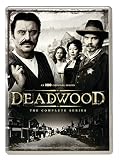
Deadwood: The Complete Series (RPKG/DVD) | $24.99 | Buy on Amazon |
| 2 |
|
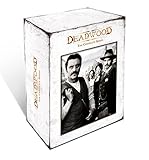
Deadwood: The Complete Series | $56.03 | Buy on Amazon |
| 3 |

|
Deadwood: The Complete Series (RPKG/DVD) | $49.45 | Buy on Amazon |
| 4 |

|
Deadwood: The Complete Seasons 1-3 [DVD] | $72.31 | Buy on Amazon |
| 5 |

|
Deadwood: Season 2 | $11.70 | Buy on Amazon |
What makes Al Swearengen powerful in Deadwood?
Swearengen’s authority begins with a business but does not end at its doors. The Gem Saloon is a social hub, a source of liquor and entertainment, and a place where information changes hands. His operation also includes prostitution, giving him access to money, secrets and a steady flow of people who need something. That position lets him influence decisions far beyond the saloon itself.
Do these 3 things before closing this tab:
1Scan for outdated or missing drivers - takes under a minute2Clear out junk files and repair common Windows errors3Fix the driver behind crashes, sound loss and screen glitchesHe also commands a network of subordinates and allies. The arrangement is less like a formal office than a personal system held together by loyalty, fear, obligation and shared interests. A request from Swearengen can carry the force of an order because people understand what he can reward, withhold or threaten. His power is therefore practical: he controls resources and relationships in a settlement where those connections matter.
Popular on Amazon
This is why the character remains consequential even when he is not physically present in a scene. A conversation can be shaped by the possibility that information will reach him, that his employees will intervene, or that his business interests will be affected. Deadwood presents influence as something built through daily transactions, not merely through official title.
| Source of influence | What it gives Swearengen | How the series uses it dramatically |
|---|---|---|
| Gem Saloon proprietorship | A central meeting place and commercial base | Private deals and public tensions overlap in the same room |
| Brothel operation | Income, access and information | Sexual authority becomes part of his political leverage |
| Subordinates and allies | Reach beyond his own physical actions | Orders, favors and threats can travel through a network |
| Reputation for coercion | Compliance without constant direct force | Other characters weigh the consequences of crossing him |
Is “Despicable Mack Daddy” an actual Deadwood quote?
No reliable evidence in the available episode material establishes the phrase as a line of dialogue or a standard epithet for Swearengen. It should not be put in quotation marks as though another character says it, and it should not be presented as an official nickname.
As an interpretive label, however, the phrase points toward real features of the character. “Despicable” identifies the cruelty and exploitation embedded in his methods. “Mack daddy” evokes a man who performs sexual and economic mastery at once: he runs a brothel, controls access to women and money, and expects his authority to be recognized as a fact of life. That reading is an argument about the character, not a piece of show terminology.
Recommended Free Tools
The distinction matters because Deadwood’s language is unusually quotable. Fans often remember a line’s rhythm or attitude while losing the exact wording and scene. A colorful description can acquire the appearance of a quotation when it is repeated online. Treating the phrase as analysis keeps the article honest while still allowing it to explain why Swearengen provokes such strong reactions.
Also popular on Amazon
- Deadwood: The Complete Series
Why Swearengen is genuinely despicable
Coercion as a routine business tool
Swearengen does not regard consent, fairness or transparency as fixed limits. He applies pressure until another person’s available choices narrow to the one he prefers. Sometimes that pressure is explicit; sometimes it is the knowledge that he can make a problem worse. In either form, coercion turns ordinary commerce into a contest of endurance.
His authority is especially troubling because it can look like competence. He is organized, alert to opportunity and able to read a room. Those skills help him keep a business functioning, but they also make exploitation efficient. The character’s intelligence does not redeem the harm; it explains why the harm can be so persistent.
Violence behind the performance
Violence is not an accidental outburst in Swearengen’s world. It is one of the options his system keeps available. The threat of force supports negotiations, protects revenue and disciplines people who become liabilities. Even when he delegates an act, responsibility remains part of his characterization because the network exists to extend his will.
Quick wins for a faster PC:
Repair Windows errors before they cause bigger problemsFix Now →Fix the driver behind crashes, sound loss and screen glitchesFind Drivers →This is where the “despicable” portion of the label has its strongest foundation. A charming manner or a clever speech cannot erase the people damaged by decisions made for profit, control or self-preservation. Deadwood asks viewers to notice the gap between Swearengen’s theatrical confidence and the human cost of maintaining it.
Also popular on Amazon
- Runtime: 2006 minutes
Sexualized authority
The Gem’s brothel business gives Swearengen a form of power that is both intimate and commercial. He profits from an environment in which desire, vulnerability and money are tightly linked. Calling him a “mack daddy” therefore highlights more than sexual swagger. It describes a performance of patriarchal ownership: he acts as though people, rooms and opportunities are extensions of his domain.
That performance can be seductive to watch because it is vivid and often funny. The danger is mistaking theatrical control for moral authority. His jokes and bravado are methods of managing attention. They can make brutality seem like part of a colorful persona rather than a series of choices with consequences.
Why he is not only a villain
The series complicates Swearengen without clearing him of wrongdoing. He can recognize another person’s humanity, form attachments and act out of motives that are not reducible to immediate profit. Those moments do not cancel coercion or violence; they reveal a character capable of more than one kind of calculation.
What’s actually slowing this PC down?
Pick the symptom - the matching free tool is one click away.
A 2019 TIME essay, “If You Want to Know Why Deadwood Is a Classic, Look to Its Women,” treats Swearengen’s exchange with Dolly in the final season as a moment of recognition and development. The essay reads that encounter as part of a movement from apparent villain toward a more conflicted antihero. This is critical interpretation rather than an official character statement, but it offers a useful way to understand the show’s design: Swearengen’s humanity appears in contact with other people, not in isolation from the harm he causes.
Also popular on Amazon
Dolly’s significance in this reading is not that she magically reforms him. Instead, the exchange creates a limit to his usual performance. Someone sees him, or he sees someone else, in a way that cannot be reduced to a deal. The resulting hesitation or recognition makes his earlier behavior more, not less, morally legible. Viewers are invited to ask what he understands and chooses to ignore.
That tension is the basis of the antihero reading. An antihero is not a hero with rough edges; the term describes a protagonist whose methods and ethics are compromised. Swearengen can be compelling because the story gives him interior pressure and relationships, while still requiring the audience to remember who benefits from his power and who bears its costs.
Ian McShane’s role in the character’s impact
Ian McShane’s performance is central to how Swearengen’s contradictions reach the audience. The character can move from threat to humor to apparent reflection without becoming a different person. That continuity makes every change in tone meaningful: a joke may conceal intimidation, while a pause may expose uncertainty that the usual swagger cannot cover.
The performance also prevents a single moral register from settling over the character. If Swearengen were played only as a monster, his business and relationships would feel mechanical. If he were played only as a charismatic rogue, the violence would become decorative. McShane’s version holds both possibilities in the same figure, allowing the audience to enjoy the craft of the performance while judging the conduct it portrays.
Also popular on Amazon
- Format: DVD. ISBN: 0-7831-3537-8 . MPAA: NR .
- Number of Discs: 8. Sound Track Language: English. Subtitles: English, Francais, Espanol .
- Aspect Ratio: Widescreen [16:9 Transfer] . Sound Quality: Enspanol: 2.0; English: Dolby Surround 5.1; English 2.0; French (P): 2.0. 3D Animated Menus.
- Audio Commentary. Documentaries. Episodic Previews.
- Episodic Recaps. Featurette.
For analysis, separate three layers: what Swearengen does, how other characters respond, and how McShane’s delivery shapes the viewer’s response. A laugh from the audience is evidence of the scene’s comic construction, not proof that the underlying act is harmless. That separation helps explain why the character can be entertaining and despicable at the same time.
Independent reader supportYour contribution helps us test, update, and keep practical guides available for everyone.How to verify a remembered Swearengen line
Online transcripts are useful for locating a scene, but they are not automatically authoritative. The Deadwood Chronicles transcript collection explains that its text is assembled from episode viewing, captions and other sources and warns that inaccuracies can occur. Use such pages as a search aid, then check the episode itself before presenting wording as an exact quotation.
- Search by distinctive words. Enter the unusual phrase together with “Al Swearengen” and Deadwood to find possible scenes. Treat matching pages as leads, not proof.
- Identify the surrounding exchange. Note who is present, what has just happened and what follows. A line detached from its scene can change meaning, especially when Swearengen is performing for different audiences.
- Listen to the episode audio. Check contractions, names and repeated words against what is actually spoken. Captions can normalize or mishear unusual phrasing.
- Compare an authorized script when available. If a licensed script or official subtitle track exists for your edition, use it to settle punctuation and wording. Do not silently convert a fan transcription into an official citation.
- Label uncertainty plainly. If the audio cannot be checked, paraphrase the moment instead of using quotation marks. A careful paraphrase is more trustworthy than a memorable but unverified line.
Following those steps is particularly important for “Despicable Mack Daddy.” The phrase was not matched to reliable transcript evidence in the available search, so the responsible description is that it is a writer’s characterization unless the episode audio or an authorized script proves otherwise.
A practical way to read Swearengen on a rewatch
A focused rewatch can test the label without turning it into a slogan. Track the character across three questions: what resource he controls, what pressure he applies and what relationship interrupts his usual strategy. The first question maps his material power; the second measures the harm; the third shows where the series complicates him.
- Resource: Is he using the saloon, the brothel, information, money or another person’s labor?
- Pressure: Does he persuade, bargain, threaten, delegate violence or rely on reputation?
- Audience: Who is watching him, and what version of himself does he perform for that person?
- Cost: Who loses safety, autonomy, money or dignity when his plan succeeds?
- Interruption: Does an exchange such as the one with Dolly expose recognition, hesitation or a motive beyond self-interest?
This method keeps interpretation tied to scenes. It also prevents two common errors: treating every sign of feeling as redemption, and treating every act of cruelty as proof that no feeling exists. Swearengen’s complexity is not a puzzle that excuses him. It is the dramatic problem the series asks viewers to hold in view.
The most accurate verdict on the “Mack Daddy” framing
Swearengen earns the “despicable” part through coercion, violence and the exploitation built into his commercial and sexual authority. “Mack daddy” captures the swagger and possessiveness of his public persona, but it is an interpretive phrase, not verified Deadwood terminology. The character’s lasting power comes from the contradiction: he is a brutal operator whose moments of recognition make him more human without making him good.






Say something about this film