Verdict: A Nightmare on Elm Street remains an unusually effective horror film because its killer does not merely invade a house or stalk a street. Freddy Krueger attacks during sleep, turning the one condition every person must surrender to into a source of danger. Wes Craven’s film is imaginative, tense and thematically richer than its simple slasher setup suggests, with Heather Langenkamp’s Nancy Thompson providing an active, resourceful center rather than a passive victim.
The film is not frightening in exactly the same way for every contemporary viewer. Its 1984 effects, performances and occasional tonal jolts are plainly of their period, while the dream premise still creates an instability that polished modern horror often struggles to reproduce. Viewers should expect sustained threat, horror and bloody scenes. For the most complete home presentation, the 2024 4K UHD release is the relevant edition to investigate, but the exact listing should be checked for its included cut, region and player requirements.
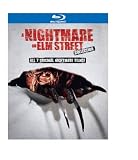
![A Nightmare on Elm Street (2010) [Blu-ray]](https://m.media-amazon.com/images/I/41WWG0Zp-xL._SL160_.jpg)
![A Nightmare on Elm Street Complete Collection 1-7 (Bonus Features - Over 3 Hours Bonus Content) [Blu-ray] [Region Free]](https://m.media-amazon.com/images/I/512e6ge+QgL._SL160_.jpg)
What is A Nightmare on Elm Street about?
Released in the United States on November 16, 1984, A Nightmare on Elm Street follows teenagers in Springwood who begin suffering nightmares about Freddy Krueger, a scarred figure with a bladed glove. Freddy’s attacks are not confined to a physical location: he reaches his victims through dreams, where ordinary rules of distance, injury and time can collapse. Warner Bros.’ official synopsis identifies Robert Englund as Freddy, Heather Langenkamp as Nancy Thompson and John Saxon as Nancy’s father, Lt. Thompson.
That mechanism gives the film its central dramatic problem. A bedroom can be locked, a parent can stand in the hallway and a police officer can search a building, yet none of those protections necessarily matter once a victim falls asleep. The threat therefore follows the characters into the biological routine they need in order to survive. Sleep is both unavoidable and dangerous, and exhaustion becomes part of the suspense rather than a relief from it.
#1 Best Overall
Nancy gradually recognizes that the nightmares are connected and that Freddy must be confronted rather than simply escaped. The official synopsis emphasizes her ingenuity, and that detail is crucial to the film’s shape: Nancy is not waiting for an outside rescuer to solve an inexplicable haunting. She observes, tests, prepares and takes risks, making the conflict a contest of strategy as well as endurance.
Why the dream premise still works
Safety becomes conditional
Most slashers establish a boundary between a safe interior and a dangerous exterior. Craven’s design erases that boundary. The place where a character is expected to recover is also where Freddy can appear, so every attempt to stay awake postpones danger without eliminating it. The result is a pressure system that naturally escalates: the more the characters resist sleep, the less capable they become of resisting anything else.
Dreams also permit images that would be impossible or implausible in a strictly realistic thriller. Rooms stretch, surfaces behave incorrectly and transitions can occur without warning. These changes are not only visual decoration. They make the audience question whether a scene has returned to waking reality or whether the nightmare has simply changed its appearance. That uncertainty lets the film sustain suspense after an apparent escape.
Uncertainty is part of the horror
The film repeatedly asks viewers to decide which rules apply. Is a wound received in a dream capable of appearing on a sleeping body? Can an object be brought back from a nightmare? Is a character awake because the scene looks ordinary, or is ordinariness itself another trap? A Nightmare on Elm Street does not treat these questions as a puzzle with a neat scientific explanation. Its effectiveness comes from making the characters act before they possess complete information.
Quick wins for a faster PC:
Scan for outdated or missing drivers - takes under a minuteDriver Scan →Repair Windows errors before they cause bigger problemsFix Now →Fix the driver behind crashes, sound loss and screen glitchesFind Drivers →The Library of Congress places this strategy within the culture of 1980s horror, arguing that a horror film can stage both anxiety and desire. Its essay describes the experience this way: “One goes to a horror film in order to have a nightmare — not simply a frightening dream, but a dream whose undercurrent of anxiety both presents and masks the desire to fulfill and be punished for conventionally or personally unacceptable impulses.” Applied to Craven’s film, the nightmare is not merely a special-effects setting. It is a form in which fear, guilt, repression and adolescent vulnerability can become visible without being explained in ordinary dialogue.
Rank #2

- Shrink-wrapped
Nancy Thompson is the film’s decisive strength
Heather Langenkamp’s Nancy gives the film a point of view that can organize its shifting realities. She begins as one teenager among several, but her attention to patterns gradually separates her from adults who dismiss the nightmares or interpret them as ordinary psychological problems. Nancy’s importance is not that she is immune to fear. She is frightened, tired and often uncertain, yet she continues to gather information and make decisions.
That active role changes the emotional contract of the story. Freddy’s victims are not interchangeable bodies waiting for elaborate deaths; Nancy’s choices influence what the audience understands about the threat. Her preparation turns the final confrontations into acts of resistance. The film’s suspense comes from wondering whether her plan can work under conditions where the opponent controls the terrain.
John Saxon’s Lt. Thompson embodies the limits of institutional protection. As Nancy’s father, he has authority, professional experience and a reason to protect her, but conventional investigation cannot easily address a killer who appears in dreams. The tension between Nancy’s direct experience and the adults’ inability to validate it gives the supernatural premise a recognizable emotional foundation: a young person knows something is wrong before the surrounding system is willing to believe her.
Freddy Krueger: performance, makeup and cultural impact
Robert Englund’s Freddy is memorable because the character combines physical menace with a performance style that is theatrical and taunting. The Library of Congress discusses Freddy’s performance and makeup as part of the character’s cultural impact. His burned appearance and bladed glove establish an instantly legible silhouette, while Englund’s delivery gives the killer a personality that can intrude on the dream world before the violence begins.
This personality is also one of the film’s most divisive elements for modern viewers. Freddy’s verbal play can make a scene more unnerving by showing that he enjoys control, but it can also puncture the oppressive seriousness of a sequence. Later entries in the broader franchise are associated with a more overtly comic Freddy; the 1984 film is best understood as the point at which the character’s taunting identity is being established, not as a promise that every scene will remain purely grim.
Rank #3
The makeup and glove perform a practical narrative function as well as a visual one. They make Freddy recognizable when dream logic becomes unstable, allowing the audience to track the threat through changing spaces. His appearance is a warning that the scene belongs to his domain, even when the setting initially looks like an ordinary bedroom, school or street.
Does the original still feel scary?
For a contemporary viewer, the strongest scares come from anticipation and uncertainty rather than from a continuous barrage of shocks. The film understands that a door, a hallway or a bed can become frightening once the audience knows Freddy may be present without warning. Its dream transitions create a persistent question: has the danger ended, or has the film only supplied a convincing imitation of safety?
The premise remains especially effective because it cannot be solved by simply refusing to visit a location. Characters can avoid a house, but they cannot avoid sleep indefinitely. That inevitability gives ordinary fatigue dramatic weight. A person who is trying to stay awake is already losing concentration, judgment and physical control, so the film’s threat operates on both supernatural and bodily levels.
Not every element has aged evenly. The film’s 1984 production design, effects and some performance choices may appear less polished than those in contemporary studio horror. Viewers accustomed to digital transformations may notice the visible mechanics of certain set pieces. Those qualities do not invalidate the film, but they affect the kind of fear it produces: the imagination of a practical effect and the abrupt violation of a familiar room can be more important than seamless realism.
The BBFC’s classification guidance for its jurisdiction describes sustained sequences of intense threat and horror, along with bloody scenes. That is a useful expectation-setting description, but it is a British classification record and should not be treated as a universal rating for every territory. Anyone sensitive to violent imagery, nightmares, child or teen peril, or scenes built around sleep deprivation should plan accordingly.
Rank #4
![A Nightmare on Elm Street [Blu-ray]](https://m.media-amazon.com/images/I/51Zvu3mjN4L._SL160_.jpg)
- Factory sealed DVD
How Craven’s direction shapes the nightmare
Wes Craven wrote and directed the film, and his authorship is visible in the way exposition and atmosphere support one another. The story must explain enough about Freddy for the audience to understand the stakes, but too much explanation would make the dream world feel safely codified. Craven keeps the rules understandable at the level of danger while allowing the images themselves to remain unstable.
Do these 3 things before closing this tab:
1Fix the driver behind crashes, sound loss and screen glitches2Clear out junk files and repair common Windows errors3Scan for outdated or missing drivers - takes under a minuteThe film’s structure alternates between apparently ordinary teenage life and intrusions that make ordinary life unreliable. That contrast is important. A nightmare is disturbing partly because it contaminates a familiar environment; if every scene were already fantastical, the loss of safety would be less meaningful. School, family spaces and bedrooms retain their recognizable functions even as Freddy changes what they permit.
Craven also treats the audience’s uncertainty as a storytelling tool rather than a flaw to be eliminated. A scene can begin with the grammar of a conventional conversation and then reveal that the characters are trapped in a dream. The transition does not simply deliver a surprise; it teaches viewers to distrust the continuity of the film itself. Once that distrust is established, quiet scenes carry suspense without needing constant musical or visual emphasis.
Cast and production facts
| Element | Established detail |
|---|---|
| Film | A Nightmare on Elm Street (1984) |
| Release date | November 16, 1984, as listed by the official Wes Craven filmography |
| Writer and director | Wes Craven |
| Distributor | New Line Cinema |
| Freddy Krueger | Robert Englund |
| Nancy Thompson | Heather Langenkamp |
| Lt. Thompson | John Saxon |
| Glen Lantz | Johnny Depp, in his film debut |
| Country and year on Warner Bros.’ official listing | United States, 1984 |
Johnny Depp’s appearance as Glen Lantz is historically notable because it was his film debut. The fact is interesting in retrospect, but the film does not depend on star recognition. Its ensemble works primarily by making the threatened teenagers feel like people with different levels of skepticism, confidence and access to adult help.
Independent reader supportYour contribution helps us test, update, and keep practical guides available for everyone.Which version of A Nightmare on Elm Street should you watch?
For a first viewing, choose a legitimate presentation that clearly identifies the 1984 film and states which cut is included. The two practical questions are version and playback format.
The Tool Desk
Outbyte PC Repair FREERepair Windows errors before they cause bigger problemsFix Now →Outbyte Driver Updater FREEFix the driver behind crashes, sound loss and screen glitchesFind Drivers →Best Value
Theatrical or uncut
A library catalog record for the 4K UHD edition describes it as containing both the theatrical and uncut versions. That detail applies to the cataloged edition, not automatically to every disc, stream or download using the same title. If a particular cut matters to you, read the exact product listing and confirm the included versions before buying.
4K UHD compatibility
The same catalog record states that the disc requires a compatible 4K Ultra HD Blu-ray player. A standard Blu-ray player should not be assumed to play a 4K UHD disc. Check the player, television and disc-region information together, especially when importing a release.
Release timing
The 2024 release announcement listed October 1, 2024 for the digital release and October 15, 2024 for the 4K UHD Blu-ray. Those are release dates, not a guarantee of current stock or a universal digital availability window. Retail and regional listings can change, so verify the edition offered in your territory.
Is the original better than the remake?
The available evidence does not support a detailed, fact-based side-by-side judgment between the 1984 film and the 2010 remake. A responsible recommendation is therefore to treat them as separate viewing choices rather than claim an unsupported definitive ranking.
Free tools Windows power users keep installed
One-click scans. No signup required.
If you are deciding what to watch, use these concrete axes:
| Decision | What to check |
|---|---|
| Story identity | Choose the 1984 film when you want Craven’s original dream-based conception and its introduction of Nancy and Freddy. |
| Cut | Confirm whether the listing is theatrical, uncut or includes both; the cataloged 4K edition includes both. |
| Playback | Confirm that your device supports 4K UHD Blu-ray before purchasing the 4K disc. |
| Viewing scope | Choose the standalone film if you want the original story rather than a series collection. |
This approach answers the practical question without pretending that a source-supported critical comparison exists where it has not been established.
What to watch for on a first viewing
- Track the boundary between states. Notice when a scene appears to move from waking life into a dream and whether the film gives you a reliable signal.
- Follow Nancy’s evidence-gathering. Her responses show how the story converts fear into a problem that can be investigated.
- Watch how ordinary spaces change. Bedrooms, corridors and domestic rooms become threatening because Freddy alters their meaning rather than replacing them with an entirely separate fantasy world.
- Listen to Freddy’s performance. The character’s voice and timing often announce control before the visual design fully reveals what is happening.
- Keep the period in view. Practical effects, 1980s styling and the film’s production texture are part of its identity. Judge whether they enhance or limit your response rather than expecting contemporary digital polish.
Final assessment
A Nightmare on Elm Street earns its lasting reputation from a simple but profound reversal: sleep, normally the escape from danger, becomes the route by which danger reaches you. The film’s most durable ideas are not dependent on a particular effects technology. They are built into the premise’s logic, the uncertainty of its transitions and Nancy’s insistence on acting when adults cannot make sense of what she knows.
Its age is visible, and Freddy’s theatricality may appeal more to some viewers than others. Even so, the original remains a focused horror film rather than merely a historical artifact. It turns exhaustion into suspense, dreams into contested territory and a teenager’s resourcefulness into the engine of the climax. For viewers seeking the foundational 1984 story, the original is the essential starting point; for home collectors, the 4K edition is worth considering only after confirming the cut, region and compatible player.
Crashes, No Sound, or Screen Glitches?
Random freezes, missing sound and display glitches usually trace back to one bad driver. Find and replace yours safely.Free scan · under a minuteWindows Errors? Fix Them Before They Spread
Repair common Windows errors and clear accumulated junk for a smoother, more stable PC - no reinstall needed.Free scan · no reinstallQuick Recap
Product prices and availability are accurate as of the date/time indicated and are subject to change. Any price and availability information displayed on Amazon at the time of purchase will apply.






Say something about this film