Some links on this page are affiliate links: if you buy through them we may earn a commission, at no extra cost to you.
Documentary filmmakers secure music, footage and personal-image rights by identifying every protected work and person, confirming who can authorize each use, and documenting permission or a carefully assessed legal exception before distribution. One release or license rarely clears everything in a clip: a song recording, its composition, the footage, artwork in the frame and identifiable people may raise separate rights questions. Start while the film is taking shape, then revisit clearance as the edit and distribution plan change.
This guide focuses on U.S. copyright principles alongside international guidance from the World Intellectual Property Organization (WIPO). Privacy, publicity and personality rights—and copyright exceptions—vary by jurisdiction, so the steps below are a workflow, not a ruling on any particular film.
What should a documentary rights-clearance process cover?
Clearance is the process of identifying protected material and people in a film, assessing the rights implicated by each use, and securing appropriate permission or documenting a considered legal basis for proceeding without it. It is not just a final paperwork check. Rights can affect the film’s content, budget, schedule, financing and distribution options.
Outdated Drivers Are Slowing You Down
One free scan finds every outdated or missing driver and matches the right update for your exact hardware.Free scan · exact hardware matchWindows Errors? Fix Them Before They Spread
Repair common Windows errors and clear accumulated junk for a smoother, more stable PC - no reinstall needed.Free scan · no reinstallWIPO recommends starting as soon as work on a project begins and says preproduction—when the script can be analyzed—is the latest point to begin. Some music clearances can take more than eight weeks after identifying owners, negotiating terms and signing. That is a possibility WIPO documents, not a typical turnaround or a guaranteed timeline. Build time for research and negotiation into the production plan rather than assuming a license can be obtained at the end.
Popular on Amazon

- 【90 Degree Full Function USB C Adapter】Supports the latest USB4 standard for up to 40Gbps of bandwidth, 8K video support, and up to 240W Fast charging; Support USB PD 3.1 Extended Power Range (EPR) including 140W, 180W and 240W. Your productivity is easily doubled. *Warm Tip: For the best fit, please make sure the USB-C port is fully exposed; thick or bulky cases may affect compatibility.
- 【Reliable Quality】Made from high-quality, scratch-resistant aluminum alloy, delicate metal frame. get excellent wear resistance and heat dissipation. Non-Slip Design for easier insertion and removal.
- 【Small and portable】Ultra thin size, ultra compact design, a petite physique that matches the minimalist design of your modern laptops. Coming with a slim figure that won't block the port next to the one it's plugged into.
- 【Compatibility】Widely work with most usb c, thunderbolt 4/3 devices. Compatibilit for ROG Ally, Steam Deck, Switch, MacBook Pro, Quest 3 VR headset, Surface Book 2, iPhone 18/17/16/15, Samsung Galaxy S23/S22/S21, Note 20/10, Google Pixel, ChromeBook, etc.
- 【Excellence Customer Support】If you experience any issues or cable failure, simply reach out to our dedicated customer service team. We provide a prompt response within 18 hours, providing you with the necessary technical support to resolve any concerns.
Think of clearance as a recurring review. A storyboard may identify a planned archive clip; a shoot may capture a song playing in a location; an edit may add a photograph; and a trailer may use a moment differently from the feature. WIPO recommends reviewing scripts and storyboards and tracking later additions through shooting and postproduction. Its guides explain both the clearance process and the different rights to assess.
How do you build a useful clearance inventory?
Make a record of each third-party work and each identifiable person, including where it appears and how the film uses it. A practical inventory makes omissions visible, connects each item to the relevant permission or assessment, and helps the team check that the final edit matches what was cleared.
- Review the script and storyboard. Note planned songs and recordings, film or television clips, news footage, photographs, artwork, posters, publications and identifiable people. Add items that enter during filming or editing.
- Describe the use, not just the item. Record timecode or scene, duration, whether the material is background or central to the story, whether the film critiques or analyzes it, and whether it will appear in a trailer, social clip or advertising.
- Identify every potentially relevant right. For example, a clip may combine a video recording, a musical composition, a particular sound recording, artwork and identifiable people. Do not treat a single source’s permission as proof that all of those interests are cleared.
- Track status and evidence. For each item, record the rights owner or contact, permission sought, license or release received, restrictions, any unresolved questions and source documentation. Keep correspondence and the final signed documents with the clearance report.
- Recheck against the locked edit and release plan. Compare what appears in the finished film and promotional materials with the actual grant, including territory, term, media and use restrictions.
This record is especially valuable when the film changes. An item initially used briefly as background may become a focal point in a later cut, or a film-only license may not cover a trailer. Those are changes to assess, not details to assume away.
Recommended Free Tools
How do you find the person who can license a work?
Find the current owner of the exact material and confirm that the person offering permission has authority to grant the rights your film needs. Possession, a copyright notice, an online upload or a platform listing does not by itself establish that the source controls every relevant right.
The U.S. Copyright Office’s Circular 16A on obtaining permission recommends researching copyright status and contacting the current owner. When making a request, describe the exact material, how it will be used, the audience and whether the use will be sold. Contact the owner well in advance. Be precise enough that the licensor can evaluate the real request rather than an incomplete description.
Also popular on Amazon

- 5-in-1 Connectivity: Equipped with a 4K HDMI port, a 5 Gbps USB-C data port, two 5 Gbps USB-A ports, and a USB C 100W PD-IN port. Note: The USB C 100W PD-IN port supports only charging and does not support data transfer devices such as headphones or speakers.
- Powerful Pass-Through Charging: Supports up to 85W pass-through charging so you can power up your laptop while you use the hub. Note: Pass-through charging requires a charger (not included). Note: To achieve full power for iPad, we recommend using a 45W wall charger.
- Transfer Files in Seconds: Move files to and from your laptop at speeds of up to 5 Gbps via the USB-C and USB-A data ports. Note: The USB C 5Gbps Data port does not support video output.
- HD Display: Connect to the HDMI port to stream or mirror content to an external monitor in resolutions of up to 4K@30Hz. Note: The USB-C ports do not support video output.
- What You Get: Anker 332 USB-C Hub (5-in-1), welcome guide, our worry-free 18-month warranty, and friendly customer service.
For archival material, identify the exact clip or image—not merely a program, collection or website—and ask what rights the proposed license covers. A footage source may control the recording but not the song audible within it, an artwork shown on screen or the personal-image interests of someone depicted. A photo archive may license the photograph’s copyright without resolving rights in the people or artwork in the image. WIPO’s rights-assessment guide treats these as distinct issues.
What should a music license cover?
A song and a particular recording of that song can involve different rights owners, so a request for music in a film should not assume that one permission covers both. Describe the intended synchronization and distribution uses accurately, then check the written grants against how the music will actually appear.
The Tool Desk
Outbyte PC Repair FREEClear out junk files and repair common Windows errorsFree Scan →Outbyte Driver Updater FREEScan for outdated or missing drivers - takes under a minuteDriver Scan →For each cue, identify the composition and the recording being used. Explain the scene, how the music functions (for example, background or the subject of analysis), and whether the requested use is only in the film or also in a trailer, social clip or advertising. Check territory, term, media and distribution windows. The relevant rights and terms depend on the particular work and the intended uses; the available data’s sources do not provide a universal fee or turnaround.
Also check whether a licensed archival clip contains music. WIPO notes that a cue sheet should reflect music contained in licensed clips where applicable. A footage license alone should not be read as confirmation that all music rights are covered. If music is being considered under a fair-use theory rather than a license, assess the specific use instead of relying on a fixed number of notes or seconds.
How do you license archival footage, photographs and artwork?
Ask the rights holder to identify the exact material and provide a written grant that matches the planned film and distribution. Then check the material itself for additional rights: footage may contain music, people, artwork or other protected works, while a photograph may depict a person or artwork whose rights are not included in the photo license.
Also popular on Amazon

- Sleek 7-in-1 USB-C Hub: Features an HDMI port, two USB-A 3.0 ports, and a USB-C data port, each providing 5Gbps transfer speeds. It also includes a USB-C PD input port for charging up to 100W and dual SD and TF card slots, all in a compact design.
- Flawless 4K@60Hz Video with HDMI: Delivers exceptional clarity and smoothness with its 4K@60Hz HDMI port, making it ideal for high-definition presentations and entertainment. (Note: Only the HDMI port supports video projection; the USB-C port is for data transfer only.)
- Double Up on Efficiency: The two USB-A 3.0 ports and a USB-C port support a fast 5Gbps data rate, significantly boosting your transfer speeds and improving productivity.
- Fast and Reliable 85W Charging: Offers high-capacity, speedy charging for laptops up to 85W, so you spend less time tethered to an outlet and more time being productive.
- What You Get: Anker USB-C Hub (7-in-1), welcome guide, 18-month warranty, and our friendly customer service.
Before signing, compare the grant with the intended use in the feature, trailers, social clips and other promotion. Confirm the territory, term, media, distribution windows, permitted edits and any limits on clip duration or promotional use. WIPO cautions that clip licenses can restrict duration and promotion, and that negotiating those terms may be difficult. If a restriction conflicts with the release plan, resolve it before relying on the license.
Owning a physical photograph is not the same as owning its copyright. Similarly, the fact that an item can be viewed online does not itself establish permission to reproduce it in a documentary. Ask what the licensor actually controls and retain the grant and any conditions in the clearance file.
Can a documentary use copyrighted music or footage without permission?
Sometimes a use may qualify for a copyright exception, but documentary subject matter alone does not make a use fair. In the United States, fair use is a fact-specific analysis under four statutory factors; there is no universal seconds, musical-notes or percentage allowance.
17 U.S.C. § 107 identifies the purpose and character of the use, the nature of the copyrighted work, the amount and substantiality used, and the effect on the potential market. The U.S. Copyright Office’s Fair Use FAQ says there are no legal rules permitting a specific number of words, musical notes or percentage of a work. A short excerpt is not automatically fair, and a longer use is not automatically unfair; the circumstances matter.
For documentary practice, the Center for Media and Social Impact’s Statement of Best Practices in Fair Use describes situations such as using copyrighted material as the object of social, political or cultural critique. Its guidance emphasizes a critical illustrative function, no suitable substitute, using no more than necessary, avoiding disproportionate reliance on one source and identifying the copyright owner. This is sector guidance, not a statutory safe harbor or a court ruling. The Center’s fair-use FAQ for documentary filmmakers also distinguishes copyright analysis from privacy and release questions.
Quick wins for a faster PC:
Scan for outdated or missing drivers - takes under a minuteDriver Scan →Repair Windows errors before they cause bigger problemsFix Now →Also popular on Amazon

- Portable and powerful USB-C HUB: BENFEI USB Type-C HUB, with super-soft and knot-free silicone woven design cable, meets most mobile office needs. Compact, lightweight, stylish, and powerful portable USB C Hub equipped with 1 x HDMI port, 1 x 100W charging, and 3 x USB ports. 18-month warranty, 24-hour response, to ensure you feel at ease when using our product.
- Design centered on comfort and reliability: Thanks to BENFEI's end-to-end in-house cable production capability, in-house PCBA and assembly capability, using the industry's most advanced silicone woven design and process, 20cm cable in length, no knots, super-soft, the HUB is easy to use in all scenarios: laptop, tablet, stand etc. Super-soft, 25000+ life cycles, to meet your daily carrying and office needs.
- 100W Charging: Support up to 90W USB C pass-through charging via Type-C port to keep your laptop powered. 10W is reserved for other interface operations. No data and video function on the Type-C port.
- 4K HDMI Display: The HDMI port supports media display at resolutions up to 4K 30Hz, keeping every incredible moment detailed and ultra vivid. Please note that the C port of the Host device needs to support video output.
- Transfer Files in Seconds: Transfer files and from your laptop at speeds up to 10 Gbps with USB A 3.2 port. Extra 2 USB A 2.0 ports are perfectly for your keyboards and mouse.
If a film will be distributed outside the United States, do not assume that U.S. fair-use analysis governs every territory. Other countries may have different exceptions. When a use is important to the film, the rights are unclear or disputed, or commercial exposure is significant, seek advice from qualified clearance counsel based on the actual film and release plan.
Do you need an appearance release for everyone on camera?
There is no universal answer for every person and every jurisdiction. Assess consent, privacy, publicity or personality rights separately from copyright, based on who is depicted, the context and the intended use. A release addressing a person’s image does not license the photograph, footage, music or artwork around them.
WIPO treats personality rights as a separate clearance area and recommends authorization for people depicted in images where required. The Center for Media and Social Impact likewise explains that privacy and release forms are distinct from copyright and fair use. These sources do not establish one rule requiring a release from every person who appears in every documentary. Nor do they determine whether a particular appearance requires one. Requirements vary with facts and jurisdiction, so assess the specific situation rather than treating camera presence alone as a complete legal test.
Keep the personal-image review connected to the film’s actual uses. A decision about an appearance in the feature does not automatically answer questions about a trailer or advertising, and the rights granted in a photograph do not necessarily resolve the interests of the person shown. Document the decision and obtain appropriate authorization where required.
How should the clearance report be checked before distribution?
Before delivery, reconcile the finished cut and its planned promotion against the clearance report. Check that every third-party item has a documented basis for use and that the actual use falls within the applicable grant or assessment.
Also popular on Amazon

- 【Read before You Buy】 Note: This adapter is USB 2.0 version and cannot transmit HDM, VGA, or other video signals. Nevertheless, they are fully capable of charging devices,duplicating files, and can be seamlessly integrated with USB-C earphones, wireless network adapters, and SD card adapters.
- 【Easy to Use and Safe】Thanks to modern manufacturing techniques, we've made these adapters sufficiently compact so that they can remain inserted in your device without noticeable protrusion or inconvenience. This means you don't have to constantly plug and unplug them, reducing the likelihood of wear and misalignment, and making them more convenient to carry around.
- 【Reliable Quality】Engineered for enhanced durability, durable aluminum alloy shell material,get excellent wear resistance and heat dissipation,the male USB C and female USB connectors & the male USB and female USB C connectors are designed to be plugged and unplugged up to 20000 times. Provides data transfer, device charging, memory space expansion, and additional computer peripherals.
- 【Think more for you】Do you need to connect a USB-C-enabled device to an odd device that only has USB-A ports? Then these USB-A male to USB-C female adapters are made for you.Simply insert the adapter into the USB-A port on the device, and you can instantly connect your USB-C device to the device that originally didn't have the correct connection port.
- 【Trusted xiwxi Quality and Service】As a responsible brand seller, you will receive xiwxi's 12-month Quality assurance and lifetime friendly customer service, you're not just buying a product,you're investing in peace of mind with all-round quality and exceptional customer service.
- Material: Is the exact song, recording, clip, image or artwork identified?
- Authority: Is there evidence that the person granting permission controls the relevant rights?
- Use: Does the grant cover the feature, edits, trailers, social clips and advertising that are planned?
- Scope: Are territory, term, media, distribution windows and any duration or promotional restrictions consistent with release?
- Embedded content: Has the team separately considered music, people, artwork and other protected content within footage or photographs?
- People: Have privacy, publicity, personality and release questions been considered independently of copyright?
- Exceptions: If relying on fair use or another exception, is the reasoning tied to the particular use and jurisdiction rather than a supposed clip-length rule?
When the edit or release strategy changes, revisit affected entries. Clearance is not simply about collecting signatures; it is about ensuring that the permissions or legal assessments fit the material as used and the way audiences will receive it.
What is a practical way to organize the decision?
For each item, compare the rights required, the current owner’s authority, the intended uses, territory and term, restrictions, fees and turnaround, any exception under consideration, and separate personal-image or embedded-content issues. This makes the real choice clearer: license the material, revise or replace the use, or assess whether an exception is supportable. The sources do not establish current price comparisons across licensors, so request terms for the specific material and use rather than relying on a generic budget assumption.
For additional reading on researching and licensing third-party visuals and music, the publisher page for Archival Storytelling: A Filmmaker’s Guide to Finding, Using, and Licensing Third-Party Visuals and Music describes a book focused on that subject. It is background reading, not a substitute for a license, release or advice on a specific film.
What’s actually slowing this PC down?
Pick the symptom - the matching free tool is one click away.
What should filmmakers remember?
Start early, inventory material as the project evolves, verify the current owner and preserve written permissions and restrictions. Treat compositions, recordings, footage, photographs, embedded works and people as potentially distinct rights questions. Finally, match every grant or exception analysis to the finished use, promotional plan, territory and term. No single release, platform upload or documentary label clears everything.
Frequently Asked Questions
Does buying or licensing a photograph clear the people shown in it?
Not necessarily. A photo license may cover the photograph’s copyright while leaving separate questions about a depicted person’s privacy, publicity or personality rights unresolved. The answer depends on the image, use and applicable jurisdiction.
Does a YouTube or social-media upload mean I can use the clip in my documentary?
No. Being able to view or download material online does not prove that the uploader owns the rights or can authorize reuse. Identify the current owner of the exact work and evaluate any embedded music, artwork or people separately.
Can I use a song if it is playing in the background of archival footage?
The footage grant may not include rights in the composition or the specific recording heard in the clip. Check the license and assess the music rights for the intended film and distribution uses; if applicable, make sure the cue sheet reflects music in licensed footage.
Should I get a lawyer to review documentary fair use?
The cited sources do not decide whether a particular use qualifies, and fair use depends on the facts rather than a fixed clip-length rule. Case-specific advice from qualified clearance counsel is prudent when rights are disputed or unclear, the use is important to the film, or commercial exposure is significant.



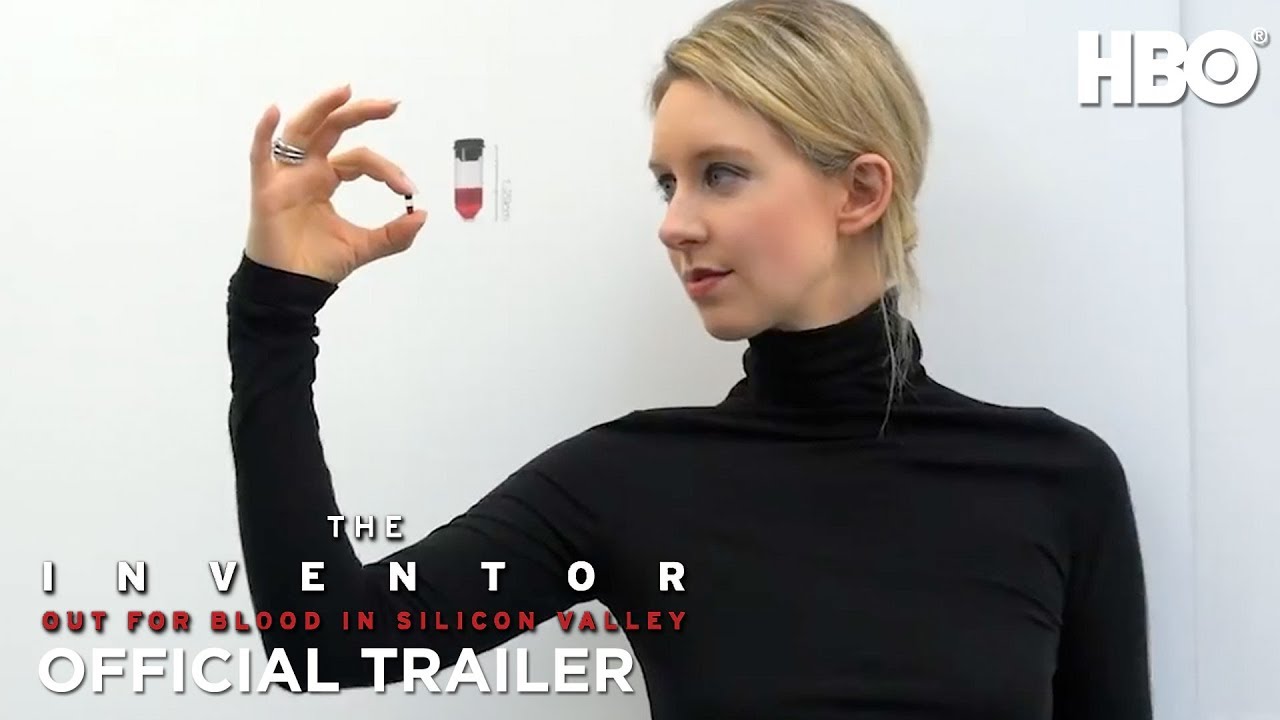


Say something about this film