What’s actually slowing this PC down?
Pick the symptom - the matching free tool is one click away.
Some links on this page are affiliate links: if you buy through them we may earn a commission, at no extra cost to you.
If you have never finished a book for pleasure, start with the book that matches your curiosity—not the book you think a “proper” adult is supposed to read. A short novella, graphic memoir, funny science book, or fast-moving mystery can all be legitimate first choices. Reading is not an intelligence or maturity test, and there is no universal first book.
One reader described the problem as, “I’ve genuinely never read a proper book in my life.” That feeling is more common than the wording suggests: many adults simply have not found a format, subject, or pace that suits them. The nine books below offer different entry points, with notes on who may enjoy each one, what could make it manageable, and what emotional material to expect.


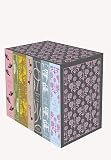

How to choose your first book
“Easy” is personal. A short classic may be ideal for one reader and frustrating for another, while a longer novel can feel effortless if its subject is compelling. Use these checks before you begin:
Quick wins for a faster PC:
Repair Windows errors before they cause bigger problemsFix Now →Fix the driver behind crashes, sound loss and screen glitchesFind Drivers →Clear out junk files and repair common Windows errorsFree Scan →- Choose interest before prestige. Pick a mystery if you like puzzles, a memoir if you prefer real lives, or illustrated nonfiction if you learn visually.
- Reduce the commitment. A novella, a collection of brief chapters, or a graphic book can make the first session feel achievable. Do not assume a short book is automatically simple; vocabulary, structure, and subject still matter.
- Use the easiest format. Try print, an ebook, or an audiobook. A library can let you test a title without buying it, and availability differs by country and edition.
- Sample before committing. Read a few pages or listen to a short sample. If you keep postponing it, switch books rather than treating that as failure.
- Set a tiny target. Ten minutes or one chapter is enough. The aim is to discover what keeps you returning, not to prove endurance.
Classics are one possible route, not a required syllabus. Harriet Sanders’s Pan Macmillan guide to easy-to-read classics for beginners (July 31, 2024) presents selected classics as accessible starting points, while Penguin Random House’s adult easy-reading guide (April 22, 2026) includes short modern and classic choices. A Simon & Schuster page for How to Read a Book also distinguishes approaches for imaginative literature, plays, poetry, history, science, mathematics, philosophy, and social sciences. In other words, the “right” reading method depends partly on what you are reading.
Popular on Amazon
Nine books that can open different doors into reading
1. The Pearl by John Steinbeck — a compact classic
Try it if: you want a serious story that can be completed in a small number of sittings and you are curious about classic literature.
Penguin Random House lists The Pearl in its adult easy-to-read books guide and describes it as a classic novella. Its central premise follows Kino, a pearl diver whose discovery appears to offer a way out of poverty. The plot is focused, so you are not required to keep track of a large cast or several timelines.
The book’s simplicity of shape does not mean its ideas are lightweight. It deals with poverty, exploitation, family, hope, and the destructive effects of greed. Those themes can make it emotionally heavy even when the reading commitment is modest. Read it when you want a complete literary experience rather than a purely comforting one.
You can borrow it from a library, use an ebook, or listen to an audiobook where your local service carries it. Editions differ in introductions and notes, so choose the format that keeps the story moving for you.
2. The House on Mango Street by Sandra Cisneros — brief, vivid vignettes
Try it if: you prefer snapshots of people and places to one long, continuously plotted narrative.
Sandra Cisneros’s novel is built from short sections narrated by Esperanza Cordero, a young girl growing up in a Latino neighbourhood of Chicago. Each vignette stands on its own while contributing to a larger portrait of home, friendship, family, class, gender, and the desire for independence.
The episodic structure gives you natural stopping points: one section can be a complete reading session. Its language is image-rich rather than strictly plain, so it may suit a reader who enjoys poetry, music, or visual description more than conventional page-turners. The narrator observes hardship and discrimination as well as humour and affection; some scenes involve abuse and poverty.
Outdated Drivers Are Slowing You Down
One free scan finds every outdated or missing driver and matches the right update for your exact hardware.Free scan · exact hardware matchWindows Errors? Fix Them Before They Spread
Repair common Windows errors and clear accumulated junk for a smoother, more stable PC - no reinstall needed.Free scan · no reinstallAlso popular on Amazon
A print or ebook edition works well for dipping in and out. If you find a continuous novel difficult, the short-vignette form lets you build confidence without losing a sense of progress.
3. Coraline by Neil Gaiman — a focused speculative adventure
Try it if: you like strange worlds, suspense, or stories in which a determined protagonist solves a concrete problem.
Coraline discovers a door to an alternate version of her home, where unsettling doubles of familiar people offer her everything she thinks she wants. The story then becomes a dangerous rescue mission. Its premise is introduced quickly, and the forward-moving plot gives each reading session a clear question: what will Coraline find, and how will she get out?
This is children’s fiction that many adults enjoy, not a book that requires specialist background knowledge. It is also genuinely creepy. Threats to children, captivity, and frightening imagery may be uncomfortable, particularly if you dislike horror. An audiobook can heighten the atmosphere; a print or ebook lets you control the pace and pause at tense scenes.
4. The Thursday Murder Club by Richard Osman — a conversational mystery
Try it if: you enjoy puzzles, ensemble casts, and humour more than solemn literary narration.
Four residents of a retirement community meet to investigate unsolved murders. When a real killing occurs nearby, their amateur case becomes urgent. The appeal is the combination of a clear mystery question, recurring characters, and light social comedy. Chapters shift among viewpoints and include documents and clues, so you get variety rather than one uninterrupted voice.
This is a fuller-length novel than the novellas on this list, and the investigation introduces several characters and timelines. Keep a bookmark or note if names blur together, and give yourself permission to pause between sections. Violence and death are central to the plot, but the tone is generally warm and witty rather than relentlessly grim.
Also popular on Amazon
Choose it when the promise of solving a case is more motivating than the idea of reading a “classic.” The same basic advice applies to print, ebook, or audio: use the format in which it is easiest to remember who is who.
Recommended Free Tools
5. The Rosie Project by Graeme Simsion — an offbeat romantic comedy
Try it if: you want a relationship story with a strong external project and an unusual narrator.
Don Tillman, a genetics professor who relies on strict routines, designs a questionnaire to identify the perfect partner. His plan changes when he meets Rosie, who asks for help finding her biological father. The “Wife Project” and “Father Project” supply immediate goals, while the romance develops through misunderstandings and shared discoveries.
The novel is structured around scenes and conversations, which can make it inviting for readers who find long descriptive passages tiring. Don’s literal interpretation of social situations creates humour, but the book also raises questions about assumptions, consent, friendship, and neurodiversity. Readers differ on how they interpret its portrayal, so approach it as a comic novel rather than a guide to relationships.
It is longer than a novella but has a strong narrative engine. If romance is the subject you already consume in films or television, starting with a romantic comedy can make the transition to a book feel familiar.
Do these 3 things before closing this tab:
1Repair Windows errors before they cause bigger problems2Scan for outdated or missing drivers - takes under a minute3Clear out junk files and repair common Windows errors6. The Hitchhiker’s Guide to the Galaxy by Douglas Adams — science-fiction comedy in short bursts
Try it if: you want absurd humour, imaginative ideas, and a story that does not take its universe seriously.
Arthur Dent is unexpectedly pulled into space just before Earth is destroyed, beginning a journey through an eccentric galaxy. The book moves through comic episodes, invented technologies, philosophical jokes, and rapid dialogue. Each section introduces a new idea or situation, so a reader can return after a break without reconstructing a dense emotional backstory.
Also popular on Amazon
Its jokes are deliberately strange, and some references reflect the era in which it was written. If a particular gag does not land, the next scene may use a completely different comic device. The story includes destruction, peril, and existential themes beneath the humour, but it is not a realistic account of science.
An audiobook suits readers who respond to performance and timing; print or ebook makes it easier to pause over wordplay. Choose it when laughter and imaginative escape are stronger incentives than realism.
7. Persepolis by Marjane Satrapi — a graphic memoir
Try it if: pages of conventional prose feel intimidating, or you want history presented through a personal visual narrative.
Marjane Satrapi recounts her childhood and adolescence in Iran during and after the Islamic Revolution, later describing her experiences in Europe. Black-and-white panels carry expression, setting, dialogue, and historical context together. You still read closely, but the images provide information that a prose-only book would have to describe.
The memoir addresses political repression, war, displacement, family conflict, and the uncertainty of growing up between cultures. It includes executions, bombings, grief, and discussions of identity. Those subjects are substantial even though the pages are visually accessible. Read one chapter at a time if the historical material feels intense.
Graphic editions vary in how the work is divided, so check whether you are choosing the complete memoir or a volume containing only part of it. A library copy is useful for comparing formats before buying.
Free tools Windows power users keep installed
One-click scans. No signup required.
8. Born a Crime by Trevor Noah — an episodic memoir
Try it if: you prefer true stories, stand-up-style humour, and chapters that can function as individual episodes.
Also popular on Amazon
Trevor Noah describes growing up in South Africa under apartheid and in its aftermath, focusing on his relationship with his mother, family life, language, religion, and the rules imposed by race. Each chapter centres on a particular memory or idea, while the whole book traces how those experiences shaped him.
The conversational voice and comic timing can make the prose feel approachable, but the subject matter is not light. The memoir includes domestic violence, poverty, racism, and danger. Some editions contain language and descriptions that may be distressing. Audiobook listeners may appreciate Noah’s performance, while print readers can pause to absorb the historical context.
Pick this when a real person’s voice is more appealing than an invented plot. You do not need prior knowledge of South African history; the memoir supplies context through the events Noah describes.
9. What If? by Randall Munroe — illustrated nonfiction in standalone questions
Try it if: you are curious about science but want answers in self-contained pieces rather than a textbook sequence.
Randall Munroe investigates absurd hypothetical questions—such as what would happen under extreme physical conditions—using explanations, calculations, diagrams, and cartoons. You can read a single question and stop, then return to a completely different one. That modular design removes the pressure to remember a continuous plot.
The book does use mathematics and physics. Munroe explains the reasoning, but readers who dislike equations may prefer to skim the calculations and follow the diagrams and conclusions. Some scenarios involve catastrophic injury or destruction, treated with comic exaggeration rather than practical instructions.
An ebook, print edition, or audiobook may each work differently because diagrams matter. For the full experience, choose a format that preserves the illustrations; if listening, pair the audio with a library or borrowed print copy when possible.
The Tool Desk
Outbyte PC Repair FREERepair Windows errors before they cause bigger problemsFix Now →Outbyte Driver Updater FREEFix the driver behind crashes, sound loss and screen glitchesFind Drivers →A low-pressure first reading plan
- Shortlist two contrasting books. For example, pair The Pearl with What If?, or Coraline with Born a Crime. Contrast helps you learn whether length, genre, or format is the real obstacle.
- Sample both for ten minutes. Notice which one makes you curious about the next page. Do not judge yourself for preferring pictures, dialogue, humour, or an audiobook.
- Set a repeatable cue. Read after coffee, during a commute, or before bed. Keep the first target small enough that you can meet it on an ordinary day.
- Stop at a sensible break. Finishing a chapter or vignette gives you a clear restart point. You do not have to read until you are exhausted.
- Switch without guilt. A book can be respected and still be wrong for you now. Put it aside, record where you stopped, and try the other choice.
Your first successful book is the one that gets you reading again. After that, follow the feature you liked—short chapters, romance, visual storytelling, suspense, science, or memoir—to find the next one.






Say something about this film