Do these 3 things before closing this tab:
1Repair Windows errors before they cause bigger problems2Fix the driver behind crashes, sound loss and screen glitches3Clear out junk files and repair common Windows errorsSome links on this page are affiliate links: if you buy through them we may earn a commission, at no extra cost to you.
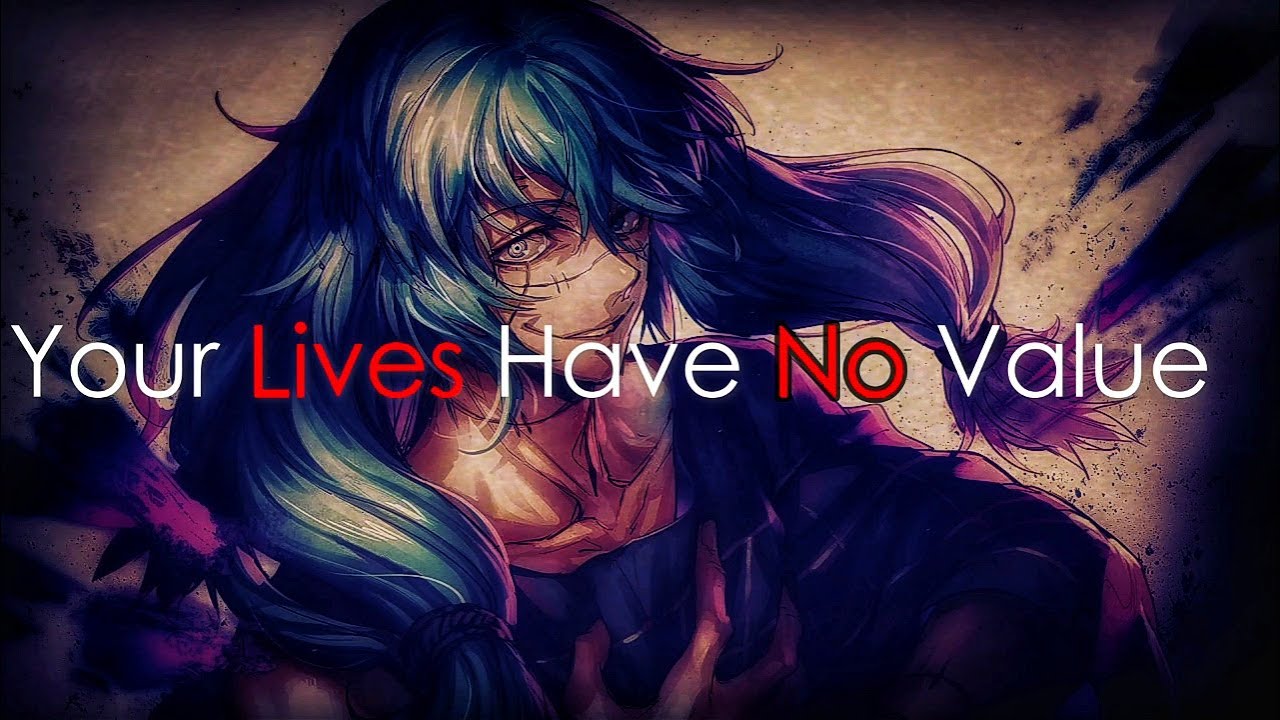
Mahito’s most memorable lines explain his cursed philosophy, bait Junpei into abandoning moral restraint and turn his battle with Yuji into a confrontation over identity. The 25 selections below are ranked editorially for thematic force, cruelty, scene consequence and memorability—not by an official audience poll. English subtitles, dubs and manga translations vary, so the wording shown is the cited English transcript form and may differ by release.
At a glance
| Name | Best for | Key spec | Checked |
|---|---|---|---|
| “You are me.” | Identity mirror | Shibuya; Yuji target | Nov 2026 |
| “The soul comes before the body.” | Soul philosophy | Junpei conversation; Season 1 | Nov 2026 |
| “If you hate, kill.” | Nihilist cruelty | Junpei conversation | Nov 2026 |
| “I found the shape of my soul!” | Transformation | Late Shibuya | Nov 2026 |
| “This is the real me.” | Self-revelation | Late-fight transformation wording | Nov 2026 |
Which Mahito quotes explain his soul philosophy?
These Junpei-scene lines establish Mahito’s belief that the soul is primary and the body is only its changing expression. Episode and wording references follow the cited English transcript and context guides, including the Mahito character reference and the ranked quote context.
- “Do you believe people have hearts?” Mahito opens his argument by challenging Junpei’s everyday idea of a heart.
- “They don’t. They have souls, but souls aren’t hearts.” He separates ordinary emotion-language from his technical soul theory.
- “All emotions are the result of the soul’s metabolism.” Feeling becomes a mechanical process rather than evidence of moral worth.
- “People place too much value on the things they can’t see.” The line dismisses unseen spiritual or ethical value.
- “I can see them.” This brief boast frames the ability that makes his soul-based techniques possible.
- “Souls are no more special than physical bodies.” Mahito denies that the soul is sacred.
- “The body is merely a reflection of the soul.” This commonly quoted formulation captures his causal order: inner shape produces outer form.
- “The soul comes before the body.” It is the concise version of the same doctrine, although subtitle wording can differ.
- “The soul has a shape.” Mahito treats that shape as something he can perceive and alter.
- “Idle Transfiguration changes the soul.” The technique’s premise makes physical transformation follow from manipulating that inner shape.
How do Mahito’s nihilist quotes manipulate Junpei?
Mahito’s philosophy is not neutral exposition. He uses it to make Junpei’s anger feel liberated, then supplies permission to act without restraint. The Season 1 setting is documented in the season overview.
Recommended Free Tools
- “There are no value or importance to life.” The intentionally blunt grammar emphasizes his rejection of inherent worth.
- “There is no true value in a human life.” This expanded wording states the same premise in a form often quoted by fans.
- “Life just continues its cycle.” Existence is flow, not purpose.
- “Meaningless. Without value.” The compressed rhythm makes the nihilism sound like a verdict.
- “We can do anything we want.” If no fixed meaning exists, Mahito claims, restraint becomes optional.
- “Don’t get trapped by indifference.” He warns Junpei not to turn emotional numbness into a rule.
- “If you’re hungry, eat.” Appetite becomes his simplest example of acting without a moral system.
- “If you hate, kill.” This is the most disturbing compression of his advice.
- “You can hate them.” The permission makes hatred sound like an honest, acceptable response.
- “I support everything you represent, Junpei.” The intimate reassurance makes the preceding cruelty feel like friendship.
- “People are born from the hatred humans have for one another.” Mahito frames curses as products of human hostility.
- “People hurt each other because that is what people do.” Responsibility disappears into an allegedly natural cycle.
Which quotes define Mahito’s relationship with Yuji?
In Shibuya, Mahito turns the soul argument into a moral mirror. He tells Yuji that curse instinct and sorcerer duty both involve killing, forcing Yuji to confront what the fight means. The exchange is transcribed in the “Right and Wrong” subtitle page; a separate subtitle file demonstrates why exact wording varies.
Popular on Amazon

- IDEAL COLLECTIBLE SIZE - At approximately 3.75 inches (9.5 cm) tall, this vinyl mini figurine complements other collectable merchandise and fits perfectly in your display case or on your desk.
- PREMIUM VINYL MATERIAL - Made from high-quality, durable vinyl, this collectible is built to last and withstand daily wear, ensuring long-lasting enjoyment for fans and collectors alike.
- PERFECT GIFT FOR JUJUTSU KAISEN FANS - Ideal for holidays, birthdays, or special occasions and as a present this figurine is a must-have addition to any Jujutsu Kaisen merchandise collection
- EXPAND YOUR COLLECTION - Add this unique Sukuna vinyl display piece to your growing assortment of Funko Pop! figures, and seek out other rare and exclusive collectible items for a complete set
- LEADING POP CULTURE BRAND - Trust in the expertise of Funko, the premier creator of pop culture merchandise that includes vinyl figures, action toys, plush, apparel, board games, and more.
- “I am you.” Also rendered as “You are me,” this is Mahito’s central identity claim: both sides kill, even if their reasons differ.
- “You are just like me.” A variant stresses similarity as accusation rather than empathy.
- “You are the same as me, only on the other side.” The line makes the battlefield a two-sided reflection.
- “Humans and curses are the same in that regard.” Mahito extends the comparison beyond Yuji to both species.
- “Humans are just animals that happen to think.” Thought does not, in his view, elevate humans above appetite.
- “If I count and kill looking troubled, would you be satisfied?” He mocks Yuji’s demand that he acknowledge each life.
- “I’ll do that next time.” Casual contempt replaces remorse.
- “I’ll give you a shallow answer.” Mahito mirrors Yuji’s anger while calling him simple.
- “Don’t get mad over everything.” Grief is recast as overreaction.
- “This is just a curse talking nonsense.” He briefly labels his own argument while continuing it.
- “Until you accept that, you can’t beat me.” Psychological acceptance becomes the supposed condition for victory.
- “Nice. Let’s keep going.” Delight at renewed combat contrasts with the surrounding violence.
- “Time for round two!” The playful announcement makes his cruelty sound like a game.
What do Mahito’s transformation quotes mean?
The late-Shibuya lines show his worldview becoming physical power. The cited character and episode summaries describe the breakthrough; a scene video is available from this YouTube reference.
- “I found the shape of my soul!” Mahito announces the insight behind his transformed combat body.
- “Thanks to you, I’ve learned that I can heal my soul.” He credits Yuji with the discovery that lets him repair himself.
- “This is the real me.” The declaration presents the transformed form as authentic identity, not a disguise.
- “I don’t want to die.” Even a curse who denies human value reveals a survival instinct when defeat becomes imminent.
- “I have no regrets.” The line turns refusal of remorse into a final self-definition.
- “I will kill you.” Unlike his playful taunts, this is direct survival-focused intent.
- “I’m having fun.” Enjoyment remains part of his cruelty even during lethal combat.
- “I’m only being true to myself.” Mahito treats impulse as authenticity.
- “I do what I feel like doing.” This phrase distills the freedom he claims after rejecting moral limits.
- “We are each other’s natural enemies.” The relationship is framed as inevitable opposition.
- “You and I are alike.” Similarity becomes a weapon rather than a bridge.
- “You are just like me.” Repeated in context, the accusation tries to make Yuji carry Mahito’s identity claim.
- “I am the real curse.” This self-label foregrounds his role as a curse born from human negativity.
- “It won’t hurt for long.” The false reassurance illustrates how he can make cruelty sound comforting.
- “Help me.” A plea from a cornered Mahito reverses his usual manipulator’s posture.
How should I verify a Mahito quote before sharing it?
- Record the episode or chapter and whether you heard a dub, read subtitles or read the manga.
- Compare the wording with a licensed release or a reputable transcript; subtitle timing can split one sentence into several lines.
- Keep the speaker and target beside the quotation. “You are me” means something different addressed to Yuji than a soul explanation addressed to Junpei.
- Mark shortened wording as an excerpt instead of silently joining separate subtitle sentences.
- Use scene function as a check: Junpei lines explain exposition and manipulation, Yuji lines taunt and mirror, and transformation lines announce physical consequence.
The strongest comparison axes are philosophical depth, cruelty, relationship target, scene consequence and emotional effect. No trustworthy audience, sales or ratings statistic establishes an objective “best” quote list. For source-text context, consult a licensed Jujutsu Kaisen character guide and VIZ’s current manga listings through the publisher’s official channels. A viewing-order guide lists Crunchyroll as a destination, but availability is territory-specific and should be checked in the current guide; any streaming catalog can change.
Also popular on Amazon

- Megumi Fushiguro is a student eager to learn jujutsu sorcery for the greater good of the people; With his ability to wield large amounts of cursed energy, Megumi summons many creatures to help defeat opponents alongside his classmates
- Pop! Megumi Fushiguro and Divine Dogs are looking forward to reaching their full potential in your Jujutsu Kaisen collection
- LEADING POP CULTURE BRAND - Trust in the expertise of Funko, the premier creator of pop culture merchandise that includes vinyl figures, action toys, plush, apparel, board games, and more
- PREMIUM VINYL MATERIAL - Made from high-quality, durable vinyl, this collectible is built to last and withstand daily wear, ensuring long-lasting enjoyment for fans and collectors alike
Frequently Asked Questions
Why does Mahito say the soul comes before the body?
His cursed technique is built on the idea that changing a person’s soul changes the body that expresses it. The statement is both a power explanation and a rejection of the human belief that the body or soul has sacred, fixed value.
Which Mahito quote is directed at Junpei?
The heart-and-soul discussion, including “Do you believe people have hearts?” and “If you hate, kill,” occurs during Mahito’s Season 1 conversations with Junpei. Those lines function as manipulation as much as exposition.
Also popular on Amazon
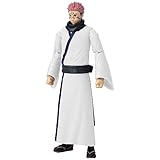
- Fight curses and be in the action - Sukuna is regarded as one of the most powerful cursed spirits in history and is now incarnated inside Itadori, who is his vessel after eating Sukuna's finger. He has made deals with Itadori to help him overcome challenges, but took Yuji's body hostage by taking out his heart and forcing him to make a binding vow. Sukuna is the main antagonist in the show and a real challenge to everyone who faces him, including Yuji who is trying to hold onto control of his body
- Manga Inspired Packaging - Each Anime Heroes line has manga inspired packaging and beautiful artwork on the front featuring the characters you know and love
- Endless Play - Each figure come with 2 sets of interchangeable hands, character specific accessories, and 20+ points of articulation to pose and play in endless ways
- Collect them all - Bandai Namco Toys & Collectibles America has a line up of the most iconic Jujutsu Kaisen characters in the Anime Heroes Action Figure line. Perfect for you to show off your fandom and collect your favorite characters
- Impressive Likeness - Each figure comes with detailed sculpt and true to show features that Anime Heroes action figures are known for
What does “You are me” mean to Yuji?
Mahito argues that both curse and sorcerer kill according to their natures, making them mirrors on opposite sides. Yuji rejects the equivalence, but the claim reframes their fight as a conflict over identity and responsibility.
Are Mahito quotes identical in the dub and subtitles?
No. Translation choices, punctuation and line breaks vary among subtitles, dubs and manga editions. Cite the release and episode whenever exact wording matters.
Quick Recap
Also popular on Amazon

- Fight curses and be in the action - Yuji Itadori was living a normal life before he got involved with Megumi Fushiguro and entered the world of sorcerers after eating one of Sukuna's fingers and becoming the vessel for one of the most powerful cursed spirits in the show. Yuji joins Tokyo Jujutsu High and not only has to be the vessel for the King of Curses but, he also has to learn everything about being a sorcerer, get along with Nobara, and keep up with everything that Satoru throws his way
- Manga Inspired Packaging - Each Anime Heroes line has manga inspired packaging and beautiful artwork on the front featuring the characters you know and love
- Endless Play - Each figure come with 2 sets of interchangeable hands, character specific accessories, and 20+ points of articulation to pose and play in endless ways
- Collect them all - Bandai Namco Toys & Collectibles America has a line up of the most iconic Jujutsu Kaisen characters in the Anime Heroes Action Figure line. Perfect for you to show off your fandom and collect your favorite characters
- Impressive Likeness - Each figure comes with detailed sculpt and true to show features that Anime Heroes action figures are known for






Say something about this film