Recommended Free Tools
For most people, Navidrome is the best free and open-source music server for a personal collection. It is music-focused, Subsonic-compatible, designed for low-resource self-hosting, and supported by a broad range of third-party clients. Jellyfin is the better choice when music must share a server with movies and television; Funkwhale is the specialist option for federation and community audio; Koel suits a polished browser-first experience.
The remaining choices solve different problems. Lyrion Music Server targets Squeezebox-style multi-room systems, Mopidy is an extensible framework, MPD is a lightweight playback daemon, Music Assistant orchestrates sources and networked players, and tools such as Ampache, gonic, Nextcloud Music, mStream, Airsonic Advanced, and Tizonia each have narrower strengths and trade-offs.
A music server is not one specific kind of software. Some applications are dedicated streamers for a personal collection; others combine music with video, publish audio through federation, control multi-room speakers, or provide only the playback engine while a separate app supplies the interface.
For most people who own a digital music library, Navidrome is the best starting point: it is music-focused, lightweight, Subsonic-compatible, and designed for self-hosting. Choose Jellyfin if music must share a server with films and television. Choose Funkwhale for federation and community publishing, Koel for a polished browser application, and Lyrion Music Server, Mopidy, or MPD when a particular player ecosystem or technical architecture matters more than turnkey setup.
#1 Best Overall

- Hassle-Free Management: With an 18-inch depth, our 16U AV rack accommodates a wide range of equipment. Its open-front and open-back design makes wiring and maintenance a breeze. Ideal for use as a stereo rack, A/V equipment cabinet, server rack, and more
- Strong Weight Capacity: Crafted from quality Q235 carbon steel, this audio equipment rack is built to last. With a max weight capacity of 200 lbs (90.7 kg), it keeps your equipment secure and stable. Say goodbye to wobbling and tilting
- User-Friendly Design: This 16U rack case features a top shelf for extra storage space, giving you more room to organize your gear. Equipped with lockable caster wheels, it is easy to move around whenever needed—effortlessly and securely
- Widely Applicable: Maximize your available space with this audio rack cabinet, suitable for clubs, bars, restaurants, places of worship, or any location. Wherever you need organized and efficient equipment storage, this rack has you covered
- Everything You Need: Our studio equipment rack comes with a fully equipped accessory kit for easy setup and secure installation: 40 x screws, 4 x caster wheels, 24 x cage nuts, 1 x wrench, 1 x blank panel, and 1 x user manual
This comparison is a use-case guide, not a benchmark ranking. The recommendations are based on the projects’ current official documentation, repositories, and release information; no hands-on performance, CPU, device-compatibility, or sound-quality testing is claimed.
What kind of music server do you need?
- Personal-library streamer: Organizes music stored on your server and makes it available through a web interface or mobile and desktop clients. Navidrome, Koel, gonic, and mStream fit here.
- Full media server: Handles music alongside films, TV shows, and other media. Jellyfin is the clearest example.
- Federated audio platform: Adds publishing, sharing, independent instances, and federation to private-library features. Funkwhale takes this approach.
- Playback daemon or framework: Plays audio on or through a server but may require a separate client or several extensions. MPD and Mopidy belong here.
- Multi-room controller: Connects sources to networked speakers and players rather than simply serving files. Lyrion Music Server and Music Assistant are designed around this model.
That distinction matters. A feature-rich platform is not automatically a better choice than a small server, and a playback daemon is not necessarily missing features simply because it does not include a modern browser interface.
Quick comparison
| Software | Best for | What it is | Main caveat |
|---|---|---|---|
| Navidrome | Most personal music libraries | Dedicated music server with Subsonic-compatible clients | Not a complete movie and television media suite |
| Jellyfin | Music alongside movies and TV | Open-source home media server | Music is one part of a broader platform |
| Funkwhale | Federated or community audio | Self-hosted, ActivityPub-enabled audio platform | Publishing and federation add administration |
| Koel | Modern browser-first streaming | Web music application with playlists and integrations | More application-stack-oriented than a minimal server |
| Lyrion Music Server | Squeezebox and multi-room ecosystems | Community continuation of Logitech Media Server | Hardware and client compatibility are central |
| Mopidy | Extensible playback and multiple sources | Python music-server framework | Requires selecting extensions and a suitable client |
| Music Player Daemon | Lightweight, client-driven playback | Headless playback server controlled over TCP | Usually needs a separate interface |
| Ampache | Broad web media management | Web-based audio/video streamer and file manager | More administratively involved than minimalist choices |
| gonic | Focused Subsonic-compatible hosting | Lightweight Subsonic API server | Narrower interface and scope |
| Airsonic Advanced | Existing Airsonic/Subsonic deployments | Airsonic-family server | Check current maintenance and release activity first |
| Nextcloud Music | Existing Nextcloud users | Music application inside Nextcloud | Not a standalone music-specialist stack |
| mStream | Filesystem-first browsing | Folder-oriented streaming server | Less album- and metadata-centric than some alternatives |
| Music Assistant | Smart-home and multi-room orchestration | Source and player aggregation layer | Broader than a personal-library streamer |
| Tizonia | Niche terminal or LAN streaming | Terminal player with LAN audio-server features | Official release history shown through 2020 |
1. Navidrome: best overall for a personal music collection
Navidrome is the clearest default recommendation when the main goal is to stream music you already own. It is an open-source project distributed under the GPLv3, with a built-in web interface and compatibility with the Subsonic API. That compatibility gives users access to a broad ecosystem of third-party clients for phones, desktops, Android TV, CarPlay, and Android Auto.
The project emphasizes low-resource operation and large-library support. Its documented features include automatic library monitoring, multiple users, multiple libraries with user-specific access controls, Docker images, and Raspberry Pi binaries. It also supports smart playlists, jukebox mode, sharing, scrobbling, and plugins.
Quick wins for a faster PC:
Repair Windows errors before they cause bigger problemsFix Now →Scan for outdated or missing drivers - takes under a minuteDriver Scan →Clear out junk files and repair common Windows errorsFree Scan →Best for: A household that wants a dedicated music product, a relatively simple deployment, and freedom to choose among many compatible clients.
Trade-off: Navidrome is primarily a music server. If the same interface must organize films and television, Jellyfin is a more natural choice.
2. Jellyfin: best for music plus movies and television
Jellyfin makes sense when music is one part of a larger home-media library. Rather than running a separate music application and video server, you can keep both types of media in one open-source platform.
Jellyfin’s music organization depends heavily on good file structure and embedded metadata. Albums are organized in folders, and embedded tags help Jellyfin identify and display artists, albums, and tracks correctly. It also supports synchronized and unsynchronized lyric files, including interactive timed lyrics in its interface.
Windows Errors? Fix Them Before They Spread
Repair common Windows errors and clear accumulated junk for a smoother, more stable PC - no reinstall needed.Free scan · no reinstallCrashes, No Sound, or Screen Glitches?
Random freezes, missing sound and display glitches usually trace back to one bad driver. Find and replace yours safely.Free scan · under a minuteBest for: Users who want a single server for music, movies, and TV shows.
Trade-off: Jellyfin is a media center with music support, not a music-only specialist. Someone who cares primarily about music discovery, Subsonic-client choice, and a focused library interface may find Navidrome or Koel more direct.
3. Funkwhale: best for federation and community audio
Funkwhale is for readers who want their audio collection to participate in a wider social or decentralized system. It supports personal collections, podcasts, sharing, compatible apps, and access through Subsonic-compatible clients. Its defining feature is federation: independent Funkwhale instances can communicate through ActivityPub.
This makes Funkwhale particularly interesting for artists, communities, archives, and collections of freely licensed audio. An administrator can import files by copying them into the media store or use an in-place import that references existing storage. The project documents recursive import workflows and recommends properly tagged files.
The Tool Desk
Outbyte PC Repair FREERepair Windows errors before they cause bigger problemsFix Now →Outbyte Driver Updater FREEScan for outdated or missing drivers - takes under a minuteDriver Scan →Best for: Federated communities, artist-hosted audio, podcasts, and users interested in decentralized publishing rather than only private playback.
Trade-off: Federation, moderation, permissions, and publishing features create unnecessary complexity for a family that simply wants to browse and play its own albums.
Read the project’s administrator import documentation before deciding how an existing library should be referenced or copied.
4. Koel: best for a polished browser-first experience
Koel is a modern web music application for streaming a personal collection. It offers library browsing, search, ordinary and smart playlists, equalizer features, visualizers, integrations, and Subsonic/OpenSubsonic compatibility. The source is available under the MIT License.
Rank #2

- 12U 19 Inch Rack Space: This GEARit 12U audio rack is designed to fit up to 12 units of standard 19 inch studio gear, networking hardware, rackmount equipment, mixers, preamps, FX units, converters, servers, and AV components
- For Audio, AV and Network Gear: Use this rack stand as an audio rack, AV rack, server rack, or network rack for music gear, mixers, network equipment, server hardware, audio components, and other compatible 19 inch rackmount devices
- Flat Oak Top Workstation: The oak-colored flat top adds extra desktop space above the rack, giving you room for mixers, laptops, notebooks, drum machines, audio interfaces, and other AV necessities in studio, production, or home setups
- Steel Studio Rack Structure: Built with a black-finished steel frame and reinforced joints, this studio rack stand helps support and organize audio, video, networking, and server hardware in a compact workstation layout
- EVA Pads Included: Optional EVA pads attach to the bottom of the workstation rack to help reduce vibration, cushion floor contact, and help keep the steel feet from sliding or scratching wood floors
Koel can scan a configured media path, accept uploads, watch for library changes, and identify duplicate uploads by comparing file hashes. Its documented format support includes MP3, Ogg Vorbis, AAC, FLAC, AIFF, Monkey’s Audio, and WavPack.
The deployment is more like a conventional web application than a small single-binary server. Koel’s streaming documentation covers PHP, nginx X-Accel-Redirect, and Apache X-Sendfile methods. It also documents FFmpeg transcoding for lossless audio and direct FLAC streaming where the client supports it.
Best for: Readers who prioritize a contemporary browser interface, application-style organization, playlists, and visual presentation.
Trade-off: The web-application stack can require more planning than a lightweight server. Streaming behavior also depends on the chosen web-server method, browser, and whether FFmpeg transcoding is needed.
Do these 3 things before closing this tab:
1Scan for outdated or missing drivers - takes under a minute2Repair Windows errors before they cause bigger problems3Fix the driver behind crashes, sound loss and screen glitches5. Lyrion Music Server: best for Squeezebox-family multi-room systems
Lyrion Music Server is the community-maintained continuation of Logitech Media Server. It serves a wide range of audio players, including Squeezebox-family hardware and compatible open-source clients.
The server supports local music, internet radio, plugins, and multiple music services. Its value is not just in the library interface; it is in the protocol and ecosystem connecting a server to multiple players around a home.
Best for: Existing Squeezebox owners and people building a multi-room setup around Lyrion-compatible players.
Trade-off: Compatibility with the intended playback hardware matters more here than it does with a browser-only server. Verify that your speakers, players, or preferred client support the Lyrion ecosystem before migrating a library.
6. Mopidy: best for extensibility and multiple music sources
Mopidy is an extensible music server written in Python. It is documented for Linux, macOS, and Raspberry Pi, and its extension system can add music sources, frontends, mixers, web clients, and other functionality.
Bundled extensions cover local-file playback, M3U playlists, internet-radio streams, HTTP and WebSocket control, and software mixing. The extension registry lists integrations for sources and services including Bandcamp, Funkwhale, Jellyfin, Internet Archive, SoundCloud, Spotify, Tidal, TuneIn, YouTube, and YouTube Music. Individual integrations can have their own authentication requirements, maintenance status, or service restrictions, so the existence of an extension is not a guarantee of identical behavior.
Best for: Technically inclined users who want to assemble a custom playback system from several backends and interfaces.
Trade-off: Mopidy is a framework and ecosystem, not a ready-made Spotify-like personal-library application. You must select extensions and a client that fit your sources and hardware.
What’s actually slowing this PC down?
Pick the symptom - the matching free tool is one click away.
7. Music Player Daemon: best for lightweight, protocol-driven playback
Music Player Daemon, usually called MPD, is a server-side playback application. It supports a variety of audio files through its library and plugin architecture, while clients control it over a documented network protocol.
That protocol exchanges line-based text records over TCP. This makes MPD useful on headless computers, small Linux systems, and installations where the administrator wants to choose the interface independently from the playback engine.
Best for: Lightweight installations, Linux-oriented systems, local playback, and users comfortable selecting a separate desktop, mobile, or web client.
Trade-off: MPD itself is not necessarily the polished browser experience a first-time user expects. The client supplies much of the library browsing and control experience.
Free tools Windows power users keep installed
One-click scans. No signup required.
Rank #3
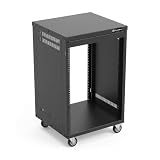
- AxcessAbles RK 16U is an AV rack cabinet designed for standard 19-inch gear. Perfect for organizing server/networking equipment, power amplifiers, microphones, DVD players, DJ gear.
- Compatible with American 5mm and European 6mm rack mount standards. Screws packs for both are included.
- Locking 3-inch caster wheels are removable for additional weight load. Side panel install is optional if you need an open-frame server rack for additional airflow as they are none-weight bearing.
- Front and rear rails. Textured-matte black finish. For gear up to 18-inche deep. Dimensions assembled: 18” x 20” x34.5" with wheels. Weight capacity is 440lbs with wheels and 550lbs without wheels
- AxcessAbles RK16U rack is compatible with all AxcessAbles drawers, trays, and panels. And it is also compatible with all standard 19" rack accessories.
8. Ampache: best for broad web-based media management
Ampache is a web-based audio and video streaming application and file manager. It can be accessed from internet-enabled devices and supports several interoperability routes, including native apps, playlist streaming, the Subsonic API, UPnP/DLNA, and DAAP.
Ampache also maintains a published API for third-party applications to access music, metadata, and artwork. That breadth makes it a useful choice when compatibility with different clients and protocols is more important than having the smallest possible installation.
Best for: Users who want a feature-rich web application, broad media management, and multiple ways to connect third-party clients and network players.
Trade-off: More protocols and administration mean more decisions. Readers seeking a focused personal-library server may find Navidrome or gonic easier to reason about.
9. gonic: best lightweight Subsonic-compatible server
gonic is a free-software implementation of the Subsonic server API. It is aimed at users who want a focused server that works with Subsonic-compatible clients rather than a large media-management suite.
Its documented features include local music paths, podcast storage, playlists, cache paths, optional TLS, scheduled or watcher-based scanning, embedded-cover scanning, jukebox support, and on-the-fly transcoding with configurable cache behavior. Installation paths include Docker, building from source, and systemd.
Best for: Users already committed to Subsonic-compatible apps who want a lightweight and narrowly scoped server.
Trade-off: Subsonic compatibility does not mean every client implements every feature in exactly the same way. Check the specific needs of your preferred mobile or desktop app, particularly around transcoding, playlists, lyrics, and jukebox control.
10. Airsonic Advanced: best when Airsonic compatibility is the reason
Airsonic Advanced remains a relevant name for people looking for the Airsonic and Subsonic lineage. However, the evidence reviewed for this comparison established package or container availability through Snapcraft, but did not establish a recent official release cadence or maintenance level comparable to the leading actively documented projects.
Best for: Existing Airsonic users, or users with a known compatibility requirement that points specifically to this family.
Trade-off: Treat maintenance freshness as a deployment prerequisite. Inspect current releases, issues, container activity, documentation, and compatibility with your intended clients before starting a new installation. This is a caution, not a declaration that the project is dead.
11. Nextcloud Music: best for an existing Nextcloud installation
Nextcloud Music is an application in the official Nextcloud app store. Its natural role is to add music access to a Nextcloud server that is already central to your home or organization.
Quick wins for a faster PC:
Fix the driver behind crashes, sound loss and screen glitchesFind Drivers →Repair Windows errors before they cause bigger problemsFix Now →Best for: Nextcloud users who want music available within the same account, storage, and web ecosystem.
Trade-off: Starting a full Nextcloud deployment solely to stream music is usually less direct than installing a dedicated server such as Navidrome, Koel, or gonic. Choose it because Nextcloud’s file-sharing and collaboration features are useful to you, not merely because it can expose audio files.
12. mStream: best for filesystem-first access
mStream describes itself as a music-streaming server with a filesystem-based API. Its documented behavior is a good fit for people who want to browse directories directly rather than rely entirely on normalized artist, album, and genre metadata.
Features listed by the project include multiple users and directories, upload and directory management, on-the-fly FFmpeg transcoding, server-side playback, Subsonic API support, and DLNA/UPnP support. Listed formats include FLAC, MP3, WAV, Ogg, Opus, AAC, M4A, and M4B.
Rank #4
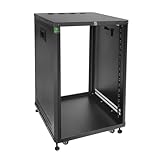
- DIMENSION: Width 22.4” x depth 19.8” x height 34.3”, (570 mm x 505 mm x 870 mm) with leveling feet or wheels. Meanwhile 9u rack, 12u rack, 15u rack 22u rack are available
- OBTUSE ANGEL PANELS: Both side panels with ergonomic safety design, minimizes the impact or cutting risks. With build in handles on each side panel of the open cabinet. Bottom area is vented to keep the air cool
- OPTIONAL RAIL HOLES & ADJUSTABLE DEPTH: This free-standing cabinet has front and rear rails. The unique design is with both tapered & square holes on each rail: round holes are compatible with US 5 mm and European 6 mm standards,while square holes fit M6 & M5 screws & cage nuts. We can also by moving rails forward or backward to fit devices’ depth
- NEAT CABLE MANAGEMENT: There are 4 gaskets (diameter: 50 mm) on the top panel & 3 in the bottom of the studio rack, to organize the cable in and out. Reveal them when needed. This open front and rear cabinets with casters are widely used in studio, home theater, office, for mounting electronics & equipment like AMP, AV, HIFI, NAS, Server, DATA, internet router, amplifier, hard recorder, computer, X-box. Telecom & musical instrument
- UNIVERSAL APPLICATIONS: This movable 18u audio rack with wheels is widely used in studio, home theater, office, for mounting electronics & equipment like AMP, AV, HIFI, NAS, DATA, internet router, amplifier, hard recorder, computer, X-box. Telecom & musical instrument. Widely used in home lab, recording studio, home theater & office scenarios
The repository reviewed for this comparison lists a 6.9.1 release dated May 20, 2026. Because release information can change, verify the repository’s current version and installation instructions before deploying.
Best for: Users who prefer folder-oriented browsing, direct filesystem behavior, and a relatively simple way to expose an existing directory tree.
Trade-off: A filesystem-first model may feel less polished to someone who expects carefully normalized metadata, album-centric navigation, or extensive music discovery features.
13. Music Assistant: best for smart-home and multi-room orchestration
Music Assistant is designed to run alongside Home Assistant, although it can also run as a Docker server. Its purpose is to connect music sources with networked playback devices, including AirPlay, Chromecast, DLNA, and Sonos.
Free tools Windows power users keep installed
One-click scans. No signup required.
It can also play through soundcards attached to the server, including USB DACs, built-in outputs, and HDMI audio. The project labels its local-audio provider as alpha, so local playback should be treated as a developing feature rather than assumed to have the maturity of every network-player integration.
Best for: Smart-home users who need source aggregation, player control, synchronized or multi-room routing, and automation-friendly playback.
Trade-off: Music Assistant is an orchestration layer, not simply a replacement for a personal-library streamer. You may still need a separate provider or library server for the actual music collection.
14. Tizonia: best for a niche terminal or LAN-streaming requirement
Tizonia is an open-source terminal music player. It supports local audio and includes an SHOUTcast/Icecast LAN server for local MP3 files. Its official site also lists integrations with several online services and network devices.
Best for: A specific terminal-based workflow, LAN-radio use case, or legacy integration that you have already confirmed works.
Trade-off: The official release history displayed on the project site lists releases through 2020. That makes Tizonia a niche or legacy option rather than a leading recommendation for a new general-purpose music server. Verify current compatibility and maintenance before relying on it.
Independent reader supportYour contribution helps us test, update, and keep practical guides available for everyone.Which music server should you choose?
Choose Navidrome if you mainly own music files
It is the strongest general-purpose fit for a personal library: music-specific, Subsonic-compatible, documented for low-resource hardware, and supported by a broad client ecosystem. It is the safest default when you do not need federation, video management, or a multi-room control layer.
Choose Jellyfin if you want one home-media library
Jellyfin is the better organizational choice when films, television, and music belong in the same server. Use consistent folders and embedded metadata, especially for music, and consider its lyric-file support if timed lyrics matter.
Choose Funkwhale if publishing and federation are requirements
Funkwhale earns its complexity when you want independent instances, ActivityPub federation, community collections, artist publishing, or sharing beyond a private household.
Choose Koel if the browser is your primary client
Koel is attractive when you want a modern web application with smart playlists, visual features, uploads, duplicate detection, and a documented web-server/transcoding architecture.
Choose Lyrion Music Server if you already have compatible players
The Lyrion choice is driven by hardware and ecosystem. It is especially sensible for Squeezebox-family equipment and multi-room clients that already speak its protocol.
Choose Mopidy when you want to build a system
Mopidy is appropriate when you want to combine local files, radio, online sources, and custom frontends. It rewards experimentation but requires more decisions than a dedicated personal-library application.
Do these 3 things before closing this tab:
1Fix the driver behind crashes, sound loss and screen glitches2Clear out junk files and repair common Windows errors3Scan for outdated or missing drivers - takes under a minuteBest Value

- STURDY & SAFER: By adding one additional horizontal beam on 2 posts, this tabletop 10u rack enhances stability & torsional resistance of the structure, meanwhile offers a safer top space for human & pets
- SPACE SAVING: Compact size allows the compact audio rack stand on desk top or floor in the corner. With 360-degree open frame structure, it’s easy to access your equipment while occupying limited space in the studio or homeLab
- VERSATILITY: The 10u desk top rack shelf is ideal for simple network, server, media, IT, AV, home theatre studio and other 19” standard equipment and devices
- EASY INSTALLATION: This 10u audio rack is easy to install with included rack mount screws & cage nuts, by following the guide menu
- SOLID MATERIAL: Features 2.0 mm cold-rolled steel that are well made and great powder coat finish which can prevent scratching the equipment. Clear U marking helps calculate the space and install the devices quickly and easily
Choose MPD when the playback engine matters more than the interface
MPD is a good headless and protocol-first option. Select it when you are happy choosing a separate client and want a lightweight server-side player.
Choose Ampache for broad interoperability
Ampache is worth considering when Subsonic, UPnP/DLNA, DAAP, playlist streaming, web access, and API access all matter. Its feature breadth is useful, but it is not the minimalist route.
Choose gonic for a focused Subsonic deployment
gonic is a sensible shortlist candidate if your preferred apps already support Subsonic and you want local paths, playlists, podcasts, scanning, and transcoding without a larger platform.
Choose Airsonic Advanced only after checking its current status
It makes the most sense for an existing Airsonic installation or a client-compatibility requirement. New users should compare current project activity with Navidrome and gonic before committing.
Choose Nextcloud Music if Nextcloud is already your server
This avoids adding another platform to a Nextcloud-centered setup. It is less compelling as the reason to deploy Nextcloud from scratch.
Choose mStream if your folders are the source of truth
mStream suits collections where direct directory browsing is more important than album-centric metadata. It also documents multiple users, transcoding, Subsonic, and DLNA/UPnP support.
Choose Music Assistant for sources and speakers
Music Assistant is the right category of tool when the central problem is routing and controlling playback across AirPlay, Chromecast, DLNA, Sonos, Home Assistant, or attached audio outputs.
Choose Tizonia only for a verified niche
Its terminal and LAN-streaming features may still fit a particular system, but its older visible release history makes it a poor default for a fresh deployment.
The Tool Desk
Outbyte PC Repair FREEClear out junk files and repair common Windows errorsFree Scan →Outbyte Driver Updater FREEScan for outdated or missing drivers - takes under a minuteDriver Scan →Hardware and storage basics
You do not need dedicated hardware to run most of these projects. A spare desktop, home server, NAS, virtual machine, or small Linux computer may be sufficient. The software and your library are separate decisions: a powerful host cannot repair incorrect tags, and a small host cannot compensate for a missing backup.
Raspberry Pi hosting
If you want a small, low-power host, a Raspberry Pi 5 music server is a practical optional route. Navidrome documents Raspberry Pi binaries and low-resource operation, while Mopidy explicitly documents Raspberry Pi installation. That makes a Raspberry Pi a relevant self-hosting platform for these projects, not a requirement for every server on this list.
Before buying, account for the operating system, storage connection, power supply, network connection, and backup destination. The computer running the server is not a backup. A microSD card or boot drive can fail while the music library remains intact elsewhere—or disappear with it if everything is stored on one device.
External SSD storage
An external SSD is useful when the host’s internal storage is too small or when you want the library separated from the operating system. Treat it as infrastructure rather than a feature of any particular music server. Back up the audio files, embedded or external artwork, playlists, metadata, and the server’s database or configuration where the application uses one.
Recommended Free Tools
Koel documents configured media paths, uploads, change monitoring, and duplicate detection. Funkwhale documents both copied media-store imports and in-place imports that reference existing storage. Those different models are a reminder to decide whether the server should own a managed copy of the library or read the files in their existing location.
USB DAC and local playback
A USB DAC is optional and matters only when the server itself will feed an amplifier or powered speakers. Music Assistant documents playback through attached soundcards, USB DACs, built-in outputs, and HDMI audio; MPD and Mopidy are also natural fits for locally attached playback systems.
If your server only sends audio to phones, browsers, smart speakers, or network players, a DAC attached to the server may have no effect on the final listening path. Do not buy one merely because a server supports it.
A practical deployment checklist
- Inventory your files. Identify formats, folder structure, artwork, playlists, and whether tags are embedded correctly. Jellyfin in particular relies on embedded metadata for music identification and display.
- Decide whether you need a library server or a playback controller. Navidrome, Koel, gonic, and mStream expose a personal collection. MPD and Mopidy emphasize playback and control. Music Assistant emphasizes source and player orchestration.
- Choose the client before committing. Subsonic compatibility is useful, but clients do not necessarily implement every server feature identically. Confirm support for the features you actually need.
- Choose an import model. Some systems scan a configured path; others can upload files or import them into a managed media store. Avoid creating multiple unmanaged copies unless that is intentional.
- Plan transcoding. If phones, browsers, or remote connections cannot play your source formats directly, configure and test FFmpeg-based transcoding where the chosen server supports it. Lossless files may require more bandwidth or conversion for some clients.
- Test permissions with a second user. This matters if different household members should see different libraries. Navidrome documents multiple users and user-specific library access controls; other platforms have different permission models.
- Secure remote access. If you make the server available outside your home, use the project’s documented authentication and encrypted-connection options, keep the host updated, and avoid exposing an unnecessary administration interface.
- Back up more than the audio. Preserve the library, artwork, playlists, tags, server database, configuration, and any certificates or deployment files needed to restore the service.
- Check the project’s current activity. This is particularly important for Airsonic Advanced and Tizonia, where the research evidence did not establish the same current release confidence as the leading alternatives.
Important licensing and streaming note
Open-source music-server software does not supply a legal catalog of copyrighted music. You must provide music that you own, have permission to use, or can lawfully access under the applicable license and local law. Online-service integrations can also have separate terms, authentication requirements, and availability restrictions. A server’s technical ability to play or transcode a format does not grant permission to redistribute the content.
What’s actually slowing this PC down?
Pick the symptom - the matching free tool is one click away.
Final recommendations by scenario
| Your situation | Start with | Why |
|---|---|---|
| One personal collection for phones, browsers, and cars | Navidrome | Dedicated music focus, low-resource deployment, Subsonic-compatible client ecosystem |
| Music, movies, and TV in one place | Jellyfin | Broader media-server design with music and lyric support |
| Artists, communities, or federated audio | Funkwhale | Sharing, ActivityPub federation, podcasts, and independent instances |
| Modern browser interface | Koel | Web-first organization, smart playlists, visual features, and integrations |
| Squeezebox or compatible multi-room players | Lyrion Music Server | Built around that player ecosystem and its plugins |
| Custom sources, extensions, or radio integrations | Mopidy | Python-based extension architecture |
| Headless local playback with your own client | MPD | Lightweight server and documented TCP control protocol |
| Small Subsonic-compatible deployment | gonic | Focused scope with scanning, playlists, podcasts, and transcoding features |
| Home Assistant and multi-room routing | Music Assistant | Connects sources to AirPlay, Chromecast, DLNA, Sonos, and local outputs |
| Existing Nextcloud environment | Nextcloud Music | Adds music functionality without introducing another main platform |
Frequently Asked Questions
No. A spare computer, NAS, virtual machine, or other suitable host can run many of these applications. A Raspberry Pi 5 is an optional low-power platform: Navidrome documents Raspberry Pi binaries, and Mopidy documents Raspberry Pi installation. Storage, backups, networking, and the chosen software matter more than using one specific computer.
Do I need a Raspberry Pi to run a music server?
For a music-only personal library, Navidrome is usually the more focused choice and offers a broad Subsonic-compatible client ecosystem. Jellyfin is the better fit when music must share one server and interface with movies and television. Neither should be called universally better without defining the use case.
Is Navidrome better than Jellyfin for music?
Many can be configured for remote access, but the exact method depends on the software, client, network, and transcoding requirements. Use authentication and encrypted access, keep the host updated, and verify that you have the legal right to access and share the audio remotely.
Can these servers stream music outside my home?
Navidrome is a dedicated personal-library server with its own web interface and Subsonic-compatible clients. MPD is primarily a lightweight playback daemon controlled over a network protocol, so a separate client usually supplies the interface. Mopidy is an extensible Python framework that combines sources, frontends, and playback components through extensions.
What is the difference between MPD, Mopidy, and Navidrome?
Not necessarily. Several projects can serve lossless files directly, while others can use FFmpeg transcoding when a client or connection cannot play the original format. Koel documents direct FLAC streaming where supported and FFmpeg transcoding; gonic and mStream also document transcoding features. Test the clients and devices you actually use rather than converting the entire library by default.
Do I need to convert FLAC files before using a music server?
The Bottom Line
Bottom line: Start with Navidrome for most private music libraries. Pick Jellyfin when music belongs beside video, Funkwhale when federation or publishing is central, Koel when the browser experience matters most, and Lyrion Music Server, Mopidy, or MPD when your hardware and playback architecture determine the choice. Airsonic Advanced and Tizonia deserve verification before a new deployment because the reviewed evidence did not show the same maintenance confidence as the leading options.
Quick Recap
Product prices and availability are accurate as of the date/time indicated and are subject to change. Any price and availability information displayed on Amazon at the time of purchase will apply.