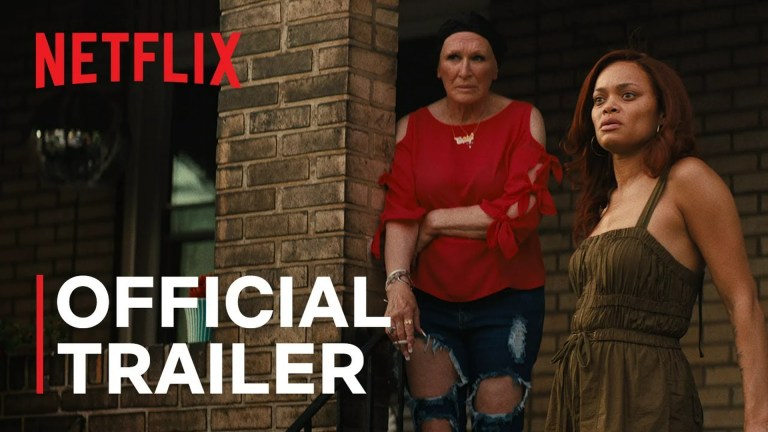
Fallout Season 1 is worth watching. It translates the games’ vaults, factions, retro-futurist design, grotesque creatures, dark humor, and moral uncertainty into a television story that works for newcomers as well as longtime players. Its main weakness is structural: the eight-episode season resolves important mysteries while deliberately leaving several character arcs unfinished.
Verdict: Fallout Season 1 is a confident, visually distinctive adaptation that understands what makes the game series unusual. It combines retro-futurist advertising, grotesque violence, dark comedy, factional politics, and sincere human drama without reducing the games to a collection of recognizable props. Its three leads—Lucy MacLean, Maximus, and the Ghoul—begin in sharply different genres before their stories converge in the same morally contaminated wasteland.
The season is not completely self-contained. Its eight episodes answer several major questions, but the finale also redirects the story toward a larger conflict and leaves some character arcs unresolved. That is a fair trade for a series built around mystery, although viewers expecting a fully closed first season may find the ending frustrating.
What is Fallout Season 1 about?
The series takes place roughly 200 years after nuclear war has devastated civilization. Some people survive in enormous underground vaults, while others live among the ruins, settlements, monsters, scavengers, and competing political and military factions of the wasteland.
#1 Best Overall

- 【4K UHD Audiovisual Experience】Xiaomi 4K UHD resolution delivers exceptional clarity, while support for HDR10+ and Dolby Vision delivers cinematic picture quality. Dolby Atmos and DTS:X also create a cinematic audiovisual experience.
- 【Powerful 6nm Platform Performance】Powered by a 64-bit 6nm high-performance platform, featuring a quad-core A55 CPU (up to 2.5GHz) and large memory (2GB + 32GB), it ensures smooth operation.
- 【High-Speed Wi-Fi 6 Connectivity】Supports Wi-Fi 6 (requires a Wi-Fi 6-enabled router), utilizing OFDMA and MU-MIMO technologies to provide greater bandwidth and significantly improved transmission speeds, enabling instant playback of online content.
- 【Smart Google TV Entertainment Center】Built-in Google TV integrates personalized recommendations for movies, shows, and more from various apps and subscriptions, along with powerful cross-app search for a customized entertainment experience.
- 【Convenient Voice Control】Use the voice button on the 360° Bluetooth remote to use Google Assistant for voice search, playback control, and smart home management. Easily cast content from your phone/tablet to the TV via Google Cast. Easy to install.
Lucy MacLean (Ella Purnell) grows up in the comparatively protected Vault 33. When an emergency forces her outside, her belief in the vaults’ orderly, benevolent society is tested by a world she has been taught to fear. Maximus (Aaron Moten) is an aspirant within the Brotherhood of Steel, a militarized organization that combines discipline, technology, hierarchy, and its own heroic mythology. The Ghoul (Walton Goggins) is a feared bounty hunter whose centuries of survival have made him pragmatic, violent, and deeply damaged.
The show uses original television characters rather than adapting one game’s campaign. That is an important choice. It allows Fallout to use the games’ factions, visual language, moral dilemmas, and world-building while giving newcomers a story they can follow without knowing the game lore.
| Detail | Information |
|---|---|
| Season | Season 1 |
| Episodes | 8 |
| Primary streaming service | Prime Video |
| U.S. timed premiere | April 10, 2024 |
| Setting | Approximately 200 years after the nuclear apocalypse |
| Lead characters | Lucy MacLean, Maximus, and the Ghoul |
Some catalog pages display April 11 because of time-zone and territory conventions. April 10 is the relevant U.S. evening release date for the timed Prime Video launch.
Spoilers ahead
The remainder of this review discusses major plot developments, including Hank, Shady Sands, Moldaver, Vault-Tec, the Ghoul’s past, and the finale. Stop here if you want to watch the season without knowing its central revelations.
Do these 3 things before closing this tab:
1Clear out junk files and repair common Windows errors2Fix the driver behind crashes, sound loss and screen glitches3Repair Windows errors before they cause bigger problemsWhy the three-lead structure works
The season’s strongest formal decision is to give its protagonists distinct narrative identities rather than sending all three through the same version of a post-apocalyptic adventure.
Lucy: innocence tested rather than simply mocked
Lucy begins as the most obvious audience surrogate. She is optimistic, capable, and sincerely committed to the cooperative values she has learned in Vault 33. The show could have treated that optimism as foolishness, but it takes a more interesting route. Lucy’s kindness is repeatedly placed in situations where kindness alone is insufficient, yet her development is not a simple conversion into a cynical survivor.
Her journey asks a difficult question: how can someone remain humane after discovering that institutions built around humane language may conceal coercion, exploitation, and violence? Lucy becomes more independent and more willing to make hard decisions, but the season does not suggest that moral awareness requires abandoning compassion.
Maximus: the gap between institutional ideals and individual behavior
Maximus wants the Brotherhood of Steel to be the heroic institution its stories promise. He wants belonging, status, and a chance to become the kind of figure who can impose order on chaos. At the same time, fear, insecurity, ambition, and self-preservation repeatedly interfere with that ideal.
Free tools Windows power users keep installed
One-click scans. No signup required.
That contradiction makes Maximus more compelling than a straightforward soldier-hero. His mistakes are not merely obstacles in the plot; they expose the distance between an organization’s public mythology and the people who act in its name. Aaron Moten plays him with enough vulnerability and decency to keep his cowardice and opportunism from becoming a simple character verdict.
The Ghoul: a Western outlaw with a history
The Ghoul’s storyline has the shape of a bounty-hunter Western. He enters scenes as a charismatic and terrifying professional, capable of treating extreme violence as routine work. His humor and theatrical confidence make him entertaining, but the entertainment is inseparable from the horror of what survival has done to him.
The pre-war material involving Cooper Howard gives that violence historical and emotional context. He is not just a cool wasteland gunslinger; he is a remnant of the society that existed before the bombs, carrying its compromises and its consequences into the future. Walton Goggins handles the contrast between genre-icon swagger and personal ruin particularly well.
These three perspectives make the world feel larger than a single quest. Lucy’s vault satire, Maximus’s military initiation, and the Ghoul’s bounty-hunter story could almost belong to different shows. Their eventual collisions reveal that the factions, settlements, corporations, and legends they encounter are connected by the same history.
The adaptation understands the games without copying them
Fallout succeeds because it treats fidelity as translation rather than replication. The series cannot reproduce the experience of choosing dialogue options, scavenging an abandoned building, or wandering into an unexpected side quest. Instead, it converts those design principles into television drama.
- Vaults become enclosed social experiments as well as visual symbols of manufactured safety.
- Factions provide competing explanations for how the wasteland should be controlled.
- Scavenging and survival become sources of danger, improvisation, and black comedy.
- Mutants, creatures, and body horror make the apocalypse physically present rather than merely historical.
- Retro advertisements and consumer imagery preserve the franchise’s cheerful, commercial surface.
- Moral compromise replaces the idea that any institution has a clean claim to heroism.
That balance makes the show accessible to newcomers while giving longtime players texture to recognize in the locations, armor, weapons, props, factions, and lore. Familiarity is rewarded, but prior knowledge is not required to understand Lucy’s central conflict or the season’s political questions.
Rank #2

- HD streaming made simple: With America’s number 1 TV streaming platform,* exploring popular apps—plus tons of free movies, shows, and live TV—is as easy as it is fun. *Based on hours streamed—Hypothesis Group
- Compact without compromises: The sleek design of Roku Streaming Stick won’t block neighboring HDMI ports, and it even powers from your TV alone, plugging into the back and staying out of sight. No wall outlet, no extra cords, no clutter.
- No more juggling remotes: Power up your TV, adjust the volume, and control your Roku device with one remote. Use your voice to quickly search, play entertainment, and more.
- Shows on the go: Take your TV to-go when traveling—without needing to log into someone else’s device.
- TV, simplified: With setup that only takes minutes, a simple-to-navigate Home Screen, and an uncluttered remote control that does all you need—Roku makes it easier to watch the TV you love.
Production design makes the wasteland feel specific
The production design is one of the season’s clearest achievements. The vaults, wasteland settlements, Brotherhood armor, weapons, advertisements, and creature effects look as though they belong to one deliberately constructed civilization rather than to a generic post-apocalyptic backdrop.
The vaults are especially effective because they are not simply clean sets before the characters reach the “real” world. Their concrete corridors, industrial systems, optimistic signage, rituals, and regulated domestic spaces communicate an entire ideology. The visual polish is part of the story: a society can look safe while controlling the information its citizens are allowed to possess.
Outside, the series expands into ruined neighborhoods, improvised communities, militarized encampments, laboratories, and corporate remnants. The contrast between polished retro-futurism and decay gives the setting its identity. Even the grotesque details often have a visual logic rooted in the franchise rather than being inserted merely to make the show look grim.
Its tonal mixture is a feature, not a flaw
Many post-apocalyptic dramas settle into one register: bleak realism, action spectacle, or grim survival horror. Fallout is more difficult to categorize. It can place slapstick, musical irony, splatter, absurdity, and genuine pathos in the same episode—and sometimes in the same scene.
The best jokes do not erase the horror. They make it more disturbing by showing how people normalize catastrophe, market it, turn it into ritual, or consume it as entertainment. A cheerful advertisement beside a massacre is not just a visual gag; it expresses the series’ argument that the old world’s habits survive even after the old world is gone.
This tonal control is also where the adaptation most clearly understands its source. Fallout is not merely “dark.” It is interested in the absurdity of people preserving manners, branding, rank, and commercial language while living amid the consequences of mass destruction.
Recommended Free Tools
The season’s central themes
Shelter is not the same as safety
The vaults protect bodies, but they also shape knowledge and behavior. Leaving the vault creates immediate physical danger, yet it gives Lucy access to information that could never become visible inside its controlled environment. The season treats shelter as both refuge and ideology.
Corporate power survives the apocalypse
The nuclear catastrophe is not presented only as a military or scientific failure. The story also examines institutions that commodify fear, prepare for disaster, and treat survival as a business problem. The unsettling implication is that the end of the world can be another market opportunity for people who already control the systems around it.
Every faction depends on mythmaking
The Brotherhood of Steel, Vault-Tec, pre-war America, and the Ghoul’s own legend all depend on stories about who deserves authority. Those stories are useful precisely because they simplify complicated histories. The season repeatedly asks what happens when the performance of heroism becomes more important than the truth behind it.
Innocence has a cost
Lucy’s growth is not a celebration of cynicism. It is an examination of what knowledge does to a person who still wants to believe that cooperation matters. The season’s more mature position is that innocence must be lost, but empathy does not have to be lost with it.
Violence becomes entertainment
The show makes violence exciting, funny, and visually memorable before forcing the viewer to notice what that excitement means. Its world turns catastrophe into spectacle, and the series itself participates in that spectacle while remaining conscious of the contradiction. That self-awareness is one reason the brutality feels thematically relevant rather than decorative.
What does not work as well?
The season sometimes uses revelation as its main source of momentum. Withholding context can make the mysteries compelling, but it can also make early episodes feel as though they are arranging pieces for later rather than completing a dramatic movement in the present.
The finale provides substantial answers, including major information about Hank, Shady Sands, Moldaver, Vault-Tec’s role, and the Ghoul’s past. However, those answers also redirect the story toward a larger conflict. Several character arcs remain deliberately unfinished, and some secondary characters seem to exist primarily to move Lucy, Maximus, or the Ghoul toward the next revelation.
That structure is understandable for serialized television, but it is still a limitation. A season can promise continuation without making its current story feel incomplete. Fallout comes close to that line, particularly when its factional politics and personal trauma compete for attention. The result is exciting, but not every thread receives equal emotional weight.
Quick wins for a faster PC:
Scan for outdated or missing drivers - takes under a minuteDriver Scan →Repair Windows errors before they cause bigger problemsFix Now →Fix the driver behind crashes, sound loss and screen glitchesFind Drivers →Rank #3
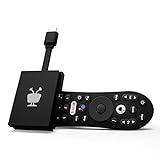
- No More App-Switching. Forget learning to navigate a new screen with every app. TiVo Stream 4K enables one centralized place for searching, browsing, and creating watch lists across all your apps..DC Input Range 5V/1.0A. Power Consumption : Maximum 5 W
- Recommendations Across All of Your Apps: Get rid of the walls between what you watch. TiVo recommends your next favorite shows and movies based on what you love, not where they live.
- Say it and watch it. The power of voice control makes it easy to find shows. Integrated Google Assistant allows you to launch apps, dim the lights and more.
- One place for all your favorite streaming apps. TiVo Stream 4K includes Netflix, Prime Video, Disney+, Peacock plus many more, so you can get to your shows fast.
- TiVo Stream 4K is one of Time Magazine’s “2020 Best Inventions, Special Mention” and PCMag hails it as “an excellent media streamer for TV lovers.” Operating Temperature 0˚C - 40˚C
The season’s best episodes align three scales at once: a character’s immediate problem, the conflict between factions, and the deeper history of the franchise’s world. Its weaker transitions occur when one of those scales is used mainly as a mechanism for delivering the next plot turn.
Independent reader supportYour contribution helps us test, update, and keep practical guides available for everyone.Performances
Ella Purnell gives Lucy the season’s most visible transformation, carrying her from sheltered certainty toward morally difficult independence without making the character’s earlier optimism embarrassing or disposable.
Aaron Moten gives Maximus a volatile mixture of vulnerability, fear, aspiration, cowardice, and decency. That combination keeps him unpredictable without turning him into a conventional antihero.
Walton Goggins makes the Ghoul both a genre icon and a damaged survivor. His performance sells the character’s wit and menace while allowing the pre-war story to expose the person underneath the legend.
The Tool Desk
Outbyte PC Repair FREEClear out junk files and repair common Windows errorsFree Scan →Outbyte Driver Updater FREEFix the driver behind crashes, sound loss and screen glitchesFind Drivers →Kyle MacLachlan is particularly effective as Hank. His genial authority gradually takes on the quality of practiced performance, making ordinary paternal confidence feel increasingly difficult to interpret.
Music: an essential part of the identity
Ramin Djawadi’s original score gives the locations and factions a strong dramatic identity. The period recordings perform a different but complementary function: they connect the pre-war American dream to the wasteland’s cheerful brutality.
The official Season 1 score album contains 21 tracks and runs for approximately 72 minutes. It is worth considering for viewers who found the show’s atmosphere, faction themes, or collision of optimism and violence as memorable as its plot. If you want to explore that side of the series, look for the Fallout original series soundtrack and verify the current format, retailer, and regional availability before buying.
Reception and recognition
At the time checked, Metacritic listed the season at 73 out of 100 from 33 critic reviews, a generally favorable result. The Television Academy records one 2024 Emmy win for Outstanding Special Visual Effects in a Season or Movie.
What’s actually slowing this PC down?
Pick the symptom - the matching free tool is one click away.
Those figures provide useful context but do not replace the review itself. The season’s strongest case is visible in its construction: it has a clear visual identity, three contrasting protagonists, and a coherent interest in how institutions preserve power through stories, branding, and fear.
Should you watch Fallout Season 1?
Yes—especially if you want science fiction with dark comedy, strong production design, game-derived world-building, and characters who cannot rely on a clean moral position. Newcomers can follow the season without playing the games. Longtime players will find additional pleasure in the details, factions, references, and lore.
It is less ideal for viewers who need every mystery resolved by the end of a season or who dislike sudden shifts between comedy, horror, and sincere emotion. The fair criticism is not that Fallout lacks ideas. It is that the season has more continuing-story architecture than eight episodes can completely resolve.
Where to watch or own it
The season’s verified streaming home is Prime Video. If you want a permanent copy rather than relying on streaming availability, look for the Fallout Season One 4K Steelbook. The Amazon-exclusive release is identified as a three-disc 4K Ultra HD and Blu-ray set with a July 8, 2025 release date. Check current stock, price, seller, and regional eligibility before buying; purchasing the physical edition is not required to watch the series.
Outdated Drivers Are Slowing You Down
One free scan finds every outdated or missing driver and matches the right update for your exact hardware.Free scan · exact hardware matchWindows Errors? Fix Them Before They Spread
Repair common Windows errors and clear accumulated junk for a smoother, more stable PC - no reinstall needed.Free scan · no reinstallFinal verdict: 8/10. Fallout understands that the end of the world is not the end of marketing, hierarchy, or self-deception—and its most unsettling joke is that the old world survives because people keep finding new ways to believe in it.
Frequently Asked Questions
Do you need to play the Fallout games before watching Season 1?
No. Fallout Season 1 uses original television characters and an original story in the Fallout universe. Knowledge of the games adds context and easter eggs, but the season explains enough for newcomers to follow Lucy, Maximus, and the Ghoul.
How many episodes are in Fallout Season 1, and when did it premiere?
Fallout Season 1 has eight episodes. The U.S. timed Prime Video premiere was April 10, 2024, although some catalog pages display April 11 because of time-zone and territory conventions.
Does Fallout Season 1 have a complete ending?
The season answers several major mysteries but leaves some character arcs and larger conflicts unresolved. Its finale is designed to propel a continuing story rather than provide a completely closed ending.
What’s actually slowing this PC down?
Pick the symptom - the matching free tool is one click away.
The Bottom Line
Bottom line: Fallout Season 1 is a highly recommended adaptation for newcomers and longtime players alike. Its production design, tonal confidence, music, and three-lead structure outweigh a finale that leaves several storylines open for continuation.
Quick Recap
Product prices and availability are accurate as of the date/time indicated and are subject to change. Any price and availability information displayed on Amazon at the time of purchase will apply.