Quick wins for a faster PC:
Clear out junk files and repair common Windows errorsFree Scan →Scan for outdated or missing drivers - takes under a minuteDriver Scan →Black paint, gold graphics, a hood-mounted shaker scoop and a police chase that ends with a spectacular leap: the Pontiac Firebird Trans Am in Smokey and the Bandit became one of cinema’s most recognizable cars. But the car’s real story is more complicated than the image suggests.
It was not a fictional “Bandit” model, and the Trans Am that performed the bridge jump was not a lightly modified showroom car. The production used several vehicles, some of which were rebuilt, damaged or dismantled during filming. Even the model year requires a qualification: the cars are generally called 1977 Trans Ams, although production accounts identify the filming cars as 1976 vehicles fitted with 1977-style components.
1. It was a real Pontiac Firebird Trans Am—not a separate “Bandit” model
Bo “The Bandit” Darville’s car was a Pontiac Firebird Trans Am Special Edition. “Bandit Trans Am” became the popular nickname after the film, and the phrase is now widely used by replica builders, collectors and model manufacturers. Pontiac, however, did not sell an official production model called the “Bandit.”
The black-and-gold appearance was associated with Pontiac’s factory Special Edition package, commonly identified by the Y82 code for 1977. The movie made the combination famous, but it did not invent the basic design.
#1 Best Overall

- Pullback Action: Experience realistic racing with the pullback action feature.
- Opening Doors: Explore the intricate interior details with the opening door feature.
- 1:38 Scale: Enjoy a detailed 1:38 scale die-cast model (approx. 5 inches long).
- Authentic Design: Modeled after the iconic 1967 Ford Shelby Mustang GT500.
- Display Piece: A must-have collectible for car enthusiasts and model collectors.
2. Hal Needham chose the car after seeing a Pontiac advertisement
Director Hal Needham reportedly recognized the Trans Am’s screen potential before the film was made. After seeing Pontiac advertising for the soon-to-be-released car, he felt its aggressive nose, long hood and dramatic graphics suited the Bandit’s personality.
That decision helped turn the car into more than transportation for Burt Reynolds’s character. Needham treated it almost like another cast member: the Trans Am establishes the Bandit’s identity, dominates the chase scenes and becomes the visual symbol of the film.
3. The filming cars were commonly described as 1977 Trans Ams—but the model-year story is complicated
The movie is usually associated with the 1977 Pontiac Trans Am, and that description is understandable. The cars seen on screen carried 1977-style front-end components, trim and graphics. However, production accounts indicate that the vehicles supplied for filming were 1976-model cars modified with the newer parts.
Filming began before 1977-model Trans Ams were broadly available, which explains the combination. The most careful description is therefore 1977-style Trans Ams built from 1976 production cars. Enthusiast listings and promotional material often shorten this to “1977 Trans Am,” but that label should not automatically be read as proof that every filming car began life as a factory-built 1977 model.
What’s actually slowing this PC down?
Pick the symptom - the matching free tool is one click away.
4. Pontiac supplied several Trans Ams for the production
Frequently cited production accounts say Pontiac supplied four Trans Ams, along with two Pontiac LeMans sedans used in the film. The Trans Ams did not all have the same job. Some appeared in driving scenes, some were used for stunt work and others served as replacement or parts vehicles.
The exact assignment of each car is less certain than many modern retellings suggest. Later enthusiast accounts sometimes attach a specific identity to a particular shot or surviving component, but those claims need documentation. It is safer to say that multiple Trans Ams were supplied and that the production used them in different roles than to assign one named car to every scene.
Rank #2

- Highly detailed 1:24 scale diecast model kit of 1929 Ford Model A
- Comes with everything needed for assembly including screwdriver
- Features opening parts, rolling wheels and pre-painted metal body
- Easy to assemble, creates fully functional rolling replica model car
- Fun and educational STEM activity for kids to build realistic miniature vehicle
5. The bridge-jump Trans Am was heavily modified
The famous bridge jump required much more than the performance of an ordinary street Trans Am. Needham explained that the car could not build enough speed on the short dirt-road approach in stock form. For the stunt, his team installed an engine producing roughly 750 horsepower and fitted a manual transmission, along with the necessary safety equipment.
That distinction is essential. The stunt car’s engine installation was a special-purpose production modification, not a factory specification for a normal 1977 Trans Am. The “6.6 LITRE” lettering on the shaker scoop identifies the movie’s visual period and engine-family association, but it does not prove that every car used in the film had the same engine, transmission or preparation.
The Tool Desk
Outbyte Driver Updater FREEScan for outdated or missing drivers - takes under a minuteDriver Scan →Outbyte PC Repair FREERepair Windows errors before they cause bigger problemsFix Now →6. Hal Needham—not Burt Reynolds—drove the bridge-jump car
Burt Reynolds played the Bandit, but he was not behind the wheel for the bridge jump. Hal Needham performed the driving for that sequence. Stunt performer Lada St. Edmund substituted for Sally Field in the car.
That behind-the-scenes detail is often blurred by the film’s publicity and by later replicas. The vehicle belongs to the Bandit’s story, but the person driving it for the leap was Needham, operating a stunt-prepared car under production conditions.
7. The original filming cars were largely consumed by the stunts
The Trans Am’s fame can make it seem as though a pristine original movie car must be sitting somewhere in a collection. The production history does not support that assumption.
Needham later said that none of the three Trans Ams used as working stunt cars remained by the end of filming, and that the last usable car had to be pushed into position for a final shot. Other accounts describe four cars being badly damaged, with some becoming parts donors. The numbers and individual vehicle histories vary, but the overall conclusion is consistent: the original filming cars were heavily damaged, dismantled or otherwise consumed by production.
Free tools Windows power users keep installed
One-click scans. No signup required.
Rank #3
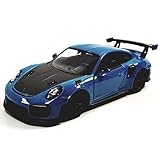
- Doors Open
- Pullback Action
- Die Cast Metal Body
- PULL BACK ACTION WITH FREE ROLLING WHEELS
Consequently, a car’s resemblance to the movie Trans Am is not enough to establish provenance. A claimed survivor needs a documented chain of ownership, production records, period photographs, identifying components and other evidence that connects it to the actual shoot.
8. The “6.6 LITRE” shaker scoop does not identify every engine
The hood-mounted shaker scoop is one of the Trans Am’s defining visual features. On the film cars, it carries the “6.6 LITRE” marking associated with the 1977-style appearance.
That marking can create confusion because the 1977 Firebird range included more than one 6.6-liter engine configuration. The lettering tells us about the car’s period presentation, but it should not be treated as a complete engine specification. Production accounts separately describe the bridge-jump car’s special approximately 750-horsepower engine installation, which was plainly different from assuming that every movie vehicle retained an identical factory drivetrain.
9. The black-and-gold look was a genuine Pontiac factory option
Pontiac’s black-and-gold Special Edition package included far more than a coat of black paint. Period descriptions identify gold exterior accents and decals, blacked-out trim, the shaker scoop, spoiler and other Trans Am equipment. The exact package price varied according to roof configuration and other options.
That factory origin is part of the car’s appeal. The film amplified an existing Pontiac design rather than creating a completely one-off movie costume. For collectors, however, originality still matters: a genuine Special Edition car, a period-correct restoration, a 1976 car converted with 1977-style parts and a movie replica are different things.
Fans who want the look without confusing it with a film-used vehicle may prefer a Smokey and the Bandit Trans Am model car or a clearly labeled 1977 Pontiac Firebird Trans Am scale model. A miniature replica captures the movie design while making no claim to be one of the scarce and difficult-to-document production cars.
10. The movie helped make the Trans Am a sales phenomenon
The film’s commercial effect extended well beyond the screen. Hagerty reports that 1977 Firebird sales reached 155,735 units, with nearly half identified as Trans Ams. Another automotive-history account lists 93,341 Trans Ams sold in 1978, compared with 46,701 in 1976.
Rank #4
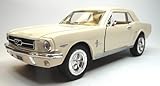
- Authentic 1:36 Scale: Meticulously crafted 1964 1/2 Ford Mustang model car with impressive 5-inch length.
- Realistic Details: Die-cast metal body with opening doors and eye-catching blue finish.
- Interactive Play: Engaging pull-back action for thrilling motion across smooth surfaces.
- Collectible Quality: Ideal for model car enthusiasts and collectors seeking miniature automotive replicas.
- Brand: KiNSMART, a trusted name in die-cast vehicle models and toys.
Those figures should not be presented as proof that the movie alone caused every increase. Pontiac’s styling, product planning and marketing also affected sales, and the Trans Am already had a strong identity before the film appeared. Still, Smokey and the Bandit became a major part of the car’s sales story, exposing the black-and-gold Trans Am to an enormous audience and giving it a cultural status that ordinary advertising could not easily reproduce.
The Burt Reynolds car is another provenance trap
One of the most important distinctions concerns Burt Reynolds’s frequently photographed black 1977 Trans Am. That car sold for $450,000 in 2014, but it was a promotional vehicle used to publicize the film—not one of the cars filmed in the original production.
Reynolds was later associated with replicas and other promotional examples as well. Those cars can be historically important and highly collectible, but the labels are not interchangeable:
- Movie-used: a vehicle documented as having appeared during filming.
- Promotion-used: a vehicle used to advertise or promote the movie.
- Burt Reynolds-owned: a car documented as having been owned by Reynolds.
- Replica: a later car built to reproduce the movie appearance.
A car may fit more than one category, but none of these descriptions automatically proves that it was the exact Trans Am seen in a particular scene.
Independent reader supportYour contribution helps us test, update, and keep practical guides available for everyone.What made the Bandit Trans Am unforgettable?
The answer is the combination of a real factory design and cinematic exaggeration. Pontiac supplied the visual ingredients: the second-generation Firebird’s aggressive front end, black-and-gold Special Edition treatment, shaker scoop, spoiler and broad stance. Needham supplied the storytelling: close calls, stunt driving, damaged cars and the bridge leap. The result was a vehicle that felt fast and rebellious even when the production had to modify it extensively to achieve the required action.
That is why the Trans Am remains more than a famous movie prop. It is simultaneously a Pontiac option package, a carefully staged stunt platform, a symbol of late-1970s American car culture and one of the clearest examples of a film turning a production automobile into a character.
Best Value

- Opening parts and rolling wheels
- Easy assembly, pre-painted metal body
- When finished the vehicles are fully functional
- Rolling diecast replica
- Skill level: intermediate
For a home collection, a Smokey and the Bandit soundtrack or an authorized DVD/Blu-ray release can recreate the film’s atmosphere, while a scale car provides the visual centerpiece. Physical-format availability varies by retailer and region, so buyers should check the current edition and condition rather than assuming every listing represents the same release.
Frequently Asked Questions
Was the car in Smokey and the Bandit an actual 1977 Pontiac Trans Am?
It was a Pontiac Firebird Trans Am presented in the 1977 Special Edition style. Production accounts indicate that the filming cars were 1976 vehicles fitted with 1977-specific front-end components and trim, so “1977-style Trans Am built from a 1976 production car” is the most precise description.
Did Burt Reynolds drive the Trans Am over the bridge?
No. Hal Needham drove the Trans Am for the bridge-jump stunt, while stunt performer Lada St. Edmund substituted for Sally Field in the car.
Crashes, No Sound, or Screen Glitches?
Random freezes, missing sound and display glitches usually trace back to one bad driver. Find and replace yours safely.Free scan · under a minutePC Slower Than It Used to Be?
A free scan shows the junk files, broken settings and background clutter dragging Windows down - then fixes them in one click.Free scan · Windows 10 & 11Does Burt Reynolds’s famous Trans Am survive as one of the movie cars?
The black 1977 Trans Am associated with Reynolds and sold for $450,000 in 2014 was a promotional vehicle, not one of the original filming cars. Any claim that a complete movie-used car survives requires specific provenance.
How many Trans Ams were destroyed during filming?
Accounts differ on the exact number and on how individual cars were assigned. The defensible conclusion is that multiple Trans Ams were used, working stunt cars were heavily damaged or dismantled, and some vehicles became parts donors.
The Bottom Line
The Bandit’s Pontiac was a real black-and-gold Firebird Trans Am Special Edition, not a factory “Bandit” model. But the movie cars were 1977-style vehicles assembled from 1976 production cars, the bridge-jump car had a special roughly 750-horsepower installation, and Hal Needham—not Burt Reynolds—performed the leap. That blend of factory style, stunt engineering and cinematic mythology is what made the Trans Am an enduring automotive icon.
Quick Recap
Product prices and availability are accurate as of the date/time indicated and are subject to change. Any price and availability information displayed on Amazon at the time of purchase will apply.