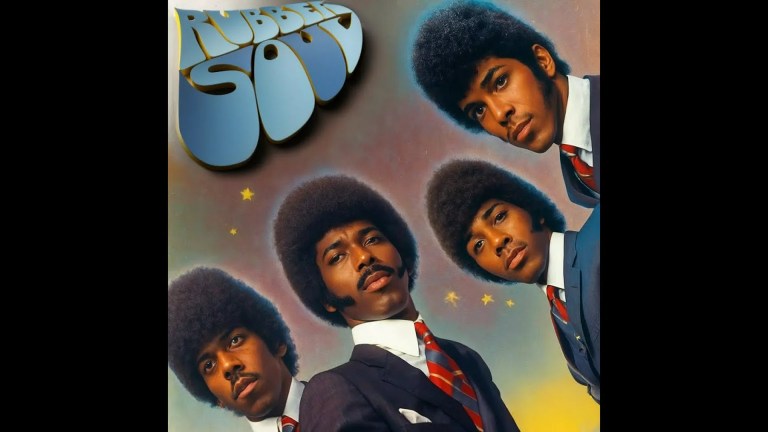
Spotify did carry an AI-generated song on the profile of dead singer-songwriter Blaze Foley, according to a July 2025 Futurism report. The track, “Together,” was unrelated to Foley, used an AI-generated cover image, and was uploaded without authorization from the label managing his catalog. Spotify removed it after the catalog representative objected. The evidence describes a distributor or uploader problem—not proof that Spotify created the song itself.
What appeared on Blaze Foley’s Spotify page
Blaze Foley was killed in 1989, so he could not approve a new recording, vocal performance or cover image. Yet a song titled “Together” appeared on his established Spotify artist page in 2025. Futurism reported that the track was AI-generated, had no connection to Foley and had not been authorized by Craig McDonald, owner of the label managing Foley’s catalog.
McDonald said, “I can clearly tell you that this song is not Blaze, not anywhere near Blaze’s style, at all.” He described it as “an AI schlock bot, if you will.” The release listed the uploader credit “Syntax Error” and used an AI-generated cover image. Spotify subsequently removed the track.
The report also identified apparently similar AI uploads on other established artist pages, including Guy Clark’s. Those details indicate an impersonation and catalog-management failure by an uploader or distributor. They do not establish that Spotify generated the music or deliberately commissioned it.
#1 Best Overall

- Adjustable Height & Solid: The height of the microphone stand with boom arm is adjustable from 28.1 inches to 89.8 inches by adjusting the knobs, perfect for people in all age groups. It features upgraded supporting structures for better load-bearing capacity, holding your microphone in position.
- Steady Tripod Stand: The high-quality thickened steel poles enhance the exceptional stability and durability of this mic stand. Compared to other lighter stands that are easy to tip over, our mic tripod stand is as heavy as 4.0lbs, serving indoor and outdoor use.
- Flexible & Detachable Boom Arm: The boom arm of the stand is adjustable from 16 inches to 30 inches in length and it can rotate 360° horizontally as well as up to 180° vertically. You can choose the best angle and length of performance by easily adjusting the knobs on the boom arm. Remove the boom arm and attach the mic clip, then you can also use it as a straight mic stand.
- Portable Carrying Bag: The package comes with a premium carrying bag and the floor mic tripod stand is easy to disassemble into several pieces which allows it to easily pack into the small carrying bag (19.5”×8.3” ) and fit anywhere, easy to transport and store.
- Wide Compatibility: Two different styles of mic clips in package are compatible with most types of microphones such as Shure SM58, Shure SM48, Shure PGA48, Samson Q2U, ATR2100x-USB, etc. The included metal 3/8” to 5/8” screw adapter is suitable for Blue Yeti, Snowball, Hyper X QuadCast, SoloCast, Shure SM7B, AT2020, Fifine AM8 and more.
Why putting synthetic music on a dead artist’s page is different
There is no consent
A deceased musician cannot authorize a new vocal, approve lyrics or object to a fabricated image. Estates, labels and rights holders may manage existing recordings, but that is not the same as consenting to a newly generated performance presented through the artist’s identity.
The profile itself creates a false endorsement
Listeners generally treat an artist page as a catalog assembled under that artist’s name. Placing an unrelated track there can make the page, search results and playlists imply that Foley made or endorsed it. The deception does not require the synthetic vocal to be a perfect imitation; attaching it to the wrong identity can be misleading on its own.
AI does not automatically make a release unauthorized
AI-assisted music can involve vocals, lyrics, instruments or post-production. The central issue in the Foley case was unauthorized impersonation and misattribution, not simply the use of an AI tool.
Rank #2

- Adjustable microphone stand designed to hold a microphone securely in place (microphone clip sold separately) at the height you choose
- Long boom arm with molded plastic counterweight; adjust to standing height for singing or speaking or seated height for playing an instrument
- Versatile design folds flat for use as straight mic stand; max height 85.75 inches; base width 21 inches
- Sturdy steel construction; ultra-light for easy transport
- Compatible with 3/8-inch to 5/8-inch adapter; clip-on cable holder keeps cords out of the way
What Spotify says its rules require
Spotify told Futurism that the upload violated its deceptive-content policy. That policy prohibits impersonation intended to mislead, including deceptively replicating another creator’s name, image or description, or posing as a person, brand or organization. Spotify says it can act against licensors and distributors that fail to police fraud, including permanently removing repeat or egregious violators.
Quick wins for a faster PC:
Repair Windows errors before they cause bigger problemsFix Now →Fix the driver behind crashes, sound loss and screen glitchesFind Drivers →In a September 25, 2025 policy announcement, Spotify stated: “Vocal impersonation is only allowed in music on Spotify when the impersonated artist has authorized the usage.” The company also announced stronger enforcement against unauthorized AI voice clones, a spam filter aimed at mass-upload and recommendation-abuse tactics, and AI disclosures in music credits.
Spotify said it removed more than 75 million spammy tracks in the preceding 12 months. That is a company-reported figure covering the period before the announcement, not a count of AI songs alone.
Rank #3

- Stable Tripod Base: CAHAYA tripod microphone stand has legs that extend wider than most, keeping your microphone securely in place. Hollow bottom supports prevent bending and help distribute weight, reducing vibration. Non-slip foot pads keep the stand in place.
- Carrying Bag & Universal Mic Clips: The mic stand floor comes with carrying bag and 2 mic clips: barrel style & clothespin style, compatible with most types of microphones like Shure SM58, Shure SM48, Shure PGA48, Samson Q2U, HyperX QuadCast, etc.
- Stand Height Adjustable: Microphone stand height can be adjusted from 25.2” to 62.2”, perfect floor use mic stand for outdoor use like stage performance, speeches, meeting rooms, party, wedding, karaoke sing or live broadcasts etc.
- Extendable & Removable Boom Arm: Boom arm extends freely within 16.9”-30.1” and 360° angle rotatable through adjustment knobs which allows for easy positioning. Simply remove the boom arm and attach microphone clip to convert the mic stand into a traditional straight mic stand.
- Portable and Quick to Assemble: All parts could be stored in a provided carrying bag for convenient transport. Assemble or disassemble in just 2 minutes for quick, effortless use.
How Spotify’s AI labels are supposed to work
Spotify is introducing two different transparency signals. They answer different questions and should not be treated as interchangeable.
| Signal | What it describes | What a listener can infer | Important limitation |
|---|---|---|---|
| AI Persona badge | The presented artist identity appears to be AI-generated. | The profile may not represent a conventional human artist identity. | Spotify announced a rollout beginning in mid-September 2026; availability and review outcomes can change. |
| AI Credits | Disclosed AI contributions to a particular recording, such as vocals, lyrics, instrumentation or post-production. | Some part of the track was reported as AI-assisted or AI-generated. | Credits depend on disclosure by the artist, label or distributor. No credit does not prove that no AI was used. |
AI Persona badges concern identity
On August 11, 2026, Spotify announced AI Persona badges for profiles whose public identity appears AI-generated. Spotify said it would not rely only on self-disclosure and could apply a badge after review. By default, Spotify said these profiles would be excluded from editorial and algorithmic recommendations unless a listener follows them. The announcement describes a default policy for the rollout, so implementation details may change.
AI Credits concern production
An AI Credit is about how a song was made, not whether the artist profile is synthetic. A human artist can disclose an AI-generated backing part, while a profile can have a Persona badge even when individual credits are incomplete. Spotify cautions that a missing AI Credit is not evidence of entirely human production.
Rank #4
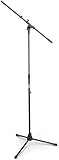
- Versatile: Adjustable-height mic stands adapt to studios, stages, podcasts, and more.
- Durable: Steel-built mic stands with non-slip rubber feet for secure, stable support.
- Compatible: Adjustable boom arms offer 30" reach and standard threading for wide equipment compatibility.
- Portable: Folds flat for easy storage, transport, and convenient travel between setups.
- Precise: Removable boom arm adjusts angle for accurate microphone positioning and optimal sound capture.
How to assess a suspicious Spotify artist page
- Check the artist identity. Look for an AI Persona badge and compare the profile with the artist’s known catalog, label information and official channels.
- Inspect track credits. Open the song’s credits and look for AI disclosures. Treat an empty disclosure as unknown, not as proof that the recording is human-made.
- Compare the release context. An unfamiliar song appearing on a long-established artist page, especially with an unrelated title or artwork, is a warning sign.
- Listen for identity mismatch, but do not rely on your ears alone. A strange style or voice can support a report, yet synthetic audio can be convincing and authentic artists can experiment.
- Report the specific track or profile. Include the artist page, song title, uploader or distributor credit, artwork and why the release appears impersonating or misattributed. Rights holders should also contact their label, distributor and estate representatives.
Why AI music may still appear in recommendations
Spotify’s announced recommendation exclusion applies by default to profiles carrying an AI Persona badge, unless the listener follows them. It does not mean every AI-assisted track is removed from every playlist, nor does it cover undisclosed or unreviewed profiles automatically. AI Credits describe disclosed production details; they are not a universal recommendation block.
Spotify’s 2026 transparency package also includes Verified by Spotify, SongDNA, Artist Details and Artist Profile Protection. Spotify says hundreds of thousands of profiles are verified, representing more than 99% of artists listeners actively search, and that tens of thousands of AI credits are submitted daily. Those figures are Spotify’s own reports, not an independent audit.
What the Foley incident shows
The Blaze Foley upload exposed a gap between a streaming service’s policy and what can reach a public artist page before enforcement catches it. The removal addressed that individual track, but prevention depends on distributor screening, identity verification, catalog controls, rights-holder reporting and clear disclosure.
Recommended Free Tools
For listeners, the practical distinction is simple: an AI Persona badge concerns who the profile appears to be; an AI Credit concerns how a particular song was made. Neither signal, by itself, proves that every track is authentic or inauthentic. In Foley’s case, the decisive facts were the unrelated AI track, the unauthorized use of a dead artist’s identity and Spotify’s subsequent removal.
Quick Recap
Product prices and availability are accurate as of the date/time indicated and are subject to change. Any price and availability information displayed on Amazon at the time of purchase will apply.