What’s actually slowing this PC down?
Pick the symptom - the matching free tool is one click away.
The best sci-fi movie of all time is 2001: A Space Odyssey. Stanley Kubrick’s 1968 film remains the genre’s most complete union of visual invention, scientific design, philosophical ambition, technical achievement, and cosmic mystery. It is followed here by Blade Runner, Alien, Star Wars, and The Matrix.
This is an editorial ranking, not an objective scorecard. It considers historical influence, formal achievement, conceptual ambition, cultural reach, and the breadth of science-fiction cinema. The list moves from silent expressionism and international art film to cyberpunk, animation, ecological dystopia, horror, blockbuster adventure, and modern first contact.
| # | Preview | Product | Price | |
|---|---|---|---|---|
| 1 |
![Sci-Fi Classics [DVD]](https://m.media-amazon.com/images/I/51d07WmsohL._SL160_.jpg)
|
Sci-Fi Classics [DVD] | $12.85 | Buy on Amazon |
| 2 |

|
Science Fiction Classics Collection (DVD) | $46.95 | Buy on Amazon |
| 3 |

|
Sci-Fi Invasion: 50 Movie Set | $3.47 | Buy on Amazon |
| 4 |
|
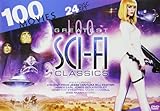
100 Greatest Sci-Fi Classics DVD Collection | $45.00 | Buy on Amazon |
| 5 |

|
Sci-Fi Classics 50 Movie Pack | $36.99 | Buy on Amazon |
How this ranking was made
“Best” is not an objective measurement. This list weighs five things: historical influence, formal achievement, conceptual ambition, cultural reach, and range. A film earns a high place not simply because it is entertaining, but because it expanded what science-fiction cinema could express or how it could express it.
That distinction matters. The American Film Institute treats its own lists as invitations to discussion rather than final verdicts. The British Film Institute, the Academy of Motion Picture Arts and Sciences, and the Library of Congress offer different kinds of evidence: critical reputation, technical achievement, preservation, historical influence, and cultural importance. This ranking brings those perspectives together while making its own editorial judgments.
#1 Best Overall
The result includes silent cinema, international art film, animation, horror, cyberpunk, blockbuster adventure, ecological dystopia, comedy, and contemporary first-contact stories. It is not a list of the 25 most commercially successful science-fiction films, nor a list limited to films that fit one definition of the genre.
-
2001: A Space Odyssey (1968) — Stanley Kubrick
2001: A Space Odyssey is the defining cinematic meditation on human evolution, artificial intelligence, technology, and cosmic mystery. Its story is communicated through images, rhythm, sound, and implication as much as through dialogue. The result is a film that can feel monumental, strange, beautiful, and deliberately withholding at the same time.
Kubrick’s scientific design, widescreen compositions, controlled editing, and Oscar-winning visual effects established a standard for serious space cinema. The film’s nearly dialogue-free visual storytelling makes the journey from prehistoric tool use to space-age intelligence feel less like conventional adventure than a speculative experiment about what humanity is becoming. Its canonical status is supported by the AFI, BFI, Academy, and Library of Congress, but its first-place position here comes from the way its formal achievement and philosophical ambition remain inseparable.
-
Blade Runner (1982) — Ridley Scott
Blade Runner turned a detective story into a foundational cyberpunk noir about artificial humans, memory, corporate power, and personhood. Its Los Angeles is crowded, wet, polluted, multilingual, and dominated by industrial architecture and advertising. The world feels inhabited rather than newly assembled for the camera.
Ridley Scott’s rain-soaked production design, Vangelis’s melancholy score, smoke-filled interiors, and morally unsettled characters became a visual and thematic template for decades of science fiction. The film’s adaptation of Philip K. Dick is central to its power: the question is not merely whether artificial beings can imitate humans, but whether the category of “human” can survive its own cruelty, exploitation, and uncertainty.
-
Alien (1979) — Ridley Scott
Alien is the definitive fusion of science fiction and horror. Its commercial spacecraft is not a sleek utopian vessel but an industrial workplace populated by tired, practical, working-class people. That setting makes the biological threat feel especially invasive: terror arrives in the middle of an ordinary job.
Scott builds suspense through confined spaces, silence, machinery, and incomplete information before revealing one of cinema’s most memorable creatures. The film’s production design makes the future tactile and used, while its ensemble dynamics give the horror a social dimension. The BFI describes its blend of science-fiction world-building and suspense as visionary, and its inclusion in the National Film Registry reflects its lasting cultural and artistic importance.
Special offer. See more information about Outbyte and uninstall instructions. Please review EULA and Privacy policy. -
Star Wars (1977) — George Lucas
Star Wars transformed science fiction into modern blockbuster mythology. Its plot draws on archetypal adventure, but its achievement lies in how convincingly it combines that simplicity with practical effects, memorable sound design, instantly legible characters, and a lived-in universe of spacecraft, robots, aliens, empires, and rebels.
George Lucas created a new model for popular world-building: the audience understands the culture of the galaxy through costumes, vehicles, props, movement, and sound rather than lengthy explanations. The film’s influence on effects-driven filmmaking, franchise storytelling, and cinematic sound is enormous. AFI recognition and Library of Congress preservation confirm its place in American film history, but its fourth-place ranking also acknowledges that later films sometimes surpassed it in psychological or formal complexity.
For fans who want a physical object connected to the film’s design legacy, the Star Wars Millennium Falcon model is a natural companion. Verify the exact book-and-model edition and current availability before purchase; this mention may be monetized.
-
The Matrix (1999) — The Wachowskis
The Matrix made simulated reality, machine control, identity, and liberation accessible to a mass audience without stripping those ideas of their philosophical force. Its central premise turns everyday perception into a political question: who built the world, who benefits from it, and what would it cost to discover that it is false?
Special offer. See more information about Outbyte and uninstall instructions. Please review EULA and Privacy policy.The Wachowskis fused cyberpunk, martial arts, anime, comic-book imagery, and techno-thriller conventions into a new mainstream action language. “Bullet time” was more than a visual trick; it made the manipulation of time and perspective part of the film’s argument about reality. Its influence can be seen in action choreography, digital cinematography, and the wave of simulated-world stories that followed.
-
Solaris (1972) — Andrei Tarkovsky
Where many space films ask how humans will conquer or survive the cosmos, Solaris asks what the cosmos might reveal about the humans who study it. Tarkovsky adapts Stanisław Lem’s science fiction into a patient psychological drama about grief, memory, guilt, and the limits of knowledge.
Rank #2
The mysterious planet and its ocean remain resistant to easy explanation. That refusal is the point: scientific investigation cannot automatically resolve emotional or moral uncertainty. Tarkovsky’s long duration, contemplative images, and attention to interior life make the film one of science fiction’s strongest arguments for quietness and psychological depth.
-
Stalker (1979) — Andrei Tarkovsky
Stalker is a metaphysical journey through an apparently abandoned restricted zone where a room may grant a person’s deepest desire. The premise sounds like an adventure setup, but Tarkovsky turns the expedition into a test of faith, motivation, and self-knowledge.
The Tool Desk
Outbyte PC Repair FREERepair Windows errors before they cause bigger problemsFix Now →Outbyte Driver Updater FREEScan for outdated or missing drivers - takes under a minuteDriver Scan →Special offer. See more information about Outbyte and uninstall instructions. Please review EULA and Privacy policy.Ecological ruin, ambiguous science, spiritual anxiety, and hypnotic pacing define the film. The Zone is both a physical landscape and a projection of the characters’ fears and hopes. Its deliberate movement and unanswered questions can challenge viewers expecting plot mechanics, but that uncertainty is precisely what makes it essential philosophical science fiction.
-
Metropolis (1927) — Fritz Lang
Metropolis established many of the visual foundations of science-fiction cinema before sound had become standard. Its monumental city, divided between elevated privilege and subterranean labor, turns class conflict and industrial power into architecture.
The robot figure, expressionist lighting, mass choreography, machinery, and towering urban spaces have been copied, quoted, and reimagined for nearly a century. Lang’s film is not subtle about its social allegory, but its visual imagination remains astonishing. It belongs this high on the list because later science fiction still speaks in images that Metropolis helped invent.
-
The Day the Earth Stood Still (1951) — Robert Wise
The Day the Earth Stood Still uses alien contact as a warning against militarism and nuclear self-destruction. Its visitor from space is not primarily a monster or invader; he is an emissary delivering a moral ultimatum to a species that has made its own violence a planetary danger.
Special offer. See more information about Outbyte and uninstall instructions. Please review EULA and Privacy policy.Robert Wise favors restraint, atmosphere, and ethical clarity over sensational destruction. The film’s postwar anxieties are specific to its period, but its basic question remains durable: can humanity recognize a shared threat before competing nations turn fear into catastrophe?
-
Invasion of the Body Snatchers (1956) — Don Siegel
This compact paranoia film imagines familiar people being replaced by emotionless duplicates. Its science-fiction premise works simultaneously as an allegory about conformity, social pressure, political fear, and the suspicion that ordinary life has become emotionally hollow.
The film’s most unsettling quality is uncertainty. The threat may be external, but the pressure to conform is already embedded within society. Don Siegel keeps the story direct and tense, allowing its ambiguity to outlast any single interpretation of the 1950s political moment.
-
Planet of the Apes (1968) — Franklin J. Schaffner
Planet of the Apes is a sharp civilizational satire disguised as a futuristic adventure. Its social order reverses familiar assumptions about intelligence, authority, prejudice, and scientific legitimacy, forcing the human characters to experience the kind of dehumanization they might otherwise impose on others.
Do these 3 things before closing this tab:
1Clear out junk files and repair common Windows errors2Scan for outdated or missing drivers - takes under a minute3Repair Windows errors before they cause bigger problemsSpecial offer. See more information about Outbyte and uninstall instructions. Please review EULA and Privacy policy.The film’s critique of nuclear catastrophe and humanity’s tendency to misunderstand its own history culminates in a famous final revelation. That ending is culturally powerful not only because it surprises the audience, but because it reframes everything that came before as a warning about technological confidence and civilizational self-destruction.
-
Close Encounters of the Third Kind (1977) — Steven Spielberg
Close Encounters of the Third Kind approaches extraterrestrial contact through wonder rather than conquest. Spielberg treats the encounter as an almost religious experience, one that disrupts domestic life while expanding the characters’ sense of what the universe contains.
Rank #3
Sci-Fi Invasion: 50 Movie Set- Top Quality, Manufactured by MILL CREEK.
- Part Number: 7121
Scientific curiosity, government secrecy, visual spectacle, and a memorable musical language coexist without reducing the aliens to simple villains. The film understands that contact would be psychologically disruptive even if it were peaceful. Its sense of awe remains one of the genre’s great achievements.
-
E.T. the Extra-Terrestrial (1982) — Steven Spielberg
E.T. the Extra-Terrestrial makes science fiction intimate. Its alien visitor becomes the center of a story about childhood, friendship, separation, family change, and empathy. The film’s speculative elements are important, but its emotional accessibility is what gives them lasting force.
Recommended Free Tools
Special offer. See more information about Outbyte and uninstall instructions. Please review EULA and Privacy policy.Spielberg’s alien design, expressive performances, visual storytelling, and carefully controlled sentiment create a bridge between family fantasy and serious science fiction. The film does not need a complicated theory of extraterrestrial life to make its central idea persuasive: an unfamiliar being can become recognizable through care. AFI’s inclusion of the film among America’s greatest is consistent with its exceptional cultural reach.
-
Terminator 2: Judgment Day (1991) — James Cameron
Terminator 2 is a rare sequel that expands its predecessor’s technology-and-fate premise into a larger meditation on responsibility. The question is no longer only whether the future can be escaped, but whether the people creating that future can change their behavior before catastrophe becomes inevitable.
Its digital effects, physical action design, and clean spatial storytelling remain unusually influential. Beneath the spectacle, the film asks whether artificial intelligence is dangerous because machines are inherently evil or because human beings repeatedly treat technological power as a weapon. Its emotional transformation of the machine antagonist gives the action a moral and parental dimension.
-
Back to the Future (1985) — Robert Zemeckis
Back to the Future is the most elegant mainstream time-travel comedy. Its screenplay turns family history, teenage identity, causal paradoxes, and personal embarrassment into a chain of escalating consequences that the audience can follow without needing a physics lecture.
Crashes, No Sound, or Screen Glitches?
Random freezes, missing sound and display glitches usually trace back to one bad driver. Find and replace yours safely.Free scan · under a minuteWindows Errors? Fix Them Before They Spread
Repair common Windows errors and clear accumulated junk for a smoother, more stable PC - no reinstall needed.Free scan · no reinstallSpecial offer. See more information about Outbyte and uninstall instructions. Please review EULA and Privacy policy.The film’s time-travel rules are accessible because they are dramatized through relationships. The protagonist’s existence depends on his parents meeting; changing the past therefore becomes both a survival problem and a family problem. Its tightly engineered structure, comic timing, and escalating complications explain why it remains such an effective introduction to the storytelling possibilities of time travel. The Library of Congress recognizes it as a preserved American film.
-
Brazil (1985) — Terry Gilliam
Brazil is a surreal bureaucratic dystopia in which paperwork, surveillance, technology, and administrative mistakes crush individual freedom. Its world is absurd but not harmless: the jokes emerge from institutions that have made ordinary life impossible to navigate.
Terry Gilliam’s baroque production design gives the film a distinctive visual identity, filling cramped offices and decaying infrastructure with oversized machinery and oppressive systems. Fantasy offers the protagonist an escape, but the film’s bleak comic tone keeps asking whether imagination can survive a state that controls both information and reality.
-
Children of Men (2006) — Alfonso Cuarón
Children of Men imagines a near future in which human infertility has caused social exhaustion, political authoritarianism, and the collapse of long-term hope. Its speculative premise is never treated as a puzzle separate from lived experience; it shapes migration, policing, family, religion, and the value people place on tomorrow.
Quick wins for a faster PC:
Repair Windows errors before they cause bigger problemsFix Now →Fix the driver behind crashes, sound loss and screen glitchesFind Drivers →Special offer. See more information about Outbyte and uninstall instructions. Please review EULA and Privacy policy.Alfonso Cuarón’s immersive long takes and documentary-like violence make the world feel observed rather than presented. The camera moves through traffic, protests, refugee camps, and battle zones with a frightening lack of protection. The film’s central question is not whether society deserves saving, but whether fragile acts of care can create the possibility of hope inside a system that has stopped believing in it.
-
Eternal Sunshine of the Spotless Mind (2004) — Michel Gondry
Eternal Sunshine of the Spotless Mind uses a memory-erasure procedure to investigate grief, repetition, emotional avoidance, and the value of painful experience. Its science-fiction device is intimate rather than spectacular: the technology enters a relationship and rearranges the experience of loss from inside the mind.
Rank #4
Sale
100 Greatest Sci-Fi Classics DVD Collection- 100 films on 24 DVDs
- Over 130 hours of entertainment in color and black & white
- Films include:
- 984: Prisoner of the Future (1982) Color, Stephen Markle
The film’s inventive structure makes memory unstable, physical, and cinematic. Spaces collapse, identities blur, and moments disappear while the characters try to preserve what they once wanted to forget. Its intimate scale proves that speculative cinema can be psychologically microscopic while still raising large questions about consent, identity, and whether suffering is part of what gives love meaning.
-
Her (2013) — Spike Jonze
Her is a melancholy near-future romance about intimacy between a human being and an operating system. Instead of treating artificial intelligence mainly as a military threat or extinction mechanism, it considers companionship, dependency, voice, embodiment, and the changing boundaries of relationships.
Special offer. See more information about Outbyte and uninstall instructions. Please review EULA and Privacy policy.The film’s warm colors and gentle pace contrast with the unsettling implications of its premise. The relationship feels emotionally real even as its participants occupy radically different forms of existence. That tension allows Her to ask whether intimacy requires physical embodiment, mutual limitation, or simply the experience of being understood.
-
Arrival (2016) — Denis Villeneuve
Arrival is a first-contact film centered on language, translation, time, and the political difficulty of understanding an unfamiliar intelligence. Its suspense comes less from an impending invasion than from the consequences of mistranslation, fear, and national competition.
Denis Villeneuve gives the film an austere visual style and a strong emotional center. Communication becomes a form of action: the ability to listen, interpret, and tolerate uncertainty may determine whether humanity responds to the unknown with cooperation or violence. The film’s intellectual premise and emotional stakes make it one of the strongest humane science-fiction films of the modern era.
-
Interstellar (2014) — Christopher Nolan
Interstellar combines space survival, ecological crisis, relativity, parental love, and human persistence on a scale few contemporary films attempt. Its characters leave a damaged Earth not because exploration is a luxury, but because the planet’s future has become uncertain.
Special offer. See more information about Outbyte and uninstall instructions. Please review EULA and Privacy policy.The film belongs on this list for its ambition, practical imagery, scientific consultation, and ability to make difficult cosmic concepts emotionally legible. Time dilation is not merely an idea to explain; it becomes a source of intimate loss. The result is a large, sometimes openly sentimental film that treats scientific curiosity and emotional attachment as complementary rather than opposing forces.
-
Mad Max: Fury Road (2015) — George Miller
Mad Max: Fury Road communicates its world through movement, color, production design, and physical geography more than exposition. Water, fuel, bodies, vehicles, and terrain reveal the logic of a society built around ecological collapse and patriarchal violence.
George Miller’s action construction is exceptionally clear even at extreme speed. Every chase has direction, geography, and consequence, while the film’s collective resistance gives its spectacle political meaning. Its themes of resource control, reproductive exploitation, mutual aid, and liberation make it far more than a post-apocalyptic chase movie.
-
Akira (1988) — Katsuhiro Otomo
Akira is a landmark animated cyberpunk film about militarization, urban unrest, youth, mutation, and technological power. Neo-Tokyo is dense and unstable, a city where political authority, scientific experimentation, and street-level frustration collide.
What’s actually slowing this PC down?
Pick the symptom - the matching free tool is one click away.
Special offer. See more information about Outbyte and uninstall instructions. Please review EULA and Privacy policy.Its detailed animation, vast cityscapes, body horror, and kinetic sound design expanded international recognition of what science-fiction animation could achieve. The film does not treat technological power as abstract; it is physically explosive, politically controlled, and capable of transforming the human body. Its influence extends well beyond animation into music videos, live-action cinema, fashion, and game design.
-
WALL-E (2008) — Andrew Stanton
WALL-E is a visually economical ecological fable about consumerism, automation, loneliness, and the recovery of human agency. Its opening section uses almost no dialogue yet establishes an abandoned Earth, a robot’s personality, a history of waste, and a longing for connection.
Best Value
Sci-Fi Classics 50 Movie Pack- Extensive Movie Collection: Features 50 classic science fiction movies spanning multiple genres including space adventures, monster films, and mythological epics
- Convenient Storage Format: Twelve double-sided DVDs provide an instant library of entertainment in a compact and organized format
- Diverse Film Selection: Includes iconic titles such as Santa Claus Conquers the Martians, Gamera the Invincible, Hercules Unchained, and many other cult classics from the golden age of sci-fi cinema
The film’s achievement is partly one of animation: image, gesture, sound, and movement carry emotional and narrative information that a dialogue-heavy film might explain. Its warning about passive consumption is balanced by a hopeful belief that curiosity and care can interrupt automated routines. It is accessible to children without being intellectually limited to them.
For families inspired by the list’s space-travel films, a build-your-own rocket kit can be a useful educational companion rather than film merchandise. Look for the specific Smithsonian book-and-model edition and verify current details before buying; this is an affiliate-eligible recommendation, not a claim that the kit is connected to WALL-E.
Special offer. See more information about Outbyte and uninstall instructions. Please review EULA and Privacy policy. -
The Thing (1982) — John Carpenter
The Thing places science-fiction horror in a claustrophobic Antarctic research station, where an organism can imitate any human being. The premise destroys the security of the ensemble: a character may be trustworthy, infected, or merely behaving suspiciously because everyone understands the stakes.
John Carpenter builds paranoia through isolation, distrust, practical creature effects, and an ensemble dynamic in which cooperation is necessary but nearly impossible. The film’s bleakness is not just atmospheric. It asks what remains of solidarity when identity itself can no longer be verified, and when survival may depend on refusing to trust anyone.
Why some obvious choices are missing
A 25-film ceiling requires difficult exclusions. The Terminator, The Empire Strikes Back, The Fifth Element, RoboCop, Snowpiercer, The Fly, David Cronenberg’s The Fly (1986), The War of the Worlds, The Incredible Shrinking Man, Fantastic Planet, Ghost in the Shell, Under the Skin, Ex Machina, Moon, Primer, The Vast of Night, and Everything Everywhere All at Once are all serious candidates.
Their absence is not a claim that they are inferior. The final selection has to balance historical range, formal innovation, cultural reach, and different kinds of science-fiction storytelling. Some near-misses might rank higher on a list focused specifically on horror, animation, contemporary cinema, practical effects, or philosophical science fiction.
Recommended Free Tools
Where to begin if you have not seen many of them
- For accessible entry points: Start with Star Wars, The Matrix, Back to the Future, E.T. the Extra-Terrestrial, or Arrival.
- For serious space cinema: Watch 2001: A Space Odyssey, then Solaris, Interstellar, and Close Encounters of the Third Kind.
- For darker science fiction: Choose Alien, Blade Runner, The Thing, Children of Men, or Brazil.
- For animation: Pair Akira with WALL-E to see how radically different animated science fiction can be in tone, audience, and visual method.
- For philosophical science fiction: Try Stalker, Solaris, Her, or Eternal Sunshine of the Spotless Mind.
Further physical companions
The films on this list are also a history of design: futuristic cities, spacecraft, robots, costumes, monsters, and imagined technologies. Readers interested in that visual history may enjoy a science-fiction movie posters book as a reference or collectible companion. It is a genre-history recommendation, not a substitute for any particular film, and price and availability should be checked at publication.
For a film creator or rights-holder planning an online discussion, replay, or educational channel, any continuous broadcast service must be used only with original, licensed, or otherwise rights-cleared video. A ranking of copyrighted films does not grant permission to rebroadcast them.
Frequently Asked Questions
What is the best science-fiction movie of all time?
2001: A Space Odyssey ranks first because it combines exceptional visual and technical achievement with unusually ambitious ideas about human evolution, artificial intelligence, technology, and cosmic mystery. Its influence on serious space cinema is matched by its formal originality.
Is this an objective list of the greatest sci-fi films?
No. “Best” is an editorial judgment based on influence, formal achievement, conceptual ambition, cultural reach, and range. The American Film Institute has also emphasized that major film lists are invitations to discussion rather than final measurements.
Which sci-fi movie should I watch first?
Some accessible choices are Star Wars, The Matrix, Back to the Future, E.T. the Extra-Terrestrial, and Arrival. Viewers looking for more challenging philosophical films can begin with 2001: A Space Odyssey, Solaris, or Stalker.
Why are some famous science-fiction movies not included?
Important near-misses include The Terminator, The Empire Strikes Back, RoboCop, Ghost in the Shell, Ex Machina, Moon, Fantastic Planet, and Everything Everywhere All at Once. They were excluded because a 25-film list must balance different eras, countries, forms, and subgenres.
The Bottom Line
Bottom line: 2001: A Space Odyssey takes the top spot because it combines historical influence, technical mastery, visual invention, and philosophical ambition more completely than any other science-fiction film here. The rest of the ranking deliberately widens the definition of “best,” from Metropolis and Solaris to Akira, WALL-E, Arrival, and Mad Max: Fury Road. The order is debatable; the films’ importance is not.
Quick Recap
Product prices and availability are accurate as of the date/time indicated and are subject to change. Any price and availability information displayed on Amazon at the time of purchase will apply.