If there is one definitive answer, it is “Sing About Me, I’m Dying of Thirst.” No other Kendrick Lamar recording combines character, grief, guilt, violence, faith, and narrative control with quite the same force. But the rest of the top 10 makes the case for Kendrick’s extraordinary range: “Alright” is a protest anthem, “DNA.” is a technical detonation, “How Much a Dollar Cost” is a moral parable, and “Not Like Us” is a late-career cultural event.
This is a critical ranking of Kendrick Lamar’s 60 greatest officially released songs—not an official industry list and not a popularity chart. The order weighs writing and performance, song construction, album and career importance, cultural impact, and durability. It includes Kendrick’s solo work, major collaborations, soundtrack recordings, mixtape-era material that remains historically central, and guest appearances where he is a substantial performer.
How this Kendrick Lamar ranking works
The list covers Kendrick’s principal studio albums—good kid, m.A.A.d city (2012), To Pimp a Butterfly (2015), DAMN. (2017), Mr. Morale & the Big Steppers (2022), and GNX (2024)—along with untitled unmastered., Section.80, soundtrack songs, singles, and consequential collaborations.
Officially released recordings are the starting point. Leaks, fan edits, unreleased songs, and tracks where Kendrick appears only as an uncredited fragment are excluded. Streaming availability can vary by country and can change, so listeners should check the current release version in their territory.
What’s actually slowing this PC down?
Pick the symptom - the matching free tool is one click away.
#1 Best Overall
- 12 SET HIGH QUALITY VINTAGE BAND POSTERS for room aesthetic, 70s 80s 90s rock band concerts posters. Size of each poster is 7.8 inch by 11.8 inch. Fits well in an 8 x 12 inch frame (not included). Can hang directly on the wall.
- BEAUTIFUL VINTAGE ROCK BAND POSTERS - these carefully selected vintage rock band concert posters are great for aesthetic room decoration for rock band lovers
- CAN BE ARRANGED IN ANY STYLE, HANGED, OR FRAMED. To paste directly to wall, use double sided tape, painters tape, washi tape, or poster putty (NOT INCLUDED IN PACKAGE)
- THOUGHTFUL GIFT. Can be gift wrapped and messaged. Great gift for any rock band loving person.
“Greatest” remains an editorial judgment. Chart performance, awards, and public recognition matter here as evidence of reach, but they do not automatically outrank a quieter song with stronger writing or deeper replay value.
The 60 greatest Kendrick Lamar songs
- “Sing About Me, I’m Dying of Thirst” — good kid, m.A.A.d city (2012)
Kendrick’s most devastating narrative performance moves through three perspectives before turning grief, guilt, street violence, and spiritual exhaustion toward release. Its structure feels less like a song with a story attached than a short film made from voice, memory, and consequence. - “Alright” — To Pimp a Butterfly (2015)
“Alright” turns bruised optimism into an anthem without pretending that survival is easy. Its intricate verses, elastic production, and instantly communal refrain gave it a life far beyond the album, including major Grammy recognition and a place in public conversations about protest and resilience. - “DNA.” — DAMN. (2017)
A compact explosion of inherited pride, anger, identity, and suspicion. The beat switch gives Kendrick room to change characters and attack angles, proving that a mainstream single can still function as a densely layered character study. - “How Much a Dollar Cost” — To Pimp a Butterfly (2015)
A seemingly ordinary encounter becomes a moral parable about selfishness, empathy, poverty, and revelation. Kendrick’s performance gradually exposes the distance between what he believes about himself and how he behaves when compassion asks something of him. - “m.A.A.d city” — good kid, m.A.A.d city (2012)
The album’s cinematic pressure point combines Compton geography, panic, vocal shifts, and MC Eiht’s memorable guest appearance. It is both street reportage and a portrait of a young person being pulled into a world he understands but cannot safely control. - “Wesley’s Theory” — To Pimp a Butterfly (2015)
George Clinton, Thundercat, a bass-heavy groove, and Kendrick’s flamboyant delivery make this a spectacular opening statement. Beneath the funk are questions about taxation, exploitation, fame, Black ambition, and what happens when success becomes another form of ownership. - “The Blacker the Berry” — To Pimp a Butterfly (2015)
One of Kendrick’s most confrontational recordings, built around racial violence, anger, hypocrisy, and self-indictment. The song refuses the comfort of a simple victim-and-villain arrangement, turning its rage back toward the speaker as well. - “Money Trees” — good kid, m.A.A.d city (2012)
Its melodic hook makes temptation and aspiration feel beautiful, while Jay Rock’s guest verse anchors the song in West Coast rap tradition. The tension between dreamlike luxury and the violence surrounding it is the entire point. - “FEAR.” — DAMN. (2017)
Kendrick builds a life inside one song by presenting fear at three ages: childhood, adolescence, and adulthood. The changing perspectives turn anxiety into a narrative device, ending not with certainty but with a more terrifying awareness of mortality. - “Not Like Us” — single (2024)
A diss record can be immediate and meticulously constructed at the same time. Its precision, chant-ready hook, West Coast framing, and enormous public reach made it one of Kendrick’s defining late-career recordings; it also won Song of the Year and other honors at the 2025 Grammy Awards. Lyrics in a diss should be understood as claims made within a battle, not automatically as verified facts. - “The Art of Peer Pressure” — good kid, m.A.A.d city (2012)
Kendrick’s conversational storytelling makes a night of bad decisions sound ordinary, social, and almost harmless—until the consequences become unavoidable. The song’s relaxed surface is part of its narrative trap. - “HUMBLE.” — DAMN. (2017)
A minimalist, blunt-force hit balancing boastful attack, self-mockery, religious imagery, and one of Kendrick’s most recognizable hooks. It is intentionally simpler than many of the songs above it, but its economy is a major part of its power. - “u” — To Pimp a Butterfly (2015)
The cracked, deliberately uncomfortable vocal performance depicts self-loathing, alcoholism, survivor’s guilt, and the psychological cost of public success. It is not designed to be easy listening; its instability is the performance. - “DUCKWORTH.” — DAMN. (2017)
An extraordinary closing narrative about chance, family history, and the fragile chain of events connecting Kendrick’s father, Top Dawg, and Kendrick himself. The song turns coincidence into destiny without losing sight of how much violence and randomness shaped that destiny. - “King Kunta” — To Pimp a Butterfly (2015)
Funk-infused swagger becomes a vehicle for questions about ownership, authenticity, industry power, and Black artistic lineage. Kendrick sounds triumphant, but the song keeps asking who is allowed to claim the throne and who profits from the performance. - “The Heart Part 5” — single (2022)
A reflective late-career statement about legacy, violence, accountability, and mortality. Its visual identity shifts through famous cultural figures, while the song’s use of an interpolation of Marvin Gaye’s “I Want You” gives the meditation an elegiac, inherited quality. - “Father Time” — Mr. Morale & the Big Steppers (2022)
Kendrick examines inherited masculinity, emotional repression, parenting, and the habits he is trying to unlearn. The writing is unusually precise about how strength can become avoidance when nobody teaches a boy another language. - “Mother I Sober” — Mr. Morale & the Big Steppers (2022)
The emotional core of Mr. Morale addresses generational trauma, family secrecy, sobriety, and the difficult work of breaking inherited patterns. It is confessional without presenting confession as instant healing. - “Institutionalized” — To Pimp a Butterfly (2015)
Wealth and celebrity do not erase institutional conditioning in this sharply observed song. Snoop Dogg, Bilal, and Anna Wise strengthen a performance about survival instincts that remain active even after the circumstances that created them have changed. - “Bitch, Don’t Kill My Vibe” — good kid, m.A.A.d city (2012)
A hazy, instantly memorable statement of artistic independence. It helped establish Kendrick’s crossover identity while preserving the introspective tension that made his early work more than polished radio rap. - “FEEL.” — DAMN. (2017)
A claustrophobic inventory of distrust, exhaustion, envy, and isolation. The recurring idea that nobody is praying for him becomes a thesis for an album concerned with the loneliness underneath fame and moral responsibility. - “PRIDE.” — DAMN. (2017)
Subdued and emotionally ambiguous, “PRIDE.” considers vanity, moral contradiction, love, and the limits of self-knowledge. Its restraint makes it a useful counterweight to the album’s louder declarations. - “Auntie Diaries” — Mr. Morale & the Big Steppers (2022)
Kendrick uses family stories to examine language, gender identity, and the process of recognizing one’s own prejudice. The song is deliberately self-critical, and it should be discussed in that context rather than treated as a simple statement of arrival or perfection. - “Backseat Freestyle” — good kid, m.A.A.d city (2012)
Youthful fantasy and adolescent bravado arrive with explosive rhythm and a Dr. Dre-influenced sense of scale. The gap between Kendrick’s grand ambitions and the dangerous environment around him gives the song its narrative charge. - “Poetic Justice” — good kid, m.A.A.d city (2012)
A polished romantic single built around Janet Jackson’s “Any Time, Any Place,” pairing Kendrick with Drake before their later conflict. Its appeal lies in its warmth, melodic clarity, and the chemistry of two artists who had not yet become opposing figures in rap’s public story. - “Wacced Out Murals” — GNX (2024)
The defensive, autobiographical opening of GNX situates Kendrick amid West Coast identity, industry tension, and his post-2024 position. It sounds like an artist taking inventory of the walls around his own legacy. - “reincarnated” — GNX (2024)
A multi-generational reflection on artistic inheritance, sin, reincarnation, and the responsibilities attached to talent. Kendrick treats influence as both a gift and a moral obligation. - “luther” — GNX (2024)
With SZA, Kendrick chooses warmth, melody, and romantic vulnerability over confrontation. The song’s restraint is significant: it shows how much expressive range he has when he is not trying to dominate the room. - “The Recipe” — good kid, m.A.A.d city bonus material/single (2012)
A relaxed but sharply observed Los Angeles travelogue in which Kendrick and Dr. Dre trade perspectives on pleasure, danger, and home. It is celebratory without forgetting that the city’s mythology has a cost. - “HiiiPoWeR” — Section.80 (2011)
An early manifesto packed with political urgency, historical references, and the conviction that Kendrick’s ambitions exceed conventional rap success. It remains one of the clearest statements of the worldview he would develop across later albums. - “Ronald Reagan Era (His Evils)” — Section.80 (2011)
A forceful critique of American policy, poverty, policing, and the conditions shaping Kendrick’s generation. The young rapper’s anger is not abstract: it is tied to the psychological and economic environments his characters inhabit. - “Keisha’s Song (Her Pain)” — Section.80 (2011)
This tragic character portrait shows Kendrick already working in the moral and narrative register that would define his major albums. Sympathy, exploitation, and consequence are compressed into a story that refuses voyeurism. - “ADHD” — Section.80 (2011)
Hypnotic and accessible, “ADHD” explores medication, numbness, youth, and self-destructive cycles. It was one of the early recordings that made Kendrick’s voice broadly recognizable without reducing his subject matter to a slogan. - “Rigamortis” — Section.80 (2011)
A technical showcase of breath control, internal rhyme, speed, and competitive intensity. It is one of the best places to hear the young Kendrick proving that virtuosity could be a foundation rather than the entire argument. - “Cartoons & Cereal” — standalone single (2012)
A vivid, surreal piece of early storytelling that places childhood imagery beside violence and adult disillusionment. Its imaginative details show why Kendrick’s pre-album work remains essential even when it sits outside a formal studio project. - “For Free? (Interlude)” — To Pimp a Butterfly (2015)
Although labeled an interlude, this jazz-rap sprint is a fully realized performance and central to the album’s design. Kendrick turns sexual and economic exploitation into a virtuosic piece of rhythm, character work, and political comedy. - “These Walls” — To Pimp a Butterfly (2015)
A layered song about sex, revenge, prison, intimacy, and the physical and metaphorical walls enclosing its characters. Its shifting meanings reward close listening: the same phrase can suggest pleasure, confinement, memory, and retaliation. - “Complexion (A Zulu Love)” — To Pimp a Butterfly (2015)
A celebration of Black skin and diasporic beauty elevated by Rapsody’s commanding guest verse. Rather than treating complexion as a superficial theme, the song connects colorism to history, dignity, and self-definition. - “Mortal Man” — To Pimp a Butterfly (2015)
The long-form finale asks what leadership, loyalty, celebrity, and revolutionary symbolism demand from an artist. Its closing conversation with Tupac Shakur’s legacy makes Kendrick’s relationship to hip-hop history part of the song’s architecture. - “i” — To Pimp a Butterfly (2015)
The album version’s live-band arrangement turns self-love into a communal, hard-won act of survival. It earned major Grammy recognition, but its deeper achievement is making affirmation sound like something fought for rather than casually assumed. - “United in Grief” — Mr. Morale & the Big Steppers (2022)
An unstable, shape-shifting opening that links consumerism, grief, therapy, and the impossibility of purchasing emotional repair. Its abrupt changes mirror a mind trying to outrun pain through noise, movement, and acquisition. - “Count Me Out” — Mr. Morale & the Big Steppers (2022)
A melodic self-assessment about regret, boundaries, confidence, and accountability. Kendrick wants to improve without remaining permanently trapped in shame, a tension that gives the song its emotional durability. - “Rich Spirit” — Mr. Morale & the Big Steppers (2022)
Deceptively smooth, “Rich Spirit” contrasts spiritual wealth with fame, envy, and industry noise. Its coolness is not emptiness; it is the sound of a performer withdrawing from demands that once defined his public role. - “Savior” — Mr. Morale & the Big Steppers (2022)
Kendrick rejects celebrity worship and political simplification, insisting that he cannot be a messiah for everyone else. The song is a crucial statement about the limits of representation and the danger of turning artists into moral infrastructure. - “N95” — Mr. Morale & the Big Steppers (2022)
A rapid-fire challenge to materialism, online identity, hypocrisy, and the masks people use to protect status. Its restless energy makes the song feel like an interrogation delivered before anyone has time to prepare an answer. - “We Cry Together” — Mr. Morale & the Big Steppers (2022)
Abrasive by design, the argument between partners exposes resentment, gender expectations, and mutual emotional damage. It is closer to dramatic performance than conventional duet, and its discomfort is the point. - “euphoria” — single (2024)
This long, multi-section diss record keeps changing flows, textures, and attack angles. Its significance is not only the battle context but the way Kendrick uses extended form to sustain pressure without settling into a conventional hook-driven structure. - “meet the grahams” — single (2024)
Structured as direct addresses to members of Drake’s family, this is a stark and unsettling performance. Its impact comes from tone, pacing, and psychological framing more than from a conventional chorus. As with all diss records, its allegations belong to the rhetoric of the battle and should not be repeated as established facts. - “Like That” — Future and Metro Boomin featuring Kendrick Lamar, WE DON’T TRUST YOU (2024)
Kendrick’s guest verse reignited the 2024 rap conflict and became an event almost immediately. The appearance is short, but its combination of timing, directness, and competitive confidence demonstrates his ability to make a feature feel like a headline. - “family ties” — Baby Keem featuring Kendrick Lamar (2021)
A high-energy collaboration with a memorable beat switch and one of Kendrick’s most aggressive recent guest verses. The song works because the technical fireworks are matched by genuine chemistry between the two performers. - “The Hillbillies” — Baby Keem and Kendrick Lamar (2023)
Playful and self-aware, this collaboration turns friendship, luxury, fame, and loose chemistry into its own aesthetic. It offers a rare glimpse of Kendrick enjoying the performance without needing to make it a manifesto. - “All the Stars” — Kendrick Lamar and SZA, Black Panther: The Album (2018)
A major soundtrack single combining pop accessibility with ambition, doubt, and cosmic scale. Kendrick and SZA make the song feel both cinematic and personal, which helps explain its lasting reach outside the film. - “Pray for Me” — The Weeknd and Kendrick Lamar, Black Panther: The Album (2018)
A dramatic soundtrack centerpiece whose verses reinforce the project’s heroism, danger, and revolutionary atmosphere. The Weeknd supplies the widescreen hook while Kendrick adds urgency and narrative threat. - “King’s Dead” — Jay Rock featuring Kendrick Lamar, Future, and James Blake (2018)
Kendrick’s high-voltage opening and eccentric vocal choices help make this an unusually chaotic but memorable collaboration. Its appeal is less about smoothness than about the willingness of every performer to push the track toward instability. - “Collard Greens” — ScHoolboy Q featuring Kendrick Lamar (2013)
A charismatic Black Hippy-era collaboration notable for Kendrick’s elastic guest verse and his chemistry with ScHoolboy Q. It captures the confidence of a West Coast collective whose members could turn technical competition into camaraderie. - “Control” — Big Sean featuring Kendrick Lamar and Jay Electronica (2013)
Kendrick’s verse became a career-defining competitive statement through its ambition, name-checking, and challenge to his peers. It belongs here not simply because it generated headlines, but because it clarified the scale of the artist Kendrick intended to become. - “Nosetalgia” — Pusha T featuring Kendrick Lamar (2013)
A tightly constructed exchange about drugs, memory, and street economies. Kendrick’s verse is vivid and controlled, matching Pusha T’s precision while giving the song a second geography and a different kind of personal history. - “Compton” — good kid, m.A.A.d city (2012)
The triumphant closing statement with Dr. Dre converts a personal journey into civic pride and arrival. After the fear and moral confusion of the album, Kendrick gets to claim his city without pretending the journey was simple. - “The Spiteful Chant” — Section.80 era
A ferocious early performance whose scarcity on some current services should be noted. Its importance lies in the evidence it provides of Kendrick’s pre-breakthrough intensity: hungry, technically aggressive, and already building a larger-than-local identity. - “gloria” — GNX (2024)
A reflective closer that personifies Kendrick’s relationship with rap and frames artistic devotion as both love and lifelong burden. It gives GNX a sense of closure by treating the craft itself as the relationship that has lasted longest.
Important version and catalog notes
- “i” has distinct contexts. The version ranked here is the live-band album arrangement on To Pimp a Butterfly, not simply the earlier single presentation. The two versions should not be treated as interchangeable.
- Single and album edits can differ. This matters especially for songs such as “Swimming Pools (Drank)” and “i,” where the familiar single may not be the same experience as the album version. Check the track listing before comparing editions.
- Black Panther: The Album is a soundtrack project. It was directed by the film’s creative team and executive-produced by Kendrick. Not every song is a Kendrick solo recording, so the soundtrack entries above are included for Kendrick’s substantial artistic role and the project’s importance—not because every track belongs to his solo catalog.
- Availability is not universal. The Section.80-era “The Spiteful Chant,” in particular, may be absent or inconsistently available on some streaming services. Physical and digital availability should be checked at publication time and in the reader’s territory.
- Diss records require context. “euphoria,” “meet the grahams,” “Like That,” and “Not Like Us” are ranked as recordings and cultural events. Statements made inside diss lyrics are part of an adversarial performance and should not be presented as independently verified reporting.
A quick guide by listening mood
| If you want… | Start with… |
|---|---|
| Kendrick’s greatest narrative writing | “Sing About Me, I’m Dying of Thirst,” “FEAR.,” “DUCKWORTH.,” “The Art of Peer Pressure” |
| A political or communal anthem | “Alright,” “The Blacker the Berry,” “HiiiPoWeR,” “Ronald Reagan Era (His Evils)” |
| Technical fireworks | “DNA.,” “Rigamortis,” “For Free? (Interlude),” “Control” |
| Emotional self-examination | “u,” “Father Time,” “Mother I Sober,” “Count Me Out” |
| Accessible, melodic Kendrick | “Money Trees,” “Bitch, Don’t Kill My Vibe,” “Poetic Justice,” “luther,” “All the Stars” |
| Competitive Kendrick | “Not Like Us,” “euphoria,” “meet the grahams,” “Like That,” “The Blacker the Berry” |
Frequently Asked Questions
Why are featured songs and collaborations included in a Kendrick Lamar greatest-songs list?
The ranking includes recordings where Kendrick is a principal, co-principal, or substantial featured performer. A major guest verse can be a meaningful part of his artistic catalog, especially when it changed his career or became a defining cultural moment. Brief, uncredited fragments and token appearances are excluded.
Is “Not Like Us” really one of Kendrick Lamar’s ten greatest songs?
That placement is an editorial judgment based on the song’s construction, hook, performance, timing, cultural reach, and durability—not only its chart success. Its lyrics should still be understood as diss-record rhetoric, and allegations in the song should not be treated as verified facts.
Rank #3

- Room decor aesthetic made of vibrant color, high resolution, durable posterboard 4pcs 12"
- Make full wall of art for dorm decor, hippie room decor, music room decor, bedroom decor, living room decor, office decor, guest room decor
- Highly recommended use aesthetic room decor with fake vines leaf, artificial ivy leaf, fairy lights or string light for the best decoration
- Earthy room decor aesthetic best gift for teen, birthday, housewarming, Christmas, Xmas, New Year
- Easy to install music decor with double-sided tape already on the package
What is the best Kendrick Lamar album to start with?
Start with good kid, m.A.A.d city for cinematic storytelling, To Pimp a Butterfly for the fullest fusion of jazz, funk, politics, and self-examination, or DAMN. for a more compact and immediately accessible entry point. After that, move to Mr. Morale & the Big Steppers and GNX.
Are the album versions of Kendrick’s songs different from the singles?
Sometimes. “i” is the clearest example: the album version has a live-band arrangement that differs from the earlier single context. “Swimming Pools (Drank)” and other songs may also appear in different edits or sequencing contexts, so compare the exact release version rather than assuming every listing is identical.
Recommended Free Tools
Rank #4
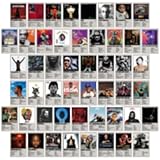
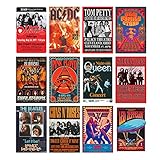
- Package including 50pcs rap theme album cover collage kit featuring iconic hip-hop theme music posters in 4x6 inch prints, designed to create a bold, music-inspired wall display.
- Each poster is printed on high-quality 300gsm cardstock with vibrant and fade-resistant inks. This ensures that the posters remain in excellent condition for a long time.
- Each poster is 4x6 inches in size, and easy to install them on any flat surface without damaging the walls. You can also use frames or clips to hang them up.
- These hip hop flexible collage styling lets you arrange the posters in grids, scattered layouts, or custom patterns to match your room decor and personal taste.
- A stylish gift idea for rap music lovers, this poster set brings a cohesive and eye-catching look to blank walls.
Why is “For Free? (Interlude)” ranked when it is called an interlude?
It functions as a complete performance rather than a brief transition. Its jazz-rap structure, character work, technical execution, and importance to To Pimp a Butterfly make it substantial enough to compete with conventional full-length songs.
The Bottom Line
Kendrick Lamar’s greatest song is still “Sing About Me, I’m Dying of Thirst,” but the larger answer is the breadth of the catalog. He can write a three-character tragedy, build a protest anthem, dismantle his own ego, dominate a diss track, or make a guest verse feel like a career announcement. The best way to test the ranking is to listen through the albums—not just the singles—and let the songs’ different kinds of ambition argue with one another.
Quick Recap
Product prices and availability are accurate as of the date/time indicated and are subject to change. Any price and availability information displayed on Amazon at the time of purchase will apply.