Outdated Drivers Are Slowing You Down
One free scan finds every outdated or missing driver and matches the right update for your exact hardware.Free scan · exact hardware matchPC Slower Than It Used to Be?
A free scan shows the junk files, broken settings and background clutter dragging Windows down - then fixes them in one click.Free scan · Windows 10 & 11Some links on this page are affiliate links: if you buy through them we may earn a commission, at no extra cost to you.
Short answer: YouTube was genuinely reported in June 2024 to be negotiating with Sony Music Entertainment, Universal Music Group and Warner Music Group over licenses for AI music tools. The proposal reportedly included upfront lump-sum payments and technology that could resemble or imitate recognizable artists. It was not a publicly announced, completed catalog-training agreement. As of August 18, 2026, the public record instead shows YouTube pursuing narrower, disclosed artist-participation experiments such as Dream Track.
What the June 2024 report actually said
On June 26, 2024, the Financial Times reported that YouTube was seeking licenses from Sony Music, Universal Music Group and Warner Music Group for AI music products. People briefed on the talks said YouTube had discussed paying upfront lump sums so recordings could be used to train AI software. The intended tools could generate music resembling, or potentially imitating aspects of, popular artists.
Those were negotiations, not announced contracts. The public reporting did not disclose payment amounts, a participating-artist list, catalog scope, model design, opt-in rules or final rights allocations. The talks were described as fluid, meaning the proposal could change or fail to produce an agreement. Ars Technica’s summary of the report and the Irish Times account both describe a licensing effort rather than a signed deal.
Recommended Free Tools
The proposed use was broader than YouTube’s ordinary recommendation, Content ID or video-hosting systems. It concerned AI music generation, including possible artist-voice or artist-style experiences for products that could have connected to Shorts.
#1 Best Overall
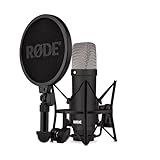
- COMPLETE VOCAL SETUP: shock mount, pop filter and XLR cable included, add an interface and record
- THE SOUND OF HIT RECORDS: the legendary NT1 large-diaphragm condenser voicing trusted in studios for two decades
- WHISPER-QUIET: among the lowest self-noise microphones ever made, nothing between you and the take
- BUILT FOR VOCALS AND STREAMS: tight cardioid pattern focuses on the voice, rejects the room
- IN THE BOX: NT1 Signature (Black), SM6 shock mount with pop filter, XLR cable and dust cover
Why “AI training rights” do not answer every rights question
“Training” is shorthand, not one universal music right. A workable license would have to distinguish several layers:
- Sound recordings: the master recordings a label owns or controls.
- Compositions: melodies, lyrics and publishing interests held by songwriters and publishers.
- Voice, likeness and identity: permissions relevant when an output sounds like a particular performer or uses the artist’s name or persona.
- Model activities: training, fine-tuning, inference and generation may require different permissions.
- Outputs: whether generated songs can be downloaded, monetized, commercially released, distributed or remixed outside YouTube.
- Platform operations: hosting, labeling, fingerprinting, takedowns and rights reporting.
A label license for masters would not automatically settle an artist’s voice, publicity, composition or performer rights. That distinction is an analytical implication of the rights structure, not a published term of YouTube’s 2024 proposal.
Why labels were considering licensing at all
The talks arrived amid lawsuits and public disputes over AI companies allegedly copying copyrighted recordings to build music models. Record companies faced three broad strategic paths:
Rank #2

- [USB Output] Enables simple setup. USB studio recording microphone kit provides a direct convenient plug-and-play connection to pc and laptop without any additional hardware or drivers for recording vocals, podcasts and Skype. Studio microphone for recording vocals is never been easier to get high-quality sound for your voice and computer-based audio recordings. (Incompatible with Xbox)
- [Excellent Sound Quality] With rugged construction for durable performance, the vocal recording microphone, USB condenser mic for PC,offers a wide frequency response and handles high SPLs with ease. Ideal for project/home-studio applications. The cardioid condenser capsule captures crystal-clear audio from the front and avoid ambient noise when communicating/creating/recording. Comes ready to go with a desktop mic boom arm stand and 8.2ft USB cable, you're guaranteed to get great-sounding results.
- [Durable Arm Set] The podcast microphone bundle with versatile and sturdy broadcast suspension boom scissor arm with 180° up and down rotation, 135° forward and backward extension for optimal adjustment, for capturing your voice in podcast or voiceover. The double pop filter attached on the music recording microphone provides two layers of dissipation, removes the rush of air, minimize the popping sounds or cancel noise that can compromise your recording, great for studio as well as home use.
- [Easy to Attach] The streaming microphone for PC includes adjustable boom studio scissor arm stand that features a heavy-duty combo mount consisting of a sturdy C-clamp and a detachable desktop mount. With 13" fixed horizontal arm and offers a 30" reach, the low-profile, table-hugging design of audio recording microphone allows on-air talent to perform without facial obstruction to record in podcasting or make dubbing sounds for videos, use voice chat in Discord or online conference on Zoom or Skype.
- [The Accessory Package Includes] The studio microphone music recording comes with practical accessories for you to use in most of recording. The scissor arm stand is made out of all steel construction, sturdy and durable, a studio-grade shock mount, a double pop filter, premium 8.2' USB-B to USB-A/C cable, a podcast PC gaming microphone, a user manual and friendly Technical Support.
- Litigate: challenge allegedly unauthorized training and outputs.
- Legislate: seek rules requiring consent, disclosure and artist protections.
- License: negotiate payment, control and permitted uses.
Warner Music Group later described this combination as “legislate, litigate, license.” Licensing can create revenue and defined controls, but it also raises difficult questions about artist consent, substitution risk and how to value music used as data rather than played directly. Warner’s explanation sets out that broader strategy.
YouTube’s public path after the report
Music AI Incubator
In August 2023, YouTube announced a Music AI Incubator with Universal Music Group and participating artists, songwriters and producers. The stated approach was to develop and test tools with music creators rather than build entirely without industry input. YouTube’s announcement describes the principles and participants.
Lyria and Dream Track
Google DeepMind and YouTube introduced Lyria and related music experiments in November 2023. Dream Track became the clearest public product: a Shorts-focused experiment that lets eligible creators generate short soundtracks with AI-generated voices associated with participating artists. Google DeepMind’s Lyria announcement and YouTube for Artists’ explanation describe the artist-partnership model.
Rank #3

- Custom three-capsule array: This professional USB mic produces clear, powerful, broadcast-quality sound for YouTube videos, Twitch game streaming, podcasting, Zoom meetings, music recording and more
- Blue VO!CE software: Elevate your streamings and recordings with clear broadcast vocal sound and entertain your audience with enhanced effects, advanced modulation and HD audio samples
- Four pickup patterns: Flexible cardioid, omni, bidirectional, and stereo pickup patterns allow you to record in ways that would normally require multiple mics, for vocals, instruments and podcasts
- Onboard audio controls: Headphone volume, pattern selection, instant mute, and mic gain put you in charge of every level of the audio recording and streaming process
- Positionable design: Pivot the mic in relation to the sound source to optimize your sound quality thanks to the adjustable desktop stand and track your voice in real time with no-latency monitoring
Current YouTube documentation says Dream Track is available to eligible creators in most countries outside the European Economic Area, with English device settings; U.S. users can also access it through the YouTube Create app. Prompts are in English and limited to 50 characters. Generated soundtracks receive a text label, published sounds can be remixed within Shorts, and the audio generally cannot be downloaded as a standalone file. Availability depends on account, language, territory and participating-artist eligibility, so the help page is not a guarantee that every account has access. See YouTube’s current Dream Track documentation.
Do these 3 things before closing this tab:
1Clear out junk files and repair common Windows errors2Scan for outdated or missing drivers - takes under a minute3Repair Windows errors before they cause bigger problemsDisclosure and creator controls
YouTube’s music-delivery system now lets partners identify content as fully generated with AI, partly generated with AI or not generated with AI through DDEX or CSV metadata. YouTube may supplement those declarations with other signals. The designation tells YouTube about AI use; it is not proof that every underlying recording, melody, lyric or voice was authorized. Details are in YouTube’s AI-music disclosure guidance.
Separately, a December 2024 YouTube update introduced controls allowing creators and rights holders to permit third-party AI training on eligible videos. That creator-level setting is not evidence of a Sony–Universal–Warner catalog license. YouTube’s help page explains the control.
Rank #4

- PLUG AND PLAY STUDIO MICROPHONE: This music mic does not require additional drivers, plug and play, and it’s suitable for smartphones, PC, and laptops. The recording mic adpots a cardioid pickup pattern, which can capture the front of the condenser microphone clearly, smooth sound with great sound performance.
- PORTABLE AND FOLDABLE MICROPHONE SHIELD: This 3-panel isolation shield is composed of a reflective layer, filter layer, absorbing layer, and high-quality screws, which are durable. The inner layer is composed of high-density absorbent foam, which can absorb environmental noise and reduce sound reflection when recording sound, providing excellent studio microphone music recording effects. The compact and foldable panel design can be adjusted to suit the angle you want, making it easy to carry.
- DOUBLE-LAYER MIC POP FILTER: The adjustable pop filter can adjust the distance and angle from the music recording microphone to achieve multi-layer noise reduction and record clearer sound. The height-adjustable metal tripod can place the microphone for music recording at a suitable height in front of you, allowing you to record in a comfortable posture.
- COMPATIBILITY AND VERSATILITY: The studio recording equipment can be used on a desk using the metal tripod included with the studio set, or it can be mounted on a microphone stand (not included) for use. Ideal recording microphones & accessories for singing, vocal recording, live streaming, and podcast.
- MUSIC STUDIO EQUIPMENT PACKAGE LIST: This studio music recording equipment kit includes 3-panel microphone studio shield*1, microphone for recording music*1, USB microphone cable*1, Type-C adapter*1, metal tripod stand*1, mic clip*1, microphone filter*1, instruction manual*1. If you encounter any problems before purchasing or during the use of this music equipment, you can contact us at any time, we will serve you wholeheartedly.
Did YouTube complete the major-label deal?
No publicly documented comprehensive agreement has been established in the sources reviewed through August 18, 2026. There is no disclosed contract showing that Sony, Universal and Warner collectively licensed their catalogs to YouTube for unrestricted AI-model training. Public information also does not provide final payment terms, catalog percentages, artist participation rules or a confirmation that the negotiations ended in a deal.
YouTube’s visible product trail points to a more constrained model: selected artists, short-form generation, account and territory limits, labeling, remix controls and generally non-downloadable results. That is materially different from an unrestricted consumer generator trained on an entire commercial catalog, although the public record does not prove what datasets any internal model may have used.
Quick wins for a faster PC:
Clear out junk files and repair common Windows errorsFree Scan →Scan for outdated or missing drivers - takes under a minuteDriver Scan →What changed elsewhere in the music industry
Later agreements show that major rights holders increasingly pursued negotiated AI partnerships, but they do not confirm the outcome of YouTube’s 2024 talks.
Best Value

- 【Ready to use Recording Studio Microphone】This studio condenser microphone features a USB output, providing a direct and convenient plug-and-play connection to your PC, smartphone, or laptop. Perfect for podcasting, vocal recording and music production, the DJM5 condenser microphone delivers high-quality sound without the need for additional hardware.
- 【Exceptional Sound Quality 】This condenser microphone uses cardioid polar pattern, 16mm diaphragm, 192kHz/24Bit sampling rate and 30Hz‑16kHz frequency response. It delivers clean sound for podcasting, vocal recording and streaming.
- 【Multifunctional Condenser Mic】This versatile condenser microphone supports 5V voltage and includes features like echo control, volume adjustment (+/-), a 3.5mm monitor headphone jack, and a mute button. Ideal for podcasting, home studio setups, and live broadcasting, the DJM5 is an all-in-one solution for high-quality audio
- 【Foldable Isolation Shield】The microphone isolation shield is made of 5 high-density sound-absorbing panels with a triple acoustic design. Each panel is foldable and adjustable, ensuring optimal noise reduction for podcasting, recording vocals, and music production. The compact design of the DJM5 makes it easy to carry and set up anywhere. This product comes with isolation shields in black, rose gold, and white, allowing you to choose the color that best matches your style
- 【Compact and Lightweight Design】 The DJM5 kit includes a soundproof shield measuring 27.55in x 10.23in, a microphone measuring 6.3in x 1.96in, a tripod stand measuring 8.66in x 7.1in, and a 6in diameter shockproof filter. The entire kit weighs only 4.1lbs (1.86kg), making it easy to carry and set up
| Date | Public development | What it establishes |
|---|---|---|
| November 2025 | Universal, Universal Music Publishing, Sony, Sony Music Publishing, Warner and Warner Chappell announced AI licensing agreements with KLAY Vision. | A separate, multi-company licensing initiative; not a YouTube settlement. |
| December 2025 | Universal announced collaboration with Splice on AI-powered music-creation tools. | Another partnership model, with no claim that it covers YouTube’s proposal. |
| July 10, 2026 | Music organizations announced a unified voluntary approach to labeling AI use in sound recordings. | Industry movement toward provenance and disclosure. |
| July 29, 2026 | Sony published proposed principles for eligibility of AI-developed recordings for official charts. | A policy discussion about releases and charts, not catalog-training rights. |
See the Universal–KLAY announcement, Warner’s KLAY announcement, Universal–Splice announcement, and Sony’s labeling initiative and chart-eligibility proposal.
What a responsible license would need to specify
- Which recordings, compositions and territories are included.
- Whether permission is label-wide, artist-by-artist or title-by-title.
- Whether artists can opt out or separately approve voice and likeness use.
- Whether training, fine-tuning, inference and output generation are separately licensed.
- Whether prompts may name an artist or request a recognizable style.
- How artists, songwriters, publishers and featured performers are paid.
- Whether economics use an upfront fee, usage royalty, revenue share, equity or a combination.
- Whether outputs may be downloaded, released commercially or monetized.
- How provenance, labeling, audits, takedowns, disputes and unauthorized imitation are handled.
These are the terms readers should look for in any future announcement. None should be treated as confirmed terms of YouTube’s 2024 proposal.
What YouTube creators can use now
For creators, Dream Track is a limited YouTube feature rather than a general-purpose music-licensing service. Check eligibility and regional availability before planning a production. Expect labeled soundtracks and platform-based remixing, and do not assume a generated track can be exported as a standalone file or used for unrestricted distribution. For ordinary licensed background music, Creator Music is a separate service; YouTube says paid licenses are being phased out beginning in August 2026 in favor of no-cost and revenue-sharing tracks. See Creator Music’s current documentation.
The bottom line
YouTube’s 2024 discussions with Sony, Universal and Warner were a real early signal that the music business was moving from blanket opposition toward conditional AI licensing. But the evidence supports calling them reported negotiations, not a completed blanket catalog deal. YouTube’s subsequent public strategy has emphasized selected artist participation, constrained generation, disclosure and platform controls. Any future claim of a major-label training agreement should be judged by the published catalog scope, artist permissions, payment model and output restrictions—not by the existence of Dream Track alone.
Quick Recap
Product prices and availability are accurate as of the date/time indicated and are subject to change. Any price and availability information displayed on Amazon at the time of purchase will apply.

