The Tool Desk
Outbyte PC Repair FREEClear out junk files and repair common Windows errorsFree Scan →Outbyte Driver Updater FREEFix the driver behind crashes, sound loss and screen glitchesFind Drivers →YouTube Shorts to integrate Veo, Google’s AI video model, is no longer only a future plan: eligible creators may already see AI features such as Create Video, AI Playground, Photo to video, and Veo-powered remixing. Those tools generate assets inside Shorts, while Gemini API or Vertex AI generation still requires a separate edit-and-upload workflow.
The word Veo needs a qualification. Some native Shorts experiences originated as Veo integrations, while later YouTube announcements describe parts of the upgraded Create Video and remix experience as Gemini Omni-powered. The useful takeaway is that YouTube is bringing Google generative-video capabilities into Shorts, but not every AI control currently shown in the app is necessarily running the standalone Veo model.
Key takeaways
- YouTube Shorts can offer native AI creation surfaces such as Create Video, AI Playground, Photo to video, generative effects, and Veo-powered remixing, but availability varies by account, country, language, device, and rollout.
- YouTube’s 2026 Create Video update describes reference-image generation using up to three images and clips of up to 10 seconds.
- Veo 3.1 in the Gemini API can generate portrait 9:16 video, native audio, image-guided clips, reference-image clips, first/last-frame interpolations, and extensions, but the API does not directly publish to a Shorts channel.
- YouTube treats square or vertical uploads of up to three minutes as Shorts under its current rules, while the in-app Shorts upload workflow supports up to 1080p.
- YouTube’s own AI tools generally handle AI disclosure automatically, but creators remain responsible for reviewing labels, rights, safety, accuracy, and audience settings.
What does YouTube Shorts to integrate Veo, Google’s AI video model, actually mean?
YouTube Shorts to integrate Veo, Google’s AI video model, describes two separate workflows rather than one universal publishing feature. Ordinary creators may generate short assets inside the YouTube mobile app, while developers and agencies can generate clips through the Gemini API or Vertex AI and then edit and upload those files through the normal YouTube process.
| Integration route | Where it runs | What it does | How publishing works |
|---|---|---|---|
| Native Shorts integration | YouTube mobile app | Generates or transforms short images and video for use in a Short | The creator reviews, edits, discloses, and publishes inside the usual Shorts workflow |
| Developer pipeline | Gemini API or Google Cloud Vertex AI | Generates video with more explicit control over model, format, references, audio, and automation | The developer downloads the output, edits it, and uploads it separately through YouTube or YouTube Studio |
| General-purpose direct publishing API | Not established by the supplied documentation | YouTube Shorts does not currently document a public Veo API that publishes directly to a Shorts channel | Do not describe Veo generation as automatic channel publishing |
The distinction matters because a Veo API call produces media, not a finished documentary Short with a title, audience setting, rights review, captions, source context, and disclosure decision. YouTube’s AI Shorts documentation covers creation inside YouTube, while Google’s Veo 3.1 developer documentation covers generation outside the Shorts app.
Recommended Free Tools
#1 Best Overall

- Lightweight and Sturdy: Weighing just 1.27 lbs, this camera tripod stand is perfect for travel and outdoor photography. Made from premium aluminum-magnesium alloy and durable engineering plastic, its stable structure ensures you can capture high-quality videos and photos.
- Wide Compatibility: This versatile tripod supports most devices with a 1/4-inch threaded hole, including cameras canon rebel t7, t5i, t3, t6, t7, eos r7, d500, g7x, g7z, m50 etc, projectors, laser levels, ring lights, telescopes, and more. It features a universal phone holder compatible with most smartphones, offering 360° rotation and two universal cold shoe mounts.
- 3-WAY PAN HEAD: The tripod head allows 360° horizontal rotation, 180° tilt, and 90° side flip. A high-precision bubble level ensures perfect panoramic videos and photos.
- Tripod with Remote: This camera phone tripod features a wireless remote compatible with cell phones (iOS 5.0+ and Android 4.3+), offering an effective range of 33 ft. Easily connect and respond instantly while filming—no need to touch your device. Perfect for seamless selfies, group photos, video recording, and vlogging.
- Complete Tripod Units: 1 tripod, 1 phone holder, 1 Bluetooth remote, 1 carrying bag, and 1 user manual.
How do you use Veo-powered creation inside YouTube Shorts?
Use the YouTube mobile app, tap Create, and look for the AI-generation entry point available on your account. The button may be called Create Video, AI Playground, Photo to video, or appear as a generative effect. YouTube is rolling these surfaces out separately, so the exact menu cannot be assumed to be identical for every creator.
- Open YouTube and tap Create. Enter the Shorts camera or the available AI-generation area.
- Choose the available creation tool. Look for Create Video, AI Playground, Photo to video, a green-screen AI option, or a related generative effect.
- Describe the shot. Specify the subject, action, setting, framing, camera movement, visual style, lighting, vertical composition, audio direction, and constraints.
- Add reference images when offered. In the announced Create Video experience, YouTube says creators can use up to three reference images and generate clips up to 10 seconds. Explain what each image contributes rather than uploading several images without instructions.
- Generate and inspect the result. Treat the output as a draft shot. Check faces, hands, text, logos, continuity, audio, and any factual implication before using it.
- Build the Short. Combine the generated clip with original footage, still images, narration, captions, available YouTube sounds, text, effects, and other edits.
- Review disclosure and audience settings. Confirm that the AI-use treatment is appropriate, select the correct audience, and complete the normal upload details before publishing.
YouTube’s documented AI-Shorts flow confirms the broad sequence: open Shorts creation, choose the AI feature, enter a prompt, generate a result, select it, and add it to the Short. The feature names and availability can change as YouTube moves experiments into or out of the app.
What can the native AI tools create?
Native Shorts tools can generate a standalone clip, create a green-screen background, animate an existing image, apply a generative effect, or remix eligible content. The available capability depends on the particular feature rather than on a single button called Veo.
- Text-to-video and standalone clips: Enter a description, generate a short clip, and add the result to a Short or use it as a background.
- Green-screen backgrounds: Generate an environment behind the creator’s own camera footage, then record or edit the foreground subject into that setting.
- Photo to video: Select an image from the phone’s gallery, choose a suggested or custom prompt, preview the animation, and continue building the Short.
- Reference-image generation: Use supplied images to guide the appearance of a character, clothing, object, or location when the feature is available.
- Generative effects: Apply an AI transformation within the Shorts camera or editing experience.
YouTube’s latest naming also requires care. The reference-image experience began as a Veo 3.1 integration, but a later 2026 Create Video announcement describes the upgraded in-app experience as using the latest Gemini Omni model. Calling every current Shorts AI feature Veo 3.1 would therefore be inaccurate. YouTube’s TeamYouTube announcement explains the reference-image and Create Video development, while the Help Center documentation lists the creator-facing AI features.
Free tools Windows power users keep installed
One-click scans. No signup required.
How does Photo to video work?
Photo to video starts with an image already saved on the creator’s phone and turns that still image into an animated Short element. Open Shorts creation, select media from the gallery, choose Photo to video when the option appears, apply a suggested or custom prompt, preview the result, and continue to the upload editor.
Photo to video is useful for animating a documentary still, map, illustration, title card, or original behind-the-scenes image, but the creator should not present an invented animation as authentic archival footage. Add a clear label or narration when the distinction between recorded material and AI-generated reconstruction could affect the viewer’s understanding.
What is the difference between Veo-powered Reimagine and other Shorts remix tools?
Reimagine and the later Shorts remix announcements should not be treated as one interchangeable product. YouTube announced Reimagine in March 2026 as a Veo-powered tool that transforms a frame from an eligible Short into an eight-second clip, accepts a prompt and up to two images from the user’s photo gallery, and links back to the original Short so the source creator receives credit.
Rank #2

- Innovative Pentagonal Tube Design – Engineered for stability and portability, this lightweight (2.6 lbs/1.18 kg) tripod features a unique pentagonal-shaped tube for enhanced durability and easy folding. With a compact 19.6 ''/50 cm folded size, it’s effortless to carry, making it ideal for travel, outdoor shoots, and professional use, even on rugged terrains
- Universal Phone & Tablet Compatibility – Designed for versatility, the 2-in-1 adjustable holder securely accommodates both smartphones and tablets with a firm grip, thanks to its high-quality plastic construction and thick rubber padding. Perfect for video recording, live streaming, online meetings, vlogging, and photography
- Extended Height & Precision Control – Adjustable from 18.9''/48 cm to 75''/190 cm, this tripod offers a wide range of shooting heights. A 360° rotatable 3-way pan head enables smooth panning, tilting, and wide-angle shots, while the built-in bubble level ensures perfect alignment for professional-grade results
- Flexible Shooting Angles – Capture every moment with complete horizontal and vertical rotation, allowing for dynamic compositions. Whether for photography, videography, live streaming, or creative projects, this tripod adapts to your needs
- Wireless Remote for Seamless Operation – The included Bluetooth remote provides hands-free control from up to 472'', ensuring effortless group photos, selfies, and video recordings without the need for manual operation
A separate Google I/O 2026 announcement describes Gemini Omni-powered remixing in Shorts Remix and YouTube Create. Those remixes include digital watermarks, identifying metadata, and a link to the original video, and creators can opt out of visual remixing. The exact remix option depends on the source video, account, feature rollout, and current YouTube product implementation. YouTube’s Reimagine announcement and its Google I/O creator update describe the two announcements separately.
Quick wins for a faster PC:
Fix the driver behind crashes, sound loss and screen glitchesFind Drivers →Clear out junk files and repair common Windows errorsFree Scan →Scan for outdated or missing drivers - takes under a minuteDriver Scan →How do you turn a generated clip into a complete Short?
A generated clip is best treated as one shot in an edited piece, not as an automatically finished documentary or story. The strongest workflow gives the clip a human-directed purpose: an opening hook, a visual explanation, a transition, a reconstruction clearly identified as such, or a brief illustration supporting original reporting.
- Choose the editorial role of the shot. Decide whether the clip is an opening image, explanatory visual, reenactment, atmosphere, transition, or background.
- Combine it with original material. Add your own filming, interview audio, narration, photographs, diagrams, research, or commentary where appropriate.
- Keep captions readable. AI-generated text inside a scene can be misspelled or distorted. Add important names, dates, quotations, and context as editor-controlled captions instead of relying on generated signage.
- Check sound independently. Listen for unwanted speech, strange words, abrupt edits, and audio that could be mistaken for a real person. Use available YouTube sounds or properly licensed audio where needed.
- Review the complete sequence, not just the AI shot. Check whether editing makes a fictional or reconstructed scene look like real footage.
- Upload through the standard Shorts path. YouTube supports recording or selecting media, editing, adding sounds, text, and effects, and publishing from the app. YouTube Studio provides a separate upload route for finished files. The standard Shorts creation documentation describes these publishing steps.
For documentary work, context is part of the production. A generated image of a historical event, public figure, crime scene, medical procedure, or disaster can look authoritative even when every visual detail is invented. Identify dramatizations and reconstructions plainly, and do not let an AI-generated establishing shot imply that a camera recorded an event that never took place.
Optional creator setup
Veo does not require special filming accessories, but creators recording original footage, narration, or reference material may find an optional smartphone tripod for Shorts useful. A phone microphone, compact LED light, and USB-C storage can also support capture and archiving; these are workflow accessories, not requirements for Veo and not a guarantee of better results.
How do you use Veo 3.1 through the Gemini API or Vertex AI?
Use the developer route when you need repeatable generation, programmatic control, cloud governance, batch work, or a production pipeline that is separate from the YouTube mobile app. The pipeline is generate, download, edit, review, export, and upload—not generate and publish directly to Shorts.
What’s actually slowing this PC down?
Pick the symptom - the matching free tool is one click away.
| Stage | Gemini API route | Vertex AI route |
|---|---|---|
| Generation interface | Gemini API request using a supported Veo model | Google Cloud console or Vertex AI API |
| Useful controls | Prompt-to-video, image-to-video, portrait output, reference images, native audio, first/last frames, and video extension depending on model and settings | Prompt-based generation with project, permissions, model, storage, and safety configuration |
| Best fit | Creators, developers, and smaller applications testing an automated workflow | Teams needing cloud infrastructure, governance, permissions, and repeatable application integration |
| After generation | Download the file, assemble the Short, and upload through YouTube | Retrieve the stored output, edit the Short, and upload through YouTube |
What can the Veo 3.1 Gemini API generate?
Google’s Gemini API documentation lists Veo 3.1 as generating short videos with native audio. Depending on the selected model and settings, the API supports portrait 9:16 output, 720p, 1080p, or 4K generation, image-to-video, up to three reference images, first/last-frame interpolation, and extension of an earlier Veo video.
The documented preview model codes include veo-3.1-generate-preview, veo-3.1-fast-generate-preview, and veo-3.1-lite-generate-preview. The API documentation also says generated videos are retained on Google’s servers for two days, so download and archive outputs promptly rather than treating the service as permanent media storage. Generated videos carry SynthID watermarking and pass safety and memorization checks described in the documentation. Google’s Veo 3.1 Gemini API documentation lists the model codes, controls, duration behavior, retention period, and safety processing.
Rank #3

- 【Introducing NEEWER ENTRY LEVEL VERSION】 Even simpler than BASICS, NEEWER ENTRY LEVEL VERSION is designed with ultimate simplicity and affordability in mind, perfect for absolute beginners who only need the most essential functions without any complexity or extras
- 【Metal Build Travel Tripod】 Made of heavy duty aluminum alloy, the lightweight tripod with phone holder attachment securely mounts a DSLR (compatible with Canon Sony Nikon cameras), action camera (adapter not included) or smartphone up to 3.3lb/1.5kg for selfies, vlogging creation, live streaming, filmmaking, etc. At 1.25lb/568g, the portable tripod folds down to 16.9"/43cm, with the included carrying bag for photography on the go. The mid spreader helps with instant setup and ensures stability
- 【For Phone & Camera】 Attach the phone mount to the tall tripod via the 1/4" screw, 2.2"/55mm to 3.4"/85mm adjustable, compatible with iPhone 17 16e 16 15 Pro Max Plus i Phone 14 13 Samsung Galaxy S26 S25 S24 S23 Ultra Google Pixel One Plus series android, with a cold shoe for LED fill lights, microphones, etc. Or mount action cameras or mirrorless cameras on the tri pod QR plate, as content creator essential gear and influencer must have photography videography accessories for versatile use
- 【Versatile Shooting Angles】 The quick release plate innovatively supports seamless horizontal to vertical shots, with a hand tightening knobs for ease of use. Besides, the tripod head enables 360° panoramic capability to capture sweeping landscapes, and allows for +90° to -70° tilt, with a detachable handle to switch from right or left for different hand dominants. Professional tripod equipment for cameras and phones
- 【Effortless Height Adjustment】 The 4 section legs can be easily adjusted from 16.5"/42cm to 57.5"/146cm using flip locks. At the same time, the center column can be additionally elevated up to 10.2"/26cm, providing flexibility to capture every satisfying shot. Also with a hook on the bottom center column to hang weights for added safety
The API normally returns one video per request. Depending on model and settings, the available duration options are 4, 6, or 8 seconds. A longer Short therefore normally requires several generated shots assembled in an editor or the documented Veo extension workflow; one request is not an unlimited narrative-video generator.
When should a team use Vertex AI instead?
Vertex AI is the more natural route for a team that already operates inside Google Cloud and needs project-level permissions, controlled output storage, safety settings, model selection, and application infrastructure. The team still has to create the editorial layer and perform the YouTube upload separately. Google Cloud’s Vertex AI documentation covers project setup and prompt-based video generation from the console and API.
Do these 3 things before closing this tab:
1Repair Windows errors before they cause bigger problems2Scan for outdated or missing drivers - takes under a minute3Clear out junk files and repair common Windows errorsWhat prompt structure works well for Shorts?
A compact prompt should define one clear shot instead of trying to describe an entire film in one request. A useful structure is:
[subject] + [action] + [location] + [camera/framing] + [lighting/style] + [vertical composition] + + [constraints]For example:
A tiny paper robot plants a glowing seed in a rainy city alley, medium close-up, slow push-in, vibrant handcrafted stop-motion style, strong subject centered for 9:16 vertical framing, soft rain and gentle mechanical clicks, no readable text or logos.
The example separates the subject, action, setting, camera movement, style, framing, audio, and restriction. The structure does not guarantee consistent characters, accurate hands, perfect lip-sync, or usable audio. Generate several short shots when the story needs multiple actions; that recommendation follows the documented short-duration limits and is an editorial production choice, not a Google performance guarantee.
For reference-image generation, state each image’s role explicitly: use image 1 for the character, image 2 for the jacket, and image 3 for the background. YouTube’s 2026 guidance recommends clear reference-image instructions and specific directions when generated audio is desired. Keep important documentary facts outside the generated scene and add them through verified narration, captions, or source material.
PC Slower Than It Used to Be?
A free scan shows the junk files, broken settings and background clutter dragging Windows down - then fixes them in one click.Free scan · Windows 10 & 11Outdated Drivers Are Slowing You Down
One free scan finds every outdated or missing driver and matches the right update for your exact hardware.Free scan · exact hardware matchWhat are the duration and resolution limits?
Generation limits and YouTube publishing limits are different. Veo creates short source clips, while the Shorts editor or an external editor can assemble those shots into a longer vertical production.
Rank #4
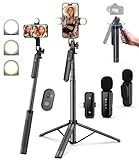
- 【Complete Vlogging Kit】This vlogging kit is designed specifically for content creators on platforms such as TikTok and YouTube. The complete starter kit combines a selfie stick tripod, dual fill lights, a wireless mic, and a smart remote—professional essentials for vlogging, live streaming, interviews, and social media videos. As a one-stop mobile studio kit, it helps you effortlessly launch high-quality creation—shoot anywhere.
- 【Pro Dual-Mic Wireless System】This Plug-and-play wireless mic with studio-quality sound - no apps required. Perfect for vloggers and creators, with 12-hour runtime on 2-hour fast charge. The dual-interface receiver (Type-C/Lightning), it works seamlessly across iPhone & Android. With 79ft stable transmission range, move freely while maintaining crystal-clear audio. Your simplest pro audio solution.
- 【Detachable Fill Lights & Smart Remote】This content creator essential tripod with light features dual detachable mini LED fill lights, with 3 color modes (Warm/Cool/Natural) and 3 brightness levels to enhance low-light shots. Studio-grade lighting control lets it adapt effortlessly to diverse scenes and moods. Also included is a Bluetooth remote (33ft range) for wireless shutter control, plus Type-C rechargeability for on-the-go use.
- 【360° Rotating Aluminum Tripod】Crafted from premium aluminum alloy, this stable, versatile tripod is essential for content creators. Its 5-stage telescopic legs adjust 11.6–71 inches, and the universal phone holder supports 270° vertical tilt and 360° rotation for easy multi-angle shooting. A smooth 360° balance handle enables precise composition control. Use as a phone tripod stand or YouTube starter kit for vlogging, live streaming, and photography.
- 【Universal 1/4" Thread Tripod】The phone tripod included universal phone holder fits 4-4.7" devices, with a standard 1/4" thread compatible with cameras, GoPros, ring lights and other recording devices. This selfie stick features a compact design for easy portability. Content creator kit includes: selfie stick tripod*1, LED lights*2, wireless remote*1, mic transmitter*1, receiver*2, Type-C cable*2, storage bag*2, user manual*2
| Part of the workflow | Documented limit or capability | Practical implication |
|---|---|---|
| Create Video in Shorts | Up to 10 seconds in the 2026 announcement; reference-image generation can use up to three images | Use the result as a shot or short visual beat rather than assuming it is a complete story |
| Veo 3.1 through Gemini API | 4-, 6-, or 8-second duration options depending on model and settings; native audio and portrait 9:16 are supported in documented configurations | Generate multiple shots or extend a prior Veo video for a longer edit |
| Veo developer resolution | 720p, 1080p, or 4K may be available under particular model and setting combinations | Generation resolution does not determine the final YouTube upload resolution |
| YouTube Shorts upload | Square or vertical videos up to three minutes qualify as Shorts under current rules; in-app Shorts uploads support up to 1080p | Export for the final Shorts workflow rather than assuming a 4K generation must remain 4K |
YouTube’s three-minute Shorts documentation explains the current duration classification, and YouTube’s Shorts creation documentation covers the upload workflow and in-app resolution. YouTube’s native Help Center documentation describes its Shorts-customized Veo 3 Fast model as optimized for low-latency 480p generation, whereas higher-resolution options belong to more advanced developer models and settings.
Independent reader supportYour contribution helps us test, update, and keep practical guides available for everyone.What AI disclosure and rights checks are required?
Disclose meaningful synthetic or altered content when the result appears realistic, especially when the content could make viewers believe that a real person said or did something, that real footage was altered, or that a realistic event or place was captured when it was not.
| Situation | What to do before publishing |
|---|---|
| YouTube’s own Shorts AI feature created the media | YouTube generally handles the AI disclosure automatically, but review the finished Short and do not assume automation removes creator responsibility |
| Veo output came from Gemini API or Vertex AI | Review the YouTube upload flow and make the appropriate altered or synthetic-content disclosure when the content qualifies; do not assume external files receive the same automatic treatment |
| A realistic person appears to speak or act falsely | Disclose the synthetic alteration, check likeness and privacy rights, and avoid misleading or harmful presentation |
| A realistic event, place, or news scene never occurred | Disclose the synthetic nature, label any reconstruction clearly, and check YouTube misinformation rules before publishing |
| The prompt or source material contains confidential or personal information | Remove the information and do not place confidential or unnecessary personal data into an AI feature |
YouTube’s altered and synthetic-content policy explains when disclosure is required. YouTube’s 2026 disclosure update says AI labels for Shorts moved to a more prominent direct-overlay placement beginning in May 2026, and says labels alone do not reduce recommendations or monetization eligibility. Failure to disclose qualifying content can still lead to enforcement, including possible removal or YouTube Partner Program consequences for repeated non-disclosure. The TeamYouTube disclosure update provides the announcement details.
Which content should a documentary creator avoid?
- Fabricated public-figure statements: Do not make a real person appear to endorse, confess to, or comment on something they did not say.
- Fake news footage: Do not use a realistic generated scene to imply that a disaster, protest, conflict, arrest, or other consequential event was actually recorded.
- Unverified medical or financial advice: Do not present generated claims as professional guidance or factual evidence.
- Unauthorized likenesses: Check privacy, publicity, consent, and other applicable rights before depicting identifiable people.
- Copyrighted characters and music: Use material for which the channel has appropriate rights or permissions; AI generation does not automatically clear an existing character, song, recording, or visual style.
- Confidential information: Keep private source details, personal data, and sensitive production material out of prompts and uploads.
YouTube’s misinformation policy prohibits certain manipulated or misattributed content that creates a serious risk of egregious harm. All generated Shorts also remain subject to YouTube’s Community Guidelines, Terms of Service, copyright rules, privacy requirements, and advertiser-friendly policies.
Can AI-generated Shorts be monetized?
AI use alone is not described by YouTube as an automatic bar to Shorts monetization, but monetization still depends on the channel and video meeting YouTube’s applicable policies. Non-original Shorts, reuploads, compilations without meaningful original contribution, fake views, and other ineligible views do not qualify for Shorts revenue calculations. YouTube’s Shorts monetization policy explains those exclusions.
A practical production standard is to add a clear human contribution: original narration, reporting, commentary, research, filming, story structure, compositing, or substantial editing. Human contribution is not a guarantee of YouTube Partner Program approval, but it makes the Short more useful to viewers and reduces the risk that a channel appears mass-produced or built from repetitive raw generations.
For a documentary channel, the safest monetization strategy is not to hide the AI component. Use AI as an illustration or production aid, preserve the distinction between sourced footage and reconstruction, and give viewers original context that cannot be obtained by watching an unedited generated clip.
Best Value

- Adjustable 20″–74″ Height: Easily extend from tabletop to full height for portraits, vlogs, outdoor photography, travel shots, and events — perfect for photographers and content creators of all levels.
- Heavy Duty & Stable: Durable aluminum legs support up to 8.8 lbs, so it can take DSLRs, mirrorless cameras, ring lights, GoPros, and smartphones securely without wobble.
- Multi-Device Compatibility: Includes quick release plate & phone mount — switch effortlessly between camera and phone setups for photos, live streams, podcasts or video calls.
- 360° Pan & Tilt Head: Smooth, fluid head movement lets you capture wide panoramas, dynamic video clips, and precise compositions without stiff dragging.
- Travel Ready & Lightweight: Weighing only 2.8 lbs and folding compactly for storage, this tripod is built for backpacks, road trips, hikes, and everyday use. Includes carry bag for convenience.
Where is the Shorts Veo integration available?
Availability is not universal. YouTube’s Help Center lists the United States among locations where Shorts AI-generated features are available and says Veo 3 is available in English for creators in the United States, Australia, Canada, and New Zealand, while other locations may receive Veo 2 or different feature access.
The 2026 Create Video announcement describes availability in select markets on iOS and Android when the device language is set to English. YouTube Create has different availability and language behavior. Account eligibility, country, language, operating system, device, and experiment cohort can all affect the menu a creator sees. Check the current YouTube AI Shorts availability documentation rather than treating a missing button as a device fault.
| What a creator sees | Likely explanation | Best next step |
|---|---|---|
| No Create Video or AI Playground option | The feature may not have reached the account, country, language, device, or rollout cohort | Check the Help Center requirements and update the YouTube app; do not assume Veo is available to every account |
| Veo 2 instead of Veo 3 or Veo 3.1 | Model access varies by location and feature rollout | Use the model actually shown on the account and verify current documentation |
| Native tool generates a lower-resolution clip | The Shorts-customized Veo 3 Fast experience is optimized for low-latency 480p generation | Use the native tool for speed or use the developer route when documented higher-resolution controls matter |
| API output is available but no automatic upload appears | Generation and YouTube publishing are separate systems | Download, edit, export, and upload through YouTube or YouTube Studio |
Availability information changes by market and rollout. The documented conditions above reflect the supplied 2026 YouTube announcements and Help Center material, not a promise that a particular account will retain a feature indefinitely.
Frequently Asked Questions
Can Veo publish directly to a YouTube Shorts channel?
No. The Gemini API and Vertex AI generate Veo video files, but the supplied Google documentation does not establish a general-purpose API that publishes those files directly to a YouTube Shorts channel. Developers must download, edit, review, and upload the finished Short through YouTube or YouTube Studio.
Does YouTube automatically disclose Veo-generated Shorts?
YouTube’s own Shorts AI features generally handle disclosure automatically, but creators remain responsible for the published content. Video generated externally through the Gemini API or Vertex AI should be reviewed in YouTube’s upload flow, and qualifying realistic synthetic or altered content should be disclosed manually when required. YouTube’s disclosure policy explains the requirement.
Is Veo available to every YouTube Shorts creator?
No. Shorts AI features and Veo model access roll out by account, country, language, device, operating system, and experiment cohort. YouTube documentation lists different availability for Veo 3, Veo 2, and newer creation surfaces, so a missing Create Video or AI Playground button does not mean every creator has access.
Can AI-generated YouTube Shorts be monetized?
Yes, AI use by itself is not described as an automatic monetization ban, but monetized Shorts must still satisfy YouTube’s originality, advertiser-friendly, copyright, and other policies. Reuploads, non-original Shorts, compilations without meaningful original contribution, fake views, and other ineligible views can be excluded from revenue calculations. YouTube’s Shorts monetization policy lists the relevant exclusions.
The Bottom Line
For most creators, the practical integration is native: generate a short vertical asset in YouTube, inspect it, place it inside a human-directed Short, and complete the disclosure and rights checks. For developers and agencies, Veo 3.1 through Gemini API or Vertex AI offers more control over generation, but publishing remains a separate YouTube workflow. Veo is a shot-generation component—not a substitute for editing, reporting, fact-checking, or creative direction.
Quick Recap
Product prices and availability are accurate as of the date/time indicated and are subject to change. Any price and availability information displayed on Amazon at the time of purchase will apply.