What’s actually slowing this PC down?
Pick the symptom - the matching free tool is one click away.
Yes—but not in the way the headline might suggest. Netflix’s Adolescence was not filmed as one uninterrupted take lasting across the entire four-part series. Instead, each episode was designed and filmed as a separate continuous take: the crew pressed record, performed the episode for roughly an hour, and stopped at the end without using conventional editorial cuts during that completed performance.
That does not mean the production succeeded on the first attempt. The team rehearsed extensively, completed multiple full runs, and selected the strongest finished take. Industry reporting describes roughly two weeks of rehearsal and approximately 10 complete takes per hour-long episode. Netflix’s own production coverage confirms the central distinction: four episodes, four continuous takes—not one take for the whole series.

Why make each episode one continuous take?
Adolescence follows the consequences of a 13-year-old boy’s arrest for the murder of a female classmate. Its story moves through a family home, police procedures, school life and youth-psychology settings. The uninterrupted format keeps the viewer close to events as they unfold, without the emotional distance that a conventional cut can create.
Rather than telling the audience where to look or giving it time to recover between edits, the camera stays with the characters. Tension comes from proximity, timing and uncertainty: conversations continue, people enter and leave, information arrives gradually, and the viewer remains inside the same unfolding moment.
Recommended Free Tools
#1 Best Overall
Netflix’s creative team has described the intention as looking through a window and allowing viewers to form their own judgments. The format is therefore not just a technical stunt. It supports the series’ subject matter by making the consequences feel immediate and interconnected. Each episode becomes a self-contained real-time passage through a different part of the investigation and its aftermath. Netflix’s masterclass with the creative team explains how the filmmakers connected the visual method to the drama.
For viewers who have not seen the series, the important expectation is simple: a continuous take does not mean the story is improvised or loosely staged. Almost every movement, entrance, handoff and change of visual style had to be planned in advance.
The camera was built for movement
The camera team used a compact DJI Ronin 4D system, paired with a Cooke SP3 32mm prime lens according to trade coverage. The combination gave the production a relatively lightweight camera package that could move through interiors and exteriors, follow running actors, travel on vehicles, and change operating styles without stopping the take.
The Ronin 4D could support movement that felt handheld, stabilized gimbal work and transitions between the two. The camera could also pass through windows, be positioned on or near vehicles and participate in the aerial transition in Episode 2. That flexibility was crucial: replacing the entire camera system during a continuous performance would have been much more difficult than changing how the existing system was supported and operated.
However, the equipment alone did not create the effect. A DJI Ronin 4D may make a compact long-take rig possible, but it does not solve blocking, focus, lighting, sound, safety, traffic control or performance continuity. The series depended on a large crew coordinating those departments around one shared route.
Post Perspective identifies the Cooke SP3 32mm lens and Ronin 4D combination, while Netflix’s behind-the-scenes account describes how the camera adapted to the production’s changing movement requirements.
One operator did not carry the camera for an hour
A common misconception about a one-take production is that a single camera operator must physically carry the camera for the entire episode. That was not the case here. The camera moved between members of the operating team at carefully planned points.
In one reported sequence, operator Lee David Brown ran alongside the actors before handing the camera to cinematographer Matthew Lewis on a tracking vehicle. The camera changed hands again later as the route continued. These were not invisible cuts. They were physical transfers performed during the live shot, timed to landmarks and action so that the audience could follow the story without noticing the change in operator.
Crashes, No Sound, or Screen Glitches?
Random freezes, missing sound and display glitches usually trace back to one bad driver. Find and replace yours safely.Free scan · under a minutePC Slower Than It Used to Be?
A free scan shows the junk files, broken settings and background clutter dragging Windows down - then fixes them in one click.Free scan · Windows 10 & 11Each handoff introduced risk. The receiving operator had to be in the correct position, the camera had to remain stable and usable, focus and framing had to continue, and the actors could not wait for the transfer. A small delay could affect the next cue; a dropped or obstructed route could invalidate an otherwise successful hour-long performance.
British Cinematographer’s production report details the operating-team handoffs, tracking-vehicle work and the physical demands placed on the crew.
How the crew choreographed an entire episode
The process began before the actors joined the detailed work. Director Philip Barantini and cinematographer Matthew Lewis scouted locations, mapped the geography and planned how the camera would travel through each environment. The team needed to know where the camera would enter, where it could turn, where operators could move safely and where actors, vehicles or background performers would appear.
The major route was established first, but rehearsal allowed the sequence to develop. The production had to coordinate:
- actors’ lines, movements and emotional changes;
- camera operators and focus pullers;
- grips handling support equipment and handoffs;
- lighting cues and exposure changes;
- drivers, vehicles and traffic control;
- extras and background action;
- assistant directors calling or monitoring cues;
- sound, safety and department resets between attempts.
This is closer to stage choreography than to ordinary television coverage. In a conventional scene, a missed line or poorly timed entrance may require only a short reset for one setup. In Adolescence, the same error could occur 45 minutes into a take and force the team to begin the entire episode again.
Reporting from the Royal Television Society describes a process involving roughly two weeks of rehearsal and about 10 complete takes for each hour-long episode, although the exact number varied. The completed episode was therefore the result of repeated full performances, not a lucky first attempt. The Royal Television Society’s production coverage provides the reported rehearsal and take figures.
The Episode 2 drone handoff
The most conspicuous technical transition comes at the end of Episode 2. During a chase, the camera needs to move away from the characters and return toward the school. In a conventional production, that change of scale and direction could be covered with an edit, a crane shot or a separate aerial setup. Here, the transition had to happen inside the continuous take.
The filmmakers used a practical drone-camera handoff. Specialist drone operators tested the camera-and-drone configuration beforehand, checking its balance, flight range and the distance over which the pilots could maintain line of sight and control. During the take, grips attached the drone to the camera, the camera operator disengaged, the drone launched, and a receiving team caught it at the other end before the camera returned to a handheld operating position.
That sequence was not a simple visual-effects shortcut. It required the pilot, camera operator, focus puller, grips, tracking vehicle, driver and actors to hit the same timing window. The handoff also took place late in an already lengthy performance, when a mistake would have meant losing the accumulated work of the preceding sequence.
The aerial movement has a narrative purpose as well as a technical one. The shift away from the immediate chase creates a more ethereal feeling and changes the viewer’s relationship to the action. It is a visual transition that would normally be created through editing, achieved instead by physically moving the camera from one operating system to another. British Cinematographer describes the drone testing and live handoff; the American Society of Cinematographers’ conversation with Lewis discusses the wider camera choreography, including drone and gimbal-to-handheld transitions.
Locations had to accommodate the route
The production’s locations were not merely backgrounds. They had to function as navigable courses for a camera, several operators, actors, crew members and sometimes vehicles.
Much of the work took place in and around South Kirkby and Production Park in West Yorkshire. Sets were constructed or adapted to accommodate long camera routes and the space required for continuous movement. Police-station interiors presented a particular logistical challenge: the camera had to move through rooms and corridors while leaving enough room for actors, operators, focus teams and the people responsible for handoffs.
The series also uses roads, school grounds, interiors, exteriors and moving police vehicles. Each location brought its own problems: doors had to open at the right moment, routes had to remain clear, vehicles had to arrive on cue, and background performers had to make the world feel active without obstructing the camera or creating a safety problem.
Rank #2
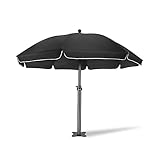
- 84" UMBRELLA FOR PRODUCTION CARTS: Provides shade coverage for outdoor film, video, and photography workflows where equipment and crew need protection from direct sunlight
- HOLDER STAND INCLUDED: Comes with a dedicated holder stand for secure mounting to compatible production carts, helping create a cleaner and more organized setup
- COMPATIBLE WITH VICTOR 42" & 48" CARTS: Designed specifically for Proaim Victor 42-inch and 48-inch production camera carts for easy integration with existing cart setups
- USEFUL FOR OUTDOOR SHOOTS: Ideal for location filming, photography sessions, live events, broadcast work, and production environments where shade support is needed
- IMPROVES ON-SET COMFORT: Helps create a shaded workspace around the cart, making it easier to manage gear, monitors, tools, and accessories outdoors
That is why the one-take structure affects production design and transport as much as cinematography. A wall, doorway or parked vehicle can be a visual element in an ordinary scene; in a continuous take, it can also be an obstacle, a hiding place for crew or a precise transition point.
Lighting had to work from beginning to end
Conventional television lighting often benefits from cuts. A lighting team can reset between angles, adjust a fixture for a new setup or hide a change in exposure behind an edit. Adolescence could not rely on that workflow.
The lighting had to support the complete camera route while remaining believable as the action moved between spaces. The crew planned light as a continuous system: they had to anticipate what the camera would see next, how much natural light would be available and how the image would change as the performers crossed from one environment to another.
Free tools Windows power users keep installed
One-click scans. No signup required.
The American Society of Cinematographers’ discussion with Lewis highlights dynamic lighting and in-camera exposure changes as part of the production’s visual strategy. Episode 3, for example, used a designed skylight and a large soft source above the principal interview room to maintain the look through the long scene.
This also explains why the image can change character without a visible cut. The camera is not necessarily moving through identical lighting conditions; instead, the lighting design and exposure strategy guide the viewer through those changes while preserving continuity.
Independent reader supportYour contribution helps us test, update, and keep practical guides available for everyone.The performances had to remain continuous too
The one-take method placed unusual demands on the actors. They could not stop between scenes, reset their emotional state, consult the script or repeat only a small section in isolation. The performance had to carry across long stretches of dialogue and action.
That was especially demanding for Owen Cooper, who made his first professional acting appearance as Jamie Miller. Netflix’s interviews with Cooper and casting director Shaheen Baig describe a rehearsal process in which the material was memorized and repeated until the episode’s sequence became internalized. Cooper also described the continuity as freeing once the performance had begun: after the scene was underway, he could remain inside the character’s experience rather than breaking repeatedly for coverage.
Do these 3 things before closing this tab:
1Repair Windows errors before they cause bigger problems2Fix the driver behind crashes, sound loss and screen glitches3Clear out junk files and repair common Windows errorsThe approach can resemble theatre, but it is not identical to a stage performance. Film actors still have to work for a moving camera, maintain marks and timing, respond to changing distances and protect focus and framing. They also have to sustain the illusion that events are unfolding naturally while performing inside a highly engineered route.
The material adds another responsibility. The series involves a young performer and emotionally intense subject matter. The production had to balance the demands of a difficult performance with appropriate care around child actors and the content being portrayed. The ASC discussion identifies that care as part of Lewis’s experience on the series.
Netflix’s interview with Owen Cooper and Shaheen Baig offers more detail on the casting and performance process.
The earlier experiment: Boiling Point
Philip Barantini and Matthew Lewis had already worked with long-form continuous shooting on Boiling Point, a feature designed around a single 90-minute take. That earlier production gave the team experience with performance continuity, camera movement, long-form choreography and the pressure of preserving an entire scene without conventional cuts. The ASC conversation with Lewis discusses the connection between the two projects.
Quick wins for a faster PC:
Fix the driver behind crashes, sound loss and screen glitchesFind Drivers →Repair Windows errors before they cause bigger problemsFix Now →Adolescence expanded the problem substantially. Instead of one restaurant location and one feature-length passage, the series required four separate episode-length performances across police operations, a school, youth detention, roads, vehicles and a family home.
The connection is therefore more meaningful than a repeated gimmick. The earlier film helped Barantini and Lewis understand how to choreograph a long take, but the series adapted that method to different environments and dramatic functions. Each episode has its own physical world, pace and emotional pressure.
What “shot in one take” really means here
The most accurate description has three parts:
- Each episode is a continuous take. The whole series was not one uninterrupted recording.
- Each episode required multiple complete attempts. “One take” describes the form of the selected finished episode, not a claim that it was captured successfully on the first try.
- The continuity was achieved practically. Operator handoffs, moving vehicles, lighting changes and the Episode 2 drone transition were planned and executed during the performance rather than being assumed to have been hidden by ordinary editorial cuts.
The visible result is smooth because the invisible preparation is extensive. Location scouting, set construction, blocking, rehearsal, camera engineering, focus, lighting, sound, transport, safety, production design, performance and assistant directing all had to operate as one system.
That is the real answer to how Netflix pulled it off: not one clever camera trick, but a production designed like a live event and rehearsed until dozens of departments could perform it together.
The Tool Desk
Outbyte PC Repair FREEClear out junk files and repair common Windows errorsFree Scan →Outbyte Driver Updater FREEFix the driver behind crashes, sound loss and screen glitchesFind Drivers →Frequently Asked Questions
Was the entire Netflix series Adolescence filmed in one take?
No. It is a four-part limited series, and each episode was filmed as its own continuous take. The series as a whole was not one uninterrupted recording.
Did Adolescence use hidden cuts?
The production accounts describe completed episodes as continuous performances without conventional editorial cuts. The camera instead used practical movement, operator handoffs, vehicle work and, in Episode 2, a physical drone-camera transition.
What camera was used to shoot Adolescence?
The production used a DJI Ronin 4D system with a Cooke SP3 32mm prime lens, according to Netflix and cinematography trade coverage. The camera was transferred between operators rather than carried by one person for an entire episode.
How many times did the crew film each episode?
The exact number varied, but Royal Television Society reporting describes roughly two weeks of rehearsal and approximately 10 complete takes for each hour-long episode.
The Bottom Line
The short version: Adolescence was made as four separate one-take episodes, not one one-take series. Netflix’s crew achieved the effect through extensive rehearsal, carefully mapped routes, a compact Ronin 4D camera package, timed operator and vehicle handoffs, continuous lighting design and a practical drone transition in Episode 2. The apparent simplicity on screen is the product of near-total coordination behind it.
Quick Recap
Product prices and availability are accurate as of the date/time indicated and are subject to change. Any price and availability information displayed on Amazon at the time of purchase will apply.

