For more than two decades, Wicked has existed as a modern myth of Broadway, a juggernaut that reshaped how musical theater speaks to identity, power, and misunderstood villains. Translating that legacy to film was never going to be a routine adaptation; it arrived carrying the weight of sold-out stages, obsessive fan devotion, and a generation that grew up with its songs as cultural touchstones. The near-perfect reviews landing now are inseparable from just how high the bar was set long before cameras rolled.
Expectations intensified the moment Ariana Grande and Cynthia Erivo were announced, not merely as stars, but as artists tasked with redefining Glinda and Elphaba for a global, cinematic audience. Critics are responding to how both performers honor the musical’s emotional architecture while expanding it, using close-ups, vocal nuance, and dramatic restraint that the stage never allowed. Their chemistry and individual transformations are being read not as stunt casting, but as an overdue re-centering of Wicked’s emotional core.


What ultimately sets this adaptation apart, and why it’s being treated as a cultural event rather than just another musical film, is its sense of intention. The film approaches Wicked not as a museum piece, but as a living text, reinterpreted with cinematic scale, political relevance, and emotional clarity that feels distinctly of this moment. That ambition, paired with performances critics are already calling career-defining, explains why expectations were immense—and why the early response suggests they may have been met.
Near-Perfect Scores Explained: What Critics Are Praising — and Why the Consensus Is So Strong
What’s driving Wicked’s near-unanimous acclaim is not a single standout element, but an unusual alignment of performance, direction, and adaptation choices that critics describe as mutually reinforcing. Reviews repeatedly note how the film feels purpose-built for cinema without sacrificing the musical’s soul, a balance that has eluded many stage-to-screen translations. The result is a work that satisfies longtime devotees while welcoming audiences encountering Oz’s untold story for the first time.
What’s actually slowing this PC down?
Pick the symptom - the matching free tool is one click away.
#1 Best Overall

- Wicked: The Soundtrack features performances by the stars of Universal Pictures' cinematic event with music and lyrics by legendary composer/lyricist Stephen Schwartz
Cynthia Erivo and Ariana Grande: Performances That Reframe the Musical
Cynthia Erivo’s Elphaba is being hailed as the emotional anchor of the film, with critics emphasizing her ability to convey interior conflict through stillness as much as vocal power. Close-ups allow her performance to breathe in ways the stage never could, turning songs like “Defying Gravity” into character studies rather than sheer spectacle. Reviewers consistently point to her restraint as the key to making Elphaba’s transformation feel intimate and inevitable.
Ariana Grande’s Glinda, meanwhile, is earning praise for its precision and intelligence. Critics note how she sharpens Glinda’s comedy without flattening her vulnerability, using timing, physicality, and vocal control to chart a credible moral awakening. Rather than softening the character for likability, Grande leans into Glinda’s contradictions, making her arc feel earned and emotionally resonant.
Direction and Cinematic Language Elevate the Material
Much of the critical enthusiasm centers on how the film uses cinematic tools to expand Wicked’s storytelling rather than simply record it. Camera movement, editing, and production design are repeatedly cited as enhancing character psychology, especially in moments of moral tension and political allegory. The film’s visual grammar allows Oz to feel lived-in and ideologically complex, not just fantastical.
Critics also highlight the discipline of the direction, particularly in knowing when not to oversell the spectacle. Musical numbers are staged with clarity and narrative intent, allowing emotional beats to land without being drowned in excess. This restraint is frequently credited with making the film feel confident rather than desperate to impress.
Do these 3 things before closing this tab:
1Repair Windows errors before they cause bigger problems2Scan for outdated or missing drivers - takes under a minute3Clear out junk files and repair common Windows errorsA Faithful Adaptation That Isn’t Afraid to Interpret
Reviewers are responding strongly to the film’s willingness to reinterpret Wicked without betraying it. Dialogue adjustments, tonal refinements, and pacing changes are described as thoughtful rather than revisionist, aimed at deepening character motivations and thematic coherence. The adaptation treats the source material as a foundation, not a ceiling.
This approach is especially effective in foregrounding the story’s political undercurrents. Critics note how themes of propaganda, scapegoating, and institutional power feel newly urgent, reframed through contemporary sensibilities without becoming heavy-handed. The film trusts the audience to connect the dots, which has only strengthened its critical standing.
Why the Consensus Feels Unusually Unified
Near-perfect scores often fracture under scrutiny, but Wicked’s reception has been marked by remarkable consistency across outlets. Critics may emphasize different strengths, but they largely agree on the same core achievements: performances of uncommon depth, a confident cinematic vision, and an adaptation that understands why the musical endures. That shared language suggests a film that’s succeeding on multiple levels simultaneously.
More than anything, the consensus reflects a sense of relief and admiration. Wicked was expected to stumble under the weight of its legacy, yet critics argue it does the opposite, using that history as fuel. In doing so, the film isn’t just living up to expectations; it’s redefining what a modern movie musical can aspire to be.
Cynthia Erivo’s Elphaba: A Defining Screen Performance of Power, Pain, and Political Fire
If Wicked is earning near-universal acclaim, much of that momentum begins with Cynthia Erivo’s Elphaba. Critics are calling her performance not just successful, but transformational, a portrayal that justifies the film’s existence as cinema rather than mere translation. Erivo’s Elphaba feels lived-in, emotionally specific, and acutely aware of the social forces closing in around her.
Vulnerability Beneath the Power
What distinguishes Erivo’s Elphaba is the clarity with which she balances strength and fragility. Reviews frequently note how her physicality conveys isolation long before the dialogue does, using posture, stillness, and restraint to express years of internalized rejection. Rather than playing Elphaba as a misunderstood firebrand from the outset, Erivo allows the character’s resilience to emerge gradually, forged through pain rather than attitude.
Her quieter moments are receiving as much praise as her vocal showstoppers. Critics highlight how the camera lingers on Erivo’s face during moments of doubt, letting discomfort and longing coexist without rushing toward catharsis. This patience deepens the emotional stakes and makes Elphaba’s eventual defiance feel earned rather than predetermined.
A Voice Used as Narrative Weaponry
While Erivo’s vocal prowess was never in doubt, reviewers emphasize how intentionally she deploys it on screen. Numbers like “Defying Gravity” are described less as technical showcases and more as narrative ruptures, moments where personal anguish collides with political awakening. The power of her voice is framed as an extension of character psychology, not a break from it.
Crashes, No Sound, or Screen Glitches?
Random freezes, missing sound and display glitches usually trace back to one bad driver. Find and replace yours safely.Free scan · under a minuteWindows Errors? Fix Them Before They Spread
Repair common Windows errors and clear accumulated junk for a smoother, more stable PC - no reinstall needed.Free scan · no reinstallCritics also praise the film’s willingness to let Erivo’s vocals remain textured rather than polished to perfection. Breath, strain, and emotional grit are left intact, reinforcing Elphaba’s humanity. That choice aligns with the adaptation’s broader refusal to sand down discomfort, and Erivo becomes its most potent embodiment.
Rank #2
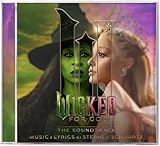
- Wicked: For Good - The Soundtrack features performances by the stars of the electrifying conclusion to Universal Pictures' global cinematic Wicked sensation, Wicked: For Good
An Elphaba for the Present Moment
Perhaps most striking is how often reviewers describe Erivo’s Elphaba as politically resonant without ever feeling forced. Her performance underscores themes of scapegoating, surveillance, and institutional gaslighting through behavior rather than speechifying. Elphaba’s anger is portrayed not as volatility, but as moral clarity sharpened by betrayal.
In this sense, critics argue Erivo reframes Elphaba as a figure of resistance rather than mere rebellion. She is not defined by opposition to power, but by an unwillingness to internalize its lies. That distinction is key to why many are already labeling the performance awards-worthy and historically significant within the movie musical canon.
Setting the Emotional Center of the Film
Erivo’s work also anchors the ensemble, providing the emotional gravity that allows other performances to flourish. Reviewers point out that her grounded intensity creates a meaningful counterweight to the film’s heightened theatricality, preventing Wicked from drifting into spectacle for spectacle’s sake. When the story soars, it does so because Elphaba’s inner life has been so carefully established.
The result, critics suggest, is an Elphaba who feels inseparable from this adaptation’s identity. Erivo doesn’t simply meet the expectations of a beloved role; she reshapes them for a cinematic language and a contemporary audience. In doing so, she gives Wicked its beating heart and its sharpest edge.
Ariana Grande’s Glinda: Recalibrating a Beloved Role Through Precision, Humor, and Emotional Intelligence
If Erivo provides Wicked with its moral gravity, critics agree Ariana Grande supplies its tonal intelligence. Her Glinda arrives fully aware of the character’s legacy, yet carefully resists caricature. Rather than leaning into exaggerated perkiness, Grande plays Glinda as hyper-observant, emotionally strategic, and quietly insecure beneath the practiced charm.
Reviewers repeatedly highlight how her performance operates on layers, allowing Glinda’s performative optimism to function as both social armor and survival mechanism. This Glinda understands the power of image long before she understands its cost. Grande’s calibration ensures that humor never undercuts sincerity, and sincerity never dulls the wit.
Comedy Built on Control, Not Excess
Grande’s comedic precision has been singled out as one of the film’s most surprising strengths. Critics note that her timing is surgical, favoring micro-expressions, vocal inflections, and deliberate pauses over broad physical comedy. The result is a Glinda who feels genuinely funny without ever feeling frivolous.
Quick wins for a faster PC:
Scan for outdated or missing drivers - takes under a minuteDriver Scan →Clear out junk files and repair common Windows errorsFree Scan →That restraint proves essential to the film’s balance. By refusing to push Glinda into parody, Grande allows the character’s lighter moments to coexist organically alongside the story’s darker political and emotional currents. Comedy becomes a tool of contrast rather than escape.
Vocals as Character, Not Showpiece
While Grande’s vocal credentials were never in doubt, reviewers emphasize how thoughtfully her singing is integrated into character psychology. Her voice is bright and agile, but never deployed for sheer spectacle. Instead, it reflects Glinda’s emotional state, evolving from polished confidence to something more tentative and exposed as the narrative progresses.
Critics praise this approach as emblematic of the adaptation’s broader philosophy. Musical numbers are not interruptions but extensions of interior life. Grande’s vocal control mirrors Glinda’s social control, making moments of vocal vulnerability feel narratively earned rather than performative.
The Emotional Intelligence of a Future Politician
Perhaps the most compelling critical insight centers on Grande’s understanding of Glinda as a character shaped by power structures. Reviewers describe her Glinda as someone instinctively attuned to hierarchy, reputation, and public perception. She is not shallow; she is adaptive.
This framing transforms Glinda’s arc into a study of complicity rather than cruelty. Grande allows the audience to see how fear, ambition, and genuine affection coexist uneasily within her choices. The performance never asks for absolution, only understanding.
A Counterpoint That Completes the Film’s Core Dynamic
Critics frequently cite the chemistry between Grande and Erivo as the film’s emotional engine. Where Erivo’s Elphaba externalizes injustice through resistance, Grande’s Glinda internalizes it through negotiation. Their performances function as opposing responses to the same oppressive system, each illuminating the other.
That dynamic is why reviewers argue Grande’s Glinda is essential to Wicked’s success as a film adaptation. She is not merely a foil or comic relief, but a fully realized ideological counterweight. Together, Grande and Erivo create a dual portrait of power, identity, and consequence that elevates Wicked from beloved musical to cinematic event.
From Stage Spectacle to Cinematic Storytelling: How Direction, Design, and Music Elevate the Material
If the performances are the film’s emotional core, critics argue that the direction provides the necessary translation layer between Broadway spectacle and cinematic intimacy. Rather than attempting to simply “open up” the stage version, the film rethinks Wicked as a visual narrative driven by perspective, scale, and point of view. Reviewers consistently note that the camera is used not to amplify spectacle, but to refine meaning.
Recommended Free Tools
The result is an adaptation that feels consciously cinematic rather than theatrically enlarged. Musical moments are framed through character subjectivity, allowing songs to unfold as emotional experiences rather than crowd-pleasing set pieces. That restraint, critics suggest, is precisely what allows the film to feel expansive without becoming overwhelming.
Direction That Prioritizes Character Over Scale
Critics highlight the director’s ability to balance intimacy with grandeur, particularly during iconic numbers long associated with theatrical bombast. Instead of wide, static compositions designed to replicate a proscenium view, the film uses movement and proximity to draw viewers inside the characters’ emotional states. Close-ups during vocal climaxes are not decorative; they are narrative tools.
This approach proves especially effective in scenes shared by Erivo and Grande, where subtle shifts in framing underscore the evolving power dynamic between Elphaba and Glinda. Reviewers note how blocking and camera placement repeatedly position the characters in visual opposition or alignment, reinforcing themes of complicity, rebellion, and mutual dependence. Direction, in this sense, becomes thematic storytelling.
Production Design That Expands Oz Without Losing Its Symbolism
One of the adaptation’s most praised achievements is its production design, which critics describe as both richly detailed and narratively purposeful. Oz is no longer confined to suggestive theatrical abstraction, but the film avoids photorealistic excess. Instead, sets are stylized, textured, and symbolically charged, preserving the fairy-tale quality while adding political and social context.
Reviewers point to how architecture, color palettes, and spatial hierarchies visually encode the film’s power structures. Emerald City’s polished verticality contrasts sharply with the more grounded, lived-in environments associated with Elphaba. This visual language quietly reinforces the ideological divide at the heart of the story, allowing the world-building to carry thematic weight without exposition.
Music as Cinematic Language, Not Just Performance
Critics are especially attentive to how the score and orchestration have been adapted for film, praising the refusal to simply replicate the Broadway sound. Musical arrangements are adjusted to accommodate cinematic pacing, with dynamics that ebb and flow in conversation with editing and performance. Songs breathe, expand, or contract depending on emotional necessity rather than applause cues.
This treatment allows iconic numbers to feel newly expressive without losing their identity. Reviewers note that transitions between dialogue and song are smoother, more psychologically motivated, and less theatrical in their signaling. Music becomes an extension of inner life, aligning perfectly with the performances that anchor the film.
An Adaptation That Understands What Film Can Do Differently
What ultimately distinguishes Wicked in critical discourse is its clear understanding of medium. Rather than treating cinema as a delivery system for a beloved stage property, the film embraces the tools of filmmaking to interrogate character, theme, and perspective. Critics emphasize that this is not a filmed musical, but a re-authored narrative shaped by editing, composition, and sound design.
Free tools Windows power users keep installed
One-click scans. No signup required.
That confidence in cinematic language is why reviewers see the adaptation as a potential landmark. By aligning direction, design, and music with the psychological depth of Erivo and Grande’s performances, Wicked transcends adaptation fidelity and becomes interpretation. It does not replace the stage version; it converses with it, expanding the story’s emotional and political resonance for a new medium.
More Than a Musical: Themes of Otherness, Power, and Mythmaking That Hit Harder on Film
One reason critics are responding so strongly to Wicked is how decisively the film foregrounds its thematic core. On stage, the story’s ideas about otherness, propaganda, and moral simplification often register through allegory. On film, those ideas are rendered with an immediacy that feels pointed, contemporary, and emotionally destabilizing.
The camera does not allow the audience to remain comfortably distant. Close-ups, spatial framing, and controlled perspective force viewers to sit with Elphaba’s isolation and Glinda’s complicity in ways the proscenium naturally softens. The result is a version of Wicked that feels less like a fable and more like a lived political tragedy.
Rank #4
Elphaba and the Cost of Being Seen as a Threat
Cynthia Erivo’s Elphaba is the emotional axis of the film’s exploration of otherness. Critics highlight how the film lingers on moments of exclusion, humiliation, and self-protection, using silence and restrained reaction shots to communicate what the stage often conveys through heightened theatricality. Her green skin is no longer symbolic shorthand but a visual constant that shapes how every character responds to her presence.
The Tool Desk
Outbyte Driver Updater FREEScan for outdated or missing drivers - takes under a minuteDriver Scan →Outbyte PC Repair FREERepair Windows errors before they cause bigger problemsFix Now →Film allows Erivo to underplay where theater requires projection, and reviewers note how devastating that restraint becomes. Elphaba’s anger is not performative; it accumulates. By the time she is labeled dangerous, the audience has already seen how fear is manufactured around her, making the injustice feel systemic rather than personal.
Glinda, Power, and the Seduction of Comfort
Ariana Grande’s Glinda benefits enormously from the film’s ability to frame power as something subtle and socially rewarded. Critics observe that her performance thrives in reaction shots and micro-behaviors: the smile held too long, the glance toward approval, the momentary hesitation before choosing safety over solidarity. These details sharpen Glinda’s arc from naïveté to moral compromise.
Rather than playing Glinda as simply shallow or comic, the film positions her as a study in how likability becomes influence. Grande’s charisma is not softened by the camera; it is weaponized. Reviewers point out that this makes Glinda’s choices more unsettling, because they feel recognizable rather than theatrical.
Mythmaking, Propaganda, and Who Controls the Story
The film’s treatment of Oz as a manufactured narrative space is one of its most critically praised elements. Through visual repetition, staged spectacle, and controlled messaging, Wicked shows how myths are built in real time. The Wizard’s authority is less about power than presentation, a theme that lands with sharper clarity through cinematic montage and media imagery.
Recommended Free Tools
Critics note how the film repeatedly contrasts private truth with public story. What characters know, what they perform, and what the world believes are deliberately misaligned. This tension elevates Wicked from revisionist fantasy into a broader meditation on how societies choose heroes and villains.
Why These Themes Land Harder Now
Reviewers frequently mention the timeliness of Wicked’s ideas without reducing them to allegory. The film does not update the story to comment on modern politics; it reveals that those politics were always embedded in the material. Film simply gives them sharper tools.
By combining Erivo’s deeply human portrayal with Grande’s precise embodiment of privilege, the adaptation turns abstract themes into emotional experience. That synthesis of performance, cinematic language, and political clarity is why critics are not just praising Wicked as a successful musical, but recognizing it as a rare example of the genre doing something urgent on screen.
Independent reader supportYour contribution helps us test, update, and keep practical guides available for everyone.Awards Trajectory and Industry Buzz: Why ‘Wicked’ Is Already Being Positioned as a Major Oscar Contender
As reviews push toward near-unanimous acclaim, Wicked is already being discussed less as a commercial event and more as an awards-season inevitability. Industry chatter following early screenings points to a rare convergence: critical praise, technical ambition, and performances that feel both populist and prestige-minded. That combination is precisely what Academy voters historically respond to when a musical breaks through genre bias.
What sets Wicked apart in this conversation is that the praise is not isolated to spectacle or nostalgia. Critics are framing the film as a cohesive cinematic achievement, one where craft, theme, and performance align rather than compete for attention. That holistic reception has positioned the film as a serious contender across multiple Oscar categories, not just the musical-adjacent ones.
Ariana Grande and Cynthia Erivo as Dual Awards Anchors
Much of the awards momentum centers on the film’s two leads, whose performances are being discussed in distinctly different but equally compelling terms. Cynthia Erivo’s Elphaba is already generating early Best Actress predictions, with critics emphasizing the emotional precision behind her vocal power. Rather than playing Elphaba as an icon, Erivo grounds her in restraint, exhaustion, and moral clarity, creating a performance that reads as dramatically rigorous even outside the musical framework.
Ariana Grande’s Glinda, meanwhile, is emerging as a potential Supporting Actress dark horse, a category where subtlety and tonal complexity often prevail. Reviews highlight how Grande weaponizes charm, using comic timing and physical performance to reveal the character’s complicity in the systems she benefits from. It is the kind of performance that gains momentum through conversation, as viewers recognize how much narrative weight is carried beneath the effervescence.
Technical Craft and the Academy’s Musical Blind Spot
Beyond acting, Wicked is drawing strong notice for its technical achievements, particularly in production design, costume design, sound mixing, and original score adaptation. The film’s visual language is repeatedly described as immersive rather than ornamental, using scale to reinforce ideology rather than overwhelm it. That distinction matters in awards contexts, where spectacle alone rarely translates into wins.
Best Value
Historically, the Academy has struggled to reward big musical adaptations unless they reframe the genre for the screen. Early reactions suggest Wicked succeeds precisely because it treats musical numbers as narrative engines, not pauses for applause. This approach aligns it more closely with films like Chicago or West Side Story than with stage-bound adaptations that feel filmed rather than reimagined.
A Prestige Narrative Built on Cultural Timing
Awards campaigns thrive on story, and Wicked enters the race with one that feels unusually organic. The film arrives at a moment when conversations about power, perception, and manufactured truth dominate cultural discourse, yet critics stress that the film never feels opportunistic. Its relevance emerges from fidelity to the material, not topical embellishment.
That sense of inevitability is fueling the industry buzz. Wicked is being positioned not just as a beloved adaptation done right, but as a musical that understands why its story endures and why it resonates now. For awards bodies that often seek films reflecting both craft excellence and cultural conversation, Wicked is increasingly being viewed not as a long shot, but as a benchmark.
The Landmark Factor: What Sets This Adaptation Apart in the History of Movie Musicals
What ultimately elevates Wicked beyond strong reviews and awards chatter is the sense that it recalibrates what a modern movie musical can accomplish. Critics aren’t just responding to technical excellence or nostalgic affection for the Broadway hit; they’re responding to a film that understands the grammar of cinema and the emotional architecture of musical theater, and fuses them with rare confidence.
The Tool Desk
Outbyte PC Repair FREERepair Windows errors before they cause bigger problemsFix Now →Outbyte Driver Updater FREEFix the driver behind crashes, sound loss and screen glitchesFind Drivers →Performance as Structural Backbone
Ariana Grande and Cynthia Erivo are not simply delivering standout turns; they are redefining how star power functions within a musical adaptation. Grande’s Glinda uses familiarity as a narrative tool, inviting audiences in with warmth before exposing the character’s moral blind spots. Erivo’s Elphaba anchors the film with emotional gravity, allowing vulnerability and restraint to carry as much weight as vocal force.
What critics are responding to is the way these performances interlock. Rather than competing for dominance, the film frames their dynamic as the story’s true engine, with each performance clarifying the other’s choices. That symbiosis gives the adaptation a dramatic cohesion many musicals struggle to achieve on screen.
A Cinematic Reimagining, Not a Translation
Historically, the most successful movie musicals are the ones that refuse to feel stage-bound. Wicked distinguishes itself by treating the source material as a foundation rather than a ceiling. Musical numbers are staged with spatial logic and emotional escalation that only cinema can provide, allowing movement, framing, and editing to deepen character psychology.
This approach gives the film a sense of inevitability rather than indulgence. Songs don’t halt the narrative; they accelerate it. In doing so, Wicked joins a small lineage of adaptations that honor theatrical roots while fully committing to cinematic storytelling.
What’s actually slowing this PC down?
Pick the symptom - the matching free tool is one click away.
Emotional Accessibility Without Simplification
Another factor separating Wicked from many prestige musicals is its clarity of intent. The film trusts its audience enough to explore moral complexity without flattening its themes for mass appeal. Power, perception, and complicity are woven directly into character arcs, not delivered as abstract concepts or visual metaphors.
This balance is where the near-universal praise finds its footing. The film is emotionally direct without being simplistic, grand without being hollow. It invites repeat viewing not for spectacle alone, but for the layered performances and narrative choices that reveal more over time.
A New Benchmark for the Genre
In the broader history of movie musicals, Wicked feels less like a revival and more like a recalibration. It demonstrates that large-scale adaptations can be both commercially inviting and artistically rigorous, that star casting can enhance rather than overshadow character, and that relevance can emerge organically from well-told stories.
If the early critical consensus holds, Wicked will be remembered not just as a successful adaptation, but as a reference point. It sets a standard future musicals will be measured against, proving that when craft, performance, and intention align, the genre can still feel not just alive, but essential.
Quick Recap
Product prices and availability are accurate as of the date/time indicated and are subject to change. Any price and availability information displayed on Amazon at the time of purchase will apply.