The Tool Desk
Outbyte PC Repair FREEClear out junk files and repair common Windows errorsFree Scan →Outbyte Driver Updater FREEFix the driver behind crashes, sound loss and screen glitchesFind Drivers →A black Venus flytrap leaf is not automatically a dying plant. One trap can blacken and die after catching prey two or three times, and broad dieback can be normal when the plant enters winter dormancy. Blackening outside those patterns—especially across new growth—calls for a check of water quality, moisture, light, growing medium, pests, and disease signs. Color by itself cannot identify a single cause, so diagnose the pattern and the plant’s conditions before treating it.
Start with the pattern, not the color
Venus flytraps are temperate perennials. Their traps are short-lived structures, while the plant’s rhizome can survive seasonal loss of above-ground leaves. The same black color can therefore represent ordinary trap aging, dormancy, cultural stress, or a pest or disease problem. Use the distribution and timing of the damage as your first clues.
| What you see | Most plausible interpretation | First response |
|---|---|---|
| One trap, or a few older traps, blacken after catching prey | Normal trap senescence is plausible. Indiana University’s Biology Building Greenhouse notes that a trap can turn black and the leaf die after two or three captures. | Leave the rest of the plant undisturbed and review its general care. |
| Many leaves die as days shorten and conditions cool | Seasonal dormancy may be beginning. New Hanover County Cooperative Extension describes shortening day length and cooler conditions as dormancy cues. | Compare the timing with your local season before assuming disease. |
| Several leaves blacken during active growth, or the crown and newest leaves are affected | A growing-condition problem, pest, or black spot deserves investigation. | Check water, moisture, substrate, light, and the leaves for visible symptoms. |
| Blackening continues or spreads despite corrected care | The color is not enough to identify the cause; a plant-health diagnosis may be needed. | Contact a local plant diagnostic service with photographs and the care history. |
Why an individual trap turns black
A Venus flytrap does not keep every trap indefinitely. Indiana University’s greenhouse guidance reports that a trap can blacken and the leaf die after it has caught prey two or three times. That is ordinary senescence: the used trap is reaching the end of its useful life, not necessarily showing rot or infection.
This explanation fits best when the black trap is one of the older leaves and the plant is still producing or maintaining healthy growth. It does not explain a whole plant turning black at once. A single aging trap also does not prove that every dark mark elsewhere is harmless; inspect the pattern before deciding.
Free tools Windows power users keep installed
One-click scans. No signup required.
#1 Best Overall
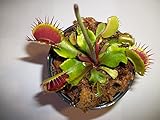
- Live healthy actively growing (not dormant) adult sized Venus Flytrap Plant
- Comes with a 3 inch net pot
- Comes with a detailed full page caresheet, full page FAQ sheet, and a full page potting diagram written by Joel the owner of Joel's Carnivorous Plants
- Shipped bareroot
- Comes with loose sphagnum moss appropriate for Carnivorous Plant soil
Do not use trap closure as a diagnostic test
Repeatedly touching or triggering traps does not reveal whether the plant is healthy. The traps have a limited useful life after captures, so closing them for entertainment or testing can consume that capacity without answering what caused the blackening. Observe the plant instead: note which leaves are old, whether new growth is affected, and whether the change is spreading.
When winter dieback is normal
Venus flytraps are temperate perennials, not continuously tropical houseplants. New Hanover County Cooperative Extension explains that shortening days and cooler conditions cue dormancy. During that period, above-ground leaves can die back while the plant survives in its rhizome.
Season is therefore essential context. A plant that blackens as autumn turns into winter may be following its normal annual cycle. A plant in warm, bright active growth that suddenly loses several leaves has a different pattern and deserves a care review. Do not label winter dieback as disease solely because the leaves are black.
Rank #2
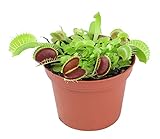
- REAL VENUS FLY TRAP PLANT: Large carnivorous plants that feed on bugs with jaw-like petals aka ‘bug traps’. This dionaea plant is a useful flying and non-flying insect trap, able to grow in a carnivore plant pot, carnivore plant terrarium, and more.
- FLY AND MOSQUITO TRAP: Functional house plants that trap and consume common bugs found in the home, such as flies, mosquitos, and spiders. Keep your carnivorous house plant thriving by planting it in a carnivorous plant pot with venus fly trap soil.
- DIY INDOOR TERRARIUM: Design a unique carnivorous plant terrarium with live flytraps and other terrarium plants. Real plants are also excellent for gift ideas. Create a Venus Fly Trap kit with Venus Flytrap soil, carnivorous plant food, and more.
- STRIKING PLANT DÉCOR: Showcase this stunning plant in a Venus Fly Trap pot with a carnivorous plant soil mix for an eye-catching display. Try planting your own Dionaea muscipula seeds in flytrap soil with Dionaea muscipula food to support growth.
- LIVE CARNIVOROUS PLANTS AT YOUR DOOR: Venus Fly Trap live plants (Dionaea Akai Ryu) will arrive fresh and in prime condition. These exotic plants can thrive as both live indoor plants or outdoor plants.
Questions that distinguish dormancy from a crisis
- Did the change begin as day length shortened and temperatures cooled in your area?
- Is the dieback mostly older above-ground foliage rather than the crown and newest growth?
- Does the plant otherwise match a seasonal slowdown instead of showing a rapidly spreading spot pattern?
These observations do not provide a complete diagnostic key, but they prevent a normal seasonal process from being mistaken for an emergency.
What’s actually slowing this PC down?
Pick the symptom - the matching free tool is one click away.
Check the four basic growing conditions
Water quality
Use rainwater or distilled water. NC State Extension recommends those sources for Venus flytraps and warns that hard or treated water can kill the plant. Iowa State Extension likewise recommends rain or distilled water because tap water may be too alkaline or mineral-rich.
“Do not allow the soil to dry out,” NC State Extension states in its care guidance. A dry medium is a direct care failure to correct, whether or not it caused the first black leaf. Keep the growing medium consistently wet rather than allowing it to cycle from wet to dry.
Rank #3

- Purple Pitcher Plant (Sarracenia purpurea ssp. venosa) features thick, colorful pitchers that trap insects naturally. Dionaea Muscipula, the Venus Fly Trap, displays striking toothed traps that actively close on insects. Ships live and green with roots and growing medium from a 2" growing cell wrapped prior to shipping, along with a detailed care card.
- Excellent for bog gardens, terrariums, and natural pest control. Non-toxic to pets and humans.
- Requires full sun, rainwater or distilled water, and constantly moist acidic soil. Cold-hardy with winter dormancy.
- Tissue culture-grown at our Florida family nursery for superior vigor.
- This item is non-returnable however all plants include our live-arrival guarantee. Please message us within 48 hours of delivery for any issues requiring replacements.
Growing medium
Venus flytraps need a wet, nutrient-poor growing medium. Confirm that the plant is in a carnivorous-plant medium rather than ordinary fertilized potting soil. Fertilized mixes introduce the kind of nutrient load these plants are adapted to avoid. If you are unsure what is in the pot, identify the ingredients before making further changes; black color alone does not tell you whether the substrate is responsible.
Light
NC State Extension lists full sun to partial shade as suitable exposure. A plant kept in a dim location should have its light improved gradually, then be observed for the condition of new growth. The available guidance does not establish a universal acclimation schedule, so avoid treating a sudden move into intense light as a guaranteed fix or assuming that every dark leaf is sun damage.
Pests and black spot
NC State Extension advises watching for aphids, spider mites, and black spot. Inspect both sides of leaves, the petioles, and the crown for visible insects or a spreading spot pattern. The cited guidance does not establish that black leaves alone identify any one of these problems, and it does not support choosing a pesticide from color alone. If symptoms persist or spread, use a local plant diagnostic service rather than guessing at treatment.
Rank #4
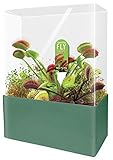
- Custom-Crafted Terrariums: High-quality kit for growing carnivorous Venus Fly Traps, or mean-eating plants, creating a captivating indoor garden. The kit includes Seed Square Terrarium, Pack of Venus Fly Trap Seeds, Fly Trap Garden Tag, and Compressed Germination Mix Disk.
- Watch Them Grow: Venus flytraps lure prey with color and scent. A touch triggers the trap to snap shut, sealing the insect inside. Witness fascinating transformation as plants develop into bug-eating monsters, adding excitement to gardening.
- Easy Setup: Just add water - everything else needed for maintenance and growth included in the flytrap terrarium kit for hassle-free gardening. Ensure the fly trap plant health by using distilled water, as tap or spring water may contain harmful minerals and salts. With simple instructions and minimal upkeep required, it's a delightful, hassle-free project that brings a piece of tranquility and greenery to any space.
- Distilled Water Recommended: Ensure the fly trap plant health by using distilled water, as tap or spring water may contain harmful minerals and salts. Transform any room into a vibrant oasis with this stunning glass terrarium kit; its elegant design not only complements any interior style but also brings a touch of nature indoors, making your living space a serene and stylish haven.
- Fun Learning Experience: Enjoy setting up the terrarium, planting fly trap seeds, and watching their fearsome plant collection thrive! This plant kit also makes an amazing gift for birthdays, holidays, or anyone who loves unique greenery.
A step-by-step diagnostic and recovery plan
- Map the damage. Count affected leaves and note whether they are old traps, recently opened traps, or the newest growth. Record whether the blackening is confined to one leaf or moving across the plant.
- Place the timing on a seasonal calendar. If shortening days and cooler conditions coincide with dieback, dormancy is plausible. If the plant is in its active growing conditions, investigate care problems instead.
- Verify the water source. Switch to rainwater or distilled water if you have been using hard or treated tap water. Do not assume that clear tap water is chemically suitable.
- Check moisture every day you normally inspect the plant. The medium must remain wet; NC State Extension’s instruction is not to let it dry out. Correct drying before attempting to interpret later leaf changes.
- Identify the substrate. Make sure it is nutrient-poor and intended for carnivorous plants, not a fertilized general-purpose mix. Do not infer the substrate’s chemistry from the leaf color.
- Review the light location. Compare the current exposure with the full-sun-to-partial-shade range recommended by NC State Extension. If the plant has been dim, improve light gradually and watch subsequent growth.
- Inspect for organisms and spots. Look specifically for aphids, spider mites, or black spot. Photograph anything suspicious so a diagnostic service can assess the pattern.
- Stop unnecessary trap testing. Do not repeatedly trigger traps while you are monitoring the plant; used traps have a limited useful life after captures.
- Escalate when the pattern does not settle. If blackening continues, reaches new growth, or spreads after the basic conditions are corrected, seek a local plant diagnostic service. Include the season, water source, light exposure, substrate, and photographs.
Common situations and the safest interpretation
| Situation | What it suggests | What not to conclude |
|---|---|---|
| A single trap closes, catches prey, then later turns black | The trap may have completed its normal life after repeated captures. | Do not conclude that the rhizome or whole plant is dead. |
| Several older leaves blacken as winter approaches | Seasonal dormancy is plausible for this temperate perennial. | Do not conclude that winter dieback is automatically a disease. |
| Black leaves appear while the plant is actively growing in a dim position | Light and general care deserve review. | Do not claim that low light alone is proven to be the cause. |
| Leaves blacken after a period with dry medium or unsuitable water | Moisture and mineral or alkalinity stress are credible care concerns. | Do not assume the leaf can recover simply because the water source changes. |
| Black marks spread and insects or distinct spots are visible | Pests or black spot need professional evaluation. | Do not select a pesticide or disease treatment from color alone. |
What to monitor after correcting care
Existing black tissue is not a reliable measure of immediate recovery. The useful observations are whether blackening continues, whether new leaves emerge normally, and whether the crown remains affected. Keep a simple log of water source, moisture, light location, seasonal conditions, and dates when new symptoms appear. That record helps separate a one-time aging trap from an ongoing environmental problem.
Make one clear care correction at a time when possible. Changing water, substrate, light, and location simultaneously can make it impossible to tell which condition mattered. The evidence supports correcting the fundamentals, but it does not establish a universal treatment for every black leaf.
Care checklist for preventing avoidable blackening
- Provide full sun to partial shade, adjusting a dim placement gradually.
- Keep the medium wet; never allow it to dry out.
- Use rainwater or distilled water instead of hard or treated water.
- Use a wet, nutrient-poor carnivorous-plant medium.
- Expect that individual traps may age after two or three captures.
- Expect possible winter dieback as days shorten and conditions cool.
- Inspect periodically for aphids, spider mites, and black spot.
- Avoid repeatedly triggering traps just to test them.
When a more specific diagnosis is justified
Blackening alone cannot distinguish normal senescence, dormancy, water stress, unsuitable substrate, inadequate light, pests, and black spot. A useful diagnostic request should state the season, whether one trap or the crown is affected, how many leaves are changing, the water source, the light conditions, and the growing-medium composition. Add clear photographs showing the whole plant and close views of the affected tissue.
NC State Extension and Iowa State Extension establish the core care requirements, while Indiana University’s greenhouse guidance explains the limited life of repeatedly used traps and New Hanover County Cooperative Extension describes seasonal dormancy. Together, those points support a pattern-based response: verify conditions first, then seek local diagnostic help when symptoms spread or remain unexplained.
Quick Recap
Product prices and availability are accurate as of the date/time indicated and are subject to change. Any price and availability information displayed on Amazon at the time of purchase will apply.





Say something about this film