Martin Mull (1943–2024) was the deadpan host Barth Gimble on Fernwood 2 Night, the satirical local-talk-show spin-off that first made his particular comic voice unmistakable. He was also a film and television actor, stand-up and musical comedian, songwriter, recording artist, painter, and author. His performances often sent up vanity and institutional absurdity, while his painting and music remained serious, sustained practices rather than side projects.
Mull died at his Los Angeles home on June 27, 2024, at age 80. His daughter, Maggie Mull, announced the death; The Washington Post reported that she did not state a cause.
What was Martin Mull known for?
Mull became widely known for playing pompous, peculiar, or deceptively calm characters without breaking the surface of the joke. His breakthrough came in Norman Lear’s satirical soap opera Mary Hartman, Mary Hartman, followed by the mock talk show Fernwood 2 Night. In the latter, he played Barth Gimble, a local television host whose solemn delivery and inflated self-regard made the fictional low-budget program feel both ridiculous and strangely plausible.
That persona carried into very different projects. He was Colonel Mustard in the ensemble mystery comedy Clue (1985), Roseanne’s business partner Leon Carp on Roseanne, Principal Willard Kraft on Sabrina the Teenage Witch, private investigator Gene Parmesan on Arrested Development, and political aide Bob Bradley on Veep. He also appeared in films such as Mr. Mom and Mrs. Doubtfire, made recurring appearances on Two and a Half Men, and played a regular role in The Cool Kids (2018–2019).
Recommended Free Tools
#1 Best Overall

- Ditch the TV, and re-ignite family night with the get-together amusement of a Hasbro game
- Party it up, and surprise guests at your next event with laugh-out-loud game from Hasbro Gaming
- Nostalgic tabletop gameplay meets interactive digital content for an immersive gaming experience
- Hasbro Gaming imagines and produces games that are perfect for every age, taste, and event
Outside acting, Mull released humorous music, wrote songs, exhibited paintings, and co-wrote books with Allen Rucker. ABC News described a six-decade career encompassing nearly 40 films and more than 50 television series; those are approximate outlet-reported totals, not an independently audited filmography.
Early life and education
Martin Eugene Mull was born in Chicago on August 18, 1943. When he was two, his family moved to North Ridgeville, Ohio, and later relocated to New Canaan, Connecticut. He studied painting at the Rhode Island School of Design, receiving a Bachelor of Fine Arts in 1965 and a Master of Fine Arts in 1967.
The formal art education mattered throughout his career. Mull did not approach painting as a celebrity pastime added after acting success; it was the discipline he had trained to practice before television made him famous. In a 1995 quotation reported by The Washington Post, he said, “I’m not a Sunday painter,” and added, “If anything, I’m more of a Sunday actor.” The remark captures the priorities behind his public image: acting paid the bills, but visual art was central to his identity.
From songs to Mary Hartman, Mary Hartman
Mull’s first public performance work was musical. He wrote and performed comic songs, and his song “A Girl Named Johnny Cash” was recorded by Jane Morgan in 1970 and reached the Billboard country chart. He also opened for performers including Randy Newman, Bruce Springsteen, and Frank Zappa. Those appearances placed him in the overlap between singer-songwriter clubs, stand-up comedy, and theatrical character work.
Crashes, No Sound, or Screen Glitches?
Random freezes, missing sound and display glitches usually trace back to one bad driver. Find and replace yours safely.Free scan · under a minutePC Slower Than It Used to Be?
A free scan shows the junk files, broken settings and background clutter dragging Windows down - then fixes them in one click.Free scan · Windows 10 & 11Norman Lear encountered Mull in 1976, when Mull was a guitarist and sit-down comic appearing at the Roxy on Los Angeles’s Sunset Strip. As Mull later told the Associated Press in an interview reproduced by CBS News, “In 1976 I was a guitar player and sit-down comic appearing at the Roxy on the Sunset Strip when Norman Lear walked in and heard me. He cast me as the wife beater on ‘Mary Hartman, Mary Hartman.’ Four months later I was spun off on my own show.”
On Mary Hartman, Mary Hartman, Mull played Garth Gimble. The character’s death created the narrative opening for Mull to return as Garth’s twin brother, Barth Gimble, in the 1977 spin-off Fernwood 2 Night. The transition from a sensational daytime parody to a fake local talk show let Mull build a complete comic host rather than simply deliver supporting scenes.
Rank #2
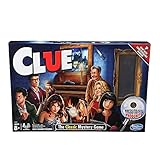
- Features a card-revealing mirror
- Who committed the murder in the mansion.
- Eliminate the suspects and discover whodunit, with what and where
- The mirror reveals the 3 answer cards
- Includes gameboard, card-revealing mirror, 6 character tokens, 6 miniature weapons, 30 cards (6 character cards, 6 weapon cards, 9 room cards, and 9 clue cards), pad of detective notebook sheets, 2 dice, and game rules. Ages 8 and up. For 2 to 6 players.
Why Barth Gimble and Fernwood 2 Night were pivotal
Fernwood 2 Night presented Barth as the host of a shabby local program, with Fred Willard as the clueless co-host Jerry Hubbard. The set, guests, production values, and interviews imitated the earnestness of real regional television while exposing the host’s vanity. Mull played every inflated claim with measured seriousness: the less he appeared to notice the absurdity, the more the satire landed.
The series continued under the title America 2-Night in 1978. Its format anticipated later mockumentary and fake-broadcast comedy by treating technical limitations and civic boosterism as part of the joke. Mull’s slow-burn timing became a reusable instrument: a pause, a sideways glance, or a misplaced certainty could reveal Barth’s self-importance without a conventional punch line.
Do these 3 things before closing this tab:
1Clear out junk files and repair common Windows errors2Fix the driver behind crashes, sound loss and screen glitches3Repair Windows errors before they cause bigger problemsWhen David Letterman praised the show years later, Mull answered, “It’s expired as well,” deadpanned Mr. Mull. “It’s been off for almost two years. But you’ll find out how that feels.” The line demonstrates the same ability to answer praise with a calm, slightly hostile literalism that defined Barth and many later performances.
Martin Mull’s best-known screen roles
The roles below show how Mull adapted his dry persona to broad studio comedy, family sitcoms, ensemble television, and political satire. “Best-known” is a matter of audience recognition, not an objective ranking.
| Role | Production and period | What Mull brought to it |
|---|---|---|
| Colonel Mustard | Clue (1985) | A polished, memorable member of the film’s deliberately exaggerated ensemble, adapted from the board game. |
| Leon Carp | Roseanne (1991–1997) | Roseanne’s business partner, part of a long-running sitcom storyline that included the show’s depiction of a gay couple’s wedding in 1995. |
| Principal Willard Kraft | Sabrina the Teenage Witch (1997–2000) | An overbearing school principal whose authority was a recurring source of comic friction. |
| Gene Parmesan | Arrested Development | A recurring private investigator whose elaborate disguises turned every appearance into a visual gag. |
| Bob Bradley | Veep | A political aide; Mull’s performance earned a 2016 Emmy nomination. |
| Various recurring and supporting roles | Mr. Mom, Mrs. Doubtfire, Two and a Half Men, and The Cool Kids (2018–2019) | Different versions of the same controlled comic intelligence, adjusted to film, multi-camera sitcom, and ensemble comedy. |
Colonel Mustard in Clue
In Jonathan Lynn’s 1985 film Clue, Mull played Colonel Mustard, one of the suspects gathered in a mansion for a fast-moving farce about murder, secrets, and competing identities. The movie was adapted from the board game, and Mull’s role is the clearest connection between his filmography and that physical game. Mustard is an ensemble part rather than a solo showcase, but Mull’s composed delivery helps anchor the movie’s escalating nonsense.
Leon Carp on Roseanne
Mull played Leon Carp, Roseanne’s business partner, from 1991 through 1997. The role gave him a sustained place in a major working-class family sitcom rather than a one-off guest appearance. Leon’s relationship with Scott, and the series’ 1995 depiction of their wedding, placed the character within one of the period’s more visible network-television portrayals of a gay couple. Mull’s understated reactions kept Leon grounded even when the surrounding situations became heightened.
Rank #3

- THE CLUE GAME, REIMAGINED: This Clue game combines classic Clue gameplay with richly reimagined takes on the original murder mystery storyline, intriguing cast of characters, and glamorous Tudor Mansion
- SOLVE THE MYSTERY: Who killed Boddy Black? Collect clues and race to be the first to figure out who committed the murder, where in the mansion they did it, and what weapon was used
- 6 SUSPECTS, 1 MURDER: Play as Miss Scarlett, Colonel Mustard, Mayor Green, Chef White, Solicitor Peacock, or Professor Plum. Discover their fascinating backstories – and try to uncover their secrets
- ELEVATED GAME COMPONENTS: Includes 6 textured, gold-plated zinc tokens representing the weapons; sculpted character movers; and a beautifully detailed illustrated gameboard and Clue cards
- UNLOCK SECRETS WITH CLUE CARDS: In a game where every character has something to hide, Clue cards help uncover clues faster to speed up the sleuthing! What card will an opponent be forced to reveal?
Principal Willard Kraft on Sabrina the Teenage Witch
From 1997 to 2000, Mull played Principal Willard Kraft, an authoritarian school administrator on Sabrina the Teenage Witch. The part translated his talent for self-important officialdom into a younger-skewing fantasy sitcom. Kraft’s rules and reprimands supplied a recognizable adult obstacle while Mull’s timing prevented the character from becoming a flat villain.
Gene Parmesan on Arrested Development
Gene Parmesan was a recurring private investigator famous for disguises. The comedy depended on the same reveal repeating in new forms: a character would fail to recognize Gene, then his disguise would collapse and the scene would erupt. Mull committed to each transformation with professional seriousness, making the investigator’s absurd theatricality funnier.
Bob Bradley on Veep
On Veep, Mull played Bob Bradley, a political aide in the show’s fast, hostile world of Washington maneuvering. The role earned him a 2016 Emmy nomination. Compared with Barth Gimble’s leisurely pauses, Veep demanded speed and verbal density; Mull’s contribution was the same underlying sense of status anxiety expressed through clipped political calculation.
Film and later television work
Mull’s film appearances included Mr. Mom (1983) and Mrs. Doubtfire (1993). He also returned to television in recurring work on Two and a Half Men and appeared in The Cool Kids from 2018 to 2019. These projects matter because they show continuity rather than a single nostalgic peak: he kept moving between guest parts, recurring characters, and ensemble casts across several generations of television comedy.
The Tool Desk
Outbyte PC Repair FREEClear out junk files and repair common Windows errorsFree Scan →Outbyte Driver Updater FREEScan for outdated or missing drivers - takes under a minuteDriver Scan →His music and comedy records
Music was not merely the route that led Mull to acting. He continued to perform songs as part of his comedy sets and released albums built largely around humorous material. ABC News reported that he released eleven albums, with all but one issued during the 1970s. That figure is the outlet’s reported count rather than a verified exhaustive discography, so it should be read as an approximate account of his recorded output.
His songwriting used the same tension that shaped his acting: a familiar musical form paired with an unexpected premise, delivered with enough control that the joke could sit inside the song rather than interrupt it. The 1970 chart appearance for “A Girl Named Johnny Cash” illustrates how his writing could circulate beyond his own stage act.
Rank #4

- SOLVE THE MYSTERY — Experience classic 1949 Clue gameplay reimagined. Designed for 3 to 6 players ages 8 and up, this edition brings family and friends together for hours of interactive fun, featuring clear instructions so both new players and seasoned sleuths can jump right in.
- PREMIUM VINTAGE COMPONENTS — Crafted with heirloom-quality materials, including wood movers with die-cast bases, detailed die-cast weapons, and retro-graphic playing cards. Comes fully equipped with a pad of detective notes and 6 pencils to track your clues with ease.
- BEAUTIFUL ON DISPLAY, FUN TO COLLECT — Designed to resemble an elegant hardcover volume, this game doubles as sophisticated decor for your bookshelf, mantel, or coffee table. It's part of an expansive collection of over 20 unique Vintage Bookshelf Edition game titles—allowing you to collect your favorite classic games and line them up together to create a cohesive, custom library aesthetic.
- THE PERFECT GIFT — Solves the challenge of finding a memorable present for friends and family. Gifting one or a few titles starts an elegant personal game library and offers them meaningful, screen-free experiences. Future occasions like birthdays and holidays become effortless as you add new titles to their collection with each passing milestone.
- COMPACT, SPACE-SAVING & TRAVEL-FRIENDLY DESIGN — The fabric book case measures 10.6 x 8.4 x 2.6 inches for convenient, upright shelf display. Inside, the foldable game board opens to a generous 18.5 x 18.25 inches, offering a spacious gameplay setup that packs away compactly, making it as easy to take on trips and coffee shop visits as it is to store at home.
Opening for Newman, Springsteen, and Zappa also explains why Mull’s performance style did not fit neatly into a single category. He could function as a club singer, a comic monologist, or a character actor, and the boundaries between those modes were deliberately porous.
Independent reader supportYour contribution helps us test, update, and keep practical guides available for everyone.Painting as a central career, not a footnote
Mull continued painting throughout his public performance career and showed work in galleries. His paintings included collage-based pieces that drew on old magazines and family photographs. The process connected found images, cultural memory, and personal history in a way that paralleled his screen comedy’s interest in constructed identities.
The Washington Post recalled one of his most theatrical art events: in 1971, Mull and other artists staged a guerrilla exhibition in a men’s room at Boston’s Museum of Fine Arts. They titled it “Flush With the Walls (Or, I’ll Be Art in a Minute).” The stunt was humorous, but it also demonstrates that Mull’s visual-art practice was willing to challenge the expected setting and status of an exhibition.
His own description of painting as the work closest to his heart, with acting paying for art supplies, should not be reduced to a clever line. It clarifies why a biography focused only on television misses the structure of his career. He was moving between media, allowing the observational habits of one form to sharpen the others.
Books and collaborations
Mull and Allen Rucker co-wrote A Paler Shade of White in 1985 and a second volume in 1986. The books grew out of the satirical world of The History of White People in America, extending the joke into written form. The collaboration adds another dimension to Mull’s work: he was not only performing characters created for him, but also helping construct the fictional histories and cultural assumptions those characters mocked.
How his different media informed one another
Mull’s career is easiest to understand as a feedback loop rather than a ladder from music to acting. His music gave him a stage persona and a way to test language in front of an audience. Painting trained him to notice composition, gesture, surface, and the cultural meaning of objects. Acting let him turn those observations into people whose confidence exceeded their competence. Writing provided a place to elaborate the invented worlds behind the jokes.
Quick wins for a faster PC:
Repair Windows errors before they cause bigger problemsFix Now →Scan for outdated or missing drivers - takes under a minuteDriver Scan →Clear out junk files and repair common Windows errorsFree Scan →Best Value

- YOU'RE THE DETECTIVE: Everyone knows the great game of Clue. This wonderful edition combines the best elements from 1949 and beyond including the ORIGINAL suspects, ORIGINAL weapons, and ORIGINAL rooms!
- SOLVE THE MYSTERY: Who killed Mr. Boddy? Collect clues and race to be the first to figure out who committed the murder, where in the mansion, and with what weapon!
- I'VE GOT A SECRET!: Every character has something to hide. What card will you force your opponent to reveal?
- FUN FAMILY GAME: One of the great things about Clue is that it's never the same game twice!
- GAME NIGHT AND MORE: Since up to 6 players can play, Clue is awesome for a murder party game night - but you already knew that!
That combination explains the consistency of his work without suggesting that every character was identical. Barth Gimble’s mock sincerity, Colonel Mustard’s theatrical composure, Leon Carp’s practical steadiness, Gene Parmesan’s disguise machinery, and Bob Bradley’s political calculation occupy different genres. What links them is Mull’s control: he rarely signaled the punch line before the audience had time to see the character’s logic.
How long was Martin Mull’s career?
Mull worked across six decades, beginning with music and comedy performances in the 1960s and continuing through television appearances in the late 2010s. ABC News characterized the body of work as nearly 40 films and more than 50 television series. Because those totals are approximate and outlet-reported, they are best used to convey scale rather than as a definitive count of every credit.
His career also crossed major changes in American entertainment: album-oriented club comedy, 1970s television satire, 1980s studio films, 1990s network sitcoms, and 2000s–2010s ensemble and prestige comedies. Remaining visible through those shifts required more than a signature catchphrase; it required the ability to change a performance’s speed, audience, and level of realism.
When and how did Martin Mull die?
Martin Mull died on June 27, 2024, at his home in Los Angeles. He was 80. His daughter Maggie announced the death. The Washington Post reported that she did not provide a cause of death, so a cause should not be inferred.
He left behind a body of work that cannot be summarized by one sitcom or one film. Viewers may first encounter him as Barth Gimble, Colonel Mustard, Leon Carp, Principal Kraft, Gene Parmesan, or Bob Bradley, but those parts belong to a larger practice that included records, songs, paintings, books, and decades of live performance.
Martin Mull’s enduring legacy
Mull’s importance lies in the way he made multidisciplinary work look coherent. He could satirize television from inside television, write a comic song that worked as a song, and treat painting as a serious studio discipline while using humor to question the art world’s rituals. His deadpan style was not emotional absence; it was a precise method for exposing vanity, bureaucracy, and the stories people tell about themselves.
That is why his best-known roles remain distinctive even when they are brief or recurring. They are built from attention to status, setting, and language, then delivered with enough restraint for the audience to discover the absurdity. Mull’s career offers a rare example of an artist whose acting, comedy, music, writing, and painting continually informed one another without collapsing into a single brand.
Quick Recap
Product prices and availability are accurate as of the date/time indicated and are subject to change. Any price and availability information displayed on Amazon at the time of purchase will apply.





Say something about this film