Recommended Free Tools
Andrew Lloyd Webber is the strongest candidate for the richest composer associated with Broadway, but no current, audited, like-for-like ranking of Broadway composers’ net worth is publicly established. The figures that circulate come from different years, different sources, and different kinds of measurement, so they cannot be placed side by side as if they answer the same question. This guide explains what each number actually measures, when it was reported, and how much weight it can bear.
Why there is no reliable ranking
A net worth ranking needs three things: a total figure for each person, measured the same way, on a recent date. Public information about Broadway composers meets none of these reliably. Most personal wealth numbers come from magazine profiles or celebrity-finance websites that do not publish their methods, and the composers themselves rarely disclose private balance sheets. A figure reported in 1996 and a figure estimated in 2026 may both be labelled “net worth,” but they are not comparable.
Three further distinctions matter before any number is read:
- Personal wealth versus show income. A production’s gross box office, or even a composer’s royalty statement for one show, is not the same as the composer’s total assets.
- Royalties versus net worth. Royalties and profit participation are income streams. They say nothing about debts, taxes, other investments, or property.
- Estimate versus disclosure. A figure described as an estimate by a website or magazine is not an audited estate value or a filed financial statement.
The figures that appear in public coverage
The table below lists every figure supported by the available sources. Each row states who reported it, when, what it measures, and how much confidence it deserves. None of these should be read as a current personal net worth unless the table says so.
#1 Best Overall

- P/V/G
- Pages: 416
- Instrumentation: Piano/Vocal/Guitar
| Composer | Figure | Source and date | What it measures | Confidence for current use |
|---|---|---|---|---|
| Andrew Lloyd Webber | £400 million | Billboard, profile dated October 19, 1996 | Estimated personal fortune as described in 1996 | Low. Historical reporting, not a current estimate. |
| Lin-Manuel Miranda | $12.7 million | Broadway Journal, 2018 report on a Hamilton Broadway production financial statement filed with the New York Attorney General | Author royalties and profit participation for the twelve months ending July 2017, from one production | Documented, but narrow. It is one show’s income for one year, not total income or net worth. |
| Lin-Manuel Miranda | $80 million to $100 million | Tatler Asia, 2026 | Estimated total wealth, described by the article as estimates | Low. Secondary estimate, not a primary financial disclosure. |
| Stephen Sondheim | $20 million | Celebrity Net Worth, estimate of net worth at death (page accessed 2026) | Unofficial estimate of net worth at death | Low. Unverified and not an audited estate value. |
Andrew Lloyd Webber: the 1996 figure
Billboard’s October 19, 1996 profile described Lloyd Webber’s personal fortune as an estimated £400 million. That is the only specific total in the sources, and it is nearly three decades old. It shows that he was widely regarded as very wealthy in the mid-1990s; it does not establish what he is worth today. His rank among Broadway composers rests mainly on that historical report and on the scale of his business interests, not on a current audited figure.
Lin-Manuel Miranda: a show’s royalties, and a later estimate
The $12.7 million figure is the most specific financial document cited for any living Broadway composer. Broadway Journal reported that a Hamilton Broadway production financial statement, filed with the New York Attorney General, showed $12.7 million in author royalties and profit participation for the twelve months ending July 2017. It covers one production over one year. It does not show Miranda’s income from other shows, film and television work, recordings, or publishing, and it says nothing about his assets or liabilities.
Rank #2

A 2026 Tatler Asia article gives a range of $80 million to $100 million. The article presents this as an estimate, not a disclosure. Treat it as a secondary figure of unknown method, and do not combine it with the production statement to produce a total.
Stephen Sondheim: a figure at death
Celebrity Net Worth estimates Sondheim’s net worth at death at $20 million. This is an unofficial website estimate. It is not drawn from an audited estate accounting, and the site’s method is not documented in the source. The figure is widely repeated, but repetition does not make it verified.
Rank #3

- Easy Piano
- Pages: 194
- Instrumentation: Piano/Keyboard
Why artistic standing is not a proxy for wealth
Readers often assume that the most successful composers must be the wealthiest. The official biographies and catalogue descriptions establish career facts, not financial ones. Andrew Lloyd Webber’s official biography identifies him as composer of The Phantom of the Opera, Cats, Jesus Christ Superstar, Evita, and other musicals, and says he owns six London theatres. Those are business facts, but the biography does not disclose his personal net worth. Lin-Manuel Miranda’s official biography names him as creator and original star of Hamilton and In the Heights, and as a songwriter, actor, producer, and director. The Stephen Sondheim Society and PBS describe the scale and influence of Sondheim’s catalogue. None of these sources converts that work into a dollar total.
How to read a composer wealth claim
- Check the date first. A 1996 fortune and a 2026 estimate answer different questions.
- Identify the measure. Is it total net worth, a production’s royalties, or an estimate at death? Each is a different number.
- Identify the source type. A filed financial statement, a business-press profile, and a celebrity-finance website carry very different weight.
- Look for a stated method. If the source does not say how the total was reached, treat it as an impression rather than a measurement.
- Do not add figures together. A production’s royalties cannot be combined with a separate wealth estimate to create a total.
Further reading and listening
For readers who want to study the work behind these names, the most direct starting points are the scores and recordings themselves. Miranda’s official bibliography lists Hamilton: The Revolution (2016) and The Lin-Manuel Miranda Collection: Piano/Vocal/Guitar Songbook (2022). Sondheim’s scores and librettos and original cast recordings of the composers’ shows are also widely available. Current availability, edition details, and prices were not verified for this article, so check the publisher or a retailer before buying.
Rank #4

- Super Easy Piano
- Pages: 120
- Instrumentation: Piano
- Instrumentation: Piano/Keyboard
The strongest verdict the evidence supports is modest. Lloyd Webber is the most likely leader on the strength of a historical report and a large business footprint. Anything more precise would require dated, documented figures measured the same way for each composer, and no such set is currently public.
Quick Recap
Best Value
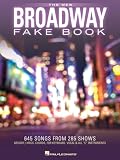
- C Instruments
- Pages: 696
- Instrumentation: C Instruments
- Instrumentation: Voice
Product prices and availability are accurate as of the date/time indicated and are subject to change. Any price and availability information displayed on Amazon at the time of purchase will apply.
The Tool Desk
Outbyte Driver Updater FREEScan for outdated or missing drivers - takes under a minuteDriver Scan →Outbyte PC Repair FREERepair Windows errors before they cause bigger problemsFix Now →



