Recommended Free Tools
Chaotic Neutral in Dungeons & Dragons means resisting imposed order and putting personal freedom first—not acting randomly or sabotaging the party. It is a broad alignment lens, not a fixed personality or a rule that dictates every choice. A character’s ideals, bonds, flaws, and habits give that outlook its shape.
What does Chaotic Neutral mean?
D&D alignment combines two broad questions: how a creature relates to social order, and where its outlook falls on the good-to-evil axis. The 2014 Basic Rules use three positions on each axis—lawful, neutral, and chaotic; good, neutral, and evil—to form nine alignments. The rules describe Chaotic Neutral (CN) this way: “Chaotic Neutral (CN) creatures follow their whims, holding their personal freedom above all else.” D&D Basic Rules (2014), Personality and Background.
In plain language, “chaotic” points to a preference for independence over laws, traditions, or other outside constraints. “Neutral” on the moral axis means the label does not, by itself, commit the character to either compassion or cruelty. It does not mean the character has no values. A CN adventurer can care deeply about friends, keep promises they chose to make, or refuse to harm the helpless without those commitments automatically changing the alignment.
Does Chaotic Neutral mean random?
No. The 2014 rules explicitly caution that their alignment summaries describe typical behavior: “These brief summaries of the nine alignments describe the typical behavior of a creature with that alignment.” They add that people vary and few follow an alignment perfectly and consistently. Alignment is therefore a guide to broad tendencies, not an action table that requires a character to break rules or surprise everyone in every scene. D&D Basic Rules (2014).
Do these 3 things before closing this tab:
1Fix the driver behind crashes, sound loss and screen glitches2Repair Windows errors before they cause bigger problems3Scan for outdated or missing drivers - takes under a minute#1 Best Overall

- UNLEASH NEW POSSIBILITIES—Introducing the 2024 Player’s Handbook, the new and improved guide for fifth edition Dungeons and Dragons. Redesigned with 10 years of feedback from the D and D community, the essential Dungeons and Dragons rulebook is bigger and better than ever before
- NEW CHARACTER OPTIONS YOU’LL LOVE—Create unforgettable characters with 12 core classes, 48 intriguing subclasses, and 10 distinctive species. Buff up your character’s backstory with 16 compelling backgrounds and 75 fantastic feats.
- STUNNING ARTWORK—With vibrant new illustrations of every single character class, subclass, background, species, weapon, and armor, our thrilling artwork also features new and familiar spells, brought to life for the first time ever.
- FRESH and ENGAGING GAMEPLAY—Change up your combat style with fascinating new Weapon Masteries for your character class. Our new Tools and Crafting system lets you use your tools to craft items and impact travel and exploration.
- DESIGNED JUST FOR YOU—We’ve thoughtfully redesigned this book with an improved layout, better organization, and an alphabetized Rules Glossary. Find whatever you’re looking for with ease
There is a useful difference between a motive and a performance. “I reject being controlled” can explain a character’s choices consistently. “I do whatever will surprise everyone” is a habit of performance, and it can make cooperative play harder if it repeatedly derails the group. Chaotic Neutral permits impulsiveness; it does not require disruptive behavior. The publisher’s alignment explainer likewise treats freedom as central while presenting examples as characterization, not mandatory rules. D&D Beyond, “Breaking Down Alignment in D&D”.
How is Chaotic Neutral different from nearby alignments?
Compare the two axes separately instead of treating each alignment as a complete character archetype. Chaotic Good and Chaotic Evil share the same broad resistance to imposed order as Chaotic Neutral; their moral orientation differs. Good leans toward helping others, while evil leans toward causing harm without compassion. Neutral on that axis does not settle the question either way. These are broad tendencies, not limits on what an individual can do.
Rank #2

- COMPLETE YOUR COLLECTION—Get all three 2024 Core Rulebooks and discover new character options you’ll love, creative world-building inspiration, stunning artwork, and monsters galore
- STUNNING ARTWORK—Delight in spectacular new artwork for character classes, subclasses, weapons, armor, legendary D&D figures, almost every monster, and so much more
- FRESH & ENGAGING GAMEPLAY—Change up your combat style with fascinating new Weapon Masteries for your character class. Our new Tools and Crafting system lets you use your tools to craft items and impact travel and exploration
- NEW CHARACTER OPTIONS YOU’LL LOVE—Create unforgettable characters with 12 core classes, 48 intriguing subclasses, and 10 distinctive species. Buff up your character’s backstory with 16 compelling backgrounds and 75 fantastic feats
| Alignment | Relationship to order | Moral orientation |
|---|---|---|
| Chaotic Good | Resists external constraints | Generally inclined to help others |
| Chaotic Neutral | Resists external constraints | Not defined by a strong commitment to good or evil |
| Chaotic Evil | Resists external constraints | Generally inclined toward harm without compassion |
These descriptions summarize the contrast, not a guarantee of behavior in every situation. A character’s actual choices depend on the person you build, the circumstances, and the campaign.
How to build a playable Chaotic Neutral character
Start with the alignment as a prompt, then add the specific details that make this person more than a label. The 2014 Basic Rules ask players to choose personality traits, an ideal, a bond, and a flaw. Together, they help turn a general preference for freedom into motives and behavior a group can recognize. D&D Basic Rules (2014), Personality and Background.
Free tools Windows power users keep installed
One-click scans. No signup required.
Rank #3

- NIFTY RESOURCES FOR DUNGEON MASTERS—We've packed this book with incredibly useful tools and advice for Dungeon Masters of all levels. Make your game sessions special with over 400 total and 18 new magic items, practical solutions for common Dungeon Master pitfalls, and Greyhawk, a customizable premade campaign setting.
- WONDERFUL WORLDBUILDING INSPIRATION—Introduce inspiring new mechanics into your game! Tinker away with revised rules for crafting magic items, creating NPCs, and more. Excite your party and keep them engaged between sessions with the new system for bastions, which are strongholds built and controlled by players.
- STUNNING ARTWORK—Delight in spectacular artwork featuring new magic items, legendary D&D figures, cinematic fantasy landscapes, a double-sided poster map of the Greyhawk setting, and more!
- LEVEL UP YOUR DUNGEON MASTER EXPERIENCE—We’ve built useful handouts and resources to help you keep track of your campaigns and added a Lore Glossary that helps you easily find information about key D&D characters and locations.
- PART OF THE 2024 CORE COLLECTION—1 of 3 revised Dungeons & Dragons core rulebooks, the 2024 Dungeon Master’s Guide is designed for use with the fifth edition 2024 Player’s Handbook and 2024 Monster Manual
- Ideal: Choose a principle connected to autonomy, choice, or resistance to unjust control. Decide what the character considers worth defending.
- Bond: Name a person, place, cause, or community the character has freely chosen. Loyalty chosen freely can make a freedom-loving character dependable without making them obedient to everyone.
- Flaw: Pick an impulse, fear, or weakness that can undermine the character’s own goals—for example, refusing help because accepting it feels like surrender.
- Personality traits: Give the character observable habits and reactions that distinguish them from other people who value freedom. They might negotiate before accepting an order, or become unusually quiet when someone threatens a friend.
To connect those details, ask yourself: Whose freedom matters to this character? What obligations do they accept voluntarily? When do they cooperate? What could make them compromise their independence, and what personal line will they not cross?
For example, a character might think: “I will not let anyone decide my future for me, but I chose this crew and will come back for them.” That is an illustration, not an official rule or quotation: it gives independence and loyalty room to coexist.
Rank #4
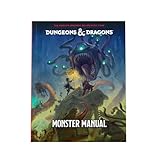
- MONSTERS GALORE—Venture into the mightiest Monster Manual yet! In addition to iconic D&D favorites like dragons and mind flayers, this monstrous menagerie introduces over 75 brand-new monsters and contains over 500 unique creatures in total.
- INTRIGUING NEW ENCOUNTERS—Inject more variety into your games with unique encounters! Raise the stakes with terrifying new monsters for higher level play, such as the arch-hag and blob of annihilation. Craft unusual and memorable NPC encounters by using over 40 humanoid stat blocks as inspiration.
- STUNNING ARTWORK—Gaze upon the legendary D&D dragons in all their splendor. In this book of majestic beasts, we’ve created stunning redesigns of the chromatic and metallic dragons, and over 300 pieces of breathtaking new artwork for almost every monster.
- DESIGNED JUST FOR YOU—Easily locate whatever monster you’re looking for and save prep time with revised, easy-to-use stat blocks. We’ve categorized all monsters by creature type and have redesigned their stat blocks to be easier to use and understand. Running encounters has never been easier!
- PART OF THE 2024 CORE COLLECTION—1 of 3 revised Dungeons & Dragons core rulebooks, the 2024 Monster Manual is designed for use with the fifth edition 2024 Player’s Handbook and 2024 Dungeon Master’s Guide
What changes between the 2014 and 2024 Basic Rules?
Both rulesets use alignment, but their surrounding character-creation guidance is not identical. Keep their wording and assumptions attached to the edition they come from.
| Rules | How alignment is presented | Relevant qualification |
|---|---|---|
| 2014 Basic Rules | Alignment combines moral outlook with attitudes toward society and order; its Chaotic Neutral summary emphasizes following whims and personal freedom. | The rules say the summaries describe typical behavior and that individuals vary. |
| 2024 Basic Rules | Alignment remains a combination of moral outlook and attitudes toward order, and is also used to suggest personality details. Its example says, “A scoundrel who wanders the land living by their wits is probably Chaotic Neutral.” | The 2024 character-creation page says D&D assumes player characters are not evil. Its traits associated with “Chaotic,” including “impulsive” and “rebellious,” are prompts, not compulsory behavior. |
The 2024 framing is specific to those Basic Rules; it is not a universal claim about every D&D table or edition. Tables can use different character options, interpretations, or house rules. D&D Beyond Basic Rules (2024), Creating a Character.
Outdated Drivers Are Slowing You Down
One free scan finds every outdated or missing driver and matches the right update for your exact hardware.Free scan · exact hardware matchPC Slower Than It Used to Be?
A free scan shows the junk files, broken settings and background clutter dragging Windows down - then fixes them in one click.Free scan · Windows 10 & 11Best Value

- ALL THE TOOLS: The Dungeons & Dragons Core Rules Gift Set includes a copy of all three core rulebooks (Player's Handbook, Dungeon Master's Guide, Monster Manual) plus a Dungeon Master's Screen, all collected in a stylish slipcase. It's the perfect gift for any D&D fan.
- PLAYER'S HANDBOOK: The essential reference for every D&D player, the Player's Handbook contains rules for character creation and advancement, backgrounds and skills, exploration and combat, equipment, spells, and much more.
- DUNGEON MASTER'S GUIDE: Teaches how to run D&D adventures for other players and how to give them monsters to fight, mysteries to solve, and fantasy worlds to explore.
- MONSTER MANUAL: Helps the Dungeon Master (the game's narrator) fill games with iconic fantasy creatures. Includes details and rules for over 400 monsters from goblins to dragons, with over 150 illustrations.
- DUNGEON MASTER'S SCREEN: Helps the Dungeon Master keep die rolls and notes hidden from players. Plus, the inside is filled with quick references for the most commonly used in-game information to help keep things running smoothly..UNLEASH YOUR IMAGINATION: Dungeons & Dragons is a cooperative storytelling game that harnesses your imagination and invites you to explore a fantastic world of adventure, where heroes battle monsters, find treasures, and overcome quests.
How monster alignment works
A monster’s alignment entry is a default, not an unchangeable fact about every version of that creature. The 2014 rules let the Dungeon Master change it to fit the campaign. They also describe creatures that lack the capacity to reason about moral or ethical choices as unaligned. This stat-block shorthand is a separate use of alignment from a player developing a character’s outlook. D&D Basic Rules (2014), Monsters.
Quick Recap
Product prices and availability are accurate as of the date/time indicated and are subject to change. Any price and availability information displayed on Amazon at the time of purchase will apply.




