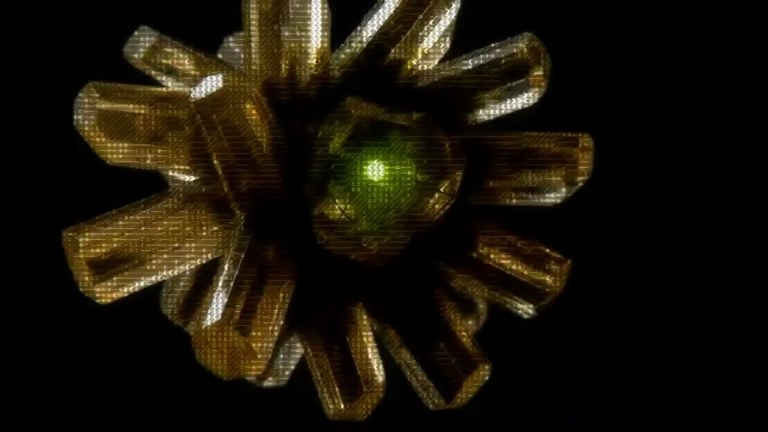
Wētā Workshop’s collaboration with Neal Stephenson’s Lamina1 was real, and it grew beyond an announcement: the project, called Artefact, opened as a Lamina1 storyworld in October 2025 and was followed by a free digital-asset mint. It was presented as participatory worldbuilding—a Web3 experiment in letting an audience explore and contribute to an expanding fictional universe—not as a conventional film production or a clearly defined standalone game. The launch is documented; the available evidence does not establish Artefact’s current availability, audience size or long-term success.
What did Wētā Workshop and Lamina1 announce?
On August 22, 2024, Lamina1 announced a collaboration with New Zealand creative company Wētā Workshop on Artefact. Neal Stephenson, Lamina1’s co-founder, was also part of the project. The stated idea was to develop intellectual property through participation: rather than treating fans only as an audience, the project invited them to help expand a storyworld through activity and input. Cointelegraph’s announcement report and GeekWire’s coverage describe that ambition.


That description matters because the announcement was not the same thing as a finished game, a film adaptation, or simply an NFT collection. It described a creative collaboration and a platform-based experience whose digital objects and blockchain features were meant to support participation. The reporting confirms the collaboration, but does not specify Wētā Workshop’s individual production deliverables, staffing, budget or continuing operational role.
Why Wētā Workshop and Neal Stephenson drew attention
Wētā Workshop’s creative background
Wētā Workshop is a New Zealand design and effects company whose work spans physical props, costumes, armor, creatures, sets and visual development, as well as games, collectibles and experiences. Its credits include The Lord of the Rings, The Hobbit and Avatar; its work is broader than being a “Lord of the Rings studio.” The company’s official site describes its work across film, television, design and games, and its Tales of the Shire project page offers one example of its game-related work.
The Tool Desk
Outbyte PC Repair FREEClear out junk files and repair common Windows errorsFree Scan →Outbyte Driver Updater FREEFix the driver behind crashes, sound loss and screen glitchesFind Drivers →#1 Best Overall
That background helps explain why its name carried weight in a project about building a fictional world. It does not, on its own, establish exactly what Wētā made for Artefact or how much of the experience it produced.
Stephenson’s connection to Lamina1
Stephenson is a Lamina1 co-founder and a novelist whose 1992 book Snow Crash is closely associated with popular discussion of the “metaverse” concept. That literary connection gives Lamina1 a recognizable conceptual identity, but it does not mean Artefact adapts Snow Crash or another named Stephenson novel. Project descriptions present Artefact as a new storyworld drawing on themes and lore associated with his work, not as a licensed adaptation.
What Lamina1, Spaces and Artefact each mean
These names refer to different layers of the project:
- Lamina1 is the broader blockchain-based content and creator platform. It was founded by Stephenson, entertainment executive Rebecca Barkin and others, and is associated with the L1 digital currency and its own network infrastructure. Lamina1 describes its aims and tools on its official overview.
- Spaces is the environment Lamina1 used for creator-led experiences and storyworlds.
- Artefact is the particular storyworld developed with Stephenson and Wētā Workshop.
Lamina1’s platform pitch includes digital experiences, assets, identity and communities. In practice, describing an experience as blockchain-based does not mean every part of it is decentralized: a token record may be on a blockchain while the interface, game logic, metadata or servers depend on services run by the platform or its partners.
Free tools Windows power users keep installed
One-click scans. No signup required.
What Artefact was designed to be
Lamina1’s October 2025 preview framed Artefact as a future damaged by AI, where a community reconstructs fragments of data, memory and identity. Its intended form was a living, participatory storyworld: people would encounter lore and digital objects, take part in activities, and help the fictional setting grow. Lamina1 laid out the premise and planned debut in its October 2025 preview.
The November launch description made the proposed activity more concrete. The loop involved decrypting an Artefact, exploring a wasteland, gathering resources, and maintaining a mobile base called a “Rig.” Players would manage power, provisions and stability, with the possibility of choosing or aligning with a “Phyle.” These are descriptions from Lamina1’s launch material, not independent evidence of how extensive or polished the live experience was.
How participation and the Thumb Drive were meant to work
The announced participation model connected story discovery to digital objects. A participant would enter the Space, find Artefacts or data fragments, and use them to unlock narrative or interactive material. Community activity was meant to feed into the expanding world. This offered a more substantial concept than a collectible without an experience, but it did not establish that each participant had a formal right to alter the underlying intellectual property.
Lamina1 described the Artefact Thumb Drive as both a digital collectible and a key to the in-world experience. Its November 2025 mint announcement said the mint was free, limited to one per wallet, and had gas and transaction fees covered by Lamina1. “Free” applied to that announced mint; it does not mean all participation, wallet use or later secondary-market activity was without cost or risk.
Outdated Drivers Are Slowing You Down
One free scan finds every outdated or missing driver and matches the right update for your exact hardware.Free scan · exact hardware matchPC Slower Than It Used to Be?
A free scan shows the junk files, broken settings and background clutter dragging Windows down - then fixes them in one click.Free scan · Windows 10 & 11Rank #3
A collectible should not be confused with ownership of the story. Holding a token does not automatically grant copyright, commercial licensing rights, revenue share, governance authority or ownership of the fictional universe. Those rights depend on specific legal terms, which the launch details cited here do not establish.
Was Artefact a game, metaverse or NFT project?
It was best understood as a Web3 storyworld experiment with game-like activities and a collectible access object. Lamina1 called its broader approach a metaverse, but the 2024 reporting said the experience did not require a VR headset. The materials describe quests, exploration, lore and evolving systems; they do not establish Artefact as a conventional PC or console game with the usual retail release and support model.
- More than an NFT collection in concept: the Thumb Drive was positioned as an entry point into an interactive narrative experience.
- Not simply a finished game announcement: the project was framed around participation and worldbuilding, and the cited material does not supply independent measures of scope, quality or ongoing play.
- A Web3/IP experiment: digital assets, wallet-based participation and blockchain infrastructure were part of the model.
The useful test is not whether a project uses the word “metaverse,” but what a participant can actually do, what the token changes about that experience, and what remains accessible if the platform’s interface or services change.
Artefact’s timeline: announcement, Space and mint
| Date | What happened |
|---|---|
| August 22, 2024 | Lamina1 announced the Artefact collaboration with Wētā Workshop and Neal Stephenson as a participatory worldbuilding project. |
| October 16, 2025 | Lamina1 previewed the story premise, early-access categories and a planned October 31 Space debut. |
| October 31, 2025 | Lamina1 later said the Artefact Space opened on Lamina1 and Linea. |
| November 11–13, 2025 | Lamina1 announced a staged Thumb Drive mint: November 11 for L1 holders, L1 Early Access Pass holders and AnotherWorld community members; November 12 for Linea holders; and November 13 for the public. The announcement stated one free item per wallet and that Lamina1 would cover gas and transaction fees. |
| November 17, 2025 | Lamina1 said the interactive experience launch had been delayed by 24 hours after bugs were found during internal testing. |
The October opening and November mint dates, sequence and delay come from Lamina1’s own launch and mint update. A launch, a mint and a playable experience are distinct milestones: the first two do not by themselves establish how many people played, how long they returned, or whether the project became a sustained service.
What Linea’s involvement does—and does not—show
By late 2025, Lamina1 described Artefact as running across Lamina1 and Linea, an Ethereum Layer 2 network. The cited material supports a cross-network rollout, not a conclusion that Lamina1 abandoned its own infrastructure. It does not independently document the full technical architecture, bridging mechanism, contract addresses or which assets were native to which network.
What creators could build with Lamina1
Lamina1’s 2025 developer documentation describes a Hub onboarding and wallet environment, L1 asset transfers, Solidity and Lamina1 EVM development, and work with assets, marketplaces, bridges and decentralized applications. It also documents Unity and Unreal Engine integrations through the Emergence toolkit. The documentation is a snapshot of the platform’s capabilities, not a definitive statement of its product state in October 2026.
The Betanet participation guide outlines the developer environment and notes features that were still developing. The asset integration guide describes reference NFT contracts and metadata structures, while stating that launching a Space was invitation-only at the time that guide was written. Anyone assessing the platform as a creator should verify current access, tooling and terms directly rather than treating those 2025 documents as current guarantees.
Independent reader supportYour contribution helps us test, update, and keep practical guides available for everyone.What is established—and what remains uncertain
The documented record supports a real collaboration, a named storyworld, a Space opening in October 2025 and a Thumb Drive mint in November. Lamina1 also reported a one-day delay to the interactive launch because of bugs found in internal testing. Those facts show the project progressed beyond a proposal, but they do not prove long-term engagement or commercial success.
Best Value
- The available evidence does not establish current Artefact availability, its audience size, continued activity or commercial performance as of October 2026.
- It does not provide a detailed breakdown of Wētā Workshop’s production responsibilities, ownership stake or ongoing role.
- It does not establish that participants received copyright, revenue rights or governance control over Artefact’s underlying IP.
- It does not demonstrate that assets can move into other experiences or remain useful if the Space, game servers or platform interface disappear.
For a creator considering Lamina1, the practical questions are whether the experience can be built and published with the access available, what parts depend on the company’s services, how assets can be exported or used elsewhere, and what rights the contract grants. Blockchain records can persist while a front end, metadata host, community or game server becomes unavailable; decentralization of one component is not a guarantee that the whole experience is permanent.
Why the project matters to Web3 entertainment
Artefact put a persistent question about blockchain and intellectual property into a specific form: can wallet-held objects and community participation make a fictional world more interactive or durable than a conventional platform experience? A token may provide a portable record of possession or act as an access key, but those functions do not automatically confer creative control or make the story portable. Lamina1’s model is meaningful only to the extent that the token changes what users can do and that access, rights and technical dependencies are clear.
The available record establishes that Artefact launched as an experiment, not that it solved the harder problems of distribution, sustainable participation or creator economics. Its significance therefore lies in the attempt to connect a professional worldbuilding collaboration to a participatory digital platform—not in proof that Web3 has already produced a durable alternative to conventional entertainment.
Quick Recap
Product prices and availability are accurate as of the date/time indicated and are subject to change. Any price and availability information displayed on Amazon at the time of purchase will apply.