Short answer: Luma’s Dream Machine did not prove that the world had technically outgrown Sora. It did something more practical and, at the time, more disruptive: on June 12, 2024, it gave the public an immediately accessible text-to-video and image-to-video generator while OpenAI’s Sora was still limited to a research preview. That accessibility gap made the launch feel like a direct challenge to Sora—and demand was high enough to produce queues, delays, and a rapid reported expansion of Luma’s computing capacity.
The headline is now historical rather than a current product announcement. Luma’s original Dream Machine launch model has evolved into a broader creative platform built around the Ray model family. As of the supplied August 12, 2026 research date, Luma identifies Ray3.2 as its current production video model, while OpenAI’s Sora product page says Sora is no longer available as of April 26, 2026.
What the June 2024 launch actually changed
Dream Machine mattered because ordinary users could try it immediately. Luma announced the service on June 12, 2024 as a publicly accessible AI video generator that could turn written prompts and still images into short moving clips. Contemporary reports described five-second generations arriving in roughly two minutes—fast enough, for that period, to make repeated experimentation feel realistic rather than theoretical.
OpenAI had previewed Sora in February 2024, and its demonstrations had attracted enormous attention. But Sora was still being offered through a limited research-preview process. The practical comparison was therefore not simply which model creates the best pixels? It was which model can a curious filmmaker, student, marketer, or researcher actually use today? Dream Machine had the clearer answer.
#1 Best Overall
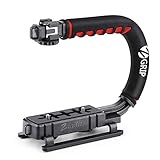
- Nice Gift -- Ideal filming accessory for birthday party, honeymoon, home, travel, banquet to record the happy and unforgettable moments. A nice gift for your friends and family.
- Moving Low Angle Filming -- Ideal for making moving low angle videos and images.
- Wide Compatibility -- Works with all Cameras and Camcorders with a national standard 1/4-20 thread interface.
- Stability -- Great for Skateboarding, Rollerblading, Motor Racing, Biking, Surfing, Hunting, Snowboarding, Skiing and any Extreme Sports Situation where stability is essential.
- Lightweight and Comfortable -- Cushioned NBR padded handle alleviated the stress of lengthy filming.
That is the defensible meaning behind the launch-era reaction that users no longer needed Sora. It was a statement about access and momentum, not a controlled technical verdict that Dream Machine surpassed Sora in every category.
Why Dream Machine was slammed with traffic
The traffic story was real, but it should not be turned into a more precise statistic than the evidence supports. Early users reported long queues and slow generations, and Luma’s own later troubleshooting documentation acknowledged that high traffic can create temporary delays or outages. Queue priority also varies by subscription plan.
A later infrastructure presentation, as reported in a third-party listing, described Luma scaling from an initial allocation of approximately 500 H100 GPUs to 5,000 H100 GPUs within six hours, followed by further capacity increases. Those figures are useful for illustrating the intensity of the launch, but they are reported presentation figures rather than independently audited company metrics. They should not be treated as a precise measurement of total traffic, total users, or successful generations.
In practical terms, the surge created a familiar generative-AI bottleneck: demand arrived faster than capacity could be provisioned. A public service that had looked almost frictionless during demonstrations suddenly had to manage a large number of people submitting multiple generations, retrying failed jobs, and comparing outputs in real time.
Do these 3 things before closing this tab:
1Clear out junk files and repair common Windows errors2Fix the driver behind crashes, sound loss and screen glitches3Repair Windows errors before they cause bigger problemsBy November 2024, Luma or a reporting partner cited more than 25 million registered users since the June launch. That number should be read as a stated registration count, not as an independently verified figure for active users or paying customers.
Rank #2

- Dual Cold Shoe Mounts: Attach microphones, lights, and accessories for enhanced photography or vlogging.
- Versatile Screw Design: 1/4" screw hole compatible with tripods, selfie sticks, cameras, and various accessories.
- 360° Rotation, 180° Tilt: Effortlessly switch between landscape and portrait mode with adjustable angle design for precise control.
- Universal Phone Compatibility: Fits smartphones from iPhone 14 to Galaxy S23 Ultra, accommodating devices within 2.16" to 3.7" width. For best results, avoid clamping directly on the side buttons. Adjust the position slightly higher or lower if your phone has thick cases or protruding buttons.
- Secure Grip: Thick non-slip silicone pad ensures stability even with a thick phone case.
What Dream Machine could do at launch
The launch version offered two central workflows:
- Text-to-video: a written description could specify a subject, setting, action, mood, and camera movement.
- Image-to-video: a still image could be animated into a short sequence, allowing the user to begin with a visual reference rather than a blank prompt.
Contemporary examples included prompts such as a corgi chasing a ball. The more important capability was not the particular subject but the combination of subject, movement, environment, and camera direction. Users could ask for objects and characters to move through a scene, describe an environment, and suggest cinematic behavior such as a tracking shot or changing perspective.
Observers considered the early output unusually realistic and fluid for a publicly available system. That impression helped distinguish Dream Machine from many earlier image-animation tools, which often produced obvious warping, frozen backgrounds, or movement that did not match the requested action. However, the launch evidence does not support saying that every Dream Machine result was superior to every Sora result. The systems were not tested here with matched prompts, identical settings, equivalent model versions, and the same evaluation criteria.
Dream Machine versus Sora: the fair comparison
| Question | Dream Machine at launch | Sora at the same historical point |
|---|---|---|
| Could the general public try it? | Yes. Luma made Dream Machine publicly accessible on June 12, 2024. | Not broadly. OpenAI described Sora as a limited research preview. |
| What inputs were emphasized? | Text prompts and still images. | OpenAI described text-to-video and published detailed demonstration scenes. |
| What clip length was associated with the launch? | Contemporary coverage described approximately five-second clips. | OpenAI’s research-preview description discussed clips of up to 60 seconds, but access was restricted. |
| What was the clearest advantage? | Immediate public access, short generation times for the period, and convincing motion in many examples. | Highly ambitious demonstrations and longer stated research-preview capabilities, but limited availability. |
The table shows why the headline resonated without proving a quality victory. A model that people can actually access may be more useful than a technically impressive model they cannot test. For creators, that difference affects learning, pitching, iteration, and production planning.
Free tools Windows power users keep installed
One-click scans. No signup required.
Sora later became available—but the story changed again
OpenAI eventually released Sora Turbo as a standalone product in December 2024 for ChatGPT Plus and Pro users. The later product supported text, image, and video inputs and offered generations up to 1080p and 20 seconds. That release removed the most obvious practical advantage Dream Machine had held in June 2024: public access before Sora.
The historical comparison should still be kept separate from the current product situation. As of the supplied research date, OpenAI’s authoritative Sora product page states that the Sora product is no longer available as of April 26, 2026. The June 2024 claim that Dream Machine was the accessible alternative therefore belongs to the history of consumer AI video, not to a claim that Sora is currently an active product competing head-to-head with Luma.
Rank #3

- 1.🎄Real Single l bracket camera design,No screws required for linking, simpler and more stable. ******Before you buy it you must know it is only can mount on Arca Swiss Quick Release Plate directly,if you want install to Manfrotto,Camvate base plate,please screw on the original quick Release Plate.******
- 2.🎄If you use this Camera L bracket on ronin S/SC or gimbal stabilizer, it can not replace stabilizer's quick release plate, but you can mount it to the quick release plate, please refer to our major picture (the Second one) for instructions.
- 3.🎄Innovative photographer partner : This L bracket is designed to shoot both vertically and horizontally ,especially it is a must for vertical shooting. You can switch freely between “landscape' and 'portrait' without a ball joint.
- 4.🎄Universal Application: This quick release L plate is fit for almost cameras, such as DSLR EOS 80D T6 5D mark i 6D D800 T6i 1300D D750 D850 D3400 D5600 D7200 ,micro-DSLR a7riii a7rii A7S a6000 a6300 . Also, it is a great help on gimbal stabilizer.
- 5.🎄Solid structure: It is made of aviation aluminum and processed with highly-precise CNC technique, which features light weight, high strength and good durability, so it is absolutely cost-effective.
What this meant for documentary creators
For documentary work, Dream Machine’s significance was less about replacing cameras than about making synthetic moving images easy to explore. A documentary team could use a generator for:
- Previsualization: testing the mood, framing, or rhythm of a proposed sequence before committing to a shoot.
- Pitch materials: creating clearly labeled concept visuals for a treatment or funding presentation.
- Illustrative inserts: representing an abstract idea, future scenario, dream, memory, or hypothetical event that cannot be filmed directly.
- Title and transition experiments: exploring visual language around maps, environments, archival themes, or reconstructed settings.
- Image animation: adding restrained motion to a properly licensed still photograph or illustration.
It should not be used to make an invented scene look like evidence of a real event. A generated image of a historical location, person, protest, crime, or scientific phenomenon is not archival footage, even when it looks plausible. In a documentary, the audience should be able to distinguish observed footage, licensed archive, reenactment, illustration, and generative imagery.
Recommended Free Tools
A responsible short-clip workflow
- Define the editorial status first. Decide whether the clip is an illustration, a speculative visualization, a reenactment, or a purely stylistic element. Do this before generating it.
- Clear the inputs. Use a still image only when the production has the necessary rights. Consider identifiable people, locations, trademarks, artwork, and private material separately.
- Describe action as well as appearance. A useful prompt specifies the subject, environment, movement, camera behavior, lighting, and duration. For example:
A five-second, restrained observational tracking shot of a paper map on a wooden table as a hand slowly traces one route, natural window light, shallow depth of field, no added text. - Review the entire clip. Do not judge only the first frame. Check hands, faces, object continuity, geography, reflections, text, physics, and whether the camera movement actually supports the narration.
- Log and label the result. Keep the prompt, source image, generation date, model or workflow used, selected version, and editorial purpose. Label synthetic footage in the edit and, where appropriate, on screen or in accompanying notes.
Short generated clips can be useful precisely because they are short. They can fill a conceptual gap without pretending to be a complete scene. But a documentary editor still needs to ask whether the image clarifies the argument or merely gives an unsupported claim a persuasive visual surface.
Dream Machine is no longer the whole Luma story
Luma has expanded beyond the original consumer-facing Dream Machine experience, adding web and iOS access, subscriptions, image generation, and additional video workflows. The company’s current product language now places the Ray family at the center of its video platform.
As of August 12, 2026, Luma identifies Ray3.2, released in June 2026, as its current video model. Luma describes it as supporting frame-level control, HDR generation, and EXR output, with workflows aimed at entertainment, advertising, and gaming production. Those are current Ray3.2 capabilities and should not be casually attributed to the original June 2024 Dream Machine model.
Rank #4
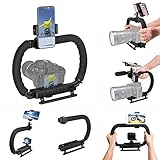
- 【High Quality Material】It is made of high quality ABS material. The weight is light but durable.
- 【Ergonomic Design】The detachable handle can be turned into a C-TYPE low-position-shooting stabilizer to reduce lumbar muscle strain, and the comfortable handle increases shooting when held with both hands Stability, easier shooting, suitable for long work.
- 【Mobile phone monitor stand】The top has a detachable ball head phone clip, which can be used to connect the camera to the camera instead of the monitor through the APP, which greatly improves the efficiency and convenience of video recording.
- 【3-shoe Extendtion Kit】The 3 shoes on the top of the stabilizer can be easily installed with external devices such as microphones and fill lights to improve the quality of video shooting.
- 【Wide compatibility】Good compatibility, compatible with GoPro Hero 11 all DSLR and mirrorless cameras and action cameras, universal camera rabbit cage for Nikon, Sony, Canon, Panasonic, Olympus, Hasselblad, Leica , Kodak, Fuji, Pentax and more SLR cameras and camcorders, perfect for photography enthusiasts, professional photographers and filmmakers.
Ray3.14, announced in January 2026, remains an important step in the product lineage. Luma described it as offering native 1080p output, four-times-faster 720p generation, three-times-lower 720p cost than Ray3, stronger prompt adherence, and improved consistency for Modify Video. These are Luma’s stated comparisons, not independent benchmark results.
For developers and production teams, the Luma API is a separate, developer-facing surface from the original public beta. The current API documentation describes Ray3.2 as the production video model and lists pricing by generation type and duration. Teams evaluating it should check the current documentation for model availability, limits, input requirements, output formats, and pricing rather than relying on launch-era reports about two-minute generations.
Commercial use and rights: the detail creators should not skip
A free test generation is not automatically cleared for a commercial documentary, broadcaster, client campaign, or sponsored film. Luma’s current terms say customers own output to the extent assigned by the agreement, while also warning that outputs can contain errors, may not be unique, and may implicate third-party rights.
Luma’s licensing guide states that commercial use is allowed on Plus, Unlimited, and Enterprise subscriptions. Free and Lite usage has more restrictive rights and may include watermarks. The guide also says that rights acquired for specific generations under an eligible paid plan remain vested in those assets even if the subscription later changes. Because plan terms and product policies can change, production teams should read the applicable agreement for the exact account, date, and generation involved.
Anyone evaluating present access should begin with the Luma paid plans and their current licensing language rather than assuming that the rules of the 2024 public beta still apply. A paid plan may address commercial-use eligibility, but it does not automatically solve clearance for a person’s likeness, a copyrighted reference image, a trademark, a location, or an output that resembles someone else’s work.
What the traffic surge tells us about AI video
The June 2024 event revealed three things at once:
- Access can be a product advantage. Dream Machine became culturally important because users could experiment with it while Sora remained restricted.
- Convincing demonstrations create operational pressure. A visually impressive launch can produce a queue problem as soon as users begin making multiple variations instead of watching a handful of curated examples.
- Launch identity can outlive launch technology. Dream Machine became the name many people associated with Luma’s breakthrough, even as the underlying product family, models, plans, and professional workflows changed.
That is why the original Sora headline should be preserved as a snapshot of the moment but corrected as a conclusion. Dream Machine did not make quality evaluation unnecessary, and it did not eliminate the need for OpenAI’s model. It made the competition tangible by letting the public participate.
Best Value

- 【Broad Compatibility】ULANZI UKA01 quick-release base works with F38 quick-release plates and has 1/4"+3/8" screw holes + Arri locating holes, fitting all cameras (Osmo Pocket 3, Sony, DSLRs), phone holders, tripod ball heads, and standard Arca devices. Its square quick-release system allows 4-way installation.( Note: UKA02 quick-release plate NOT PAIRS with F38 quick-release base)
- 【Effortless Installation】UKA01 quick release kit comes with optimal top-bottom quick release! Unlike traditional sliding types, it takes just 2 steps: 1. Tilt to insert; 2. Press down gently. Faster to mount/dismount—effortless and time-saving
- 【Solid Safety Assurance】The base features a full-enclosure design to lock firmly without slipping. Equipped with an anti-misoperation safety lock (slides to lock), it prevents accidental detachment and erroneous unlocking. Boasts dual anti-loosening design. UKA01’s pad upgrades from silicone to large-textured rubber—highly elastic for tighter grip, reducing looseness
- 【Lightweight with High Load Capacity】Base and plate are made of aviation-grade aluminum via CNC machining. All-metal yet only 52g (easy to carry; plate has a lanyard hole). Max load: 20KG, supporting flagship DSLRs (e.g., Canon 1D X), pro mirrorless (Sony A1), and large lenses
- 【All-Round Practicality】UKA01 quick release system combines solid safety, broad compatibility, and easy operation. Compact size (52g) with 20KG load—ideal for travel. 4-way installation and universal fit (Arca, cameras, tripods) make it a versatile choice for various shooting setups
What can—and cannot—be claimed
| Defensible claim | Claim to avoid |
|---|---|
| Dream Machine launched publicly on June 12, 2024 while Sora was still limited. | Dream Machine definitively beat Sora in overall video quality. |
| High demand caused queues and delays. | The exact launch traffic or GPU total has been independently audited. |
| A later reported presentation described rapid expansion from roughly 500 to 5,000 H100 GPUs in six hours. | Those reported figures prove a specific number of users or generations. |
| Luma’s platform later evolved toward Ray3.14 and Ray3.2. | The 2024 Dream Machine feature set describes Luma’s current technical endpoint. |
| Luma cited more than 25 million registered users by November 2024. | More than 25 million active or paying users were independently verified. |
Frequently Asked Questions
Did Luma Dream Machine actually replace Sora?
No. Dream Machine’s clearest advantage at launch was public accessibility while Sora remained a limited research preview. A fair quality comparison would require matched prompts, settings, model versions, and dates, and no such controlled test is established here.
Can filmmakers still use the original Dream Machine model?
The original June 2024 experience should not be treated as Luma’s current technical endpoint. As of August 12, 2026, Luma’s current product language centers on the Ray model family, including Ray3.2.
Can AI video from Luma be used commercially?
Commercial use depends on the applicable plan and agreement. Luma’s licensing guide identifies Plus, Unlimited, and Enterprise as allowing commercial use, while free and Lite usage has more restrictive rights and may include watermarks. Separate permissions may still be needed for source images, likenesses, trademarks, and other third-party material.
The Tool Desk
Outbyte PC Repair FREEClear out junk files and repair common Windows errorsFree Scan →Outbyte Driver Updater FREEFix the driver behind crashes, sound loss and screen glitchesFind Drivers →The Bottom Line
Bottom line: Dream Machine did not make Sora technically irrelevant; it made AI video publicly usable at a moment when Sora was still mostly out of reach. The resulting queues and reported infrastructure expansion showed how quickly demand could follow credible generative video. Today, the historically important Dream Machine launch is best understood as the beginning of Luma’s broader Ray-based platform—not as a description of its current model or a permanent verdict on Sora.
Quick Recap
Product prices and availability are accurate as of the date/time indicated and are subject to change. Any price and availability information displayed on Amazon at the time of purchase will apply.