Recommended Free Tools
Carbon monoxide was checked after Gene Hackman and Betsy Arakawa were found dead at their Santa Fe home, but investigators ruled it out. Later autopsy reporting said Hackman’s carbon monoxide concentration was below 5% saturation, within the normal range. Authorities reported that Hackman died of heart disease, with Alzheimer’s disease contributing; Arakawa died earlier of hantavirus pulmonary syndrome.
Why carbon monoxide was investigated
Hackman and Arakawa were found at their home on February 26, 2025. Carbon monoxide was among the possibilities examined during the early investigation, but that initial uncertainty did not remain the official explanation. The preliminary autopsy findings ruled out carbon monoxide poisoning, and the local gas utility reported no significant findings after checking for gas leaks and carbon monoxide. Associated Press timeline; CBS News.
The headline’s wording should not be read as a confirmed statement by a specific relative. The available reporting does not establish which family member, if any, expressed that particular suspicion.
What the autopsy and officials reported
On April 28, 2025, the Associated Press reported that Hackman’s carbon monoxide concentration was below 5% saturation, described as within the normal range. That figure applies to Hackman; the report does not provide an equivalent quantified result for Arakawa. Associated Press autopsy report.
Do these 3 things before closing this tab:
1Clear out junk files and repair common Windows errors2Scan for outdated or missing drivers - takes under a minute3Repair Windows errors before they cause bigger problems#1 Best Overall

- Electrochemical sensor technology detects CO gas
- Easy installation, no wiring needed, detects during a power failure by operating on 2-AA batteries (included); Install on a wall of your home or place on a tabletop
- Green LED indicates power to the carbon monoxide detector, while an 85-decibel alarm & a red LED indicates the presence of carbon monoxide
- Event Memory records the last time carbon monoxide was detected or when the unit was last tested
Officials announced the reported causes of death on March 7, 2025. Hackman died of heart disease, with Alzheimer’s disease contributing. Arakawa died earlier from hantavirus pulmonary syndrome. At the briefing, New Mexico Chief Medical Investigator Dr. Heather Jarrell said Hackman “had significant heart disease, and I think ultimately that is what resulted in his death,” according to CBS News. CBS News.
How the investigation unfolded
- February 11, 2025: Arakawa’s last known activity, according to the Associated Press timeline.
- February 18, 2025: Hackman’s pacemaker recorded his last reported heart activity.
- February 26, 2025: The couple were found at their Santa Fe home.
- February 28, 2025: The sheriff said preliminary autopsy findings ruled out carbon monoxide poisoning.
- March 7, 2025: Officials announced the reported causes of death.
- April 28, 2025: The Associated Press reported additional autopsy details, including Hackman’s normal-range carbon monoxide concentration.
Associated Press timeline; Associated Press autopsy report.
Rank #2

- Keep your family safe with this easy to use plug in carbon monoxide alarm; It works with any standard outlet and also has a battery backup for continuous monitoring of Carbon Monoxide levels, even if there's a power failure
- Features an advanced electrochemical carbon monoxide sensor that accurately detects carbon monoxide levels, no matter where the detector is placed in the room
- Simple to use, with a single test/silence button; a loud 85 decibel alarm sounds when Carbon Monoxide levels reach dangerous levels. Low battery signal mute, quiets low battery signal for upto 8 hours
- To ensure complete protection make sure to place one on each level of your home and in each bedroom
- 7 year limited warranty; Equipped with end of life signal chirp, so you know when it’s time to replace the unit for safety
Carbon monoxide safety, separate from this case
This investigation does not establish what alarm equipment was present at the home or whether a detector would have changed the outcome. As general safety guidance, a CDC report says carbon monoxide detectors can alert users when dangerous levels are present. It advises leaving the home and seeking medical attention immediately if symptoms such as headache, fatigue, dizziness, nausea or vomiting, or loss of consciousness occur. The report dates to 2005; consult current local public-health or fire-safety guidance for present-day detector placement and recommendations. CDC, MMWR.
Quick Recap
Best Value
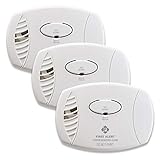
- Keep your family safe from carbon monoxide in multiple rooms with this convenient plug in carbon monoxide alarm 3 pack; The alarms work with any standard outlet and also have a battery backup for continuous monitoring of CO levels, even if there's a power failure
- Features an advanced electrochemical carbon monoxide sensor that accurately detects carbon monoxide levels, no matter where the detector is placed in the room
- Simple to use, with a single test/silence button; A loud 85 decibel alarm sounds when Carbon Monoxide levels reach dangerous levels
- To ensure complete protection make sure to place 1 on each level of your home and in each bedroom
- 7 year limited warranty; Equipped with end of life signal chirp, so you know when it’s time to replace the unit for safety
Rank #4

- DETECTS CARBON MONOXIDE: Model COB monitors CO and sounds a loud 85 dB alarm to signal evacuation to fresh air; LED warning light indicates hazard; Test/Hush button allows quick checks or temporary silencing
- AA BATTERY POWERED: This CO detector is battery-powered, installs without wiring, mount it on the wall or set it on a table, and operates during outages using two included AA batteries
- TRAVEL-READY DESIGN*: Compact carbon monoxide detector is suitable for use at home or for travel; lightweight design allows you to take it on the go to use in hotels or vacation rentals when detection is needed away from home
- TESTED & TRUSTED: This carbon monoxide alarm is rigorously tested to meet UL 2034 5th Edition standards, and is ETL Listed; includes a 10-year limited warranty on alarm
- BUILT FOR EVERY HOUSEHOLD: Designed to help provide dependable carbon monoxide monitoring for everyday residential use; supports renters, homeowners, and pet owners seeking added awareness and protection from CO hazards in the home
Rank #3

- DETECTS CARBON MONOXIDE: With backlit display that shows CO levels & sounds a loud 85 dB alarm when CO is detected to signal evacuation; sleep peacefully with no nighttime chirps; LED warning light indicates hazard; Test/Hush button for quick checks
- PLUG-IN POWER WITH BATTERY BACKUP: CO detector plug-in operates on 120V AC with 2 AA backup batteries (included) for detection during outages; rotating plug fits vertical or horizontal outlets; includes power surge immunity to help maintain performance
- TRAVEL-READY DESIGN*: Compact carbon monoxide detector is suitable for use at home or for travel; lightweight design allows you to take it on the go to use in hotels or vacation rentals when detection is needed away from home
- TESTED & TRUSTED: This carbon monoxide alarm is rigorously tested to meet UL 2034 5th Edition standards, and is ETL Listed; includes a 10-year limited warranty on alarm
- BUILT FOR EVERY HOUSEHOLD: Designed to help provide dependable carbon monoxide monitoring for everyday residential use; supports renters, homeowners, and pet owners seeking added awareness and protection from CO hazards in the home
Product prices and availability are accurate as of the date/time indicated and are subject to change. Any price and availability information displayed on Amazon at the time of purchase will apply.