Quick wins for a faster PC:
Repair Windows errors before they cause bigger problemsFix Now →Scan for outdated or missing drivers - takes under a minuteDriver Scan →Clear out junk files and repair common Windows errorsFree Scan →Viral TikTok dad’s octopus purchase led to approximately 50 surprise babies and thousands of dollars in reported damages because Terrance, a female California two-spot octopus, had mated before arriving with the family and later laid viable eggs. The hatchlings required separate containers, live food, specialist care, and difficult rehoming decisions.
Cameron Clifford bought Terrance for his son Cal, an Edmond, Oklahoma, child fascinated by octopuses. The family expected the work of keeping one saltwater animal; they did not expect a breeding event, a house-damaging equipment leak, or a national audience following the consequences.
Key takeaways
- Terrance was a female California two-spot octopus, or Octopus bimaculoides, that laid approximately 50 eggs after mating before the family acquired her.
- The hatchlings were not the result of asexual reproduction: octopuses can retain sperm and delay egg-laying after mating.
- The family had to separate the babies, feed them live mysid shrimp, and transfer many of them to a more experienced keeper because of cannibalism risks and the scale of the work.
- Reported octopus-related costs reached approximately $3,000–$4,000, including water damage from a leaking reverse-osmosis system, according to TechTimes’ April 2024 report.
- Terrance died around Earth Day in April 2024, while the reported number of surviving babies changed over time and should not be treated as a final census.
How did a pet octopus produce 50 surprise babies?
The surprise babies resulted from delayed reproduction, not a “virgin birth.” Terrance was identified as a California two-spot octopus, commonly called a bimac, and reporting indicated that she had mated before she was collected. The family did not know that she had encountered a male, but she had retained sperm and later used it to fertilize her eggs.
Female octopuses can store sperm and delay reproduction until conditions are suitable for laying eggs. The Washington Post explained that the family initially believed the eggs were unfertilized because Terrance had apparently not recently been housed with a male. When one egg detached from her den and a hatchling emerged after Cameron Clifford examined it, the family realized the clutch was viable. Forty-nine more hatchlings followed, producing a family-reported total of approximately 50 babies. The Washington Post’s report on Terrance and the hatchlings documents the delayed-reproduction explanation.
#1 Best Overall

- 【𝐀 𝐅𝐫𝐢𝐞𝐧𝐝𝐥𝐲 𝐒𝐭𝐚𝐫𝐭𝐞𝐫 𝐊𝐢𝐭 𝐟𝐨𝐫 𝐅𝐢𝐬𝐡𝐤𝐞𝐞𝐩𝐢𝐧𝐠】Everything you need to start a thriving aquarium is right here: a crystal-clear fish tank, a multi-stage filtration system, a heater, a digital thermometer, a LED light with Timer, a water changer, and a net. It eliminates worries about water quality, temperature, or light, making it the perfect gift for a kid, a beginner, or anyone desiring the serenity of nature without the hassle.
- 【𝐇𝐢𝐝𝐝𝐞𝐧 & 𝐏𝐫𝐨𝐭𝐞𝐜𝐭𝐞𝐝】eWonLife small aquarium features a hidden multi-storage design that neatly tucks away all essential gear, including heaters and filters. This gives you a clutter-free view and allows your curious fish to explore happily, fearlessly, and free from harm from the pump
- 【𝐌𝐨𝐫𝐞 𝐅𝐢𝐥𝐭𝐞𝐫 𝐌𝐞𝐝𝐢𝐚, 𝐅𝐞𝐰𝐞𝐫 𝐖𝐚𝐭𝐞𝐫 𝐂𝐡𝐚𝐧𝐠𝐞𝐬】After the initial sponge filter, we've added ceramic rings and quartz balls to create a paradise for beneficial bacteria. Think of them as a tiny, powerful cleanup crew that constantly removes invisible toxins from fish waste. This creates a clear and stable environment where your aquatic friends can thrive, and far less work for you
- 【𝟕𝟖°𝐅 𝐂𝐨𝐧𝐬𝐭𝐚𝐧𝐭 𝐓𝐞𝐦𝐩𝐞𝐫𝐚𝐭𝐮𝐫𝐞 & 𝐄𝐚𝐬𝐲 𝐑𝐞𝐚𝐝𝐢𝐧𝐠𝐬】The included heater creates a stable, ideal 78°F world for your Betta fish and tropical fish to thrive. The clear LED thermometer instantly confirms the perfect conditions, so you can sit back and enjoy watching your fish swim happily
- 【𝐂𝐨𝐦𝐩𝐚𝐜𝐭 & 𝐂𝐫𝐲𝐬𝐭𝐚𝐥-𝐂𝐥𝐞𝐚𝐫 𝐃𝐞𝐬𝐤𝐭𝐨𝐩 𝐀𝐪𝐮𝐚𝐫𝐢𝐮𝐦】Made from high-clarity, durable plastic, this lightweight tank (15"L x 7.9"W x 8.3"H) fits perfectly on any desk or balcony. The 3.5 gallon swimming space is an ideal home for a Betta, small schooling fish (like Cardinal Tetra or Zebra Danios), and ornamental shrimp (such as Red Cherry or Blue Velvet)
The approximately 50 hatchlings were an unusual event for this household, not a species-wide promise that every California two-spot octopus produces exactly 50 young. The count also describes hatchlings documented at the time, not 50 animals that all survived to adulthood.
Who were Terrance and the Clifford family?
Cameron Clifford, a dentist from Edmond, Oklahoma, bought the octopus for his son Cal, who had been fascinated by octopuses and marine biology since approximately age two. The family named the animal Terrance after a character in the Wayside School children’s-book series.
The purchase was not completely impulsive. The family researched a saltwater aquarium, water-cycling equipment, and a food supply before Terrance arrived by mail around Cal’s birthday in October 2023. The family had prepared for one octopus, however, and was still inexperienced with the demands of keeping a cephalopod when the eggs appeared in December 2023.
The story became a viral documentary saga through the family’s TikTok account, @doctoktopus. Contemporary reports described the account’s reach differently depending on the date and metric, including more than 400,000 followers and millions of views or likes. Those figures were platform snapshots during the April 2024 coverage, not permanent audience totals. ABC News’ account of Cal’s pet octopus describes how a child’s interest became a national news story.
What’s actually slowing this PC down?
Pick the symptom - the matching free tool is one click away.
What happened after the hatchlings appeared?
The hatchlings transformed a difficult individual-pet setup into a large-scale marine husbandry problem. Reporting described the family keeping the young octopuses in separate containers to reduce cannibalism and feeding them live mysid shrimp each day. Many animals also had to be moved to a more experienced keeper’s facility.
California two-spot octopus hatchlings are direct developers: unlike species whose young enter a fragile planktonic paralarval stage, the hatchlings resemble miniature benthic octopuses. Direct development can make the biology easier to understand, but it does not make caring for dozens of young animals simple. Each animal still requires suitable water, food, space, shelter, and monitoring.
Names for the babies reflected the family’s humor and online audience. Reported names included Pearl, Seaoncé, Jay Sea, Swim Shady, Squid Cudi, Rocket Larry, and Bill Nye the Octopi. The names made the story shareable, but the practical problem remained serious: finding appropriate homes for specialized animals.
Rank #2
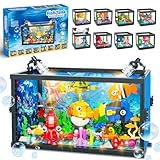
- 8 in 1 Versatile Building & 9 Models - Endless Fun: This 8-pack marine fish tank building blocks set offers two assembly options—build 8 small aquariums or 1 large sea-themed tank (cannot be built simultaneously). It recreates vivid underwater scenes with octopuses, jellyfish and colorful fish, plus 9 unique models to keep kids engaged. Perfect for sharing among 8 kids at parties
- Built-in Lights & Multi-Scenario Decoration: Equipped with 2 night lights and light strings, the aquarium emits dreamy glow at night, presenting a stunning underwater view. The removable background with shipwreck adds mystery, making it a stylish desktop decor for bedrooms, offices—loved by both kids and adults
- STEM Educational & Skill-Building Toys: As classic STEM building toys for 6-12 year olds, each small tank is a mini marine landscape that sparks curiosity about ocean creatures. It enhances hand-eye coordination, color recognition, patience and teamwork—kids can build alone or collaborate on the large tank for group fun
- Safe High-Quality Material & Wide Compatibility: Made of kid-safe and durable ABS material with bright colors, meeting safety standards. The blocks are fully compatible with major brand building sets, allowing kids to combine with existing collections for more creativity
- Ideal Gift for All Occasions: A perfect gift choice for birthdays, Valentine's Day, Christmas, Halloween and party favors. It also works as cake toppers, classroom rewards and goody bag fillers. Suitable for boys and girls aged 6-12, even adults who love DIY decor will adore it
How much damage did the octopus setup cause?
The family’s reported financial loss came partly from a leak in the reverse-osmosis system used for aquarium water. Water damaged the kitchen island and floors, and portions of the home reportedly had to be removed or rebuilt. The aquarium system therefore created a household repair problem as well as an animal-care problem.
TechTimes reported Cameron Clifford’s estimate of approximately $3,000–$4,000 in octopus-related expenses, including water damage. TechTimes’ April 14, 2024 report presents that figure as an estimate, not as an audited invoice or independently verified insurance total.
The Washington Post used a different comparison, describing the tanks and other equipment as costing roughly as much as a used car. The two descriptions may reflect different dates or definitions of octopus-related costs. Neither figure should be treated as a universal price for keeping an octopus.
What does captive research show about California two-spot octopus care?
Captive research shows why a home octopus system is more demanding than an ordinary decorative aquarium. A 2025 peer-reviewed study of captive O. bimaculoides housed adult animals individually in 40-gallon tanks with separate sump compartments. The study maintained water at approximately 15–20°C, salinity of 34–36 parts per thousand, pH of 7.7–8.2, ammonia below 0.2 mg/L, nitrite below 0.2 mg/L, and nitrate below 100 mg/L. The 2025 PLOS ONE study on captive California two-spot octopuses provides those laboratory conditions.
Those figures are research conditions, not a universal do-it-yourself care manual. The study also used reverse-osmosis/deionized water, marine salt mix, dens or caves, and enrichment objects. Individual housing matters because octopuses are not generally community-tank animals, and dozens of hatchlings create a radically different logistical problem from one adult.
Rank #3

- FUN and REWARDING: Are you looking to buy an aquarium for your family, owning an aquarium can be a really fun rewarding experience while providing many wellness benefits.
- DAZZLING COLORS: Energy-efficient LED lighting with 7 dazzling color selections to brightly illuminate your fish; choose daylight white, blue, green, amber, aqua, purple, or red depending on the time of day or your viewing pleasure.
- COMPLETE FILTRATION: Powerful internal power filter cleans and purifies aquarium water at a flow rate of 45 gallon per hour, effectively removing fish waste and debris; uses Koller Products S replacement filter cartridges (AQ10FC-60), available on Amazon.
- IMPACT-RESISTANT CONSTRUCTION: Manufactured of impact-resistant plastic with crystal-clear clarity so good that most think it is made of glass, providing leak-proof confidence.
- BUILT-IN LIGHT TIMER: Set your LED light to come on at the same time every day, select light settings of 4 hours, 8 hours, or continuous On, easily with a flick of your finger.
The same research examined play-like behavior and welfare, using features such as live rock, shells, novel objects, and feeding puzzles. Octopuses are behaviorally complex animals that need more than water and food. Their intelligence and problem-solving ability are part of their appeal, but those traits also increase the responsibility of keeping them in captivity.
Did Terrance survive, and what happened to the babies?
Terrance survived for several months after laying the eggs but died around Earth Day in April 2024, according to a later local profile. Associated Press reported earlier in the story’s news cycle that Terrance was still alive four months after laying the eggs, an unusual outcome because female octopuses commonly die soon after laying and brooding a clutch. The Edmond Outlook profile of Terrance reported her death and provided a later snapshot of the family’s situation.
The babies’ survival numbers changed as time passed. The Washington Post reported that many died early, particularly during transport after the water-system leak, and that 23 remained at an experienced keeper’s facility at the time of that report. The later Edmond Outlook profile said the family was caring for 18 of the original 50. Those numbers describe different dates, not a definitive final count of surviving adults.
The Cliffords and collaborators contacted aquariums, research institutions, professors, and sanctuaries while seeking suitable homes. The family reportedly declined to give the babies to ordinary private owners despite public interest, recognizing that enthusiasm generated by a viral video is not the same as the ability to provide specialized marine care.
Independent reader supportYour contribution helps us test, update, and keep practical guides available for everyone.Was this a good example of octopus ownership?
No. The story is better understood as a warning about exotic-animal responsibility than as a pet-care success story. The family researched the purchase, invested in a saltwater system, and tried to manage an unexpected clutch, yet still faced live-food demands, separate housing, specialist transfers, equipment failure, property damage, and difficult placement decisions.
Cameron Clifford warned that owning an octopus was labor-intensive, expensive, wet, and difficult to manage. The family’s experience does not show that octopuses are easy household pets, that a child can care for one independently, or that a prepared aquarium makes unexpected reproduction manageable.
For a child fascinated by octopuses, a safer first step may be an educational alternative such as an octopus care book, a marine-biology book, a visit to a public aquarium, or an octopus plush toy. Those choices can support the child’s interest without creating an obligation to house a wild or exotic marine animal.
Rank #4

- 4 in 1 Long Aquarium Tools Kits: The aquascape tools kit contains 1 x 10" aquarium scissors, 1 x 10.6" straight long tweezer, 1 x 10.6" curved feeding tongs, and 1 x 12.56" Aquarium substrate spatula. One set of terrarium supplies to help you better manage your aquarium and terrariums. This aquascaping tools are long and slender enough to easily use in any gallon fish tank, good as fish tank accessories. It suits both beginner and experienced people.
- Rust-proof and Stainless Steel Material: The 4pcs of aquarium supplies are made of high-quality stainless steel material, rustproof and corrosion-proof, sturdy, and long-lasting. With the protection of the rustproof coating, every tool has excellent corrosion resistance.
- Multi Functions and Applications: Ohtomber aquascape tools is ideal for all types of grooming, maintaining, and sorting out aquatic plants in water as an aquarium accessories. Aquarium scissors could help you trim the plant, furnish the aquarium landscape with driftwood cornerstones, sand, and aquarium algae scraper could be applied to scrap the algae and smooth out plant stratum substrate. Do use it to maintain a comfortable environment for fish in an aquarium tank now!
- Minimizing interference: Long aquascaping tools can prevent accidental injuries to Aquarium plants and damage to the environment. Long aquarium tweezer can adjust driftwood, and feed little reptiles instead of putting your hands into water. It is very effective in precise operation and avoiding getting your hands wet. Similarly, Long aquarium scissors are suited for small or thin water plants and help trim excess parts. It won't hurt the plant's cross-section.
- Maintenance tips: In order to extend tool life and keep performing well, we recommend that you rinse off the saltwater attached to the tools surface and then wipe up to keep dry.
Why did the story become so popular?
The story combined a child’s sincere wish with consequences that escalated far beyond the original birthday gift. A family bought one octopus; the animal turned out to be female, laid approximately 50 viable eggs, and created a need for separate containers, live prey, extra facilities, and specialist homes. The leaking water system added a vivid household-risk element.
Social media made the animals’ development visible and gave viewers a continuing narrative through names, updates, and setbacks. The public followed not only a novelty but also a series of ethical questions: Who should keep the hatchlings? How much care can a private household provide? What happens when aquarium infrastructure fails? Those questions are more important than the novelty of the number 50.
Timeline of the Terrance octopus story
| Date | What happened |
|---|---|
| Approximately age two | Cal Clifford began repeatedly expressing interest in octopuses and marine biology. |
| August 2023 | The family bought a secondhand 60-gallon tank, according to The Washington Post. |
| October 2023 | Terrance arrived by mail around Cal’s birthday and was named by the family. |
| December 2023 | The family noticed eggs and initially believed they were unfertilized. |
| February 2024 | A hatchling emerged after an egg detached from Terrance’s den; approximately 50 hatchlings were eventually documented. |
| April 13–16, 2024 | The story received national coverage from The Washington Post, Associated Press, ABC News/Good Morning America, KQED, and other outlets. |
| Around Earth Day, April 2024 | A later local profile reported that Terrance had died and that the family was caring for 18 babies at the time of its interview. |
What is the responsible lesson from the viral octopus story?
The responsible lesson is that exotic pet ownership requires planning for biology and failure, not just the initial purchase. A prospective keeper would need to understand the species’ reproductive biology, obtain suitable equipment and food, monitor water quality, protect the home from leaks, arrange veterinary or specialist support, and have a placement plan before acquiring the animal.
Free tools Windows power users keep installed
One-click scans. No signup required.
Terrance’s story was extraordinary because several unusual events arrived together: delayed fertilization, a large unexpected hatch, a water-system leak, and a viral audience. The events were biologically explainable, but the consequences were difficult and expensive. The story should inspire marine-science curiosity—not an impulse purchase of a live octopus.
Frequently Asked Questions
Was Terrance’s reproduction a virgin birth?
No. Terrance’s babies were not the result of asexual reproduction or a virgin birth. Reporting indicated that Terrance had mated before collection and retained sperm, which she later used to fertilize her eggs.
What happened to Terrance the octopus?
Terrance died around Earth Day in April 2024, according to a later Edmond, Oklahoma, profile. Earlier Associated Press coverage had reported that she was still alive several months after laying the eggs.
Are California two-spot octopuses good beginner pets?
No. The family’s experience involved live mysid shrimp, separate containers to reduce cannibalism, specialist transfers, water-quality management, and property damage from a leaking reverse-osmosis system. The story is not evidence that octopuses are easy pets.
The Tool Desk
Outbyte PC Repair FREERepair Windows errors before they cause bigger problemsFix Now →Outbyte Driver Updater FREEFix the driver behind crashes, sound loss and screen glitchesFind Drivers →How much did the octopus story cost the family?
The reported estimate was approximately $3,000–$4,000 in octopus-related expenses, including water damage, according to TechTimes. The Washington Post described the equipment costs differently, so the figures should be treated as attributed estimates rather than a universal ownership price.
The Bottom Line
Terrance’s approximately 50 babies were the result of stored sperm from an earlier mating, not spontaneous reproduction. The family’s reported $3,000–$4,000 in costs, water damage, live-food burden, separate containers, and specialist rehoming demonstrate why a California two-spot octopus is not a beginner pet.
Quick Recap
Product prices and availability are accurate as of the date/time indicated and are subject to change. Any price and availability information displayed on Amazon at the time of purchase will apply.