Some links on this page are affiliate links: if you buy through them we may earn a commission, at no extra cost to you.
TV burn-in is permanent, uneven aging of part of a display. It can leave a station logo, sports scoreboard, news ticker, game HUD, or desktop toolbar faintly visible after the original content is gone. Temporary image retention can look similar but often fades after varied content and the television’s normal maintenance cycle.
OLED and QD-OLED televisions are the main technologies buyers need to consider, although modern protection features have reduced the risk. For most people watching varied films, shows, sports, and games, burn-in is a manageable rather than inevitable risk. If a display will show static graphics for many hours every day, LCD or Mini-LED is usually the safer choice.
What is TV burn-in?
Burn-in, also called permanent image retention, happens when parts of a display age differently from the rest. Areas that repeatedly show bright, high-contrast elements can lose brightness or change color relative to surrounding pixels. The result is a persistent pattern that may be visible on gray, white, or solid-color screens and sometimes during ordinary viewing.
The Tool Desk
Outbyte Driver Updater FREEScan for outdated or missing drivers - takes under a minuteDriver Scan →Outbyte PC Repair FREEClear out junk files and repair common Windows errorsFree Scan →Common examples include a faint channel logo, sports score bar, news ticker, game health bar, map, ammunition counter, desktop taskbar, or browser toolbar.
#1 Best Overall

- OUR MOST ADVANCED 4K AI PROCESSOR: Powered by 128 neural networks to deliver AI-enhanced picture and optimized sound, resulting in an exceptional 4K experience for streaming, gaming, live sports and more.*
- TRANSFORMS EVERYTHING ON SCREEN TO IMPRESSIVE 4K RESOLUTION*: See impressive details on screen. Our AI processor upscales everything you watch to 4K using 128 AI neural networks and ensures incredibly sharp and smooth picture quality.*
- POWERFUL BRIGHTNESS AND DEEPER CONTRAST IN EVERY PIXEL**:Experience powerful brightness and deeper contrast revealing nuanced detail in each scene. The NQ4 AI Gen3 processor analyzes each scene and boost brightness to illuminate even the smallest details.**
- BRINGS SMOOTH MOTION TO SPORTS AND TEAR-FREE GAMING: Experience smooth visuals and elite speeds for VRR gaming at up to 4K 144Hz.***
- KEEP YOUR EYE ON THE BALL: The AI processor smooths the motion of fast-moving balls and text, reducing blur and flickering, so you don't lose sight of the action.*
| Condition | What it means | Usually reversible? |
|---|---|---|
| Temporary image retention | A short-lived afterimage or nonuniformity | Often |
| Permanent burn-in | Uneven, irreversible aging in part of the panel | No |
| Dead or stuck pixels | Individual pixels fail or remain on or off | Usually no |
| Banding or uniformity defect | Panel variation not necessarily caused by a static image | Sometimes improves |
| Backlight failure | A problem with an LCD’s illumination hardware | Not without repair |
“Screen burn,” “burn-in,” and “image retention” are often used interchangeably in consumer discussions. Technically, the important distinction is whether the mark fades. A faint afterimage immediately after a static scene is not proof of permanent damage.
Which TV technologies are vulnerable?
OLED
OLED pixels produce their own light rather than relying on a separate backlight. Bright pixels gradually age with use, so repeatedly driving the same area harder than the rest can create uneven wear. Static white logos, scoreboards, tickers, subtitles, and game interfaces are more relevant than moving images.
OLED is not one uniform panel design. WOLED and QD-OLED use different architectures, and panel generation, firmware, heat management, brightness controls, and compensation behavior can affect longevity. Long-duration testing by RTINGS has produced permanent image retention under extreme, repeated static-content conditions, while noting that those conditions are harsher than ordinary mixed viewing.
QD-OLED
QD-OLED is still an OLED-based, self-emissive display. Its quantum-dot color-conversion layer does not make it immune to cumulative pixel aging. The exact risk varies by panel generation, model, firmware, brightness management, and use; there is no universal rule that every QD-OLED is more or less resistant than every WOLED panel. See RTINGS’ QD-OLED and WOLED analysis for the architectural context.
Plasma
Older plasma televisions could suffer both temporary image persistence and permanent burn-in. Plasma is now largely a legacy technology, but it helped make “screen burn” a familiar household term.
LCD, LED, and Mini-LED
LCD televisions use a separate backlight, so their pixels do not age in exactly the same way as OLED pixels. LCD and Mini-LED are generally better suited to fixed-information displays, desktop dashboards, signage, and channels that remain on for many hours.
They are not immune to every form of image retention or failure. Extreme testing has found retention symptoms on some LCD units, and LCDs can also develop dead pixels, uniformity problems, backlight deterioration, or other hardware faults. The more accurate conclusion is that LCD has a different and generally lower burn-in risk, not zero risk. RTINGS explains the distinction here.
What’s actually slowing this PC down?
Pick the symptom - the matching free tool is one click away.
Rank #2

- ADVANCED PROCESSING POWERS AI-ENHANCED** 4K CLARITY: Uses AI with the power of 20 neural networks to enhance picture quality of your content to 4K and optimizes sound for superb performance in everything you watch.
- BOOSTS YOUR FAVORITE CONTENT TO CAPTIVATING 4K RESOLUTION**: Watch your shows and videos in stunning detail. Our AI processor upscales your content to up to 4K using 20 AI neural networks and ensures sharp and smooth picture quality.*
- DYNAMIC BRIGHTNESS AND CONTRASTS: Reveal hidden details with bold brights and inky blacks in each scene. The NQ4 AI Gen2 processor analyzes each scene* to improve brightness for a more dynamic picture.
- EXPERT-VALIDATED COLOR AND SKIN TONES FOR A REALISTIC PICTURE: With color validated by the experts at Pantone, you can be sure colors look realistic and skin tones accurately shown, for a vibrant and true-to-life picture.
- DESIGN THAT EMBODIES SOPHISTICATION: Made to look bold, yet elegant design that evokes gentle waves. Smooth lines and flowing design come together to harmoniously blend into your home.
What causes burn-in?
Burn-in is usually the result of several factors acting together:
- Static content: logos, tickers, scoreboards, subtitles, game HUDs, desktop taskbars, spreadsheets, and browser controls.
- Duration and repetition: a graphic shown in the same place every day can matter more than one brief pause.
- Brightness: high luminance and aggressive HDR settings drive emitting pixels harder.
- Contrast: a bright fixed logo against a dark background creates more localized differential wear than varied full-screen video.
- Panel temperature and design: heat management, panel generation, and brightness controls influence wear.
- Maintenance behavior: compensation cycles help manage nonuniformity, but their timing and operation vary by manufacturer and model.
- Disabled safeguards: turning off screen savers, pixel shifting, logo dimming, automatic brightness controls, or panel maintenance can increase exposure.
LG identifies features such as Screen Saver, Screen Shift, Logo Luminance Adjustment, and Clear Panel Noise among its OLED protection and maintenance systems. Sony likewise warns against continuously or repeatedly displaying the same image for long periods. Feature names and menu locations vary by model and firmware; consult the current manual rather than assuming a universal path.
Sources: LG OLED reliability guidance and Sony’s image-retention guidance.
What does burn-in look like?
The artifact may appear as:
- a faint station logo in one corner;
- a sports scoreboard or news ticker;
- a game map, health bar, or other HUD element;
- a desktop taskbar or application window;
- uneven vertical bands from repeatedly displaying 16:9 content on an ultrawide OLED monitor;
- a color tint or brightness difference visible on gray or white screens; or
- persistent subtitles or interface elements.
Visibility depends on the background, viewing angle, room lighting, the viewer’s sensitivity, and whether the wear affects a particular color channel. A mark that is obvious on a 5% gray test image may be difficult to see during normal programming. Conversely, a problem visible across ordinary content deserves attention.
Do these 3 things before closing this tab:
1Repair Windows errors before they cause bigger problems2Fix the driver behind crashes, sound loss and screen glitches3Clear out junk files and repair common Windows errorsHow to tell temporary retention from permanent burn-in
- Stop showing the suspected static content. Switch to varied programming rather than repeatedly checking the same paused image.
- Turn the TV off normally with the remote. Leave it connected to power so its normal maintenance routine can run, if the model uses one.
- Allow the routine to finish. Timing differs by brand and model. Do not interrupt a manufacturer-directed panel-cleaning or compensation process.
- Watch varied full-screen content for several hours. This helps reveal whether the mark is fading.
- Check under ordinary viewing conditions. A test pattern can reveal subtle uniformity differences that are not significant during normal use.
- Use the built-in Picture Test or panel test if available. Follow the television’s manual for the exact procedure.
- Document the result. Photograph the screen with the same content, brightness, lighting, and camera position before and after maintenance.
- Contact the manufacturer or retailer if it remains. This is especially important if the mark appeared unusually early or the TV is still covered.
LG’s support instructions describe Pixel Cleaning as a maintenance tool and warn that the process can take time. Do not repeatedly run long cleaning cycles as a casual experiment. They are not guaranteed repairs for permanent burn-in and should be used only as the manufacturer directs.
Vertical lines, flickering areas, sudden severe dimming, or large black regions may indicate a hardware failure rather than burn-in. A single dead pixel is also not burn-in.
How to prevent OLED burn-in
Keep protective features enabled
Unless you have a specific reason to change them, leave the following enabled:
Rank #3

- PERFECT BLACK AND PERFECT COLOR: Over 8.3 million self-lit smart pixels with Perfect Black and Perfect Color technology
- A8 AI PROCESSOR 4K GEN3: Enjoy outstanding picture quality powered by AI technology that detects what you're watching and automatically improves the picture and sound quality to your personal preferences
- DOLBY VISION, DOLBY ATMOS AND FILMMAKER MODE: Bring big-screen magic home with Dolby Vision color and contrast, Dolby Atmos immersive sound, and FILMMAKER MODE with Ambient Light Technology for films just as the director intended
- ULTIMATE GAMEPLAY: Delivers ultra-smooth gaming with a 0.1ms response time and up to 120Hz refresh rate for blur- and tear-free action. Featuring NVIDIA G-SYNC, AMD FreeSync Premium, and VRR. Play on console or cloud with Game Dashboard and Game Optimizer for easy control
- OLED CARE: Helps protect your OLED display to retain the best picture quality possible over time
- screen saver;
- pixel shifting or screen shift;
- logo brightness reduction;
- automatic brightness limiting;
- automatic compensation or panel-refresh routines; and
- firmware updates that improve panel-management behavior.
These features reduce or distribute future wear; they cannot undo established damage. Exact names differ among LG, Samsung, Sony, Panasonic, Philips, TCL, and other brands.
Recommended Free Tools
Vary what is displayed
Do not leave one news channel, game menu, streaming interface, desktop layout, or dashboard on all day. Use a sleep timer, switch inputs when leaving the room, pause with a blank or moving screen, and rotate among games and content types. A short pause is very different from leaving a bright static image for hours.
Use brightness sensibly
Use a calibrated or moderate picture mode for ordinary viewing and avoid maximum OLED-light or peak-brightness settings when they are unnecessary. HDR itself does not need to be avoided, but bright, fixed HDR graphics deserve more caution. Brightness scales differ between brands and modes, so there is no universal “safe” percentage.
Be realistic about gaming
Gaming does not automatically cause burn-in. Risk depends on the brightness and design of the HUD, hours per day, repeated play over months or years, and whether the interface can be hidden, dimmed, or repositioned. A few hours of varied gaming is not equivalent to a menu left on continuously.
Treat PC use as a higher-risk case
Desktop taskbars, browser chrome, application windows, and spreadsheets remain fixed for long periods. If the screen will be used for heavy daily productivity, an LCD or Mini-LED monitor may provide greater peace of mind. An OLED can still be suitable for mixed PC use when protective features, screen savers, varied layouts, and reasonable brightness are used.
Quick wins for a faster PC:
Repair Windows errors before they cause bigger problemsFix Now →Scan for outdated or missing drivers - takes under a minuteDriver Scan →Does turning the TV off help?
Yes. Turning the TV off stops further exposure, and OLED televisions may perform short compensation routines after a normal shutdown. Unplugging the set immediately can prevent or interrupt those routines, depending on the model. Normally shut the TV down as recommended by its manufacturer and leave it connected to power unless the manual says otherwise.
Manufacturers implement compensation cycles differently, so do not assume that every OLED performs the same maintenance on the same schedule. RTINGS’ investigation explains why model-specific behavior matters.
Rank #4
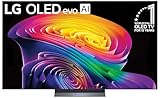
- BRIGHTNESS BOOSTER: Brighter visuals and vivid detail with Brightness Booster powered by the a11 AI Processor Gen 3
- SELF-LIT OLED TECHNOLOGY: Over 8.3 million self-lit smart pixels deliver infinite contrast with advanced black and color technology
- a11 AI PROCESSOR: Alpha 11 AI Processor Gen3 provides LG's most powerful Dual AI Engine for enhanced picture quality and processing speed
- DOLBY VISION, DOLBY ATMOS AND FILMMAKER MODE: Experience Dolby Vision color and contrast, Dolby Atmos immersive sound, and FILMMAKER MODE with Ambient Light Technology for cinematic viewing as the director intended
- GAMING FEATURES: Gaming capabilities include 165Hz Refresh Rate, NVIDIA G-Sync, AMD FreeSync Premium and 0.1ms response time for responsive gameplay
Can burn-in be repaired?
Temporary image retention may disappear after varied content, normal shutdown, or a manufacturer-directed compensation process. Permanent burn-in is different: changing picture settings cannot restore the panel to its original condition.
Pixel-refresh or compensation routines may reduce the visibility of some nonuniformity, but they do not guarantee reversal of physical degradation. Lowering brightness, changing picture modes, or enabling pixel shifting may mask an artifact or reduce future wear; they do not repair the aged pixels.
Do not rely on flashing-color videos, “burn-in repair” loops, or extreme full-screen patterns as guaranteed cures. If permanent burn-in is confirmed, panel replacement may technically solve it, but the cost can approach that of a new television. Obtain a written repair estimate before assuming replacement is economical.
Which TV technology fits your use?
| Usage pattern | Better fit | Why |
|---|---|---|
| Films and varied streaming | OLED or QD-OLED | Deep blacks and contrast with relatively varied content |
| Mixed gaming and television | OLED or QD-OLED with precautions | Fast response and excellent contrast; fixed HUD exposure still matters |
| Heavy desktop productivity | LCD or Mini-LED | Lower concern from taskbars and application layouts |
| Continuous news or sports | LCD or Mini-LED | Repeated logos, tickers, and scoreboards are unavoidable |
| Digital signage or monitoring dashboards | Commercial LCD or Mini-LED | Designed for long, static operation and appropriate coverage |
| Maximum burn-in peace of mind | LCD or Mini-LED | Different, generally lower image-retention risk |
Choose OLED when cinematic contrast, deep blacks, and fast response matter and most viewing is varied. Choose QD-OLED for its particular OLED picture characteristics, but do not treat “QD” as immunity. Choose LCD or Mini-LED when static content is unavoidable, the TV may run unattended, or the household does not want to manage exposure.
What to check before buying
- How many hours per day will the display run?
- Will the same logo, ticker, scoreboard, or HUD remain in one position?
- Will it be used as a desktop monitor or dashboard?
- Is maximum brightness genuinely necessary?
- Can you leave the TV connected to power for normal maintenance?
- Does the exact model include screen shifting, logo dimming, and compensation features?
- Does the written warranty explicitly cover permanent image retention?
- Does a retailer protection plan cover burn-in, and are PC or commercial uses excluded?
- Would a panel replacement be financially realistic?
Warranty coverage is model- and country-specific
Do not assume that a general panel warranty covers burn-in. Coverage can vary by model, country, retailer, protection plan, and date of purchase. Some terms cover defects in materials or workmanship but exclude image burn-in; some newer premium lines advertise longer panel coverage without making every form of permanent retention automatically covered.
For example, LG’s 2026 G6 announcement describes five-year panel coverage, while an older LG USA warranty document explicitly lists image burn-in among exclusions. Those documents demonstrate why buyers should read the exact terms for the model and country and obtain written confirmation that permanent image retention or burn-in is covered.
Sources: LG’s 2026 announcement and LG’s warranty document.
Quick Recap
Product prices and availability are accurate as of the date/time indicated and are subject to change. Any price and availability information displayed on Amazon at the time of purchase will apply.

