Short answer: Cameron Todd Willingham was probably wrongfully convicted, but he was never formally exonerated. The later reviews did not prove exactly how the fire started. They did, however, seriously undermine the arson theory used to convict him, concluding that the available fire evidence could not scientifically sustain a finding that the blaze was deliberately set.
That distinction is central to the 2018 film Trial by Fire. Willingham was convicted of killing his three daughters in a 1991 house fire and executed in 2004. Afterward, fire-science experts concluded that many of the supposed signs of arson—burn patterns, low burning, melted objects, crazed glass and alleged multiple points of origin—could not reliably establish arson. No court later issued a posthumous exoneration, so “probably innocent” is more accurate than “legally proven innocent.”


What happened to Cameron Todd Willingham?
On December 23, 1991, a fire destroyed the Willingham family home in Corsicana, Texas. Willingham’s three daughters died: two-year-old Amber Kuykendall and one-year-old twins Karmen and Kameron Willingham. Willingham survived. His wife, Stacy Kuykendall, was away buying Christmas presents when the fire broke out.
Willingham said he had been asleep when the fire began. He maintained that he tried to reach the children but could not get back into the burning house. Prosecutors presented a very different account: they argued that he intentionally set the house on fire to kill the girls.
Do these 3 things before closing this tab:
1Repair Windows errors before they cause bigger problems2Scan for outdated or missing drivers - takes under a minute3Clear out junk files and repair common Windows errors#1 Best Overall
A jury convicted Willingham of capital murder on August 21, 1992. He was formally sentenced to death on October 29 of that year. The Texas Court of Criminal Appeals affirmed the conviction on direct appeal in 1995. That appellate decision addressed alleged legal errors in the trial; it was not a later scientific re-examination of the fire.
Willingham was executed by lethal injection in Huntsville, Texas, on February 17, 2004. In the weeks before his execution, his lawyers sent Governor Rick Perry and the Texas Board of Pardons and Paroles an analysis by fire expert Gerald Hurst challenging the arson conclusion. Officials received the report, but it did not lead to a stay. Willingham continued to insist that he was innocent, including in his final statement.
Why did the arson finding become controversial?
The prosecution’s case depended heavily on the claim that the fire was intentionally set. Investigators interpreted several features of the burned house as evidence of arson, including:
- Irregular or unusual burn patterns, which were treated as signs that the fire had been deliberately distributed.
- Low burns near the floor, interpreted as evidence that an accelerant had been poured there.
- “Pour patterns” and alleged trails of burning liquid.
- Melted materials, which investigators associated with unusually intense or fuel-fed burning.
- Crazed glass, meaning a network of small cracks in glass exposed to heat.
- Multiple points of origin, interpreted as evidence that separate fires had been started in different places.
For decades, fire investigators commonly treated some of these observations as reliable indicators of deliberate ignition. The problem, later reviewers argued, was that fire behavior is more complicated than those rules suggested. Ventilation, the movement of air through a burning structure, flashover, post-flashover burning, the collapse or movement of contents, and the burning of ordinary household materials can all produce patterns that may look suspicious after the event.
For example, a low burn does not automatically establish that an accelerant was poured on the floor. Heat can move unpredictably through a structure, and burning contents can create deep or irregular damage. Likewise, melted objects and cracked glass show that intense heat was present; they do not, by themselves, identify the fire’s cause. Once a structure has undergone flashover and extensive burning, the original pattern can be altered or destroyed.
The first edition of the National Fire Protection Association’s NFPA 921: Guide for Fire and Explosion Investigations was published in 1992, around the time of Willingham’s trial. Later reviewers argued that the methods used in his case were inconsistent with scientific principles that were already emerging before or around the trial—not merely that investigators had failed to use knowledge discovered many years later.
What did the later fire experts conclude?
Gerald Hurst reviewed the case before Willingham’s execution and concluded that the fire evidence did not support an arson finding. After the execution, the Innocence Project commissioned or publicized additional expert reviews arguing that the forensic analysis used to convict Willingham was invalid.
Craig Beyler, an expert retained by the Texas Forensic Science Commission, reviewed the available evidence in 2009. His conclusion was not that he had found the precise accidental cause of the fire. Rather, he concluded that the investigators’ determinations lacked a sound basis in modern fire science and that a finding of arson could not be sustained from the available evidence.
Outdated Drivers Are Slowing You Down
One free scan finds every outdated or missing driver and matches the right update for your exact hardware.Free scan · exact hardware matchWindows Errors? Fix Them Before They Spread
Repair common Windows errors and clear accumulated junk for a smoother, more stable PC - no reinstall needed.Free scan · no reinstallThat is a powerful criticism, but it is narrower than saying science proved the fire was accidental. The later reviews primarily showed that the original evidence could not reliably establish intentional ignition. They did not reconstruct every moment of the fire or identify a particular accidental source such as an appliance, electrical fault or discarded cigarette.
The key reversal was about the cause of the fire. The experts did not need to prove a specific accidental mechanism to show that the state’s arson conclusion was unsupported. Once the evidence could no longer reliably establish arson, the prosecution’s theory that Willingham murdered his children by setting the house on fire became substantially weaker.
The three questions that should not be confused
Much of the continuing debate becomes clearer when three separate propositions are kept apart:
| Question | What the later record supports |
|---|---|
| Was the fire intentionally set? | The available fire evidence no longer provides a scientifically reliable basis for concluding that it was. |
| Did Willingham set the fire? | That was not independently established once the arson premise was undermined. The later reviews did not prove every detail of his conduct or intentions. |
| Was Willingham legally guilty? | He was convicted, and the conviction was affirmed on appeal, but no court later formally exonerated him. |
The first question is the foundation for the other two. If the fire was accidental, the central crime described by prosecutors did not occur. If the evidence cannot establish arson, the state also loses the main basis for claiming that Willingham deliberately set the blaze. That does not automatically answer every question about the night, but it makes the original conviction extraordinarily difficult to defend as reliable.
What other evidence did prosecutors present?
The fire investigation was not the only evidence at trial. Prosecutors also presented testimony from Johnny Webb, a jailhouse informant who claimed that Willingham confessed. Webb’s account was later challenged, and the Innocence Project described the informant evidence as discredited. The reliability and evolution of statements attributed to Willingham’s wife and other witnesses were also disputed.
There was circumstantial evidence concerning Willingham’s behavior before and after the fire. Critics pointed to the superficial nature of some of his burns, his position outside the house and the fact that he moved a car. Supporters and later reviewers argued that those facts could also be consistent with a survivor of a rapidly developing structure fire, particularly one who had tried to enter the house and was prevented from doing so.
Neither interpretation should be treated as automatic proof. A person’s demeanor after a catastrophic fire can appear strange, detached or self-protective for many reasons. It is not a substitute for reliable evidence of how the fire began. Similarly, a disputed confession cannot resolve whether the physical evidence genuinely established that a crime had occurred.
The Innocence Project has argued that the forensic evidence was the centerpiece of the case because it supplied the essential premise that the fire was arson. Its position is an advocacy organization’s interpretation, not a judicial finding, but it aligns with the later expert criticism: before asking who deliberately set the fire, investigators first had to establish that it had been deliberately set at all.
Recommended Free Tools
What did the Texas Forensic Science Commission actually say?
The Texas Forensic Science Commission examined the Willingham case alongside the arson case of Ernest Willis. Its work focused on the quality of the fire investigation and the scientific basis for the conclusions presented to juries.
The commission’s materials emphasized why fire cause is a threshold issue. If a fire was not intentionally set, then the prosecution may be trying a person for a crime that never happened. The report also warned about the danger of a jury simply accepting an investigator’s unsupported conclusion that a fire was arson.
But the commission did not declare Willingham innocent. It distinguished between determining whether the forensic investigation was scientifically valid and determining whether Willingham committed the murders. Its work was also complicated by questions about the commission’s jurisdiction over evidence and testimony that predated the statutory framework governing later forensic oversight.
The commission’s report and addendum, issued after the Innocence Project formally submitted the case in 2006, recommended improvements in fire-investigation education, training and review of older cases. Those recommendations and the expert criticism seriously damaged confidence in the investigation. They were not equivalent to a court judgment of actual innocence.
What’s actually slowing this PC down?
Pick the symptom - the matching free tool is one click away.
Was the conviction based on bad science?
The fairest answer is that the conviction relied on fire-science conclusions that later experts found scientifically unreliable or unsupportable. That does not mean every piece of evidence at trial was fabricated, nor does it establish that investigators acted in bad faith. It means that observations once presented as near-conclusive signs of arson did not carry that meaning under a more scientifically grounded analysis.
This distinction matters because “bad science” can mean several different things. In Willingham’s case, the criticism was not simply that investigators made one minor mistake. The later reviews challenged the underlying interpretive framework: the assumption that certain burn patterns, low burning, melted objects or cracked glass could reliably reveal intentional ignition after a destructive structure fire.
The strongest official and expert conclusion is therefore negative rather than affirmative: the available evidence did not sustain an arson finding. It is more accurate to say that the prosecution’s scientific foundation collapsed than to say that investigators conclusively proved an accidental fire.
Why was Gerald Hurst’s report important?
Hurst’s analysis was significant because it reached the central issue before Willingham was executed. His review challenged the interpretation of the fire evidence and concluded that it did not support arson. Willingham’s lawyers sent that analysis to Texas officials in the weeks before the scheduled execution.
Quick wins for a faster PC:
Clear out junk files and repair common Windows errorsFree Scan →Scan for outdated or missing drivers - takes under a minuteDriver Scan →The timing illustrates one of the case’s most troubling features. The state had notice that a qualified expert disputed the scientific foundation of the conviction, yet the execution went forward. A later review could expose the weakness of the evidence, but it could not give Willingham a new trial or allow a court to reassess the case while he was alive.
After his execution, investigative reporting and independent reviews brought the case to wider public attention. The Texas Forensic Science Commission’s eventual proceedings made Willingham one of the best-known examples in the debate over outdated arson-investigation methods and the risks of relying on forensic conclusions that have not been scientifically validated.
How accurate is the film Trial by Fire?
The 2018 feature film was directed by Edward Zwick, with Jack O’Connell playing Willingham and Laura Dern playing Elizabeth Gilbert. It dramatizes the case through the relationship between Willingham and Gilbert, a playwright who became involved in his case.
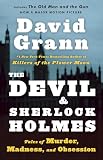
The film is based on David Grann’s 2009 New Yorker article, “Trial by Fire.” It is not based on a standalone book of the same name. For readers who want the original narrative rather than the film’s compressed version, David Grann’s The Devil and Sherlock Holmes contains Grann’s original New Yorker investigation along with other nonfiction pieces.
The Tool Desk
Outbyte Driver Updater FREEFix the driver behind crashes, sound loss and screen glitchesFind Drivers →Outbyte PC Repair FREEClear out junk files and repair common Windows errorsFree Scan →The film’s central premise—that Willingham may have been executed on the basis of faulty arson science—is supported by the later expert criticism of the investigation. However, the movie compresses chronology and simplifies legal and scientific disputes. Dialogue is dramatized, and some scenes are composite, altered or shaped for narrative effect.
That is especially important when assessing the personal relationship between Willingham and Gilbert. The emotional arc is part of the film’s storytelling; viewers should not assume that every conversation, meeting or turning point occurred exactly as shown. The New Yorker article, the Texas Court of Criminal Appeals’ opinion, the Texas Forensic Science Commission’s materials and the expert reviews are stronger sources for checking factual claims.
Independent reader supportYour contribution helps us test, update, and keep practical guides available for everyone.So, was Cameron Todd Willingham actually innocent?
No responsible answer can turn the later reviews into a formal declaration that they did not make. Willingham was never posthumously exonerated by a court, and the Texas Forensic Science Commission did not rule that he was innocent. The surviving record also does not establish the precise accidental cause of the fire.
At the same time, saying only that “he was convicted and executed” leaves out the most important development in the case. The fire evidence used to establish arson was later found to be scientifically unreliable. That evidence was not peripheral: it was central to proving that the deaths resulted from an intentional criminal act. The informant testimony and circumstantial evidence were disputed, and the later record does not show that they independently proved Willingham set the fire.
Rank #4

- VICTORIAN MYSTERIES: Immerse yourself in the gaslit streets of Victorian London with this standalone box that offers ten thrilling cases for Sherlock Holmes Consulting Detective.
- COOPERATIVE DEDUCTION: Join forces with friends or play solo in a shared deductive experience, where every player's wits are essential to cracking the case.
- UNIQUE GAME STRUCTURE: Experience an utterly unique game structure that draws you deep into the world of Sherlock Holmes, where solving each mystery feels like stepping into the detective's shoes.
- REIMAGINED AND REFINED: The ten cases included in this collection have been fully revised and retranslated from the Ystari version, ensuring a fresh and engaging experience.
- THRILLING CHALLENGES: Test your deductive skills, follow the trail of clues, and make logical connections as you tackle each intriguing case, just like the legendary detective himself.
The most defensible conclusion is that Willingham was probably wrongfully convicted and may have been innocent of deliberately setting the fire, but he was not formally exonerated. The conviction should be regarded as unreliable because its central scientific premise could not be sustained—not because a later investigation identified an indisputable alternative explanation for every detail.
Willingham was executed for a fire that prosecutors said was arson, but later fire-science reviews found that the available evidence could not support that conclusion. The case therefore strongly suggests a wrongful conviction, while the absence of a posthumous court exoneration means that absolute claims about his innocence should be qualified.
A concise fact-check of the film’s central question
- He was convicted of killing his three daughters: Yes. The conviction followed a 1992 capital-murder trial.
- He was executed: Yes. Texas executed him by lethal injection on February 17, 2004.
- The original fire investigation was later discredited: Its central interpretations were later rejected or found unsupported by independent fire-science reviewers.
- Science proved the fire was accidental: No. The later reviews showed that arson could not be sustained; they did not identify a definitive accidental cause.
- The Texas Forensic Science Commission declared him innocent: No. It investigated the forensic process and did not issue a formal actual-innocence finding.
- A court exonerated him after death: No. His conviction was never formally overturned through a posthumous exoneration.
Sources and context
The case is best understood by comparing the original appellate record with the later scientific reviews. The key materials include the Texas Court of Criminal Appeals’ direct-appeal opinion, Gerald Hurst’s pre-execution analysis, Craig Beyler’s review for the Texas Forensic Science Commission, the commission’s report and addendum, and the Innocence Project’s account of the case. David Grann’s New Yorker investigation provides the narrative foundation for the film, while the movie itself should be read as a dramatization rather than a forensic or legal record.
Frequently Asked Questions
Did Cameron Todd Willingham confess to setting the fire?
Prosecutors presented testimony from jailhouse informant Johnny Webb, who claimed that Willingham confessed. Webb’s account was later challenged, and the Innocence Project characterized the informant evidence as discredited. Statements attributed to Willingham’s wife and other witnesses were also disputed, so the alleged confession should not be presented as an uncontested fact.
Did experts prove that the Willingham fire was accidental?
No. The later experts’ more precise conclusion was that the available evidence could not scientifically sustain a finding of arson. They did not identify one definitive accidental ignition source or reconstruct every detail of the fire.
Did the Texas Forensic Science Commission exonerate Willingham?
No. The commission investigated the scientific validity of the fire investigation and discussed problems with outdated arson indicators. It did not formally determine that Willingham was innocent or issue a court-style exoneration.
Is Trial by Fire a true story?
It is based on a real case and on David Grann’s 2009 New Yorker article, but it is a dramatized feature film. The chronology is compressed, dialogue is recreated and some personal scenes are composite or altered for storytelling.
What is the best book about the real Trial by Fire case?
David Grann’s The Devil and Sherlock Holmes contains the original New Yorker investigation that inspired the film. It is useful for readers who want the case’s narrative context, although official court and forensic-commission materials are better for checking precise legal and scientific claims.
Free tools Windows power users keep installed
One-click scans. No signup required.
The Bottom Line
Bottom line: Cameron Todd Willingham was convicted and executed, but the arson science used against him later collapsed under expert review. That makes a wrongful conviction highly probable and undermines the claim that he deliberately set the fire. It does not, however, amount to a formal exoneration or prove exactly how the fire began. The most accurate description is that Willingham was probably innocent of deliberately setting the blaze, but never legally cleared.
Quick Recap
Product prices and availability are accurate as of the date/time indicated and are subject to change. Any price and availability information displayed on Amazon at the time of purchase will apply.