Tony Todd was the kind of actor whose entrance altered a scene before he ever spoke, and when he did, the effect was seismic. Towering, deliberate, and possessed of a voice that seemed to resonate from somewhere deeper than the screen, Todd brought an elemental gravity to every role he inhabited. His passing marks the loss of a performer who understood cinema not just as dialogue and action, but as physical presence and mythmaking.
From Oliver Stone’s Platoon, where his quiet intensity grounded the chaos of war, to Candyman, where he transformed a slasher premise into tragic folklore, Todd operated on a wavelength few actors could reach. He wielded stillness like a weapon, using posture, eye contact, and cadence to command attention without theatrics. Horror embraced him, but he was never confined by it; rather, he elevated the genre by insisting it reckon with themes of history, pain, and consequence.
| # | Preview | Product | Price | |
|---|---|---|---|---|
| 1 |

|
Funko Pop! Movies: Candyman - Candyman with Chase (Styles May Vary) | $7.29 | Buy on Amazon |
| 2 |

|
Candyman (2021) - Blu-ray + DVD + Digital | $8.98 | Buy on Amazon |
| 3 |
|
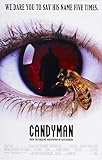
72258 CANDYMAN Movie Horror Decor Wall 36x24 Poster Print | $12.98 | Buy on Amazon |
That same mastery carried into voice acting, most famously as Venom, where his baritone gave the symbiote a sense of menace and intelligence that lingered long after the credits rolled. Todd’s voice was not merely recognizable, it was narrative shorthand for authority, dread, and gravitas. Across film, television, and animation, he left behind performances that continue to teach audiences and filmmakers alike how powerful a single human presence can be.
From Stage to Screen: Early Training, Classical Roots, and the Path to Platoon
Long before Tony Todd became synonymous with cinematic menace and mythic authority, he was shaped by the discipline and rigor of classical performance. Born in Washington, D.C., and raised in Hartford, Connecticut, Todd gravitated toward the stage as a place where physicality, voice, and intention mattered as much as emotion. Acting, for him, was never casual; it was a craft rooted in control and command.
#1 Best Overall
- Be careful how many times you say his name ; He moves through mirrors to find his victims and it's not just a story
- Capture Pop! Candyman for your collection today
- Country of Origin : Vietnam
- Be careful how many times you say his name; He moves through mirrors to find his victims and it's not just a story
A Classical Foundation
Todd studied theater at the University of Connecticut before continuing his training at the Eugene O’Neill National Theatre Institute, an environment steeped in classical technique and textual precision. There, he absorbed Shakespeare, Greek tragedy, and the fundamentals of vocal projection and movement that would later become hallmarks of his screen presence. His towering stature and resonant baritone were not accidents of fate but instruments he learned to wield with purpose.
On stage, Todd learned the power of stillness, how silence could be as expressive as dialogue. Classical theater demands clarity of intention, and Todd carried that discipline into every medium he touched. Even in his earliest screen appearances, there was a sense that he was performing for the back row, projecting meaning beyond the frame.
The Transition to Film
Todd’s move from stage to screen in the mid-1980s coincided with a period when American cinema was hungry for authenticity and raw physical presence. Smaller roles in film and television showcased his intensity, but it was clear he was not destined for background work. Casting directors recognized that Todd didn’t simply play characters; he embodied them.
That recognition led to his breakthrough role in Oliver Stone’s Platoon in 1986. Cast as Sergeant Warren, Todd brought a quiet authority that contrasted sharply with the film’s volatility and moral chaos. His performance didn’t seek attention, yet it anchored the ensemble, grounding Stone’s visceral depiction of war in lived-in realism.
The Tool Desk
Outbyte Driver Updater FREEScan for outdated or missing drivers - takes under a minuteDriver Scan →Outbyte PC Repair FREEClear out junk files and repair common Windows errorsFree Scan →Platoon as a Defining Arrival
In Platoon, Todd’s classical training paid dividends. He conveyed discipline, fatigue, and moral weight through posture and presence rather than exposition. Amid explosions and emotional extremes, his restraint made the character feel authentic, a soldier shaped by experience rather than cinematic heroism.
The film’s success opened doors, but more importantly, it established Todd as an actor of substance. Platoon wasn’t just a high-profile credit; it was proof that his stage-honed gravitas translated seamlessly to the screen. From that point forward, Tony Todd was no longer simply a trained actor seeking roles—he was a formidable presence filmmakers would return to again and again when they needed gravity, authority, and depth.
Platoon and the Birth of a Character Actor Icon in American Cinema
Platoon did more than introduce Tony Todd to a wide audience; it revealed the kind of actor he would become in American cinema. In a film crowded with future stars and heightened performances, Todd stood out by refusing to compete for attention. His Sergeant Warren felt lived-in, a man shaped by routine, command, and the quiet erosion of war.
Authority Without Exhibition
Todd’s performance was notable for what it withheld. He rarely raised his voice or demanded the camera, yet his presence carried weight in every scene. In Oliver Stone’s volatile vision of Vietnam, Todd represented order strained to its limits, authority tempered by experience rather than ideology.
Do these 3 things before closing this tab:
1Fix the driver behind crashes, sound loss and screen glitches2Clear out junk files and repair common Windows errors3Scan for outdated or missing drivers - takes under a minuteThis approach marked him as something increasingly rare in Hollywood: a character actor whose power came from restraint. Todd understood that credibility often emerges from behavior, not dialogue. His physical stillness and deliberate cadence suggested histories the script never spelled out, giving Sergeant Warren a depth that extended beyond screen time.
Redefining the Modern Character Actor
Platoon arrived at a moment when American cinema was shifting toward realism, and Todd fit that movement instinctively. He wasn’t cast to symbolize heroism or villainy but to embody the professional soldier caught in moral crossfire. That grounding made his performance feel essential rather than ornamental.
The industry took notice. Casting directors began to see Todd as an actor who could anchor scenes and lend authenticity to heightened material. He became a reliable presence for filmmakers who needed credibility, whether in war films, thrillers, or later, genre cinema that benefited from his gravity.
A Foundation for a Lasting Screen Identity
What Platoon ultimately gave Todd was not typecasting, but trust. It established him as an actor audiences believed in, regardless of genre or screen time. That trust would follow him into horror, science fiction, and voice acting, allowing him to elevate even the most fantastical material.
Windows Errors? Fix Them Before They Spread
Repair common Windows errors and clear accumulated junk for a smoother, more stable PC - no reinstall needed.Free scan · no reinstallCrashes, No Sound, or Screen Glitches?
Random freezes, missing sound and display glitches usually trace back to one bad driver. Find and replace yours safely.Free scan · under a minuteIn retrospect, Platoon stands as the moment Tony Todd’s screen identity crystallized. It was the birth of a character actor icon, one defined not by flash or excess, but by presence, discipline, and the rare ability to suggest an entire inner life with a single look.
‘Candyman’: Horror Immortality, Cultural Mythmaking, and the Redefinition of the Genre Villain
If Platoon established Tony Todd’s credibility, Candyman transformed it into legend. Bernard Rose’s 1992 horror film did not simply give Todd a starring role; it granted him authorship over a modern myth. In a genre dominated by masked killers and disposable monsters, Todd’s Candyman arrived with history, voice, and tragic gravity.
The performance did more than frighten audiences. It rewired what a horror villain could be, fusing Gothic romance, social commentary, and folkloric terror into a figure that felt ancient the moment he appeared on screen.
A Monster Born From History, Not Gimmick
Candyman was not an arbitrary boogeyman. He was the product of racial violence, generational trauma, and communal storytelling, and Todd understood that the horror only worked if the pain felt real. His Candyman was terrifying not because he killed, but because he remembered.
Quick wins for a faster PC:
Fix the driver behind crashes, sound loss and screen glitchesFind Drivers →Repair Windows errors before they cause bigger problemsFix Now →Scan for outdated or missing drivers - takes under a minuteDriver Scan →Todd played him less like a slasher and more like a wounded immortal, bound to legend yet aching for recognition. The hook hand and blood-soaked iconography mattered, but they were secondary to the sadness and fury behind his eyes.
The Voice That Defined Fear
Central to Candyman’s power was Todd’s voice, a resonant baritone delivered with ceremonial calm. He didn’t shout threats or snarl dialogue; he invited belief. Each line sounded like a ritual, reinforcing the idea that saying his name was an act of participation, not provocation.
That vocal authority became inseparable from the character. Todd’s cadence suggested inevitability, as though Candyman was not chasing victims but answering a summons that had existed long before the film began.
Redefining the Horror Antagonist
At a time when horror villains were becoming increasingly cartoonish, Todd brought dignity and emotional weight to the role. Candyman did not exist merely to shock but to reflect societal fears that mainstream horror rarely confronted directly. Race, class, and urban mythology were not subtext; they were the text.
Todd’s performance challenged audiences to empathize even as they recoiled. That complexity elevated Candyman beyond franchise fodder and positioned the film as one of the most intellectually enduring horror works of the era.
Immortality Beyond the Screen
The true measure of Candyman’s impact is its persistence. Decades later, the character remains a cultural reference point, studied, debated, and reinterpreted by new generations of filmmakers and fans. Todd’s portrayal proved so definitive that it became inseparable from the mythology itself.
For Tony Todd, Candyman was not just a career milestone. It was the role that ensured his place in horror history, not as a monster of the week, but as a symbol of how genre cinema can create legends that speak to deeper truths.
Beyond the Hook: Tony Todd’s Expansive Horror Legacy and Cult Filmography
Candyman may have been Tony Todd’s most iconic creation, but it was only one chapter in a horror career defined by range, intelligence, and an unmistakable screen presence. Todd did not simply appear in genre films; he elevated them, often bringing gravity to projects that might otherwise have been disposable. His horror legacy stretches across decades, subgenres, and mediums, forming a body of work that rewards deeper exploration.
Rather than repeat a single archetype, Todd moved fluidly between hero, villain, mythic figure, and moral center. Even in ensemble casts, his performances carried a sense of history, as though the character existed long before the camera arrived.
The Survivor, the Prophet, and the Moral Anchor
One of Todd’s most important horror roles came in Tom Savini’s 1990 remake of Night of the Living Dead, where he portrayed Ben. In a genre often defined by nihilism, Todd’s Ben was intelligent, decisive, and emotionally grounded. His performance reframed the character not as a hotheaded survivor, but as a tragic figure undone by systemic mistrust and human failure.
The film remains one of the most respected remakes in horror history, in large part because Todd treated it as serious drama rather than genre exercise. His Ben was not battling zombies alone; he was battling fear, prejudice, and the crushing weight of responsibility.
Death as Mythology in the Final Destination Series
Todd found a different kind of immortality as William Bludworth in the Final Destination franchise. Appearing as a cryptic mortician who spoke in riddles about fate and balance, Todd transformed what could have been exposition-heavy scenes into moments of eerie reflection. His presence suggested that death itself had rules, and that Bludworth might be more than human.
Recommended Free Tools
Though his screen time was limited, the character became central to the series’ mythology. Todd’s calm delivery and philosophical tone gave the films an unsettling sense of cosmic order, reinforcing the idea that death was not random but patiently inevitable.
Embracing the Cult and the Extreme
Todd also embraced cult horror with enthusiasm, appearing in films like Hatchet, where he played Reverend Zombie, a vengeful spirit steeped in Southern Gothic excess. In these more outrageous projects, he leaned into genre theatrics without sacrificing credibility. Even when surrounded by splatter and spectacle, Todd grounded his characters in conviction.
This willingness to engage with independent and cult filmmakers endeared him to horror fans. He never treated smaller productions as beneath him, understanding that cult cinema thrives on commitment as much as budget.
A Voice That Haunted More Than One Medium
Beyond physical performances, Todd’s voice became one of horror’s most recognizable instruments. Whether narrating, voicing supernatural entities, or lending gravitas to animation and video games, his baritone conveyed authority and menace with surgical precision. The voice alone could establish mood, history, and threat.
Free tools Windows power users keep installed
One-click scans. No signup required.
That vocal legacy extended well beyond horror purists, crossing into mainstream pop culture while retaining its ominous power. Todd understood that fear often begins not with what is seen, but with what is heard.
A Genre Career Built on Respect
What ultimately defined Tony Todd’s horror filmography was respect for the material and the audience. He approached every role, no matter how fantastical, as an opportunity to explore character and consequence. That seriousness elevated the genre and challenged its limitations.
His expansive body of work stands as proof that horror thrives when actors treat it as mythmaking rather than novelty. Todd did not merely frighten viewers; he invited them to consider why fear endures, and why some figures refuse to be forgotten.
Voice of the Abyss: Venom, Animation, Video Games, and Vocal Performance as Myth
If Tony Todd’s physical presence conveyed inevitability, his voice suggested something even older and more elemental. Deep, resonant, and unhurried, it carried the weight of myth rather than mere performance. When Todd spoke, it felt less like dialogue and more like invocation.
What’s actually slowing this PC down?
Pick the symptom - the matching free tool is one click away.
Venom and the Sound of Monstrous Intellect
Todd reached an entirely new generation of fans as the voice of Venom in Spider-Man: The Animated Series, a role that helped define the character beyond the page. His interpretation balanced brute menace with a chilling intelligence, making Venom feel less like a rampaging creature and more like a dark reflection of the hero. The cadence, the deliberate pauses, the sense of coiled control all suggested a mind as dangerous as the symbiote’s strength.
At a time when animated villains were often exaggerated or one-note, Todd brought theatrical discipline and psychological depth. His Venom didn’t shout; it judged, stalked, and waited. That performance became a benchmark, influencing how the character would be voiced and portrayed for decades afterward.
Animation as Modern Mythmaking
Todd’s animation work extended well beyond Venom, touching projects that leaned heavily into mythic and supernatural themes. Whether voicing demons, deities, or cosmic narrators, he approached animation with the same gravity he brought to live action. The medium allowed his voice to exist untethered from physical form, enhancing its sense of omnipresence.
In these roles, Todd functioned less as a character actor and more as a mythic storyteller. His performances recalled oral tradition, where voice alone establishes authority and belief. Animation became a space where his baritone could operate as pure narrative force.
Video Games and Interactive Dread
Video games proved a natural extension of Todd’s vocal power, placing players directly inside worlds shaped by fear, choice, and consequence. His voice work in games often embodied figures of judgment, ancient evil, or looming inevitability. In interactive media, that authority felt personal, as if the game itself were addressing the player.
Todd understood that video game performances require restraint as much as intensity. His delivery never overwhelmed the experience but deepened immersion, reinforcing the idea that unseen forces were always listening. Few voice actors could make digital spaces feel haunted through sound alone.
Rank #3
- SIZE - 36x24 inches (around 90x60 cm)
- DURABLE WATERPROOF PAPER - vinyl-like PVC paper with glossy lamination
- STRONG PACKAGING - The poster will be packed in a plastic sleeve and shipped rolled in a hard tube
- FREE glue tape included
- GREAT as a gift, interior design or for collection
The Voice as Legacy
Across animation and games, Tony Todd’s voice became a kind of signature rune, instantly recognizable and emotionally loaded. It carried history, threat, and wisdom in equal measure, transcending genre and platform. Even when audiences couldn’t place his name, they felt his presence.
In many ways, Todd’s vocal work ensured his immortality. Long after the screen fades to black, his voice continues to echo through cartoons, consoles, and collective memory, reminding us that true cinematic power does not always need a body. Sometimes, it only needs a voice willing to speak from the abyss.
What’s actually slowing this PC down?
Pick the symptom - the matching free tool is one click away.
A Performer’s Performer: Industry Respect, Fan Devotion, and Influence on Modern Genre Storytelling
Tony Todd’s influence extended far beyond the roles he played, shaping how genre performers approached horror, science fiction, and even dramatic supporting work. Within the industry, he was widely regarded as a performer’s performer, an actor whose commitment elevated every scene regardless of budget, billing, or screen time. Directors trusted him to bring weight to thinly sketched characters, while fellow actors understood that sharing a frame with Todd meant raising their own game.
He carried himself with the seriousness of a classical actor, never treating genre material as disposable. That attitude earned him enduring respect in an industry that often undervalues horror and science fiction. Todd didn’t just work consistently; he worked with intention.
Respected by Peers, Sought After by Creators
Todd’s collaborators frequently spoke about his preparation and generosity on set. Whether appearing in a war film like Platoon or anchoring a supernatural story, he approached each project with the same discipline and curiosity. Younger actors, in particular, cited his willingness to mentor, offering guidance without ego or condescension.
Genre filmmakers understood what Todd brought instinctively: credibility. Casting him immediately signaled to audiences that the material would be taken seriously. His presence acted as a seal of authenticity, especially in horror, where sincerity often separates lasting films from forgettable ones.
Free tools Windows power users keep installed
One-click scans. No signup required.
A Horror Icon Embraced by Fans
Few actors cultivated a bond with fans as enduring or sincere as Todd’s relationship with the horror community. Convention appearances were not treated as obligations but as extensions of his craft, where he engaged thoughtfully with audiences who had grown up fearing and revering his characters. He spoke openly about Candyman, not as a gimmick, but as a cultural text shaped by race, mythology, and tragedy.
Fans responded in kind, treating Todd not merely as a screen villain but as a storyteller who respected their intelligence. His willingness to discuss the deeper themes of his work helped legitimize horror as a space for serious discourse. In many ways, he helped redefine what it meant to be a horror icon in the modern era.
Influence on Contemporary Genre Storytelling
Todd’s legacy can be felt in the current wave of genre storytelling that prioritizes atmosphere, symbolism, and character-driven dread. Modern filmmakers who approach horror as social allegory owe a quiet debt to performances like his in Candyman, which demonstrated how terror could emerge from history, identity, and collective memory. His work proved that monsters are most powerful when they carry meaning.
Actors following in his footsteps have adopted a similar ethos, treating genre roles as opportunities for gravity rather than exaggeration. Todd showed that fear does not require volume or excess, only conviction. That lesson continues to shape how modern genre cinema is written, cast, and performed.
Legacy of a Legend: Why Tony Todd’s Work Will Continue to Haunt, Inspire, and Endure
Tony Todd’s legacy is not defined by a single performance, but by the consistency of his authority across genres, mediums, and decades. He brought a rare sense of gravitas to every role, whether playing a grieving spirit, a battle-hardened soldier, or an otherworldly voice emerging from the shadows. Few actors made audiences feel the weight of a character’s history with such economy and conviction.
What endures most is how seriously Todd treated genre storytelling. He never played horror as novelty or spectacle, but as myth, tragedy, and reflection. That approach gave his work a timeless quality, allowing it to resonate with viewers long after trends shifted and franchises faded.
A Presence That Elevated Every Frame
Todd possessed a commanding physicality that directors instinctively trusted. His height, posture, and voice created an immediate sense of authority, but it was his restraint that made him unforgettable. He understood that true menace, or true sorrow, often lies in what is held back.
In films like Platoon, his performance grounded the chaos of war in lived-in realism. Even in ensemble casts, he stood out not by demanding attention, but by earning it. That ability to elevate material without overpowering it made him invaluable to filmmakers across genres.
The Immortality of Candyman
Candyman remains the cornerstone of Todd’s cultural legacy, not simply as a horror icon, but as a modern myth. His portrayal fused menace with melancholy, transforming a slasher figure into a symbol of historical trauma and collective guilt. Todd’s deliberate cadence and tragic dignity turned the character into something operatic.
The role continues to influence how horror villains are written and performed, emphasizing psychology and symbolism over spectacle. Candyman endures because Todd understood the character as a ghost of history, not just a creature of fear. That depth ensures the performance remains relevant to new generations discovering the film.
A Voice That Expanded His Reach
Todd’s voice acting extended his influence beyond the screen, introducing his unmistakable presence to animation and video games. As the voice of Venom, he brought intelligence and menace to a character often defined by excess. His delivery added layers of personality and threat, proving that vocal performance could carry as much weight as physical acting.
This work allowed Todd to reach audiences who may not have encountered his filmography, further cementing his cross-generational impact. His voice became a conduit for storytelling, capable of conveying power, pain, and dark humor with equal ease.
Quick wins for a faster PC:
Fix the driver behind crashes, sound loss and screen glitchesFind Drivers →Repair Windows errors before they cause bigger problemsFix Now →An Enduring Blueprint for Genre Excellence
Tony Todd leaves behind more than memorable roles; he leaves a blueprint for how genre acting can be approached with integrity. He demonstrated that horror, science fiction, and action are not lesser forms, but spaces where serious artists can explore complex themes. His career stands as a rebuke to the idea that character actors are secondary contributors to cinema.
As audiences revisit his work and new viewers encounter it for the first time, Todd’s performances continue to speak with clarity and force. His characters linger, not because they frightened us, but because they meant something. That is the mark of a true cinema icon, and why Tony Todd’s work will continue to haunt, inspire, and endure.
Quick Recap
Product prices and availability are accurate as of the date/time indicated and are subject to change. Any price and availability information displayed on Amazon at the time of purchase will apply.