Recommended Free Tools
Timothée Chalamet’s ballet and opera controversy began with a remark about cultural survival, not with a stated campaign against either art form. During a CNN and Variety town hall in February 2026, Chalamet argued that audiences cannot be persuaded indefinitely to preserve forms of entertainment they no longer want to attend. He then contrasted cinema with ballet and opera, saying he did not want to work in forms where people ask audiences to “keep this thing alive” even though “no one cares about this anymore.”
He immediately tried to soften the comment by offering “all respect to the ballet and opera people out there” and joking that he had lost “14 cents in viewership.” But when a clip circulated online in early March, the phrase “no one cares” became the focus.
Timothée Chalamet’s ballet and opera controversy began with a remark about cultural survival, not with a stated campaign against either art form. During a CNN and Variety town hall in February 2026, Chalamet argued that audiences cannot be persuaded indefinitely to preserve forms of entertainment they no longer want to attend. He then contrasted cinema with ballet and opera, saying he did not want to work in forms where people ask audiences to “keep this thing alive” even though “no one cares about this anymore.”
He immediately tried to soften the comment by offering “all respect to the ballet and opera people out there” and joking that he had lost “14 cents in viewership.” But when a clip circulated online in early March, the phrase “no one cares” became the focus. Critics said the wording was dismissive, factually overbroad and especially tone-deaf coming from an actor whose family has close connections to ballet and New York performance culture.
The Tool Desk
Outbyte Driver Updater FREEFix the driver behind crashes, sound loss and screen glitchesFind Drivers →Outbyte PC Repair FREERepair Windows errors before they cause bigger problemsFix Now →#1 Best Overall

- ⚠️ Size Tip (READ BEFORE ORDERING) ---For standard gel toe pads, choose one size up from the chart recommendation. Please choose by foot length first. US size and EU size are for reference only. (Size 13-2 are kids size.)
- √ Material and Design of Vamp --- Our vamp is made of high quality satin which is soft, comfortable and durable. Also our Mid-length Vamp with very sturdy wide box can provide very good support and protects the forefoot, it can reduce the probability of sole sprain. We send free toe pads and a storage bag, allow you to dance effortlessly.
- √ High Quality Sole --- The sole is made of multiple layers of cardboard and durable leather, sewed by double needle cord, tightly and neatly, with beautiful radian and medium hardness, so our pointe shoes are very comfortable, non-slip and resistant. Provide enough support for beginners and professional dancer.
- √ Inner Material and Toe Pads --- High-quality canvas insole is made of comfortable and breathable cotton, always keep dry. Toe pads can protect your feet from injury, they are made of soft silicone, it's very safe, no stimulate, no peculiar smell, flexible material can be easily stretched to fits most size foot.
- √ Ribbon and After Sale --- The sewed satin ribbon length 24 inches, can be adjusted tight or loose, bring the most comfortable tightness for the feet. The elestic rubber band on the vamp can be adjusted to keep the shoe close to your foot. If you are not satisfied with our shoes, please contact us immediately, we will deal with it properly.
What did Timothée Chalamet actually say?
The remark came during a town hall held before students at the University of Texas at Austin’s Moody College of Communication. The CNN–Variety event covered Chalamet and Matthew McConaughey’s careers, their creative process, their work together in Interstellar and questions from the audience.
The relevant discussion was broader than ballet and opera. Chalamet and the panel were talking about the future of movie theaters, audience attention and whether filmmakers should ask the public to preserve theatrical moviegoing. He pointed to the strong audience response to films such as Barbie and Oppenheimer as evidence that people will still attend theaters when they feel strongly motivated to see a particular film.
His apparent point was that cultural institutions cannot depend forever on appeals to preservation. If audiences are not motivated to participate, he suggested, simply telling them that an art form must be kept alive may not be enough. The comparison became controversial because he described ballet and opera as though they had reached a point where “no one cares.”
The original town hall was recorded and broadcast in February 2026. The most provocative portion was clipped and circulated roughly two weeks later, in early March. As often happens with a short social-media clip, the sentence that sounded most insulting traveled more widely than the preceding discussion about theaters, audience behavior and the commercial success of major films.
Why did people find the comment offensive?
The criticism was not based on Chalamet saying that he personally hated every ballet or opera. The objection was to the way he characterized the audience and the status of the art forms.
“No one cares” is a sweeping claim
Ballet and opera may have less mainstream visibility than film, television or popular music, but they plainly have audiences. Companies continue to stage performances, sell tickets, train artists, commission work and attract both established patrons and newcomers.
That makes the difference between declining mainstream attention and the absence of interest central to the dispute. A claim that ballet and opera face funding pressure, aging audiences or difficult production economics can be supported as an institutional observation. A literal claim that nobody cares cannot account for the people who attend, perform, teach, fund and produce the work.
Ballet and opera are not one interchangeable category
Critics also objected to grouping ballet and opera together as a single supposedly obsolete form. They have different artistic traditions, institutions, labor requirements, audiences and financial models. Opera depends heavily on singers, orchestral musicians, conductors, designers and stage crews; ballet relies on dancers, choreographers, musicians, rehearsal structures, teachers and production teams. Both are live performance forms, but they are not the same cultural product.
Reducing both to “old art forms that people must be persuaded to save” simplified a much more complicated question: how can live institutions remain artistically ambitious, financially sustainable and accessible to new audiences?
Rank #2

- Quality Satin Upper Material, Cotton Lining and Intensive Paper
- ★Important! To Ensure of Fitting, Please Choose Right Size according to Feet Length.(If You Don't Use Silicone Toe Pads, Please Choose a Size Down) and Size US 4 Big Kids=US 5.5 Adult, US 5 Big Kids=US 6 Adult, US 5.5 Big Kids=US 7 Adult, US 6.5 Big Kids=7.5 Adult, US 7 Big Kids= US 8 Women
- Free Silicone Toe Pads, Protect the Dancers' Toe; Sewed Ribbon Band Inside of Ballet Shoes
- Washing Tips: The Out Sole of Ballet Pointe Shoes Can be Only Cleaned the Upper Satin Surface with Wet Towel
- Swag The Out Sole Repeatly, Makes the Sole a Little Soft, More Longer to Use, More Comfortable to Wear.
Celebrity influence changed the stakes
Chalamet is not an anonymous audience member making an offhand complaint. He is a globally recognized actor speaking in a high-profile media event. Performers and arts organizations argued that a celebrity’s description of an art form as irrelevant can affect public perceptions, fundraising conversations and ticket decisions, even if the speaker did not intend a measurable consequence.
That does not mean Chalamet was obligated to endorse ballet or opera, or that one sentence determines the future of either. It explains why the comment was treated as more consequential than an ordinary disagreement about entertainment preferences.
Why did Chalamet’s family background intensify the backlash?
Chalamet’s family has meaningful connections to dance. His mother, Nicole Flender, and his sister, Pauline Chalamet, trained at the School of American Ballet, and reporting has described broader family connections to dance and New York performance culture.
Outdated Drivers Are Slowing You Down
One free scan finds every outdated or missing driver and matches the right update for your exact hardware.Free scan · exact hardware matchPC Slower Than It Used to Be?
A free scan shows the junk files, broken settings and background clutter dragging Windows down - then fixes them in one click.Free scan · Windows 10 & 11That background made the remark seem particularly jarring to some critics. They viewed him as dismissing traditions that were part of his immediate family environment. The perceived irony was amplified online, where some commentary suggested that Chalamet himself had undergone formal ballet training.
That version needs a qualification. Later reporting quoted Flender clarifying that Timothée did not take formal ballet classes as a child; his sister Pauline was the family member who trained. The accurate description is that Chalamet grew up around dance and had close family exposure to ballet, not that he was a professional ballet trainee who rejected his own former discipline.
The family connection also does not prove that he intended to insult his relatives or that he owed the public a particular opinion. It helps explain the reaction, but it is not evidence of motive.
How did ballet and opera artists and institutions respond?
The backlash included responses from performers, educators, arts organizations and entertainment figures. Opera singer Isabel Leonard criticized the remark publicly. Other artists defended the seriousness and continuing relevance of live performance, emphasizing the labor, discipline and communal experience involved in staging ballet and opera.
What’s actually slowing this PC down?
Pick the symptom - the matching free tool is one click away.
Jamie Lee Curtis amplified criticism and shared material promoting dance organizations. Dancers and opera singers also used the moment to point out how many people are required to create a performance that audiences may experience in a single evening.
Several institutions chose a promotional response rather than a formal denunciation:
Rank #3

- BOX TYPE: Very sturdy wide box, Mid-length Vamp, it provides very good support and protects the forefoot, which is suitable for most people's feet. This is a pair of professional dance shoes with very rigorous workmanship. The center of gravity of the sole and body is in a vertical line, which is very important because it may reduce the probability of sole sprain and reduce the injury of dancers (especially for beginners).
- SOLE: high cost synthetic sole imported from Germany for ballet shoes, with beautiful radian and medium hardness. Provide enough support for beginners and professional dancers. High-quality canvas insole, strong breathability, always keep dry.
- TOE PADS: These toe pads made of SEBS and knitted fabric for best fit and freedom. Creates a protective surface around the toe and offers a perfect snug fit that prevents movement or ruffles to the toe pad. Flexible material easily stretches to accommodate most size foot. It is very safe, does not stimulate your skin, does not produce peculiar smell, and does not need to be maintained regularly with talc powder.
- RIBBON AND RUBBER BAND: The ribbon has a length of 24 inches, they are very tight, so don't worry about being torn. The selected high-quality rubber band has super tensile force. When you feel the heel is loose, you can tighten it to keep the shoe close to your foot.
- SIZE: It is usually recommended to choose a larger size. Many people think that the shoes will be larger. In fact, they don't tighten the rubber band. When you think that the shoes are too loose, you can tighten the rubber bands, allow the shoes to close your feet.
- The Royal Ballet and Opera shared footage of performers and backstage craftspeople and invited Chalamet to reconsider by attending a performance.
- Seattle Opera used the “14 cents” line in a limited promotion for Carmen, offering 14% off selected tickets with a Chalamet-related code.
- The Metropolitan Opera posted social-media material highlighting the musicians, designers, stage crews, makers and other workers involved in producing opera.
These responses defended the art forms while also turning an unfavorable news cycle into audience development. In an ironic twist, the comment generated publicity for institutions trying to persuade people to attend the very performances Chalamet had described as struggling for public attention.
Did Chalamet have a point about ballet and opera?
Some commentators thought the wording was unnecessarily harsh but acknowledged a real structural problem. Ballet and opera remain active professional art forms, yet many companies face high production costs, funding pressure, limited touring capacity, competition for leisure time and concerns about aging audiences.
Quick wins for a faster PC:
Repair Windows errors before they cause bigger problemsFix Now →Fix the driver behind crashes, sound loss and screen glitchesFind Drivers →Those pressures are different from saying the art forms are dead. The School of American Ballet describes itself as a major training institution whose alumni make up more than 95% of New York City Ballet and work in companies across the United States and around the world. That statistic does not establish universal popularity, but it does demonstrate an active educational and professional pipeline.
Large companies continue to mount productions, employ artists and technical staff, sell tickets and introduce audiences to both traditional and contemporary work. The more accurate question is not whether anyone cares. It is whether enough people can be reached, persuaded and supported to sustain the institutions at their current scale.
Visibility is not the same as viability
This distinction is the most useful way to understand the argument:
| Term | What it asks | Why it matters here |
|---|---|---|
| Visibility | How often does an art form appear in mainstream conversation and popular media? | Ballet and opera generally receive less mass attention than major film releases. |
| Viability | Can institutions continue training artists, producing work and reaching paying audiences? | Ballet and opera remain viable, although many organizations face serious economic and audience pressures. |
Chalamet’s comment treated low visibility as if it meant a lack of meaningful concern. Critics argued that the distinction matters because declaring an art form irrelevant can become self-fulfilling: potential audiences may assume there is nothing contemporary, welcoming or worthwhile to see.
Did Timothée Chalamet apologize?
As of August 12, 2026, available reporting had not identified a detailed public apology in which Chalamet fully explained or retracted the remarks. His immediate qualification during the town hall—“all respect to the ballet and opera people out there”—and the “14 cents in viewership” joke were his clearest contemporaneous attempts to acknowledge that he had taken an unnecessarily provocative shot.
That response was not enough for everyone. The qualification could be read as an effort to soften the line, but it did not directly address why “no one cares” was an inaccurate description of real audiences and working artists.
Filmmaker Luca Guadagnino later defended Chalamet. Guadagnino argued that one comment had grown into a controversy larger than its original context and described Chalamet as young, intelligent and concerned that cinema could become marginal. He also suggested that the arts should be united rather than set against one another.
Rank #4
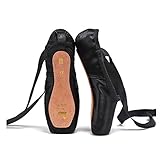
- Satin Upper: Elegant and durable, providing a smooth, professional finish.
- Leather Sole: Adds durability and provides a non-slip surface for better control.
- Wide Toe Box: Offers extra comfort and stability, particularly suitable for dancers with square-shaped toes.
- Strong Elastic Shank: Provides the necessary support and strength for developing dancers,these pointe shoes are ideal for dancers who are working on perfecting their pointe technique.
- Included Accessories: Comes with toe pads and ribbons for a complete package. Note: If you plan to wear these with toe pads, it's recommended to order 1/2 to 1 size larger.
That defense supports the interpretation that Chalamet was worried about cinema’s cultural position rather than calling for ballet or opera to disappear. But without a fuller explanation from Chalamet, the ambiguity remained: supporters heard an offhand joke about cultural economics, while opponents heard an influential actor belittling fellow artists.
Free tools Windows power users keep installed
One-click scans. No signup required.
Was Chalamet punished or did the controversy affect his career?
No verified evidence reviewed for this account establishes a formal disciplinary consequence, a confirmed cancellation or a definitive career impact caused by the remarks.
Claims that the comment directly cost Chalamet an award should be treated as speculation unless supported by voting data or an on-record explanation from voters. A viral backlash can change the tone of public discussion, but it does not by itself prove that a casting decision, award result or professional opportunity was caused by the controversy.
What is the fairest interpretation?
Two points can be true at once:
- Chalamet was raising a legitimate concern about whether cultural forms can survive without broad and active public engagement.
- His phrase “no one cares about this anymore” was dismissive, factually too broad and poorly suited to a public discussion involving living artists and institutions.
He did not announce an anti-ballet or anti-opera campaign, and he did show some awareness during the town hall that the comment was provocative. But the criticism should not be reduced to people being unable to take a joke. The sentence erased the difference between a smaller or less visible audience and no audience at all, grouped two distinct art forms together and came from someone with an unusually large platform.
The controversy is therefore less about whether Chalamet is personally allowed to prefer cinema. It is about how public figures describe cultural forms that are under pressure but still alive—and whether a blunt argument about audience demand can be made without dismissing the people who keep those forms functioning.
Do these 3 things before closing this tab:
1Scan for outdated or missing drivers - takes under a minute2Clear out junk files and repair common Windows errors3Fix the driver behind crashes, sound loss and screen glitchesFrequently Asked Questions
What did Timothée Chalamet say about ballet and opera?
The controversy began after a clip from a February 2026 CNN and Variety town hall circulated online in early March. While discussing whether audiences should be asked to preserve movie theaters and older cultural forms, Chalamet said he did not want to work in forms where people ask audiences to “keep this thing alive” even though “no one cares about this anymore.” He then expressed respect for ballet and opera professionals and joked about losing “14 cents in viewership.”
Does Timothée Chalamet hate ballet and opera?
No. He did not say that he personally disliked every ballet or opera, nor did he call for either art form to disappear. His wording did, however, characterize them as though they had no meaningful audience, which is why performers and institutions regarded the comment as dismissive.
Did Timothée Chalamet train in ballet?
Chalamet’s mother Nicole Flender and sister Pauline Chalamet trained at the School of American Ballet. However, later reporting quoted Flender clarifying that Timothée himself did not take formal ballet classes as a child. He grew up around dance, but he was not a professional ballet trainee.
Did Timothée Chalamet apologize or lose an award over the controversy?
As of August 12, 2026, available reporting did not identify a detailed formal apology or a verified career punishment resulting from the remark. His immediate qualification during the town hall was the clearest attempt to soften what he had said. Claims about the comment directly costing him an award remain speculation without voting data or an on-record explanation from voters.
The Bottom Line
Bottom line: Chalamet’s underlying concern—that cultural institutions need real audience engagement rather than appeals to preservation alone—was legitimate. His wording was the problem. Ballet and opera face visibility and sustainability challenges, but they have active artists, institutions, training systems and audiences; “no one cares” was an inaccurate and dismissive way to describe that reality.
Quick Recap
Product prices and availability are accurate as of the date/time indicated and are subject to change. Any price and availability information displayed on Amazon at the time of purchase will apply.