Do these 3 things before closing this tab:
1Scan for outdated or missing drivers - takes under a minute2Repair Windows errors before they cause bigger problems3Fix the driver behind crashes, sound loss and screen glitchesThe Kamala Harris memes were not one joke or a single campaign invention. The 2024 cycle combined a May 10, 2023 “coconut tree” speech clip, the “Brat” aesthetic, Venn diagrams, laughter, and “unburdened by what has been.” Supporters used those formats to build recognition, while critics used the same clips to question Harris’s authenticity and seriousness.
The most famous example is the coconut-tree meme, whose meaning is often reversed online. Harris was quoting her mother to argue that people exist within the context of family, community, history, and institutions; Harris was not claiming that she personally fell from a coconut tree. The later meme cycle transformed that contextual argument, along with several other Harris clips, into a flexible political language.


Key takeaways
- The coconut-tree meme originated in Kamala Harris’s May 10, 2023 White House remarks, not during the 2024 campaign.
- Harris was quoting a saying from her mother to argue that people exist within family, community, historical, and institutional contexts; Harris did not claim that she personally fell out of a coconut tree.
- The 2024 Kamala Harris meme cycle included the coconut tree, Charli XCX’s “kamala IS brat” post, Venn diagrams, laughter, “unburdened by what has been,” and edited clips of Harris dancing, cooking, and speaking.
- The campaign selectively adopted online material, especially the Brat visual identity, rather than creating every meme from scratch.
- Supporters and critics used many of the same clips for opposite purposes, so the memes do not have one fixed political meaning.
- A 2024 TikTok study reported changes in sentiment after Joe Biden withdrew from the race, but the study does not prove that memes caused a change in votes or determined an election result.
What does the Kamala Harris coconut tree meme mean?
The Kamala Harris coconut tree meme turns an unusual image from a serious argument about social context into a shorthand for Harris’s distinctive public persona. The phrase became widely recognizable in July 2024, but the source was a White House speech delivered more than a year earlier.
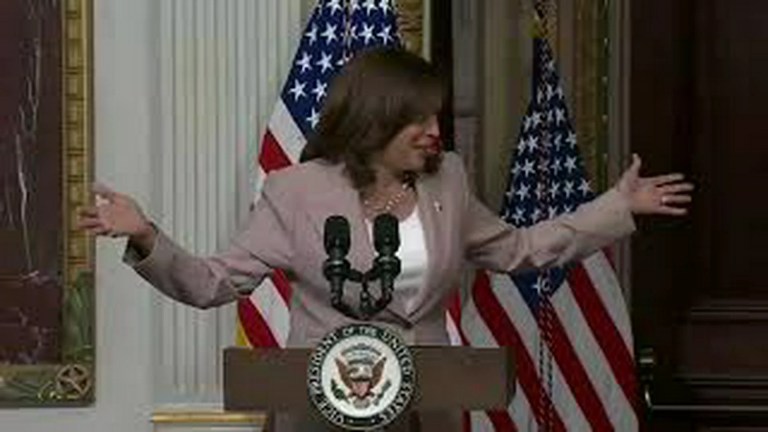
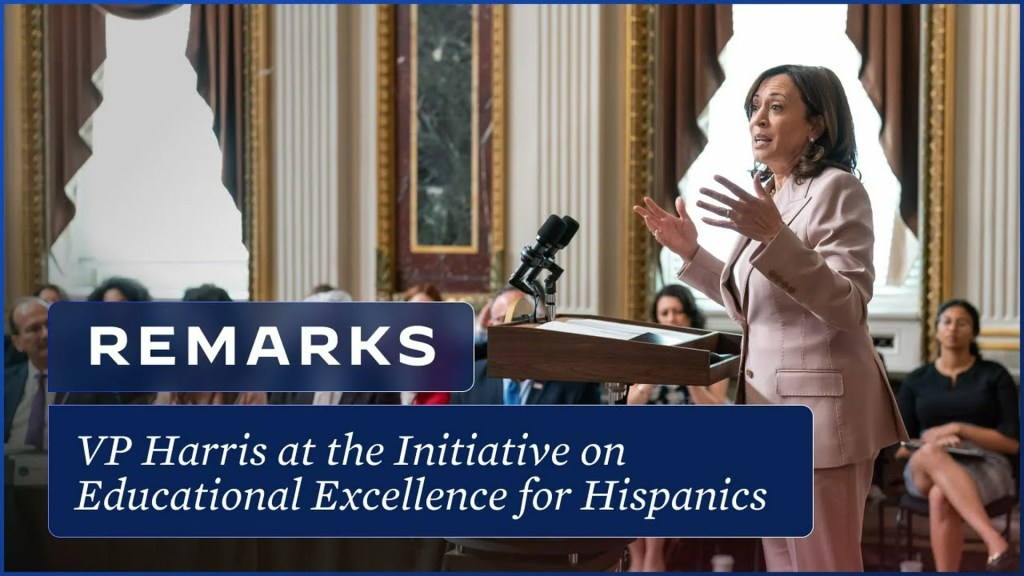
On May 10, 2023, Harris spoke at a White House ceremony for commissioners connected to the White House Initiative on Advancing Educational Equity, Excellence, and Economic Opportunity for Hispanics. Harris was explaining why discussions about young people should also consider their parents, grandparents, teachers, communities, and history.
#1 Best Overall
Harris quoted her mother by saying, You think you just fell out of a coconut tree?
Harris then made the underlying point: You exist in the context of all in which you live and what came before you.
The official White House video of Harris’s May 10, 2023 remarks preserves the speech and its original setting.
The common misreading is that Harris said she had literally fallen out of a coconut tree. She did not. Harris was quoting a saying her mother used to challenge the idea that young people can be understood in isolation from their families and surroundings.
The meme’s humor comes from the contrast between the vivid coconut-tree image and the broader policy argument. A short rhetorical question, Harris’s sudden laugh, and the sentence about context could all be detached from the speech. Palm-tree and coconut emojis then became a compact way to refer to Harris, her supporters, or the entire 2024 meme cycle.
Why did the coconut-tree clip become a meme in 2024?
The coconut-tree clip became a meme in 2024 because an easily detached sentence collided with a major political transition. In July 2024, Biden ended his reelection campaign and endorsed Harris, bringing older Harris clips into a new stream of online attention.
What’s actually slowing this PC down?
Pick the symptom - the matching free tool is one click away.
CBS News’s July 22, 2024 explainer described the dramatic resurfacing of the clip after Biden’s withdrawal and endorsement. The timing changed the role of the video: the coconut-tree line was no longer just an isolated odd quotation. It became a symbol of the sudden enthusiasm, confusion, and participatory humor surrounding Harris’s candidacy.
The clip had several properties that made remixing easy:
- The question was short enough to quote in a caption or post.
- The coconut tree created an instantly recognizable visual image.
- The laugh supplied a reaction sound that could be separated from the argument.
- The phrase about context could be used sincerely, ironically, or without its original political meaning.
- The clip suggested a character as well as a proposition: Harris could be framed as warm, strange, funny, awkward, or unusually memorable.
The scale of the early burst should be described carefully. According to The Washington Post (2024), an X thread compiling Harris moments, including “I love Venn diagrams,” received nearly 14 million views. The Washington Post also reported that searches for “Kamala” and “coconut tree” reached their highest levels of that year at that time. Those were dated July 2024 observations, not a permanent measure of the meme’s reach or a current 2026 engagement figure.
How do the major Kamala Harris memes differ?
The major Kamala Harris memes came from different sources and carried different levels of campaign involvement. Treating every format as one identical joke hides the way political memes move between speeches, fan communities, celebrity culture, and official communication.
| Format | Origin | Original context | Typical online form | Campaign relationship | Interpretive risk |
|---|---|---|---|---|---|
| Coconut tree | Harris’s May 10, 2023 White House remarks | A quotation from Harris’s mother used in an argument about family, history, and social context | Caption, coconut or palm emoji, reaction clip, audio remix | Amplified during the 2024 meme cycle; the supplied evidence does not establish it as an original campaign slogan | The excerpt can make a contextual argument look like an isolated absurdity |
| Brat | Charli XCX’s July 2024 public statement followed by online remixing | Charli XCX’s pop-cultural “Brat” identity and the internet’s association of Harris with irreverent, imperfect, anti-polished energy | Acidic green graphics, fan edits, captions, and “kamala IS brat” references | The official campaign account changed its branding to echo selected Brat visual and linguistic cues | A celebrity phrase can be mistaken for a coordinated campaign partnership or for Harris’s own originating message |
| “I love Venn diagrams” | Harris’s August 11, 2023 gun-safety conversation | An explanation of overlapping attacks on voting rights, reproductive health care, and LGBTQ rights, and the coalitions formed around those intersections | Short quotation, caption, image, or enthusiastic audio clip | No specific official campaign reuse is established in the supplied evidence | The enthusiastic phrase can erase the coalition-building argument around it |
| “Unburdened by what has been” | Recurring Harris speech language; the dossier does not identify one sole originating event | An optimistic political idea about moving beyond the constraints or legacy of the past | Caption, repeated audio, music edit, or deliberately grand verbal loop | Circulated within the broader campaign-era meme embrace; no specific official reuse is established here | Its abstract structure makes the phrase easy to mock as circular or empty |
| Laugh and reaction clips | Short excerpts from Harris’s public appearances | Reactions and laughter embedded in longer interviews or speeches | Reaction image, sound bite, captioned clip, or soundtrack edit | Used by supporters and critics; no single official adoption defines the format | Cropping, soundtrack, and caption can turn warmth into supposed awkwardness or unseriousness |
| Dance, cooking, and speech edits | Fan-made and critical edits of existing Harris footage | Performance, personality, or everyday activity rather than one policy proposition | Fan cam, music video, montage, or character-driven short video | Part of the wider meme-candidate environment described in 2024 campaign coverage | The edit can construct a “character” that overwhelms the person and the policy record |
Why are people saying Kamala Harris is Brat?
People said Kamala Harris was Brat because Charli XCX publicly posted the phrase “kamala IS brat” after Biden withdrew and endorsed Harris, and internet users connected Harris’s clips with the album’s acidic green, irreverent, imperfect, and anti-polished aesthetic.
Charli XCX supplied the highly visible phrase; Harris did not originate the comparison. Online users then attached the Brat identity to Harris clips, coconut imagery, fan edits, and campaign commentary. TIME’s July 2024 account of the Charli XCX connection describes the cultural collision between the pop album and Harris’s suddenly renewed online presence.
The campaign’s role came afterward and was selective. Reporting documented that the official campaign account changed its branding to echo Brat’s visual language. TIME’s reporting on the Harris campaign’s meme strategy presents the shift as an effort to use existing internet appeal and reach younger voters.
The sequence matters: celebrity statement, user remixing, then official campaign adoption. Charli XCX’s post is evidence of a highly visible cultural endorsement, not proof of a coordinated campaign partnership. The campaign’s branding change shows strategic amplification, not that campaign officials invented every preceding joke.
Recommended Free Tools
Why does Kamala Harris keep saying she loves Venn diagrams?
Harris’s “I love Venn diagrams” line was a metaphor for overlapping political issues and coalitions, not a standalone policy proposal about mathematics.
During an August 11, 2023 conversation about gun safety, Harris said, I love Venn diagrams.
The surrounding discussion described the overlap among attacks on voting rights, reproductive health care, and LGBTQ rights. The Archives of Women’s Political Communication transcript preserves the fuller context.
The meme removed the policy explanation and retained the enthusiastic sentence. That reduction made the phrase unusually flexible. Supporters could use “I love Venn diagrams” to signal coalition politics or affectionate identification with Harris’s speaking style. Critics could use the same line to portray Harris as affected, overly academic, or comic.
What does “unburdened by what has been” mean?
“Unburdened by what has been” expresses an optimistic idea about moving forward without being limited by the past, while the meme often treats the phrase as an ornate and deliberately repetitive verbal loop.
Rank #3
The phrase’s abstract, aphoristic structure makes it easy to place over unrelated images, repeat with music, or present as a caption detached from a policy argument. Supporters can read the phrase as a forward-looking slogan. Ironic edits can make its repetition sound grandiose, evasive, or nonsensical.
The phrase therefore illustrates a recurring feature of Harris memes: the words do not carry one stable meaning after extraction. The speaker’s cadence, the edit, the soundtrack, and the community sharing the post all help determine whether the result feels inspirational, campy, awkward, or hostile.
Why do Harris’s laugh, dance, cooking, and speech clips keep circulating?
Harris’s laugh, dance, cooking, and speech clips keep circulating because short audiovisual edits can build a recognizable public character without making one complete argument.
Supportive fan cams and music videos presented Harris as energetic, spontaneous, funny, self-aware, or unexpectedly unserious in an affectionate way. Critical edits used similar footage to suggest awkwardness, inauthenticity, incompetence, or a lack of seriousness. The raw footage could remain almost unchanged while the interpretation flipped through a new caption or soundtrack.
Windows Errors? Fix Them Before They Spread
Repair common Windows errors and clear accumulated junk for a smoother, more stable PC - no reinstall needed.Free scan · no reinstallOutdated Drivers Are Slowing You Down
One free scan finds every outdated or missing driver and matches the right update for your exact hardware.Free scan · exact hardware matchThat flexibility is why the “meme candidate” was larger than the coconut-tree quotation. TIME’s coverage of the 2024 campaign meme cycle discusses the broader collection of Harris clips and formats rather than treating the coconut tree as an isolated event.
A viewer should ask what the edit is doing before deciding what a clip proves. Cropping can remove a question’s answer. A soundtrack can turn a neutral reaction into mockery. A caption can tell viewers to interpret laughter as warmth or as evidence of discomfort. The same audiovisual material can support opposite political narratives.
Are the Kamala Harris memes supportive or making fun of her?
The Kamala Harris memes are both supportive and mocking because a meme is a reusable format rather than a fixed message. Supporters used coconut emojis, Brat visuals, fan edits, and clipped quotations to create collective excitement and cultural fluency; critics reused related material to frame Harris as awkward, inauthentic, unserious, or unintelligent.
| Element | Supportive reading | Hostile reading | What changes the interpretation |
|---|---|---|---|
| Coconut-tree quotation | A memorable explanation of how history and community shape people | An absurd line suggesting verbal confusion | Whether the full speech or only the rhetorical question is shown |
| Laugh | Warmth, spontaneity, and emotional openness | Awkwardness or lack of seriousness | Caption, facial crop, soundtrack, and surrounding exchange |
| Venn diagrams | Coalition-building and attention to political intersections | Over-intellectualized or performative speech | Whether the policy examples remain in the clip |
| Brat aesthetic | Confidence, irreverence, imperfection, and youth-oriented cultural fluency | Branding without substance or borrowed pop-culture relevance | Whether the post is fan-made, celebrity-led, or official campaign communication |
Why does race and gender matter when interpreting the memes?
Race and gender matter because Harris’s meme cycle was also a struggle over how a Black and South Asian woman in public life could be represented, mocked, defended, and made legible online.
Quick wins for a faster PC:
Clear out junk files and repair common Windows errorsFree Scan →Scan for outdated or missing drivers - takes under a minuteDriver Scan →That point does not mean that every coconut joke, laugh edit, or Brat reference is automatically racist or sexist. The analytical point is that public figures do not enter meme culture as blank screens. Existing expectations about women’s voices, emotional expression, authority, likability, intelligence, and “seriousness” influence how identical behavior is read.
Research on the Facebook framing of Harris uses an intersectional approach to examine memes depicting the first female U.S. vice president. An intersectional reading asks how race, gender, ideology, and platform conventions work together, rather than treating a meme as a purely individual joke detached from social power.
Later research also examines Harris memes as campaign organization, cross-platform diffusion, political participation, and possible “controlling images”—repeated portrayals that narrow how a group or public figure is understood. The 2025 Academy of Management Proceedings study of memetic contagion in the Harris campaign and the 2025 study of how “Kamala is brat” spread across platforms reflect that broader shift from asking whether a meme is funny to asking what social and organizational work the meme performs.
Independent reader supportYour contribution helps us test, update, and keep practical guides available for everyone.Did Kamala Harris’s memes help her campaign?
The available evidence shows that Harris’s online environment changed after Biden’s withdrawal, but it does not establish that memes alone changed voter behavior or determined an election.
According to Yi Luo, Jin-A Choi, and Bond Benton (2024), a study of TikTok videos reported a 46.8% increase in positive sentiment in videos mentioning Harris and a 52.0% decrease in negative sentiment after Biden’s withdrawal. The findings appear in the researchers’ 2024 study of sentiment and user engagement for 2024 presidential candidates.
The same study reported increased odds of sharing and liking for videos mentioning Democratic candidates after the withdrawal. Those observations matter because they show measurable changes in an online dataset. They do not show that a coconut emoji caused a vote, that a Brat graphic persuaded a particular demographic, or that meme culture determined the election.
Several limitations are important:
- The figures describe a specific TikTok-video dataset, not all social platforms or all voters.
- The study observed a change after a major political event; it did not prove that memes caused the change.
- Sentiment and engagement are not the same as persuasion, turnout, or electoral support.
- The nearly 14-million-view X-thread figure reported by The Washington Post describes a July 2024 moment and should not be treated as a current or universal reach metric.
A broader 2024 study of satirical memes and attention to political information examines how memes can make politics more attractive and noticeable, but attention is not automatically agreement. The 2024 research on satirical memes and political information is useful for that distinction: a meme can bring someone toward political content without telling us what the person ultimately believes.
What did the campaign create, and what did it borrow?
The Harris campaign borrowed and amplified a large part of the meme language rather than originating the entire cycle. Online users circulated Harris clips; Charli XCX made the Brat comparison highly visible; and the official campaign account adopted selected Brat cues and participated in a broader meme-friendly communication strategy.
The Tool Desk
Outbyte Driver Updater FREEFix the driver behind crashes, sound loss and screen glitchesFind Drivers →Outbyte PC Repair FREEClear out junk files and repair common Windows errorsFree Scan →Best Value
This distinction is important for understanding modern campaign communication. A campaign can recognize an existing community’s joke, adopt its visual language, and make the joke more visible without controlling the joke’s original creation or every later interpretation.
Official adoption can also change a meme’s meaning. A fan-made edit may feel spontaneous and subcultural. The same green graphic or coconut reference on an official campaign account can become a branding decision. Some supporters may see that decision as savvy participation; critics may see it as an attempt to manufacture authenticity.
How should you interpret a Harris meme before sharing it?
A reliable reading of a Harris meme starts with the source clip and separates the original statement from the later edit.
- Find the original date and setting. The coconut-tree clip belongs to May 10, 2023, while the Venn-diagram quotation comes from an August 11, 2023 gun-safety conversation.
- Watch beyond the viral sentence. Check whether the speaker was making a policy argument, quoting another person, answering a question, or reacting to someone else.
- Separate words from presentation. A caption, crop, soundtrack, speed change, or reaction shot may supply most of the joke’s meaning.
- Identify the circulation path. Ask whether the post came from a fan, critic, celebrity, campaign account, news outlet, or anonymous aggregator.
- Look for the target of the humor. A post may be laughing with Harris, laughing at Harris, mocking a campaign, or commenting on internet culture itself.
- Do not convert visibility into causation. Views, likes, shares, and sentiment changes show online activity; they do not by themselves prove persuasion or electoral impact.
How can readers understand Harris beyond clipped video moments?
Readers who want Harris’s own account of the experiences and values shaping her public life can use her memoir, The Truths We Hold, as optional background reading. The memoir is not a book about the 2024 meme cycle, but it offers a way to separate Harris’s self-described political biography from the compressed persona built by viral clips.
Free tools Windows power users keep installed
One-click scans. No signup required.
The contrast is useful because memes are optimized for recognition and repetition, while a memoir offers a longer account of personal history, public service, and political values. Neither format should automatically replace the other: the meme shows how a public image circulates, while the memoir presents the subject’s own narrative about her life.
What is the larger meaning of the Harris meme cycle?
The Harris meme cycle shows how political identity is assembled in the space between speech, fandom, celebrity culture, campaign branding, and criticism. The coconut tree became memorable because it was both funny and detachable from its original argument. Brat became powerful because a pop-cultural label met an already circulating collection of clips at a moment of political change.
The memes made Harris more recognizable and gave supporters a participatory language, but recognition was politically ambivalent. The same circulation that created warmth and cultural fluency also created opportunities for ridicule, racialized and gendered framing, and claims about authenticity or competence.
Evidence from 2023 and 2024 establishes the origins and early effects of the cycle. Later academic work helps explain diffusion, organization, and representation. No reliable current 2026 metric isolates the continuing reach of the Harris meme cluster from broader political search and social-platform activity, so the strongest conclusion is not that the memes remain equally viral. The stronger conclusion is that the memes demonstrate how contemporary political meaning is made, contested, and revised through remix.
The Bottom Line
Bottom line: The Kamala Harris memes were a layered media phenomenon, not one campaign slogan: a 2023 context argument became a 2024 coconut-tree shorthand, collided with Charli XCX’s Brat aesthetic, and was used by supporters and critics alike. The memes increased recognition and online participation, but available evidence does not prove that they alone changed votes or election outcomes.
Quick Recap
Product prices and availability are accurate as of the date/time indicated and are subject to change. Any price and availability information displayed on Amazon at the time of purchase will apply.