What’s actually slowing this PC down?
Pick the symptom - the matching free tool is one click away.
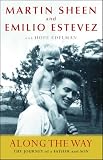
Charlie Sheen and his father, Martin Sheen, have described a relationship marked by affection and support, but also by difficult periods and disagreements. Charlie called them “pretty cool” in 2012; accounts of his childhood and a consequential intervention in 1998 show why their bond is better understood as close but complicated than as either an easy relationship or an estrangement.
What Charlie has said about his relationship with Martin
In 2012, as Martin was preparing to play Charlie’s father on the sitcom Anger Management, Charlie described their relationship to CBS News as “pretty cool.” The comment was brief, but it gives a direct answer to whether Charlie publicly portrayed them as estranged: he did not. CBS News reported the comment alongside news of Martin’s guest role.


How Charlie’s childhood put him close to his father’s struggles
Charlie accompanied Martin to the Philippines during the making of Apocalypse Now when he was 11. In the documentary aka Charlie Sheen, he recalls recognizing his father’s struggle with alcoholism and remembers playing catch while Martin was in rehabilitation. Those memories place Charlie near a difficult part of Martin’s life, though they are Charlie’s retrospective account rather than a complete record of the family’s private experience. Netflix Tudum describes the childhood and rehabilitation memories featured in the documentary.
What happened during Charlie’s 1998 crisis
After Charlie was hospitalized following a cocaine overdose, Martin turned him in for a parole violation, according to Charlie’s account in a 2013 Guardian interview. The action had real consequences; it was not simply an expression of approval or indulgence. Charlie also recalled that his father gave him a practical direction: “Go get your money and take care of your kids.” The combination of enforcement and a push toward responsibility complicates any simple account of Martin either abandoning or shielding his son. The Guardian interview recounts Charlie’s memory of the episode.
Crashes, No Sound, or Screen Glitches?
Random freezes, missing sound and display glitches usually trace back to one bad driver. Find and replace yours safely.Free scan · under a minuteWindows Errors? Fix Them Before They Spread
Repair common Windows errors and clear accumulated junk for a smoother, more stable PC - no reinstall needed.Free scan · no reinstall#1 Best Overall
Martin’s public statements showed continuing love and concern
In a 2011 CBS interview about his children, Martin said, “I’d never, ever, ever allowed my heart not to include all of my children all of the time.” He added: “You love them differently, and you give the most love to the one that needs it at the time. And that’s certainly the case with Charlie.” Those are Martin’s own public descriptions of his approach to his son, not proof that every period between them was uncomplicated. CBS News reported Martin’s comments about loving and supporting his children.
Why Martin’s absence from the documentary does not establish rejection
Martin did not appear on camera in aka Charlie Sheen, and neither did Charlie’s brother Emilio Estevez. Director Andrew Renzi said they wanted Charlie to have his moment and supported the project. Charlie later said his father felt celebrated after watching it. In the film, Charlie expressed the hope that Martin would see it “as the love letter to him that it is.” Taken together, those accounts make the absence of an on-camera interview a poor basis for concluding that Martin rejected the documentary or his son. Netflix Tudum’s interview with Charlie covers his father’s reaction and the director’s account of the family’s support. Renzi explained Martin and Emilio’s absence from on-camera interviews in a separate Netflix Tudum interview.
Rank #2
The relationship has included friction as well as affection
In a 2016 Guardian interview, Charlie described arguing with Martin about Alcoholics Anonymous around the time he told his father he was HIV-positive. The anecdote is a reminder that public expressions of love did not mean they agreed on everything. It is Charlie’s account of a particular disagreement, not grounds for broader claims about either man’s health or their relationship as a whole. The Guardian reported Charlie’s recollection of the disagreement.
Independent reader supportYour contribution helps us test, update, and keep practical guides available for everyone.What the public record can—and cannot—say
Across Charlie’s recollections, Martin’s public comments, and accounts surrounding the documentary, the picture is of a father and son who have expressed care for one another while confronting serious difficulties and occasional conflict. These interviews and retrospective accounts offer snapshots, not a full private history. “Close but complicated” best fits what they have publicly shared without claiming that the relationship was always easy.
Quick Recap
Best Value

- Used Book in Good Condition
Product prices and availability are accurate as of the date/time indicated and are subject to change. Any price and availability information displayed on Amazon at the time of purchase will apply.




