WWE dates the Attitude Era to 1996–2001, but its signature WWE Championship design did not arrive until March 30, 1998, when it was presented to “Stone Cold” Steve Austin. The era also featured distinct secondary and specialty titles, so there was no single belt design that represented every championship.
This is a ranking of prominent designs documented in WWE’s histories, not a complete catalog of every strap and plate variation used on television. The order is subjective: it weighs visual impact and readability, fit with the title’s identity, distinctiveness, and association with memorable wrestlers and moments.
| # | Preview | Product | Price | |
|---|---|---|---|---|
| 1 |
|
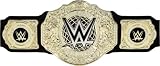
Mattel WWE Championship Title Belt, Role Play Accessory | $31.01 | Buy on Amazon |
| 2 |

|
Wing Eagle Heavyweight Wrestling Championship Belt Replica, Adult Size, 2MM Brass | $115.00 | Buy on Amazon |
How broad is this ranking?
WWE’s timeline labels the Attitude Era “’96-’01.” That span covers multiple championships and design histories; it should not be confused with the tenure of one particular WWE Championship belt. The official histories establish several prominent designs and title lineages, but they do not provide a complete visual inventory of every Attitude Era belt or variation.
Accordingly, the ranking below focuses on named designs or title identities supported by WWE’s published accounts. Where those accounts confirm a championship’s presence but do not document its exact appearance, that limitation is made explicit rather than filled in by guesswork.
#1 Best Overall
- Kids can be a champ with WWE Championships!
- The leather-like belt measures more than 3 feet long.
- The kid-sized titles feature an authentic style replicating real titles for immersive role-play!
- Play out championships seen on RAW, SmackDown and NXT!
- Fans can collect every championship and rule the WWE Universe (each sold separately, subject to availability).
Attitude Era belt designs, ranked
1. Attitude Era WWE Championship (Big Eagle family)
The era’s defining main-title design arrived on March 30, 1998, when Mr. McMahon presented it to Steve Austin on Raw. WWE describes a rounded centerpiece and updated side plates. The strap began blue and later changed to black; WWE identifies the 1998 WWE-logo update as the only other variation during the design’s tenure. Those distinctions matter: “Big Eagle” refers to a family of versions, not one unchanging belt.
It ranks first for scale and recognition as well as its place in the era’s central title story. The eagle-centered design looks like a major championship, while the strap and logo changes give it a visual history of its own. WWE’s account of the title’s design and its presentation to Austin is at The history of the WWE Championship.
2. Smoking Skull WWE Championship
Austin’s personalized WWE Title made the strongest departure from the standard championship look. Its centerpiece replaced the eagle and globe with a skull, smoke from its eyes, and rattlesnakes at either side. The imagery translated Austin’s rebellious persona into a belt that was immediately distinct from the regular title.
WWE records that Austin held the Smoking Skull and that The Rock once stole it and threw it off a bridge. That association with the rivalry gives the design more than novelty value: it became part of the story around the championship. WWE recounts the customized title in its WWE Championship history.
Free tools Windows power users keep installed
One-click scans. No signup required.
3. Hardcore Championship
The Hardcore Championship is memorable because it rejects the polished, symmetrical look of a conventional title. WWE says it resembled a battered former Winged Eagle, broken into pieces and covered in duct tape. The damage was part of the presentation, not an attempt at luxury craftsmanship.
That rough, improvised appearance is an unusually clear match between a championship’s visual identity and its chaotic character. It places third because it is less refined than the top two designs, but more visually distinctive than a conventional plate-and-strap belt. WWE describes it in The chaotic chronicles of the Hardcore Championship.
4. European Championship
The European Championship added a recognizable secondary-title identity to the period. WWE says it was introduced to fans during a European tour in 1997 and won by The British Bulldog in a Berlin tournament final against Owen Hart. Its lineage later ended in 2002, when Rob Van Dam defeated Jeff Hardy to unify it with the Intercontinental Championship.
The title’s history is well established, but WWE’s account does not offer a detailed construction record for every version of its belt. Its place here reflects its distinct identity and historical role, not a claim that one exact plate design remained unchanged throughout its run. See WWE’s European Title history.
PC Slower Than It Used to Be?
A free scan shows the junk files, broken settings and background clutter dragging Windows down - then fixes them in one click.Free scan · Windows 10 & 11Crashes, No Sound, or Screen Glitches?
Random freezes, missing sound and display glitches usually trace back to one bad driver. Find and replace yours safely.Free scan · under a minute5. Light Heavyweight Championship
The Light Heavyweight Championship belongs in an account of the era’s title landscape, though WWE describes it as a lesser-known part of the late-1990s period. WWE gives the division’s limit as under 215 pounds and documents a 2001 storyline unifying the Light Heavyweight and Cruiserweight championships.
Rank #2
- Championship Quality: This wrestling belt is designed for professional-level competitions, featuring a heavyweight 2mm brass construction for durability.
- Replica: Wing Eagle Wrestling Championship belt replica can fix every one.
- Adult Sizing: With an adjustable length, this belt can accommodate most adult wrestlers and fits waist sizes up to 42 inches.
- Impressive Display: Whether worn during matches or showcased as a prized possession, this belt makes a bold statement.
- Durable Materials: Crafted with high-quality brass and genuine leather, this belt is built to withstand the rigors of intense wrestling action.
The title’s historical presence is clearer than a full, version-by-version visual chronology in the official material. It ranks below the European Championship because its documented identity is less prominent in WWE’s account, not because the evidence establishes a definitive visual comparison. WWE’s coverage is in its Light Heavyweight Championship history and history of unification.
6. Intercontinental Championship designs
The Intercontinental Championship was part of the Attitude Era title picture: WWE’s title history lists era holders including The Rock, Austin, and Chyna. That establishes the championship’s presence, but a lineage page alone does not identify which belt design appeared with each reign. Without a dated image or a more detailed design history, it is not responsible to rank a specific Intercontinental version against the named designs above.
WWE’s Intercontinental Championship title history documents the lineage, not a complete design chronology.
7. Tag team championship designs
WWE says a tag-title version first appeared in the mid-1980s and continued through the Attitude Era with “very slight alterations.” That supports continuity across the period, but does not establish a detailed inventory of every strap or plate change. The design is therefore relevant to the era without being a single, precisely documented variant to rank confidently here.
WWE’s account is Seven rare championships from the WWE vault.
8. Women’s Championship designs
WWE’s title-history page confirms the Women’s Championship lineage, but the available account does not provide a comprehensive visual chronology of its Attitude Era designs. A particular belt version needs dated visual evidence before it can be identified and ranked without speculation. The lineage is available in WWE’s Women’s Championship title history.
Independent reader supportYour contribution helps us test, update, and keep practical guides available for everyone.Why the WCW Championship is not ranked as a WWE-origin design
Chris Jericho won the WWE and WCW championships at Vengeance 2001 and carried both belts for a period. After WrestleMania X8, the championships were merged and replaced by one Undisputed title. The WCW belt is relevant to the adjoining Invasion and unification story, but it was not a WWE-origin championship design, so it does not belong in a ranking of WWE belt designs. WWE recounts the sequence in The complex history of WWE’s era of unification.
Do these 3 things before closing this tab:
1Fix the driver behind crashes, sound loss and screen glitches2Clear out junk files and repair common Windows errors3Scan for outdated or missing drivers - takes under a minuteWhat “every” can—and cannot—mean here
WWE’s published accounts support a ranking of several prominent designs and title identities, but not an exhaustive catalog of every championship and visual variation from 1996 through 2001. The Big Eagle family’s documented strap and logo changes illustrate why a belt’s name alone may not specify its exact appearance. A genuinely complete inventory would need dated visual identification for each design and variation, including the relevant secondary, tag, and women’s titles.
Quick Recap
Product prices and availability are accurate as of the date/time indicated and are subject to change. Any price and availability information displayed on Amazon at the time of purchase will apply.