View-Master began as a portable color stereoscope for scenic and educational viewing, not primarily as a children’s toy. Developed by William B. Gruber with Harold Graves and Sawyer’s Photographic Services, it was introduced at the 1939 New York World’s Fair. Its seven-pair reels later carried Disney characters, television shows, films, and educational subjects into millions of homes. After passing through GAF, View-Master International, Ideal, and Tyco, the brand became part of Mattel and eventually attempted a smartphone-based virtual-reality revival.
Before View-Master: the long history of stereoscopic images
View-Master did not invent three-dimensional photography. Nineteenth-century stereoscopes were already popular in parlors, where viewers looked at paired photographs or illustrations and saw an apparent sense of depth. The principle was straightforward: each eye received a slightly different image, and the brain fused the two views into one three-dimensional scene.

View-Master’s achievement was to update that established technology for the age of compact color photography. It combined stereoscopic viewing with circular reels, small transparent images, precision optical paths, and the vivid color of transparencies such as Kodachrome. The result was more portable, repeatable, and commercially adaptable than the earlier parlor stereoscope.
In technical terms, the classic View-Master is a hand-held stereoscope. It is not a camera, a projector, an electronic 3-D display, or a modern virtual-reality headset.
Recommended Free Tools
#1 Best Overall

- Experience Animals in 3D: Enjoy 2 reels of eye-popping 3D animal photos (7 images per reel)!
- Flick for Next Pic: With a flick of the finger, you’ll be traveling the world from your living room!
- Classic Retro Look: Relive some of your favorite childhood memories with the View-Master’s classic look!
- Amazing Animal Facts: Learn fun and interesting facts about the animals you see as you rotate through the reels!
- Reels Are Compatible: Most View-Master reels fit into this viewer, allowing you to expand your viewing experience even further!
William Gruber, Harold Graves, and Sawyer’s
William B. Gruber was an organ maker and photographer in Portland, Oregon. He experimented with paired cameras and stereoscopic photography, looking for a practical way to present two related images to the viewer’s eyes.
In 1938, Gruber met Harold Graves at Oregon Caves. Graves was president of Sawyer’s Photographic Services, a company with experience producing scenic postcards and tourist imagery. The partnership was crucial. Gruber contributed the technical concept, while Graves, Edwin Mayer, and Sawyer’s supplied photographic production, manufacturing, naming, marketing, and distribution capabilities.
That makes the familiar claim that Gruber simply “invented View-Master” useful only as shorthand. The system emerged from a collaboration between an inventive photographer and a company already skilled at turning images of places and attractions into commercial souvenirs.
The 1939 World’s Fair launch
View-Master was introduced publicly at the 1939–1940 New York World’s Fair. A world’s fair was an ideal setting: visitors expected technological novelty, visual spectacle, tourism, and educational exhibits. Sawyer’s presented View-Master as a modern photographic and viewing device.
Quick wins for a faster PC:
Scan for outdated or missing drivers - takes under a minuteDriver Scan →Repair Windows errors before they cause bigger problemsFix Now →Fix the driver behind crashes, sound loss and screen glitchesFind Drivers →The early product was aimed largely at adults, travelers, educators, and people interested in scenic imagery. The Smithsonian describes the original device as an educational and scenic product before its later transformation into a children’s toy. A second important promotional venue was the 1940 Golden Gate International Exposition in San Francisco.
These dates should not be confused. 1938 is associated with the Gruber–Graves meeting and early partnership; 1939 is the key public-introduction date.
How a View-Master works
A standard classic reel contains seven stereoscopic pairs, commonly described as 14 individual color transparencies. The seven displayed scenes are not seven single photographs: each scene consists of two slightly offset views, one for the left eye and one for the right.
Rank #2
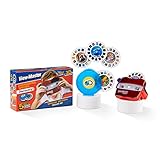
- Experience Earth's Majesty: Enjoy 5 reels of eye-popping 3D animal photos! With a flick of the finger, you’ll be traveling the world from your living room!
- Classic Retro Look: Relive some of your favorite childhood memories with the View-Master’s new retro metallic look that offers even more 3D fun!
- Deluxe Case: Convenient storage included in this special edition set through a special deluxe case only found in this bundle!
- Cool Animal Facts: Learn fun and interesting facts about the animals you see as you rotate through the reels!
- Travel The World: Most View-Master reels fit into this viewer, allowing you to expand your viewing experience even further!
- The reel is inserted into a compatible viewer.
- A pair of images is positioned in front of the viewer’s two optical paths.
- Each eye sees its corresponding transparency through a lens.
- The brain fuses the two views and interprets their differences as depth.
- An advancing mechanism moves the reel to the next pair.
The images are viewed as backlit transparencies. Ordinary classic viewing does not require batteries, and the device does not project an image outward. The user looks through lenses at the small photographs.
Viewers changed over time. Early designs included round or clamshell-style constructions, while later models commonly used rectangular plastic bodies and more convenient slot-loading or advancing mechanisms. The details matter to collectors: a reel, projector, talking viewer, reel card, or VR product may belong to a different product family, even when it carries the View-Master name.
The Photographic Historical Society of Canada’s history documents the reel format, Kodachrome, early models, and changes in assembly and operation.
The early scenic and educational years
View-Master’s first identity was built around places rather than cartoon characters. Reels showed national parks, natural landscapes, cities, landmarks, tourist attractions, and cultural subjects. They were souvenirs for “armchair travel”: a person could revisit a vacation or experience a distant location in color and apparent depth.
Other early uses included geography, religious or instructional material, and educational subjects. The system’s appeal was both emotional and practical. A reel was small, reusable, easy to store, and more vivid than a printed postcard. It turned the act of looking at photographs into a physical ritual: insert, focus, advance, and explore.
Do these 3 things before closing this tab:
1Scan for outdated or missing drivers - takes under a minute2Clear out junk files and repair common Windows errors3Fix the driver behind crashes, sound loss and screen glitchesThis beginning is often lost because later generations encountered View-Master mainly through licensed children’s entertainment. Historically, scenic and educational content came first.
1951: Tru-Vue and the Disney turning point
The decisive commercial shift came in 1951, when Sawyer’s acquired rival film-strip company Tru-Vue. Tru-Vue had a licensing relationship with Disney, giving Sawyer’s access to Disney-related subjects, including characters, Disneyland imagery, films, and television properties.
Rank #3
Disney did not invent View-Master, and Disney was not part of its original launch. Instead, the acquisition connected an existing optical system to an exceptionally powerful entertainment library. View-Master could now show recognizable characters and stories rather than only landscapes and landmarks.
That change altered the audience. Scenic reels continued, but children’s entertainment became increasingly central. Disney and Disneyland content helped View-Master move from a photographic and educational product into a mass-market toy. The hardware mattered, but the content pipeline mattered just as much.
From educational device to children’s toy
View-Master’s transformation was not a single redesign. It was a repositioning supported by licensing, packaging, and retail distribution.
- Original scenic material: national parks, tourist attractions, cities, and landscapes.
- Educational material: geography, science, culture, religion, and instructional subjects.
- Licensed entertainment: Disney, television programs, films, comic characters, and animated properties.
- Personal content: photographs made by users with related stereo-camera systems.
- Later digital content: smartphone-based VR experiences.
Gift sets, carrying cases, projectors, talking products, and colorful plastic viewers reinforced the association with childhood. Yet calling View-Master “always a children’s toy” erases the adult and educational market that shaped its early history.
Product evolution: viewers, cameras, projectors, and talking systems
The first Sawyer’s viewers included the early Model A, with a distinctive clamshell construction. Later Sawyer’s designs made loading and advancing reels more convenient, and rectangular plastic models became increasingly familiar.
The system also expanded beyond the basic hand-held viewer:
- Personal stereo cameras: related Sawyer’s products allowed users to photograph their own subjects and have or assemble reels made from personal images. This offered a path into amateur stereoscopic photography, although film processing and reel preparation were more complicated than simply buying a finished reel.
- Projectors: specialized optical accessories allowed images to be displayed for groups rather than viewed by one person at a time.
- Talking View-Master: GAF-era products added audio or sound-related elements to the viewing experience. The Westport Tech Museum identifies a 1970 GAF Talking View-Master and gives an approximate original-era price of $14.
- Later toy integrations: Fisher-Price-era designs and licensed products adapted the name for new generations of children.
Not every reel works in every View-Master-related product. Vintage viewers, projectors, talking systems, reel cards, and later digital products may have different requirements. Compatibility should be checked against the specific model.
Rank #4

- View Master Virtual Reality Destinations Experience Pack
- The custom Destinations Experience View-Master VR viewer (sold separately) is your portal to immersive, virtual reality entertainment and adventure transporting you into Destinations
Corporate history: Sawyer’s to Mattel
| Period | Company or owner | Significance |
|---|---|---|
| 1939–1966 | Sawyer’s Photographic Services / Sawyer’s Inc. | Original developer, manufacturer, and marketer |
| 1966–1981 | General Aniline & Film, commonly GAF | Acquired Sawyer’s and expanded the product line |
| From 1981 | View-Master International Group | GAF sold the business to investors led by Arnold Thaler |
| Mid-to-late 1980s | Ideal-related ownership | The brand became associated with View-Master Ideal |
| 1989–1997 | Tyco Toys | Tyco acquired the View-Master/Ideal business |
| From 1997 | Mattel | Tyco merged with Mattel, bringing View-Master into its portfolio |
The exact wording of some transitions varies among historical accounts because a brand, a manufacturing company, a trademark, and a corporate operating unit are not always the same thing. The Science Museum Group’s Sawyer’s record confirms the GAF acquisition and the 1981 sale to View-Master International Group. Later accounts support the Ideal, Tyco, and Mattel sequence.
View-Master as a licensing platform
View-Master’s commercial strength came from its ability to turn almost any visually recognizable subject into a reel series. Disney and Disneyland were especially important, but the catalog expanded to children’s television, movies, comic and animated characters, educational publishers, museums, science subjects, and nature-related material.
This was a content economy as much as an optical one. A viewer could remain unchanged while new reels gave families reasons to buy again. A scenic reel, a science reel, a television character, and a film adaptation were not culturally identical, but they could share the same basic viewing ritual.
Free tools Windows power users keep installed
One-click scans. No signup required.
The business model also reduced the risk of relying only on one audience. Travel and educational material served adults and institutions; licensed entertainment brought children and families; personal cameras addressed hobbyists. The brand survived technological and corporate changes partly because it could attach itself to new subjects.
The View-Master VR experiment
In the 2010s, View-Master was adapted for smartphone-based virtual reality. The newer viewer housing worked with a smartphone, while experience packs and apps replaced classic optical reels with digital content. Mattel’s support catalog lists products including a Virtual Reality Starter Pack, Deluxe VR Viewer, Smithsonian, Space, Destinations, National Geographic Wildlife, Batman, Masters of the Universe, and Teenage Mutant Ninja Turtles experiences.
This was an attempt to connect a familiar toy identity with contemporary VR. It should not be described as simply a modern version of the classic reel system. Classic View-Master uses physical transparencies and optical stereoscopy; View-Master VR uses a smartphone, software, and digital displays. Phone compatibility, app availability, and product support can also change over time.
Independent reader supportYour contribution helps us test, update, and keep practical guides available for everyone.What happened to View-Master?
The safest present-day answer requires separating ownership, support, manufacturing, and retail availability.
The Tool Desk
Outbyte Driver Updater FREEFix the driver behind crashes, sound loss and screen glitchesFind Drivers →Outbyte PC Repair FREERepair Windows errors before they cause bigger problemsFix Now →Best Value

- This item is brand new in the package.
- View-Master Classic viewer and a set of 3 Discovery Kids 3D image reels (21 images).
- Includes: Age of Dinosaurs, Marine life, Safari Adventures.
- Search words: fish angelfish gorillas jungle life pteranodon
- Gender: Boys & Girls
Mattel remains the company associated with the View-Master brand and its official support archive. Mattel’s support pages continue to list numerous View-Master and View-Master VR products, including legacy manuals and experience packs. Those pages document products and provide support information, but an archive listing does not prove that a product is currently manufactured or broadly sold.
As of 2026, the available evidence does not establish that a classic reel-and-viewer line is broadly available through Mattel’s primary U.S. storefront. Nor should the presence of VR documentation be treated as proof of current retail stock or guaranteed compatibility with modern smartphones.
Thus, “View-Master was discontinued” is too broad unless it refers to a particular product line, country, or sales period. “View-Master is still sold” is also too broad without specifying the product, market, date, and retailer. For practical purposes, vintage viewers and reels remain central to collecting, while official support records may concern products that are archived or discontinued rather than newly sold.
Collecting View-Master today
Collectors encounter Sawyer’s, GAF, View-Master International, Ideal, Tyco, and Mattel products, along with scenic, Disney, educational, television, and film reels. The most useful questions are not simply “How old is it?” or “Is it rare?”
- Is the viewer complete and mechanically functional?
- Are the lenses clear, and does the advancing mechanism move correctly?
- Is the reel warped, cracked, scratched, faded, or separated?
- Does the packaging survive, and does it match the contents?
- Is the item an original product or an unofficial reproduction?
- Is the subject desirable to collectors, such as a particular Disney, television, national-park, or educational issue?
- Is the reel compatible with the intended viewer or accessory?
Early plastic can become brittle, hinges can fail, springs can weaken, and transparencies can suffer color fading or emulsion damage. A visually intact reel may still have serious image deterioration. “Rare” and “valuable” are not synonyms: condition, completeness, subject, packaging, regional issue, and current demand all matter.
The strongest historical appeal of the system is that it remains tangible. A collector is not merely preserving images but a complete way of seeing: a circular reel, a mechanical advance, two lenses, and seven small moments of depth.
Conclusion
View-Master’s history is a story of transformation. William Gruber and Sawyer’s turned stereoscopic photography into a compact color system and introduced it to the public at the 1939 World’s Fair. Early reels offered scenic, educational, and travel imagery. The 1951 Tru-Vue acquisition and access to Disney licensing changed the brand’s audience, making it a major platform for children’s entertainment. GAF, View-Master International, Ideal, Tyco, and Mattel then carried the name through successive corporate and technological eras.
Its later VR products could not reproduce the exact experience of the original reels, but they revealed the enduring value of the View-Master identity: a simple viewer, a curated sequence of images, and the feeling that a flat picture has opened into a small world.
What’s actually slowing this PC down?
Pick the symptom - the matching free tool is one click away.
Quick Recap
Product prices and availability are accurate as of the date/time indicated and are subject to change. Any price and availability information displayed on Amazon at the time of purchase will apply.