Free tools Windows power users keep installed
One-click scans. No signup required.
Choose Don’t Look Back for the quickest, most intimate view of Bob Dylan; choose No Direction Home for a full early-career history; choose Rolling Thunder Revue for the 1975 tour’s concert energy and deliberately unstable storytelling. The films are not interchangeable: one is a 96-minute observational snapshot, one is a 3-hour-27-minute historical portrait, and one is a 2019 documentary-concert-film hybrid. Your answer to “Do I want a biography or a concert film?” should determine where you start.
The three films at a glance
| Film | Year | Historical scope | Filmmaking mode | Runtime | Best starting point for |
|---|---|---|---|---|---|
| Don’t Look Back | 1967 | Dylan’s 1965 England tour | Black-and-white observational cinéma-vérité | 96 minutes | Immediate access to Dylan’s personality and touring life |
| No Direction Home: Bob Dylan | 2005 | Early life, folk scene, rise to fame and 1966 turning point | Interviews, archival footage and performances | 3 hours 27 minutes (Apple TV catalog listing) | Biography, chronology and historical context |
| Rolling Thunder Revue: A Bob Dylan Story by Martin Scorsese | 2019 | The 1975 Rolling Thunder Revue fall tour | Documentary, concert film and “fever dream” hybrid | Not stated in the cited catalog material; check the current listing | Live atmosphere, tour spectacle and formally playful storytelling |
Which Bob Dylan documentary should you watch first?
Start with Don’t Look Back for intimacy
At 96 minutes, Don’t Look Back is the fastest route to Dylan as a person in motion. D. A. Pennebaker follows him around England in 1965 rather than explaining his life from a distance. You see encounters with fans and journalists, time with Joan Baez and Donovan, and the constantly changing social pressure around a young artist whose fame is expanding faster than the rooms he occupies. Cars, hotel spaces, press conferences and informal conversations become the story.
| # | Preview | Product | Price | |
|---|---|---|---|---|
| 1 |
|
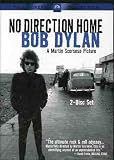
Bob Dylan - No Direction Home | $14.99 | Buy on Amazon |
| 2 |
![Rolling Thunder Revue: A Bob Dylan Story by Martin Scorsese (The Criterion Collection) [DVD]](https://m.media-amazon.com/images/I/51ZuzJ2FtYL._SL160_.jpg)
|
Rolling Thunder Revue: A Bob Dylan Story by Martin Scorsese (The Criterion Collection) [DVD] | $25.33 | Buy on Amazon |
| 3 |

|
Bob Dylan - Don't Look Back (1965 Tour Deluxe Edition) | $32.53 | Buy on Amazon |
| 4 |

|
No Direction Home: Bob Dylan | $19.23 | Buy on Amazon |
| 5 |
|
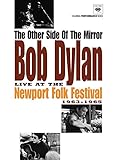
The Other Side Of The Mirror | $27.00 | Buy on Amazon |
This is the right first film if you want to observe Dylan negotiating attention rather than receive a narrated account of how he became famous. It also suits anyone interested in cinéma-vérité technique: the camera’s presence is alert and exploratory, but the film does not impose a conventional biography over every scene.
Start with No Direction Home for a career narrative
Martin Scorsese’s No Direction Home is the strongest beginner’s choice when “first” means “give me the background.” Its 3-hour-27-minute length (the runtime listed in the Apple TV catalog) allows it to move from Dylan’s origins through the early-1960s folk world, his ascent and the 1966 turning point. Live footage, press conferences, archival material and interviews create a chronological explanation that Don’t Look Back intentionally leaves out.
#1 Best Overall
If you are asking, “Is Don’t Look Back or No Direction Home better for a beginner?”, choose No Direction Home when you need names, sequence and context; choose Don’t Look Back when you are happy to enter through atmosphere and let the historical questions accumulate.
Start with Rolling Thunder Revue for a 1975 concert experience
Rolling Thunder Revue is the answer to “What is the best Dylan documentary about the Rolling Thunder tour?” It centers on Dylan’s 1975 touring ensemble, the performances and the atmosphere around the shows. Netflix Media Center describes it as “part documentary, part concert film, part fever dream,” a useful warning that it is not a straightforward chronological record.
Begin here if you already know Dylan’s basic story and want live energy, 1975-era mood and a film that treats memory and performance as active ingredients. It is a poor substitute for a biography if your priority is a verified timeline.
Don’t Look Back: the intimate 1965 snapshot
What the film covers
Pennebaker’s 1967 film was shot around Dylan’s 1965 England tour and runs 96 minutes in black and white. Its world is the tour itself: Dylan with fans, reporters, fellow musicians and people in his immediate orbit, including Joan Baez, Donovan and Alan Price. The film’s songs include “Subterranean Homesick Blues,” “The Times They Are A-Changin’” and “It’s All Over Now, Baby Blue.”
Do these 3 things before closing this tab:
1Repair Windows errors before they cause bigger problems2Scan for outdated or missing drivers - takes under a minute3Clear out junk files and repair common Windows errorsThe narrow time frame is deliberate. Rather than begin with childhood and proceed through milestones, the film concentrates on what it feels like to be a rapidly intensifying public figure. A question from a journalist, a conversation in transit or a meeting backstage can reveal more about the pressures of celebrity than an explanatory voice-over would.
Rank #2
- Rolling Thunder Revue: A Bob Dylan Story by Martin Scorsese (Criterion)
Why its observational style matters
Don’t Look Back is not primarily a concert film. Performances and musical fragments appear, but the drama comes from the contradictions of ordinary interaction: Dylan can be witty, evasive, generous, combative or simply tired, sometimes within the same stretch of conversation. The camera watches those shifts without translating them into a single official interpretation.
“Filmmaking is kind of like exploration, only your device, instead of a telescope or a microscope, is this camera.” — D. A. Pennebaker
That exploratory approach is why the film remains valuable even for viewers who already know the songs. You are not just collecting facts about 1965; you are watching a method of documentary filmmaking test how much can be learned by staying present.
What you gain—and what you do not
- You gain: immediate access to Dylan’s on-camera personality, the social texture of touring and the transition from folk celebrity toward a larger cultural figure.
- You gain: a compact introduction to the people and pressures surrounding him in one concentrated period.
- You do not gain: a cradle-to-career biography, a detailed explanation of Dylan’s origins or a complete account of the 1966 turning point.
- You do not gain: a conventional concert-film structure with a performance as the sole center of attention.
Who should choose it
Pick Don’t Look Back if you have about an hour and a half, prefer unscripted encounters to exposition, or want to study how cinéma-vérité turns travel, publicity and conversation into narrative. It is also the best opening film for viewers who want to understand Dylan’s presence before they learn every date in his career.
No Direction Home: the broad early-career history
Scope and structure
PBS American Masters presents Scorsese’s film as a portrait of Dylan’s evolution from folk troubadour to iconic rock star. It reaches back to his origins, follows the early-1960s folk scene and builds toward his ascent and the 1966 turning point. The original U.S. broadcast premiere was in 2005.
Rank #3
- Disc 1 Special features include: Five uncut audio tracks, alternate version of the "Subterranean Homesick Blues", original theatrical trailer, D.A. Pennebaker filmography, Bob Dylan discography as well as commentary by director D.A Pennebaker and tour road manager Bob Neuwirth and biographies from all cast and crew!
- Disc 2: Bob Dylan 65 Revisited - Over 20 hours of never-before-seen footage compiled by D.A. Pennebaker
- Also included in the Deluxe Edition box set is a 168-page companion book which includes a new forward by D.A. Pennebaker, a full transcription of the film and over 200 photos!!
- Collectible "Subterranean Homesick Blues" flip book included*
- This was given to me as a gift many years ago. I unwrapped it and put it gently on my book shelf. I kept promising myself I'd make time to watch it later. … It hasn't moved from the shelf in all these years. This DVD set deserves a new home!
Its method combines live footage, press conferences, archival material and interviews. Dylan is interviewed, as are figures including Allen Ginsberg, Pete Seeger, Joan Baez and Maria Muldaur. Those voices supply the connective tissue that Pennebaker’s observational film withholds: where Dylan came from, how the folk community understood him and why his movement toward rock carried such cultural weight.
Why it works for newcomers
A newcomer can follow a recognizable progression: origins, immersion in folk culture, rapid ascent, changing artistic identity and the pressure surrounding 1966. The film gives performances room to breathe but repeatedly returns to testimony and context, so a viewer does not need a pre-existing map of Dylan’s collaborators or chronology.
The trade-off is time and mediation. At 3 hours 27 minutes, it asks for an evening rather than a single sitting between errands. Because interviews and archival framing guide the viewer, it offers less of the unpredictable, unfiltered social tension that defines Don’t Look Back.
What it is best at
- Biography: It is the clearest of the three for understanding how Dylan became a major cultural figure.
- Historical transition: It explains the folk-to-rock transformation rather than presenting that shift as a sudden mystery.
- Orientation: It gives first-time viewers enough chronology to place people, performances and controversies.
Who should choose it
Choose No Direction Home when your main question is “How did this happen?” It is the right first film for a viewer who wants origins, chronology and testimony, and for anyone willing to spend a long evening with a historical portrait rather than a single-tour observation.
Rolling Thunder Revue: the 1975 tour as collage and performance
The period and the premise
The 2019 film focuses on the Rolling Thunder Revue, Dylan’s 1975 fall tour and the music performed by its touring ensemble. Netflix Media Center frames it as a portrait of a troubled United States in 1975. The country’s atmosphere and the tour’s traveling community matter as much as a linear account of what happened on which date.
Rank #4
Why “fever dream” is an important qualifier
Calling the film “part documentary, part concert film, part fever dream” signals a deliberately mixed form. It combines documentary material and concert performance with a collage approach that can feel theatrical, unstable or dreamlike. Treat it as an experience shaped by memory and performance, not as a source that promises a strictly chronological biography.
Quick wins for a faster PC:
Fix the driver behind crashes, sound loss and screen glitchesFind Drivers →Repair Windows errors before they cause bigger problemsFix Now →That distinction is useful when deciding whether the film is “accurate” for your purpose. It can convey the emotional and visual charge of the 1975 tour while refusing the neutral, archival posture some viewers expect from a historical documentary. If you want every claim separated cleanly into verified event and later recollection, watch No Direction Home first and approach this one as interpretation.
Who should choose it
- Established Dylan listeners: You will recognize the period and can appreciate the film’s variations on memory and persona without needing an introductory timeline.
- Concert-focused viewers: The center of gravity is live atmosphere and the ensemble on the road.
- Form-conscious viewers: Its hybrid of documentary, concert film and constructed storytelling is the point, not a distraction from one.
The cited material does not establish a runtime, so check the current catalog listing before planning a screening. Streaming rights and regional availability can change, even though the film’s 2019 release and subject remain stable.
How the three documentaries differ by viewing goal
| If you care most about… | Choose | Reason |
|---|---|---|
| Watching Dylan react in real time | Don’t Look Back | Its 1965 England-tour access is observational and minimally explanatory. |
| Understanding his rise | No Direction Home | Its interviews and archive build an early-career chronology through the 1966 turning point. |
| 1975 live energy | Rolling Thunder Revue | It foregrounds the Rolling Thunder ensemble, performances and tour atmosphere. |
| A short film | Don’t Look Back | The documented runtime is 96 minutes. |
| An evening-length immersion | No Direction Home | The Apple TV catalog lists 3 hours 27 minutes. |
| A formally experimental documentary | Rolling Thunder Revue | Its documentary-concert-film-fever-dream design embraces constructed and unstable storytelling. |
Music versus conversation: what kind of screen time do you want?
For encounters and fragments: Don’t Look Back
Music appears as part of the tour’s social world, but conversations and encounters carry the film. Select it when the question behind your viewing is “What was Dylan like around people?” rather than “Can I see an entire concert?”
For a balance: No Direction Home
Scorsese balances performances with explanatory interviews and archival context. The result is the most even choice for viewers who want to hear the music while understanding the cultural circumstances around it.
The Tool Desk
Outbyte Driver Updater FREEScan for outdated or missing drivers - takes under a minuteDriver Scan →Outbyte PC Repair FREERepair Windows errors before they cause bigger problemsFix Now →Best Value
- DYLAN BOB THE OTHER SIDE OF THE MIRROR
For atmosphere: Rolling Thunder Revue
The 1975 film puts concert energy and the feeling of the tour near the front. Its hybrid construction means the atmosphere is not merely evidence of a past event; it is part of the film’s artistic argument.
Is Don’t Look Back or No Direction Home better for a beginner?
Neither is universally better. No Direction Home is the safer first choice if “beginner” means someone who wants a guided account of Dylan’s life and early career. Its chronology and interviews explain the folk scene, Dylan’s ascent and the 1966 turning point.
Don’t Look Back is better if “beginner” means someone who wants a vivid introduction without committing to a long documentary. Its 96 minutes provide a concentrated encounter with Dylan’s public personality and the pressures of the 1965 England tour. You can then watch No Direction Home to supply the context that the snapshot deliberately omits.
A practical three-film order
- Watch Don’t Look Back first. Begin with the 1965 snapshot so you encounter Dylan’s personality, touring relationships and media friction directly.
- Follow with No Direction Home. Use the longer historical portrait to place that snapshot within Dylan’s origins, the folk scene, his rise and the 1966 turning point.
- Finish with Rolling Thunder Revue. Once the early-career framework is in place, the 1975 tour’s concert atmosphere and intentionally slippery form become a later-era reimagining rather than a confusing introduction.
This order moves from immediacy to explanation to reinterpretation. It is not the only valid sequence: a viewer whose priority is the 1975 tour can start with Rolling Thunder Revue, while someone with one free evening can start and stop with Don’t Look Back.
Crashes, No Sound, or Screen Glitches?
Random freezes, missing sound and display glitches usually trace back to one bad driver. Find and replace yours safely.Free scan · under a minuteWindows Errors? Fix Them Before They Spread
Repair common Windows errors and clear accumulated junk for a smoother, more stable PC - no reinstall needed.Free scan · no reinstallWhat each film leaves out
| Film | Its deliberate limitation | Use another film when you need… |
|---|---|---|
| Don’t Look Back | One tour, one period and an observational approach rather than a life story | Origins, chronology or an explanation of Dylan’s wider rise |
| No Direction Home | Long-form interview and archive structure rather than unmediated tour observation | A short, immediate encounter or a 1975 concert-centered experience |
| Rolling Thunder Revue | A deliberately hybrid relationship to documentary truth, focused on 1975 | A strictly chronological biography or early-career introduction |
Edition, catalog and availability notes
Don’t Look Back physical editions
The Criterion Collection lists a restored Blu-ray and DVD edition of Don’t Look Back, with commentary, outtakes and related archival material. Those extras are useful if you want to study Pennebaker’s method beyond the feature itself. Retail stock and prices can change, so confirm the current edition before buying.
No Direction Home runtime and broadcast record
PBS American Masters records the film’s original U.S. broadcast premiere in 2005. The Apple TV catalog lists a 3-hour-27-minute runtime. Catalog metadata can differ by territory or edition; use the listing available in your region when scheduling a viewing.
Rolling Thunder Revue streaming checks
Netflix Media Center identifies Rolling Thunder Revue as a Netflix documentary. Whether it is available in your country, and under which catalog label, is subject to changing regional rights. Check the current service listing rather than relying on an old availability claim.
The short answer
For the most intimate and efficient introduction, watch Don’t Look Back. For the fullest account of Dylan’s early development and rise, make time for No Direction Home. For a vivid 1975 Rolling Thunder experience that treats documentary form as something elastic, choose Rolling Thunder Revue. Watching them in that order gives you a personal snapshot, the historical framework and then a later tour refracted through performance and memory.
Quick Recap
Product prices and availability are accurate as of the date/time indicated and are subject to change. Any price and availability information displayed on Amazon at the time of purchase will apply.






Say something about this film