There was no single, proven feud behind It Ends With Us. The public breakdown surrounding the 2024 film grew from several overlapping disputes: disagreements about intimate and abuse-related scenes, different ideas about how to market a story about domestic violence, allegations of inappropriate conduct and retaliation, and increasingly aggressive legal and public-relations campaigns.
Blake Lively and Justin Baldoni offered competing accounts of what happened. Their central litigation ended in a settlement before trial, so no jury issued a verdict deciding whether Baldoni sexually harassed Lively, whether Wayfarer retaliated against her, or whether Lively and her associates defamed Baldoni. The court record narrowed some claims and dismissed others, but it did not produce a complete factual answer.


What It Ends With Us is about
It Ends With Us began as Colleen Hoover’s 2016 novel about Lily Bloom, a woman whose relationship with neurosurgeon Ryle Kincaid becomes abusive. Sony’s 2024 adaptation cast Blake Lively as Lily and Justin Baldoni as Ryle; Baldoni also directed the film.
That premise matters because the movie had to operate in two registers at once. It was marketed partly as a romance, with attention to Lily’s flower shop, fashion and relationship storyline, but its central subject is domestic violence. Sony’s official synopsis makes that turn explicit and includes a referral to domestic-abuse support resources.
Recommended Free Tools
#1 Best Overall
For readers who want to compare the adaptation with its source, Colleen Hoover’s original It Ends with Us novel is the fictional foundation for the film. The book and the real-world dispute should be kept separate: the novel describes Lily and Ryle, while the controversy concerns the people involved in making and promoting the movie.
Why the alleged feud became visible in August 2024
The film opened in the United States on August 9, 2024. During the promotional campaign, Lively and Baldoni appeared to follow notably different publicity strategies and did not promote the film together in the way audiences expected.
Lively’s publicity often emphasized the film’s romance, flowers and fashion. Baldoni more frequently discussed the domestic-violence storyline and encouraged audiences to seek help and approach the subject seriously. That contrast helped fuel online speculation that the cast and director were in conflict.
Reports at the time also described rumors of tension on set and disagreements over the movie’s tone and marketing. Those reports made the split in the publicity campaign newsworthy, but they were not court findings. The absence of joint appearances, or the presence of separate marketing messages, cannot by itself establish what happened privately during production.
The production dispute: intimate scenes, abuse and creative control
Lively’s later legal filings described disagreements about how intimate and abuse-related scenes were planned and filmed. Her allegations included disputes over the staging of scenes, the material included in them, and the handling of intimacy and safety concerns. Court opinions summarizing her pleadings also described allegations that Baldoni and producer Jamey Heath engaged in inappropriate conduct and that Lively raised concerns during production.
Those allegations were contested. Baldoni and the Wayfarer parties presented a different account, arguing that Lively and people representing her sought greater creative influence over the film and later used misconduct allegations to damage Baldoni and his company.
That distinction is essential. The existence of a complaint establishes that a claim was formally made; it does not establish that every event described in the complaint occurred. Likewise, a denial or competing pleading is not proof that the opposing account was fabricated. The available record contains competing versions of a difficult production rather than a single, judicially established narrative.
The marketing controversy
Marketing became the most visible part of the disagreement because the film’s promotional messages seemed to point in different directions.
Outdated Drivers Are Slowing You Down
One free scan finds every outdated or missing driver and matches the right update for your exact hardware.Free scan · exact hardware matchWindows Errors? Fix Them Before They Spread
Repair common Windows errors and clear accumulated junk for a smoother, more stable PC - no reinstall needed.Free scan · no reinstallRank #2

- 1 subject notebook comes with 70 wide ruled, double-sided sheets. Wide ruling is ideal for the younger student who needs more space between lines.
- Sheets measure 7-1/2" x 10-1/2" when torn out with an overall size of 8" x 10-1/2". Perforation easily tears out with clean edges.
- Notebook is 3-hole punched to store in your favorite binder. Covers are coated for durability and have writable label on front cover.
- Includes 6 notebooks in randomly selected colors: Red, Blue, Green, Yellow, Purple or Black. Colors will vary with each purchase.
- Assembled in U.S.A. with U.S. and foreign parts
- Lively’s approach: Much of her publicity highlighted the romance, Lily’s flower-shop setting, clothing and the film’s emotional appeal.
- Baldoni’s approach: His public comments more often centered on domestic violence, the seriousness of the subject and the importance of seeking support.
- The underlying problem: A campaign focused too heavily on romance could appear to minimize the abuse at the center of the story, while a campaign focused almost entirely on abuse could present a different version of the film from the one many audiences expected.
Lively’s complaint alleged that, after she raised concerns during production, people associated with Wayfarer pursued a coordinated public-relations and online campaign intended to harm her reputation. The allegations described communications involving public-relations personnel, social-media activity and contacts with journalists.
The Wayfarer parties denied conducting a retaliatory smear campaign. Their counter-narrative alleged that Lively, Ryan Reynolds and people close to them attempted to control the public story and defame Baldoni and his company. The public battle therefore became not only a disagreement over the movie, but also a dispute over who was trying to manipulate the conversation around it.
What Lively alleged in her complaints
On December 20, 2024, Lively filed a complaint with California’s Civil Rights Department. On December 31, she filed a federal lawsuit.
Her allegations included inappropriate conduct during filming, unwanted or improper behavior connected with intimate scenes, and retaliation after she objected to conduct or production decisions. She also alleged that a public-relations campaign was organized to damage her reputation after she raised concerns.
Baldoni denied the allegations. The Wayfarer parties disputed Lively’s account and argued that the legal claims were part of a broader effort to seize control of the narrative and harm their business and reputations.
Because these accusations were resolved before a trial verdict, they should be described as allegations rather than established facts. The careful formulations are “Lively alleged,” “according to her complaint,” “Baldoni denied,” and “the Wayfarer parties argued.” It is not accurate to write that a court found Baldoni guilty of sexual harassment, nor is it accurate to write that Lively was proven to have fabricated her allegations.
The countersuit and The New York Times dispute
On January 16, 2025, Baldoni, Wayfarer and associated plaintiffs sued Lively, Reynolds and others. The complaint alleged defamation, extortion-related conduct and interference with business relationships. It also named The New York Times over the newspaper’s December 2024 reporting on Lively’s allegations.
Rank #3
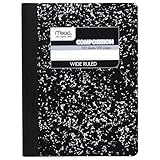
- Composition book contains 100 double-sided sheets; A classic favorite for journaling and lab notes
- Wide ruling gives you plenty of writing space for notetaking
- Sewn binding is smooth, helps keep pages securely in place and lays flat when open
- Inside covers feature a class schedule, multiplication tables, conversion tables and grammar rules
- Pages measure 7.5" x 9.75"; Black Marble Soft Cover
The countersuit presented the conflict in reverse. Rather than describing Lively as a victim of retaliation, the Wayfarer parties alleged that she and her associates used their influence to damage Baldoni, Wayfarer and the film’s public reputation. The parties therefore placed sharply different meanings on the same broad sequence of events: production complaints, publicity decisions, media coverage and online discussion.
The Tool Desk
Outbyte Driver Updater FREEFix the driver behind crashes, sound loss and screen glitchesFind Drivers →Outbyte PC Repair FREERepair Windows errors before they cause bigger problemsFix Now →On June 9, 2025, the federal court granted motions to dismiss the Wayfarer parties’ amended complaint, allowing only limited amendment concerning contract-related theories. That ruling rejected the complaint as pleaded at that stage. It was not a trial finding that every allegation made by Lively was true, and it was not a factual finding that every allegation made by Baldoni’s side was false.
What the court rulings did—and did not—decide
Several procedural developments are easy to misread when reduced to headlines.
A dismissal is not automatically a factual verdict
When a court dismisses claims at the pleading or legal-sufficiency stage, it is deciding whether the claims, as presented in the relevant complaint and under the applicable law, can proceed. That is different from hearing witnesses and deciding which person’s account is factually true.
The June 2025 dismissal of the Wayfarer parties’ main complaint therefore did not resolve the entire factual dispute. It addressed the legal claims as pleaded, with limited permission to amend certain contract-related theories.
Quick wins for a faster PC:
Clear out junk files and repair common Windows errorsFree Scan →Fix the driver behind crashes, sound loss and screen glitchesFind Drivers →The sealing and unsealing proceedings
On January 20, 2026, the court issued a major opinion concerning the sealing and unsealing of discovery and summary-judgment materials. Those proceedings affected what material could be publicly examined, but they did not turn the competing allegations into proven facts.
The April 2026 ruling on Lively’s claims
On April 2, 2026, Judge Lewis J. Liman dismissed most of Lively’s claims, including claims asserted personally against Baldoni, while leaving a narrower set of issues involving retaliation and related claims potentially available for adjudication at that stage.
Rank #4

- Upgraded Two Zipper Pockets: Forvencer server books feature two secure zipper pockets for better organization of coins, cash, and receipts, ensuring that everything you collect has a safe and secure place
- Smart Storage & Quick Access: Designed with 8 multi-functional compartments, the right side includes a guest receipt pad, while the left has a money pocket, ticket pocket, and credit card slot. Two small clear pockets store bills, receipts, and other visible items. A stitched pen loop ensures you always have your favorite pen ready
- High-quality & Easy to Clean: Crafted from high-quality PU leather with heavy-duty stitching, this server book is built to last. It resists tears, scratches, and its waterproof surface makes cleaning easy with just a damp cloth or a non-chlorine sanitizer
- Perfect Fit for Your Apron: Measuring 5” x 8”, this compact organizer is slightly smaller than other models, making it ideal for bending or sitting while carrying in your server apron. It holds everything a waitress needs—a place for everything
- What's Included: This server organizer comes with multiple open and zippered pockets to store money, receipts, tips, etc. Clear sleeves are perfect for keeping menus or special lists while serving. Available in a variety of colors, allowing you to express yourself even when in uniform
That opinion was a ruling on legal sufficiency and the record before the court. It did not determine that the alleged conduct did occur, and it did not determine that it did not occur. The remaining issues never produced a full trial verdict because the parties settled the core litigation the following month.
Timeline of the conflict
| Date | What happened | Why it matters |
|---|---|---|
| 2016 | Colleen Hoover’s novel It Ends With Us is published. | It establishes the fictional story about Lily Bloom and an abusive relationship that the film later adapted. |
| August 9, 2024 | The film opens in the United States. | The promotional campaign makes the apparent separation between Lively’s and Baldoni’s public messaging especially noticeable. |
| December 20, 2024 | Lively files a complaint with the California Civil Rights Department. | Her allegations of inappropriate conduct and retaliation become part of a formal administrative record. |
| December 31, 2024 | Lively files a federal lawsuit. | The production and publicity dispute becomes federal litigation. |
| January 16, 2025 | Baldoni, Wayfarer and associated plaintiffs file a countersuit against Lively, Reynolds and others, including The New York Times. | The legal fight expands to allegations of defamation, extortion-related conduct, interference and disputes over reporting. |
| June 9, 2025 | The court dismisses the Wayfarer parties’ amended complaint, with limited leave to amend some contract-related theories. | The complaint does not proceed in its principal form, but the ruling is not a complete factual judgment about the production. |
| January 20, 2026 | The court issues a significant sealing and unsealing opinion involving discovery and summary-judgment materials. | More of the litigation record becomes subject to public scrutiny, without resolving every disputed fact. |
| April 2, 2026 | The court dismisses most of Lively’s claims and leaves a narrower set of issues at that stage. | The case is substantially narrowed before any trial on the underlying allegations. |
| May 4, 2026 | Lively and Baldoni announce a settlement of the core litigation. | The scheduled May trial does not take place, and settlement terms are not disclosed. |
| June 12, 2026 | The court awards Lively attorneys’ fees and costs under California Civil Code section 47.1, while denying her request for treble and punitive damages. | The order addresses fee shifting and damages requests; it is not a trial verdict on the underlying allegations. |
| Late June–July 2026 | Lively’s lawyers seek approximately $8 million in fees and costs. Baldoni’s side challenges or seeks to reduce the request. | The post-settlement fee dispute continues as a financial and procedural matter, not a new trial over who was telling the truth. |
Settlement and current status
On May 4, 2026, Lively and Baldoni announced that they had settled the core litigation, avoiding a trial that had been scheduled for that month. The terms were not disclosed. In a joint statement, the parties said the finished film was a source of pride to those who made it.
What’s actually slowing this PC down?
Pick the symptom - the matching free tool is one click away.
The settlement ended the central courtroom fight, but not every related financial question. On June 12, 2026, the court granted Lively’s motion for attorneys’ fees and costs under California Civil Code section 47.1. It denied her request for treble and punitive damages.
In late June and July, Lively’s lawyers sought roughly $8 million in fees and costs connected to the litigation. Baldoni’s side opposed the amount or sought reductions, arguing that the request was excessive and included work that should not be shifted. As of August 11, 2026, that fee dispute remained a post-settlement proceeding.
The related litigation involving Lively, Reynolds and The New York Times was also dismissed or otherwise ended through court orders and procedural deadlines. A later June 12, 2026 order explained that the relevant defamation claims had previously been dismissed and that Lively sought statutory attorneys’ fees and damages after that dismissal.
Independent reader supportYour contribution helps us test, update, and keep practical guides available for everyone.So, what was the alleged feud really about?
The most supportable explanation is not that one person suddenly fell out with another over a single incident. The conflict developed across several connected layers:
Do these 3 things before closing this tab:
1Scan for outdated or missing drivers - takes under a minute2Clear out junk files and repair common Windows errors3Fix the driver behind crashes, sound loss and screen glitches- Creative control: Lively and Baldoni’s sides disagreed about elements of the production, particularly the treatment and filming of intimate and abuse-related material.
- Safety and conduct allegations: Lively alleged inappropriate behavior and retaliation; Baldoni and the Wayfarer parties denied her account and offered competing explanations.
- Marketing strategy: Lively and Baldoni appeared to emphasize different aspects of a film that combines romance with domestic violence.
- Public-relations tactics: Lively alleged a coordinated effort to damage her reputation, while Baldoni’s side alleged that Lively and her representatives attempted to control the narrative and defame them.
- Litigation escalation: Separate lawsuits, counterclaims and disputes over media reporting transformed an apparent production breakdown into a high-profile legal conflict.
Those layers reinforced one another. A disagreement over a scene could affect trust between collaborators; a marketing split could make that loss of trust visible; media coverage could intensify the reputational stakes; and the resulting lawsuits could make every public statement part of the legal battle.
Best Value
What cannot responsibly be concluded
The public record does not support several popular but overly definite claims:
- A court did not find Baldoni guilty of sexual harassment.
- Lively was not proven in a full factual trial to have fabricated her allegations.
- The dismissal of claims did not automatically establish that the underlying events never happened.
- The settlement did not amount to a public admission by either side.
- The lack of a joint promotional campaign does not independently prove misconduct or retaliation.
- No side received a complete trial verdict declaring its entire account true.
The most accurate description is that the legal fight ended without a trial verdict, leaving the public with competing accounts of a troubled production and a court record that narrowed—but did not factually resolve—many of the allegations.
Sources and scope
This explanation distinguishes allegations from rulings and relies on Sony’s official film materials; Colleen Hoover’s official author information and the publisher’s page for the sequel; the filed complaints; and the federal court orders dated June 9, 2025, January 20, April 2 and June 12, 2026. News reporting is used for the settlement and continuing fee-proceeding chronology where a complete public procedural summary was not available in the court materials.
Availability, procedural status and fee disputes can change after the dates stated above. The status described here is current through August 11, 2026.
Frequently Asked Questions
Was Justin Baldoni found guilty of sexual harassment?
No. Lively alleged inappropriate conduct and retaliation, and Baldoni denied the allegations. Most of Lively’s claims were dismissed before trial, and the core litigation settled without a verdict deciding whether the alleged conduct occurred.
Free tools Windows power users keep installed
One-click scans. No signup required.
What did the It Ends With Us feud involve?
It involved alleged disagreements over intimate and abuse-related scenes, creative control, the film’s marketing strategy, alleged public-relations retaliation and competing defamation claims. Calling it a single proven personal feud oversimplifies the record.
Did Blake Lively and Justin Baldoni settle their lawsuit?
Yes. They announced a settlement of the core litigation on May 4, 2026. The terms were not disclosed, and a later dispute over attorneys’ fees and costs continued after the settlement.
Is It Ends With Us based on a book?
Yes. The film adapts Colleen Hoover’s 2016 novel of the same name, which follows Lily Bloom and her abusive relationship with Ryle Kincaid. Hoover later published the fictional sequel It Starts with Us.
The Bottom Line
Bottom line: The alleged feud behind It Ends With Us was a layered professional, legal and public-relations conflict—not a court-proven storyline with one clear villain and one clear verdict. The parties settled before trial, leaving important allegations disputed even after the court dismissed or narrowed many claims.
Quick Recap
Product prices and availability are accurate as of the date/time indicated and are subject to change. Any price and availability information displayed on Amazon at the time of purchase will apply.