Do these 3 things before closing this tab:
1Fix the driver behind crashes, sound loss and screen glitches2Repair Windows errors before they cause bigger problems3Scan for outdated or missing drivers - takes under a minuteFull-series spoilers: The best Satoru Gojo quotes combine outrageous confidence, comic timing, fierce mentorship, and the loneliness of being Jujutsu Kaisen’s strongest sorcerer. Here are 35 ranked lines from the completed manga story, including Hidden Inventory, Shibuya, the Culling Game, and the Sukuna battle.
Full-series spoiler warning: This ranking discusses Hidden Inventory / Premature Death, Jujutsu Kaisen 0, Shibuya, the Culling Game, Gojo’s unsealing, and the Sukuna battle, including Chapter 236.
The best Satoru Gojo quotes are not simply his loudest boasts. His most memorable lines show the contradiction at the center of his character: Gojo is genuinely the strongest, but that strength isolates him; he jokes constantly, yet takes teaching seriously; and his confidence can sound arrogant while functioning as reassurance for the people around him.
Below are 35 of Gojo’s best lines and recurring sayings, ranked by recognizability, character insight, narrative importance, emotional range, and influence on fan culture. Gojo is officially presented as a special-grade teacher at Tokyo Jujutsu High, a member of the Gojo family, and the bearer of the Limitless technique. The story repeatedly validates his belief that he is the strongest, while also asking what that strength has cost him.
Important translation note: English wording can differ between the licensed VIZ/Shonen Jump manga, official anime subtitles, and English dubs. Some entries below are short, stable quotations; others are translation variants, fragments, or paraphrases of a larger idea. Quote aggregators frequently combine those versions. For an exact quotation, check the licensed edition or the official anime release you are using.
#1 Best Overall

- Unique Anime Style Design:This set includes 4 different cute girl characters with vibrant colors, detailed expressions, and playful sitting poses, bringing a lively anime-inspired vibe to your space.
- Ideal Display Size:Each figure measures approximately 5.1–5.9 inches (13–15 cm), perfectly sized for desks, shelves, display cabinets, or collector showcases.
- Durable PVC Material:Made of high-quality PVC material with smooth surfaces and fine craftsmanship, designed for long-term display without easy fading.
- Cute Sitting Pose for Easy Placement:Designed in a sitting position, these figures can be placed on edges such as shelves, desks, or cabinets, adding a fun and relaxed decorative touch.
- Great Gift & Collectible Choice:Suitable for anime figure collectors, hobby enthusiasts, or as a creative gift for birthdays, holidays, or special occasions.
The 35 best Satoru Gojo quotes, ranked
1. “Throughout heaven and earth, I alone am the honored one.”
Chapter 75, Hidden Inventory / Premature Death — translation-sensitive rendering.
This is Gojo’s defining awakening quote. After Toji Fushiguro nearly kills him, Gojo discovers how to use Reverse Cursed Technique and returns with a radically expanded understanding of his own power. The wording echoes a Buddhist-derived expression, but Gojo turns it into a personal declaration of absolute self-realization.
The line is more than a victory boast. It marks the moment Gojo stops being merely a gifted teenager and becomes the overwhelming figure the rest of the series knows. He is euphoric, terrifyingly calm, and no longer looking at power from the same human scale as Toji.
2. “Nah, I’d win.”
Chapter 221 — commonly quoted manga rendering.
After Gojo is finally released from the Prison Realm, the story builds toward his confrontation with Sukuna. When asked about the likely result, Gojo answers with this tiny, almost comically casual line. It became one of the series’ most recognizable memes because the question is enormous while the response sounds effortless.
That contrast is the point. Gojo does not need a speech to reassert his confidence. His answer is short because, from his perspective, the outcome is obvious. The line also carries dramatic irony: the audience knows that even Gojo’s certainty cannot make the battle safe.
3. “Don’t worry. I’m the strongest.”
Early encounter with Yuji Itadori — wording varies by release.
This is the clearest example of Gojo’s arrogance doubling as protection. Yuji is frightened, inexperienced, and suddenly caught inside the world of curses and jujutsu. Gojo does not offer a detailed plan or sentimental reassurance. He simply tells the boy that the strongest sorcerer is present.
The Tool Desk
Outbyte Driver Updater FREEScan for outdated or missing drivers - takes under a minuteDriver Scan →Outbyte PC Repair FREERepair Windows errors before they cause bigger problemsFix Now →The line establishes Gojo’s public persona immediately, but it also explains why students trust him. His confidence is not only self-advertisement. In dangerous situations, he wants weaker allies to believe that someone capable of handling the worst outcome has arrived.
4. “Are you the strongest because you’re Satoru Gojo, or are you Satoru Gojo because you’re the strongest?”
Hidden Inventory / Premature Death — translation-sensitive identity question.
This question, associated with Gojo and Suguru Geto’s conversation, is one of the most important philosophical ideas in the series. It asks whether Gojo’s strength is a quality belonging to his identity or whether the title of strongest has swallowed his identity entirely.
That distinction becomes increasingly painful. Gojo is surrounded by students, colleagues, enemies, and admirers, yet almost nobody can meet him on equal terms. The question anticipates the loneliness that follows his awakening and the emotional distance created by being treated as a weapon before being treated as a person.
5. “Throughout heaven and earth…”
Short form of the honored-one declaration — not a separate scene.
This fragment deserves a place because it is the version most often used in captions, edits, and fan discussions. It preserves the grand scale of the awakening without reproducing the entire sentence. It is best understood as a search-friendly variant of the first entry, not as a different quote or a second declaration.
Use the complete wording from the edition you are citing when accuracy matters. The punctuation and capitalization of English translations are not perfectly uniform.
6. “Domain Expansion: Unlimited Void.”
Gojo’s signature technique callout.
Few technique names in Jujutsu Kaisen are as immediately associated with their user as Unlimited Void is with Gojo. When he opens his Domain Expansion, the opponent is overwhelmed by an endless flood of information and perception. The phrase is memorable because it sounds both technical and cosmic: Gojo does not merely attack the body; he controls the conditions of awareness itself.
Unlimited Void also represents the danger of Gojo’s power. The technique is spectacular, but its use requires judgment. Gojo must distinguish between enemies, allies, civilians, and the consequences of deploying overwhelming force in a crowded environment.
7. “Hollow Purple.”
Limitless attack invocation — short wording is safer across translations.
Hollow Purple is the attack most casual viewers associate with Gojo’s destructive power. It combines the opposing principles of Blue and Red into a technique that tears through whatever stands in its path. The name is brief, dramatic, and instantly recognizable.
Gojo’s technique callouts work because they make abstract jujutsu mechanics feel like character statements. Blue, Red, and Purple are not just moves in a catalogue; they are expressions of a sorcerer who treats space itself as something he can command.
8. “You’re weak.”
Recurring assessment — meaning depends on the scene.
Gojo uses this kind of blunt judgment with opponents, students, and people who underestimate the situation. Sometimes it is teasing. Sometimes it is a provocation designed to make an enemy reveal more than they intended. Sometimes it is an accurate diagnosis that a person’s technique, mindset, or willingness to act is not enough.
The line is effective because Gojo can say it without posturing. His strength gives the insult credibility, but his teaching role gives it another possible purpose: identifying a weakness before that weakness gets a student killed.
9. “Winning by dying and winning even if you die are two completely different things.”
Advice to Megumi — verify the exact English wording in the licensed edition.
What’s actually slowing this PC down?
Pick the symptom - the matching free tool is one click away.
This is one of Gojo’s best teaching lines because it challenges Megumi’s instinct toward self-sacrifice. Megumi is willing to call on dangerous options and accept death if it means taking an enemy down. Gojo insists that a suicidal act is not automatically a victory.
The distinction matters throughout Jujutsu Kaisen. Courage is not the same as throwing away your life, and accepting risk is not the same as treating death as the plan. Gojo wants his students to survive long enough to create a future rather than merely make a dramatic final stand.
Rank #2

- Ideal size: toy size: about 28cm/11 inches,Action Figure Classic cartoon image, the best holiday gift
- Production of PVC materials.The animated model has highly restored and realistic images.Environmental, harmless to human body
- DESIGN:Anime-inspired 3D vivid and fun characters.It is a great toy not only for fun, but also improve cognitive ability, imagination ability and touch sensation.
- Best Gift: best gift for your family and friends on Birthday, Christmas Day, Valentine's Day, Thanksgiving Day and more, It displays well on a dresser, desk, or shelf
- Collector: No matter what angle you look at, the collector can appreciate its perfect posture, suitable for collection
10. “The next generation will surpass you.”
Gojo’s challenge to the conservative jujutsu establishment — translation varies.
Gojo’s conflict with the higher-ups is not only personal irritation. He believes the existing jujutsu system protects its authority, repeats old rules, and sacrifices young sorcerers to preserve tradition. His answer is to raise students who are strong enough to make those rules impossible to maintain.
Outdated Drivers Are Slowing You Down
One free scan finds every outdated or missing driver and matches the right update for your exact hardware.Free scan · exact hardware matchPC Slower Than It Used to Be?
A free scan shows the junk files, broken settings and background clutter dragging Windows down - then fixes them in one click.Free scan · Windows 10 & 11The line is hopeful, but it is also confrontational. Gojo is telling the older generation that its influence has an expiration date. His students are not meant to become obedient replacements for the same system; they are meant to outgrow it.
11. “I’ll raise strong sorcerers.”
Concise version of Gojo’s teaching mission.
Gojo’s decision to teach is a strategic response to a broken society. He could spend his life personally solving individual crises, but that would leave the system dependent on one exceptional person. Training Yuji, Megumi, Nobara, Yuta, Maki, Panda, Toge, and the next generation is his attempt to distribute power and change the future.
This idea also explains why Gojo’s classroom behavior is so unserious. His jokes and provocations are not evidence that he has no standards. They are part of a teaching style built around forcing students to think and act for themselves.
12. “I’m the strongest.”
Recurring self-description rather than one isolated speech.
Quick wins for a faster PC:
Clear out junk files and repair common Windows errorsFree Scan →Fix the driver behind crashes, sound loss and screen glitchesFind Drivers →Repair Windows errors before they cause bigger problemsFix Now →For most characters, saying this would be empty arrogance. For Gojo, the statement is repeatedly confirmed by the narrative. He possesses the Six Eyes, the Limitless technique, extraordinary control over cursed energy, and a level of combat ability that changes the strategic balance of the entire jujutsu world.
That is why the line remains interesting after the audience accepts it as true. Gojo is not bluffing. The tragedy is that being right does not make him omnipotent, emotionally fulfilled, or capable of saving everyone.
13. “You can’t hit me.”
Paraphrase of Gojo explaining Infinity.
This is best treated as a representative explanation, not a guaranteed verbatim line from every English edition. Infinity is the neutral application of Limitless: it manipulates the space between Gojo and an incoming object or attack, making contact effectively impossible under ordinary conditions.
The appeal of the phrase is its simplicity. Gojo does not need to dodge because the attack never reaches him. The line turns an intricate technique into an almost childish rule: you can try, but you cannot touch me.
Recommended Free Tools
14. “Infinity is always on.”
Frequently circulated English-version variant.
Fans often use this sentence to summarize Gojo’s automatic defense. Its meaning is accurate as a shorthand for how he maintains Infinity, but the precise wording should be checked against the official manga or anime translation being quoted.
The important character detail is that Gojo has refined Limitless to the point where his defense is not merely a manual trick he activates at the last second. His perception and cursed-energy control let him filter threats while continuing to move, talk, teach, and act casually.
15. “I’m not even angry at you.”
Circulated rendering of Gojo’s confrontation with Toji.
After his awakening, Gojo’s attitude toward Toji is colder than ordinary anger. Toji has killed him once, destroyed the mission, and changed the course of Gojo’s life, but the revived Gojo does not return as a furious brawler. He returns with serene certainty.
Free tools Windows power users keep installed
One-click scans. No signup required.
That emotional temperature makes the scene so frightening. Gojo is not struggling to control his rage. He has moved beyond the need to rage at all. Because English versions and fan quote lists handle this wording differently, treat it as a scene reading unless you have verified the exact edition.
16. “This is the first time I’ve felt…”
Incomplete awakening fragment from Hidden Inventory — use as a paraphrase unless checked.
The unfinished fragment captures the sensation of Gojo’s transformation better than a neatly completed slogan might. Having survived a near-fatal attack and mastered Reverse Cursed Technique, he experiences his own power as something euphoric and almost transcendent.
The scene is not simply about becoming stronger. Gojo’s relationship with reality changes. Space, cursed energy, and the boundary between life and death suddenly seem available to his understanding. The incomplete wording reflects an experience that ordinary language cannot comfortably contain.
Outdated Drivers Are Slowing You Down
One free scan finds every outdated or missing driver and matches the right update for your exact hardware.Free scan · exact hardware matchPC Slower Than It Used to Be?
A free scan shows the junk files, broken settings and background clutter dragging Windows down - then fixes them in one click.Free scan · Windows 10 & 1117. “Geto.”
Gojo’s final address to Suguru in Jujutsu Kaisen 0.
The power of this moment comes partly from what the audience does not hear. Gojo says something to Geto before Geto’s death, but the full farewell is deliberately withheld. Replacing that unseen sentence with an invented quotation would weaken the scene.
The single name is therefore meaningful on its own. After years of separation, ideological conflict, and grief, Gojo addresses the person who knew him before he became an institution. The missing words leave the intimacy of the farewell private.
18. “My best friend.”
Gojo’s description of Suguru Geto — short wording associated with their relationship.
Gojo’s public life is crowded, but his bond with Geto is singular. They were classmates, partners, rivals, and the only two students of their generation who could meaningfully share the burden of exceptional ability.
Calling Geto his best friend makes the later tragedy personal rather than merely political. Gojo can defeat an enemy, but he cannot turn the past back into the friendship it once was. His feelings for Geto remain visible even when he hides them under jokes and indifference.
19. “My one and only.”
Translation variant associated with Gojo and Geto.
Different English versions render this relationship-focused sentiment differently, so it should be verified before publication as a quotation. As an interpretation, however, it expresses the same emotional compression as the previous entry: Geto occupies a place in Gojo’s life that no later colleague or student completely replaces.
Rank #3
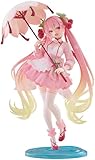
- Cherry blossom shaped umbrella
- Cherries in hair accessories
- Artist's masterpiece
- Be sure to collect this and enhance your display with other incredible figures
The phrase carries intimacy, grief, and finality. It also reinforces the series’ recurring idea that the strongest person may still have one relationship that cannot be solved through strength.
Do these 3 things before closing this tab:
1Clear out junk files and repair common Windows errors2Fix the driver behind crashes, sound loss and screen glitches3Repair Windows errors before they cause bigger problems20. “You’re late.”
Reunion-related candidate — verify the scene and translation before treating it as standalone canon.
Gojo’s casual speech often conceals emotional weight. A line as ordinary as this can sound like a joke or complaint on the surface while pointing to a long separation underneath. That contrast is especially effective in scenes connected to people from his past.
Because this wording appears in circulating quote lists without consistent scene references, it belongs near the bottom of a quotation ranking. It is useful as an example of Gojo’s emotional understatement, but it should not be presented with more certainty than the source allows.
21. “I thought I’d die.”
Hidden Inventory aftermath — English wording may vary.
Recommended Free Tools
This line reflects the shock of Toji’s attack and Gojo’s awareness that he survived something that should have ended him. It is a rare glimpse behind the myth of the invincible teacher. Before he became the untouchable adult sorcerer, Gojo was a teenager who had genuinely reached the edge of death.
The aftermath matters because survival does not return him to his old self. Reverse Cursed Technique and his awakened control over Limitless transform both his abilities and his outlook.
22. “How annoying.”
Recurring Gojo reaction.
This may be Gojo’s most useful everyday line. He applies the same breezy irritation to bureaucrats, dangerous missions, enemies, and inconveniences that would make most people panic. It is a verbal expression of his refusal to let other people’s authority dictate his mood.
There is no single definitive scene to attach to every use of the phrase. Its value lies in repetition: Gojo’s humor keeps returning even when the surrounding story becomes brutal.
Free tools Windows power users keep installed
One-click scans. No signup required.
23. “I’m busy.”
Comic recurring line — verify the episode or chapter for an exact citation.
Gojo’s teasing avoidance is part of his appeal. He can be surrounded by emergencies and still behave as though everyone else should wait while he finishes whatever amusing distraction has his attention.
The joke works because the audience knows that Gojo really is busy with missions, students, political resistance, and the consequences of being the strongest. His apparent laziness is a mask over a person carrying an abnormal amount of responsibility.
24. “I love sweets.”
Light characterization detail — adaptation wording varies.
Gojo’s sweet tooth is one of the details that keeps him from becoming only a symbol of power. Desserts, playful shopping trips, novelty behavior, and an apparent enthusiasm for childish pleasures make the strongest sorcerer feel socially recognizable.
This is not one of Gojo’s major philosophical statements. It belongs on the list because the contrast matters: the man who can erase an enemy with Hollow Purple is also defined by ordinary preferences and deliberately silly habits.
25. “You’re my students.”
Paraphrase of Gojo’s teaching-and-protection theme.
Gojo rarely expresses care through long sentimental speeches. His concern for Yuji, Megumi, and Nobara appears in the risks he takes, the missions he assigns, the adults he challenges, and the ways he tries to give his students room to become themselves.
That makes this paraphrase more revealing than a conventional declaration of affection. Gojo’s students are not disposable assets in his plan to reform jujutsu society. They are young people whose futures he wants to protect, even when his methods are reckless or irritating.
26. “Don’t die.”
Protective instruction — do not assume every similarly translated line is the same quotation.
As a short command, this sounds characteristically Gojo: direct, unsentimental, and impossible to misunderstand. It also captures the practical form his mentorship often takes. He does not always say that he cares; he tells his students to come back alive.
The phrase should be tied to a specific scene if used in a caption or quotation graphic. Across manga and anime releases, similar protective instructions can be translated with slightly different wording.
What’s actually slowing this PC down?
Pick the symptom - the matching free tool is one click away.
27. “I’ll handle it.”
Recurring confidence pattern.
Gojo’s presence changes how everyone else behaves. When he says or implies that he will handle a crisis, allies feel safer and enemies reassess the battlefield. His confidence is comforting, but it can also create dangerous dependence: if the strongest person is always expected to solve everything, the system never learns to function without him.
This is why Gojo’s sealing in Shibuya is such a strategic disaster. Removing one person does not merely eliminate a fighter; it removes the reassurance on which an entire generation has come to rely.
28. “You can leave the rest to me.”
Paraphrase of Gojo’s protection motif.
Gojo’s bravado often serves as emotional support. He takes the terrifying part of a situation onto himself so that students and civilians can focus on surviving. The offer sounds arrogant because Gojo knows his own ability, but it is also a promise to carry responsibility for people who cannot match him.
Its darker side appears whenever Gojo is absent. His students have to grow quickly because the person who normally tells them to leave the rest to him cannot always be there.
Rank #4

- Classic anime image: Inspired from famous anime MHA character Bakugo
- Unique design: MHA figures has good detail and is well painted, every detail of the figurine is meticulously depicted, the color is uniform and bright, realistic texture skin, realistic carving
- Material: PVC material, and it will not cause harm to the human body.This is a safely anime model that is very worth to collecting
- Good choice for you: Decorate the cake, desk or party. If you have MHA anime fans around you, choosing it as a gift is definitely a huge surprise for your friends
- Best gift: This anime figure also can be a gift for All Might/Hawks/Midoriya Izuku/Uraraka Ochako/Dabi/Toga Himiko/Todoroki Shouto anime lovers
29. “The higher-ups are a problem.”
Paraphrase of Gojo’s opposition to jujutsu leadership.
Gojo’s frustration with the higher-ups is not a minor running gag. He sees an entrenched leadership class that values precedent over people and uses its authority to make younger sorcerers bear the consequences.
His answer is not to become a more efficient servant of that structure. He teaches, recruits, protects, and challenges the people who inherited power. The line represents his reformist instinct, even when his methods are deliberately provocative.
30. “The jujutsu world needs to change.”
Paraphrased reformist thesis.
This idea is the bridge between Gojo’s personal power and his role as a teacher. If he simply eliminated every curse and opponent himself, the old hierarchy would remain intact. By cultivating students who can surpass the previous generation, he hopes to change the culture that produced the same crises repeatedly.
The Tool Desk
Outbyte Driver Updater FREEScan for outdated or missing drivers - takes under a minuteDriver Scan →Outbyte PC Repair FREERepair Windows errors before they cause bigger problemsFix Now →Gojo’s plan is imperfect, and the story does not present him as a flawless reformer. But his decision to invest in people rather than rely only on his own strength gives his character a purpose beyond winning fights.
31. “I’m going to kill you.”
Battle-threat candidate — identify the opponent and official translation before publishing it as a specific quotation.
Gojo can be playful with enemies, but his threats become stark when someone harms his students, attacks civilians, or crosses a personal boundary. The phrase represents the point at which his joking persona disappears and his overwhelming ability becomes an executioner’s certainty.
Because many battle scenes contain similar wording, this entry is best understood as a recurring rhetorical mode unless it is attached to a verified chapter or episode.
32. “You have no chance of winning.”
Representative Gojo taunt.
Gojo’s taunts are persuasive because they are usually assessments rather than empty attempts to intimidate. He can read an opponent’s technique, understand the gap between their abilities, and explain the result with insulting calm.
That confidence can be funny when aimed at a minor threat, but it becomes unsettling when the opponent has enough power to make the prediction uncertain. Gojo’s self-belief is strongest when the stakes are highest, which is why the Sukuna confrontation carries so much tension.
33. “The strongest is lonely.”
Thematic paraphrase, not a safe verbatim quotation without edition checking.
This may be the most concise summary of Gojo’s tragedy. His power protects him from ordinary physical danger but separates him from ordinary human experience. Few people can understand what he sees, challenge him directly, or share responsibility at his level.
Quick wins for a faster PC:
Fix the driver behind crashes, sound loss and screen glitchesFind Drivers →Repair Windows errors before they cause bigger problemsFix Now →Scan for outdated or missing drivers - takes under a minuteDriver Scan →The series does not reduce Gojo to a sad loner. He has meaningful relationships with Geto, his students, and other allies. The point is that affection and companionship do not automatically erase the distance created by incomparable strength.
34. “I’m completely alone.”
Translation-sensitive final-battle or post-battle candidate.
Handle this line cautiously. Fan lists often present it as a clean quotation, but its precise context and English wording should be checked against the official chapter translation. The underlying idea is firmly connected to Gojo’s story: the strongest person can still experience profound isolation.
In the aftermath of the Sukuna battle, the phrase gains additional weight because Gojo’s confidence, skill, and preparation still cannot guarantee the result he wants. His final reflections force the audience to separate being unrivaled from being invulnerable.
Do these 3 things before closing this tab:
1Scan for outdated or missing drivers - takes under a minute2Clear out junk files and repair common Windows errors3Fix the driver behind crashes, sound loss and screen glitches35. “I gave everything I had.”
Chapter 236-related paraphrase — full spoilers.
This entry should be treated as a summary of Gojo’s post-battle reflection unless you have checked the licensed English edition. After the fight with Sukuna, Gojo’s conversation looks back on the battle with unusual openness. He acknowledges the scale of the contest and the fact that he committed himself completely.
The line is powerful because it denies both easy triumphalism and easy self-pity. Gojo did not hold back, and his defeat does not make his life meaningless. It closes the arc of a character who spent years being called the strongest while trying to create people who would not need him forever.
Independent reader supportYour contribution helps us test, update, and keep practical guides available for everyone.What makes Gojo’s quotes so memorable?
Gojo’s dialogue works because it constantly switches between three registers.
- Absolute confidence: Lines such as “I’m the strongest,” “Nah, I’d win,” and the honored-one declaration make his power part of his voice rather than merely part of his résumé.
- Playful deflection: Reactions such as “How annoying,” “I’m busy,” and his comments about sweets make him feel unserious even when he is carrying enormous responsibility.
- Quiet responsibility: His advice to Megumi, his protection of Yuji and the other students, and his opposition to the higher-ups reveal that teaching is not a side activity. It is his long-term answer to a broken society.
The tension between these modes is what separates Gojo from a generic overpowered character. He is funny because he is confident, confident because he is powerful, and lonely because almost nobody can stand beside him at the level the world demands.
The Tool Desk
Outbyte Driver Updater FREEFix the driver behind crashes, sound loss and screen glitchesFind Drivers →Outbyte PC Repair FREEClear out junk files and repair common Windows errorsFree Scan →Where to verify the exact wording
- Check the licensed manga first. The VIZ/Shonen Jump English edition is the best reference for chapter-specific wording, including Hidden Inventory, the Sukuna confrontation, and the relevant volumes of the main series.
- Use Jujutsu Kaisen 0 for the Geto material. Gojo’s final exchange with Geto is deliberately incomplete on the page and should not be replaced with a fan-invented full sentence.
- Keep adaptation versions separate. Official anime subtitles and English dubs may choose different wording from the manga. A quote can be faithful to one release without matching another word for word.
- Be cautious with quote websites. Fan pages are useful for discovering scenes, but they often mix paraphrases, subtitles, dubs, and unofficial translations. Confirm the chapter, speaker, and edition before using quotation marks.
For readers who want the source—or a Gojo collectible
If you want to compare translations or revisit the scenes behind this ranking, start with the licensed Jujutsu Kaisen manga and Jujutsu Kaisen 0. Volume availability and regional formats can change, so check the current publisher or retailer listing rather than relying on an old product page.
For collectors, a licensed Satoru Gojo figure is the most direct physical companion to a quote collection. The research snapshot for this article identified a MegaHouse Gojo figure and other Gojo products in the Crunchyroll Store catalogue, but stock, pre-orders, prices, region eligibility, and licensing status should all be rechecked before purchase. A product appearing in a store catalogue does not by itself establish an affiliate relationship or guarantee current availability.
Frequently Asked Questions
What is Satoru Gojo’s most famous quote?
The most famous Gojo quote is usually the Hidden Inventory declaration commonly translated as “Throughout heaven and earth, I alone am the honored one.” It represents his awakening after Toji’s attack. “Nah, I’d win” is his most recognizable short quote and meme, while “Don’t worry. I’m the strongest” best captures his protective confidence.
What chapter does Gojo say Nah, I’d win?
“Nah, I’d win” is associated with Chapter 221, after Gojo is unsealed and before his confrontation with Sukuna. English wording can differ between the manga, anime subtitles, and dub, so check the licensed edition for an exact quotation.
Quick wins for a faster PC:
Fix the driver behind crashes, sound loss and screen glitchesFind Drivers →Clear out junk files and repair common Windows errorsFree Scan →Are these Gojo quotes exactly the same in every English translation?
Not all English versions use identical wording. The list separates stable short quotations from translation variants, incomplete fragments, recurring phrases, and paraphrases. For publication, quotation graphics, or academic discussion, verify the wording against the licensed VIZ/Shonen Jump manga or the official anime release.
Is The strongest is lonely an exact Gojo quote?
“The strongest is lonely” is best treated as a thematic paraphrase unless you have verified it in a specific official translation. The idea is central to Gojo’s story, but fan quote lists often turn a broader theme or translated passage into a standalone sentence.
The Bottom Line
Gojo’s best quote is arguably the honored-one declaration because it captures his awakening, power, and isolation in one image. But the full ranking shows why he remains compelling: “Nah, I’d win” is the meme, “Don’t worry. I’m the strongest” is the reassurance, and his ideas about students and the next generation reveal the person behind the strongest sorcerer.
Quick Recap
Product prices and availability are accurate as of the date/time indicated and are subject to change. Any price and availability information displayed on Amazon at the time of purchase will apply.




